Just got back from a 4-day trip with my brother and his son to scale Matterhorn Peak, the northernmost high peak (12,285′) in the Sierra Nevada.
Matterhorn Peak sits on the border between Hoover Wilderness in the Humboldt-Toiyabe National Forest and Yosemite National Park. A Wilderness Permit is required for camping, as is a Fire Permit that can be obtained online. There are only 8 Wilderness Permits per day for the Horse Creek Trail, 4 by reservation and 4 by walk-in. If there are no walk-in permits left on the day you get to the ranger station in Bridgeport, CA, permits for the next day are available after 1 p.m. We got there at 2:30 p.m., and fortuitously there were 3 walk-in Wilderness Permits left.
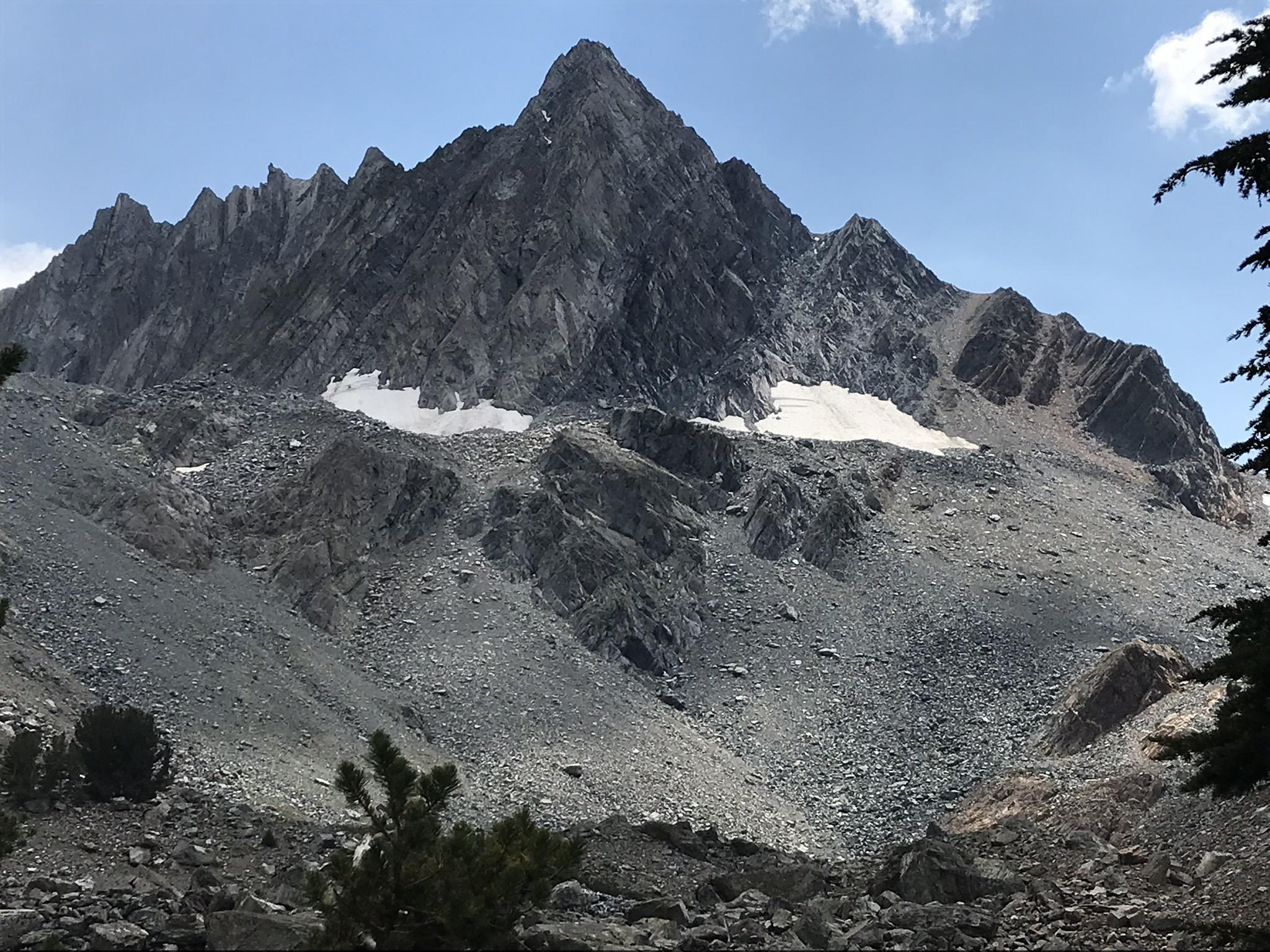
We finally got on the trail late Monday afternoon, heading almost due south from the Twin Lakes trailhead (7,100′) up Horse Creek Canyon about 2/3 of the way to the pass (10,600′) into Spiller Creek Canyon at the northeast corner of Yosemite. We camped the first night near the last “lake” (9,600′) before the climb to the pass. This is a view of Mt. Virginia looking southwest up Horse Creek Canyon from our campsite. The pass where we were heading is up the canyon below the right side of the peak:
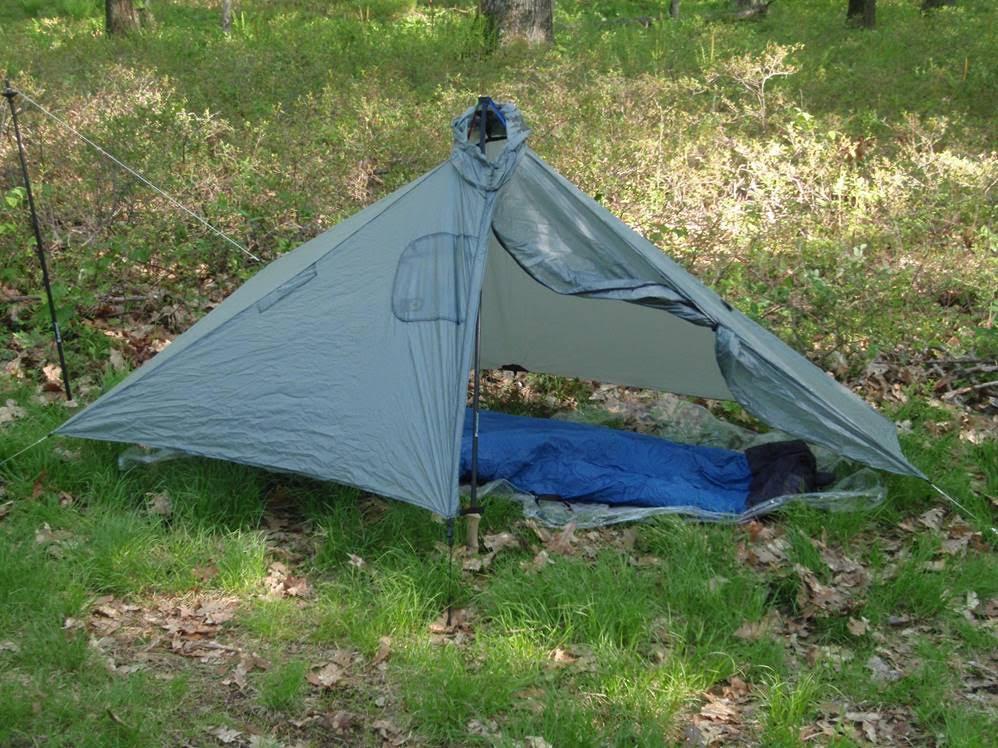
My brother and his son setting up their tent the first night, and the Gatewood Cape I was using for the first time:

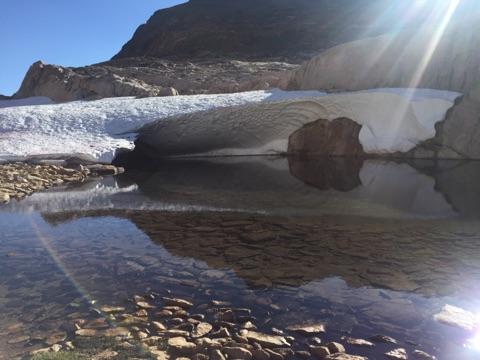
From there we went up the right/north side of the canyon and over the pass into Yosemite and camped Tuesday night about 1/4 mile up towards Matterhorn Peak from a little slot lake below what’s left of a glacier:
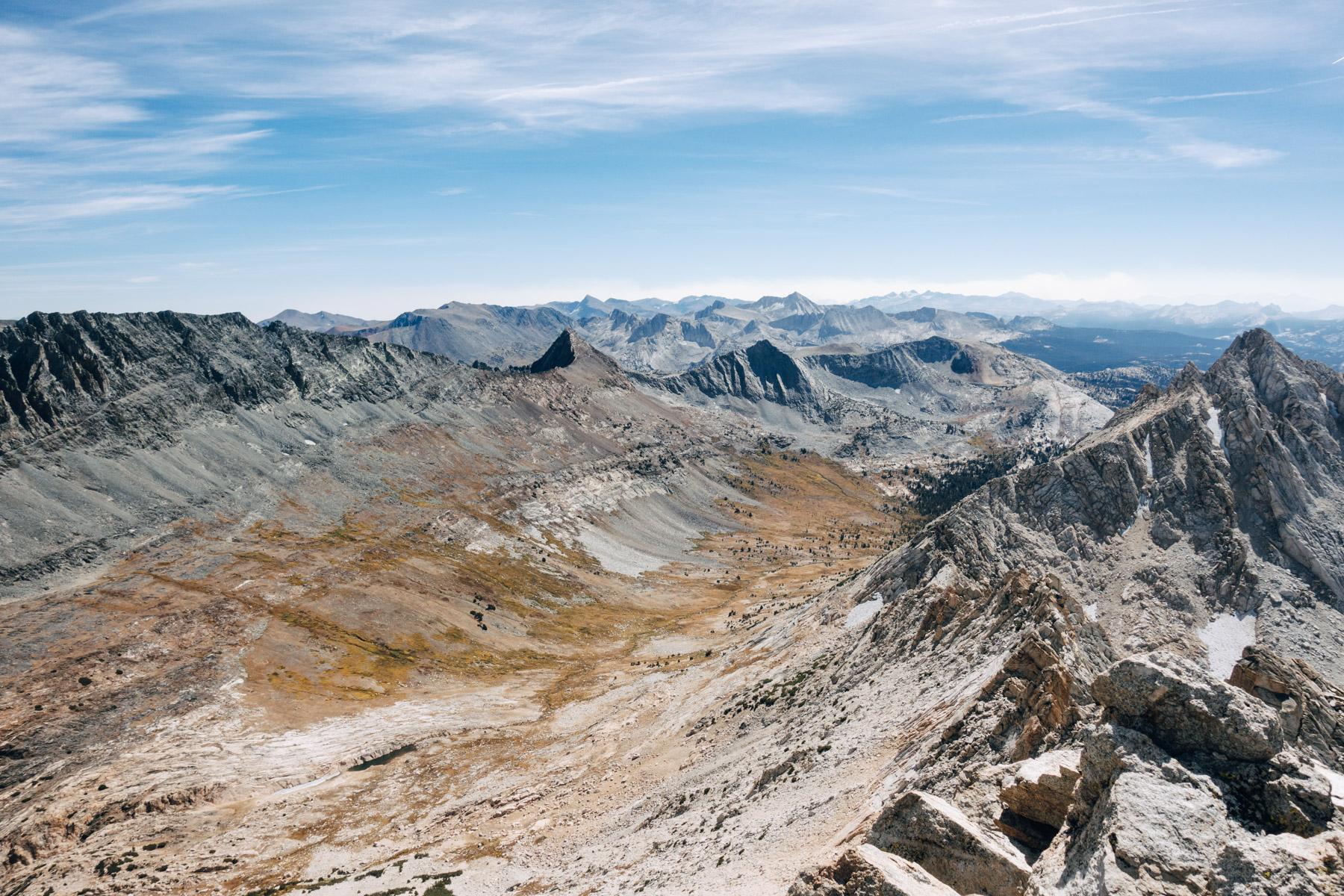
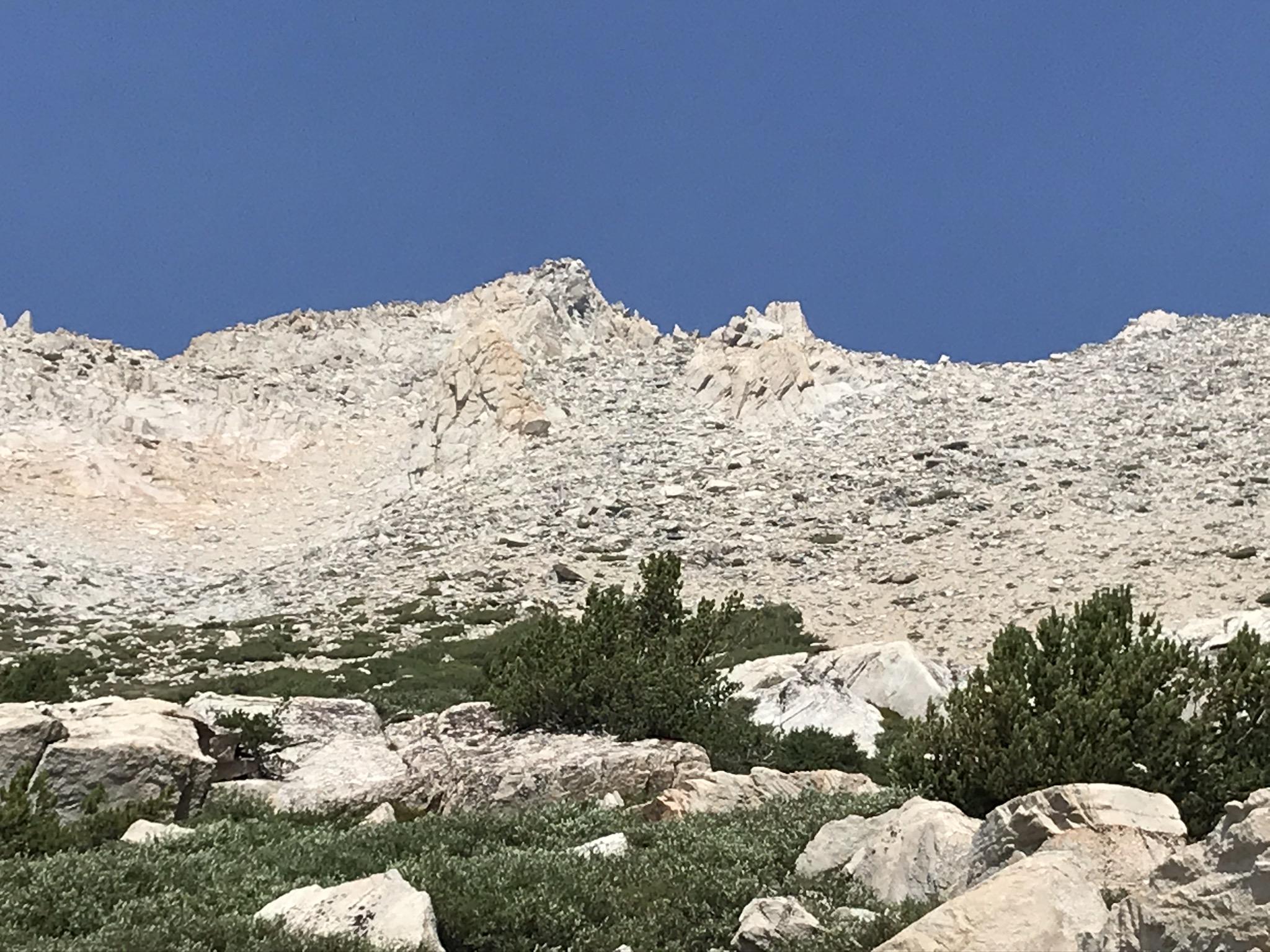
We scaled the peak Wednesday afternoon by going pretty much straight up and down the main southwest bowl/couloir to the notch left of the peak in this picture, then along the ridge to the summit:
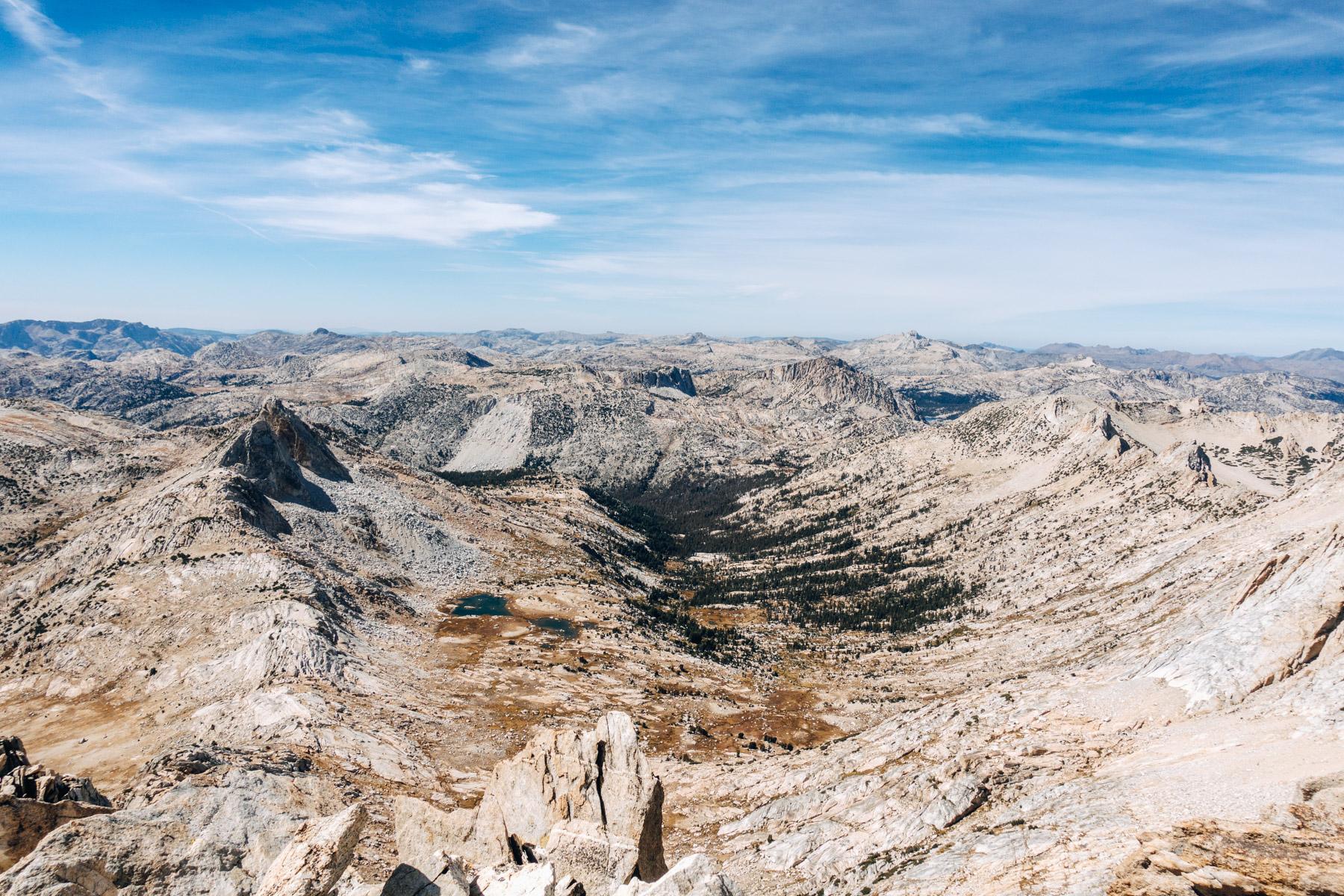
This is a view from the top of the southwest couloir back down to our campsite and the glacial lake. On Monday we could see much of Yosemite. By Tuesday morning it was smokey like this from the hundreds of fires raging in California:

It’s a dramatic peak. Shear cliffs on all four sides. After a nearly vertical 50′ scramble to the highest notch on the southwest ridge it’s an easy 200 ft. walk and 4.0 scramble with cliffs on both sides to the peak. Any other route requires ropes and serious climbing skills.

We didn’t actually stand on the high point, an angled rock about 12″ wide that looked ready to tumble. So we reached out and touched it:
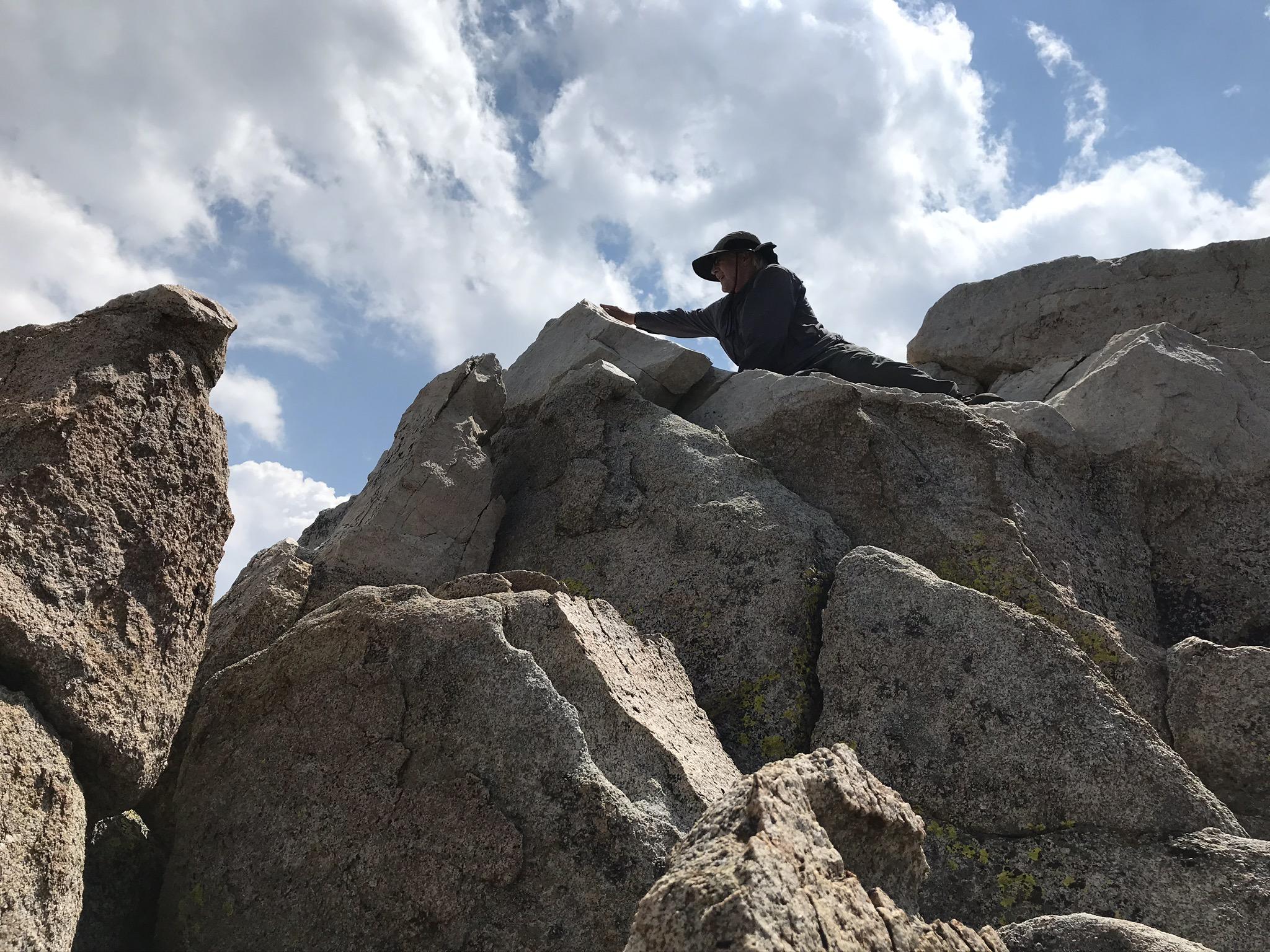
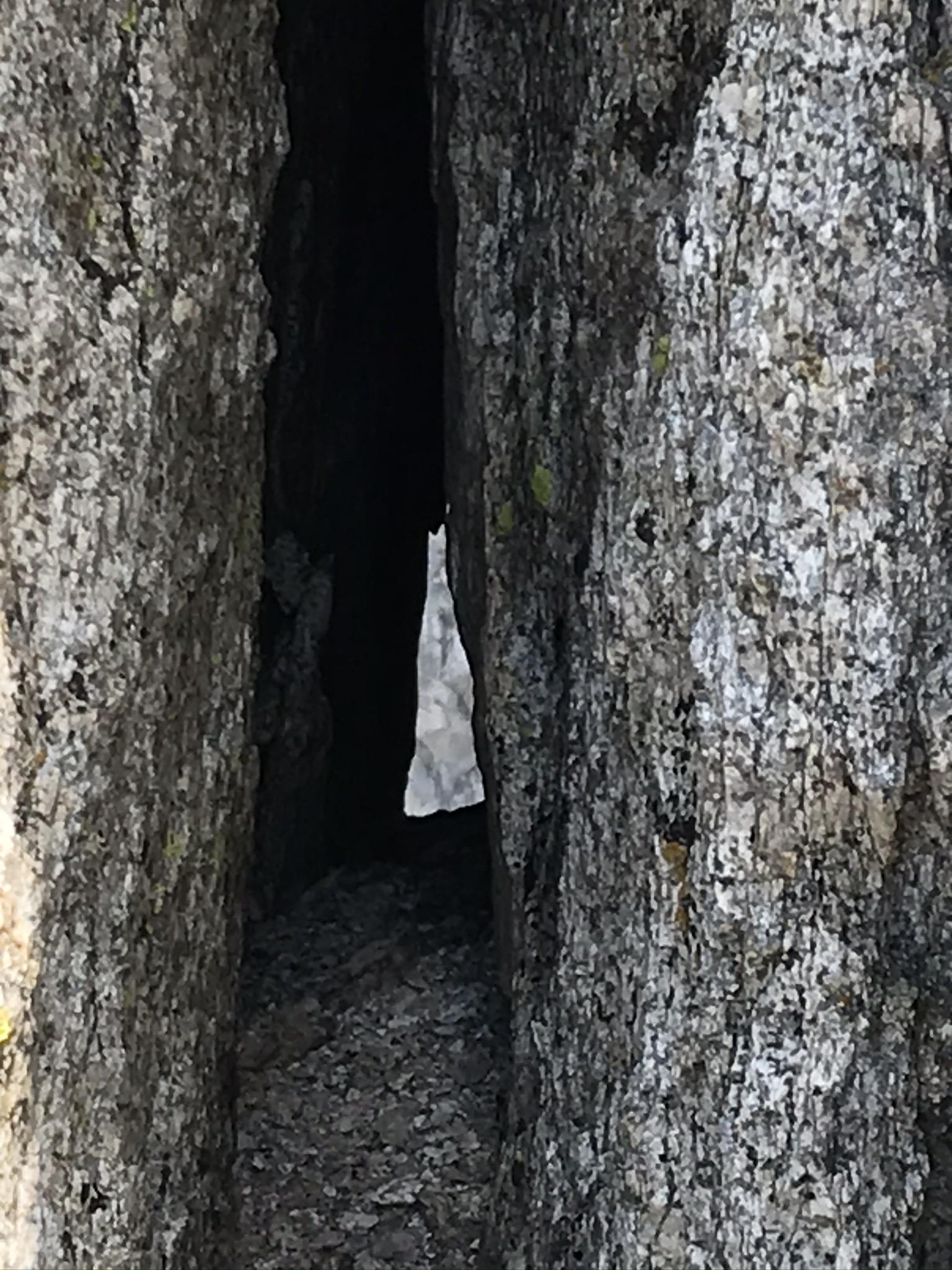
The peak is more like a pile of boulders than a solid chunk. We could even see through a small eyelet about 12′ below the peak to the cliffs on the other side of the canyon:
We exited back down Horse Creek on Thursday more or less the same way we came in and stuck to the scree and rocks, now on the left, because the snow on the other side of the canyon looked hard and slippery, although I didn’t check it closely.
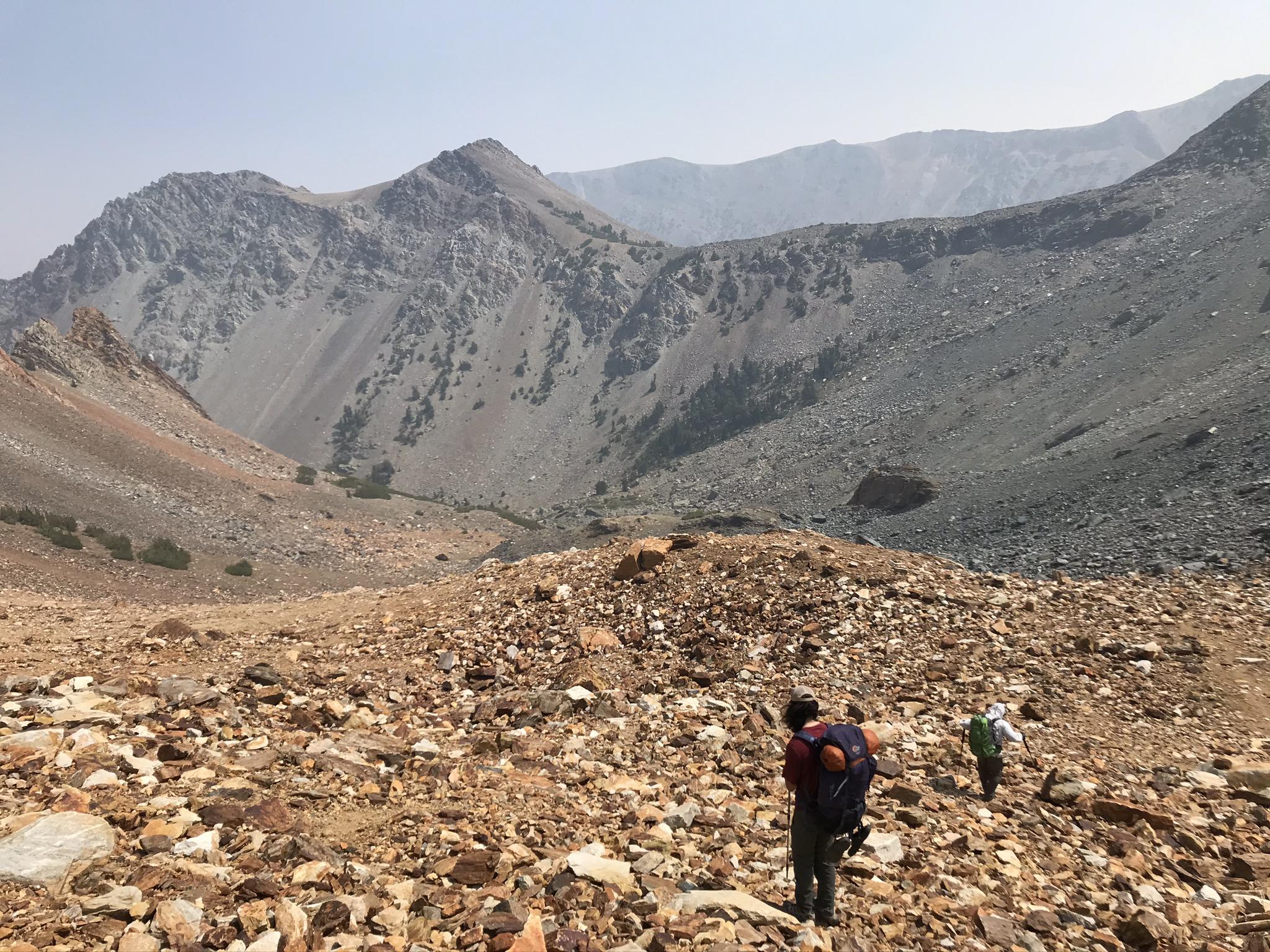
This is a strenous hike for those with at least moderate experience doing “technical walking” and scrambling over rocks, boulders, scree and talus. You look at a map and think “Oh, it’s only 4.2 miles from the trailhead to the peak? Easy peasy.” But it’s completely exposed to direct sun all day as you climb the east side of the Sierras, a lot of elevation gain from 7,100′ to 12,285′, a lot of walking over jumbles of sharply angled loose rocks and boulders, no water for the last 1.5 miles, and a nearly vertical 4-point scramble up 50′ to the final ridge to the peak. Not for beginners.
But the views and scenery are absolutely incredible, and it’s totally wilderness once you get about 1.5 miles from Twin Lakes up Horse Creek Canyon. Looking southwest down the Spiller Creek watershed you can see much of Yosemite. The Sawtoot Ridge on the west side of Horse Creek is classic raw, craggy, east side granite. The rocks are many colors: red, beige, dark grey, light grey, green striped, white. I saw 6 different kinds of flowers in bloom near the summit. A tiny frog jumped on me the first night. The spectacular Mt. Virginia and Matterhorn Peak loom over the area. And I saw two animals for the first time in the more than 50 years that I’ve been camping in the Sierra Nevada: a Pika and 6 Tawny Grouse (2 hens and 4 chicks). With the 8 per day limit on permits it is still a wilderness experience and well worth the effort.