Topic

Are there any alcohol stove gurus here that can vet this?

Viewing 5 posts - 1 through 5 (of 5 total)
PostedMay 2, 2021 at 11:01 am

By vet I mean replicate and compare to pre-existing models that they have to test for fuel efficiency, in a more controllable environment than my front porch.

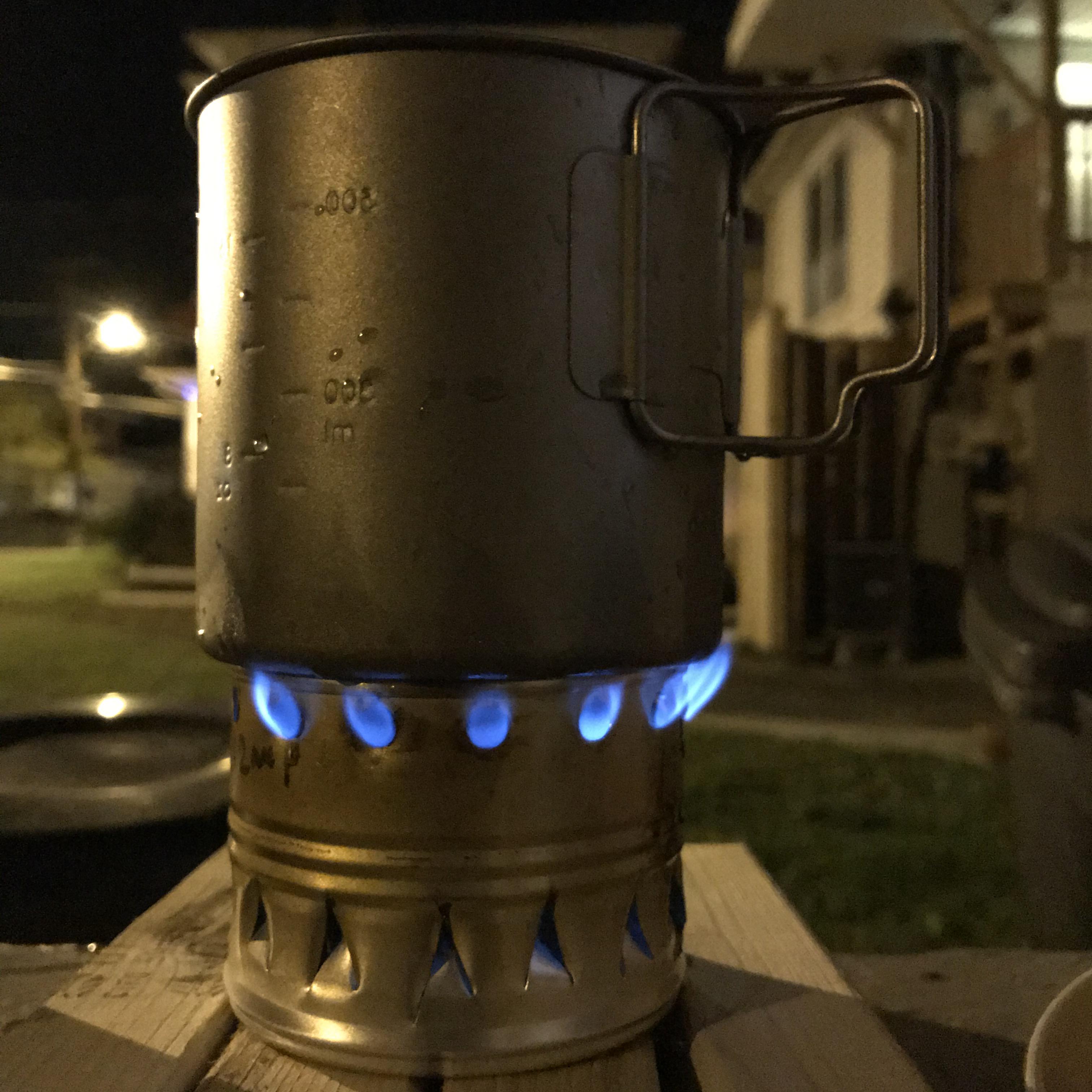
My primary goal was to increase resting pot stability and to focus the heat transfer to increase fuel efficiency.

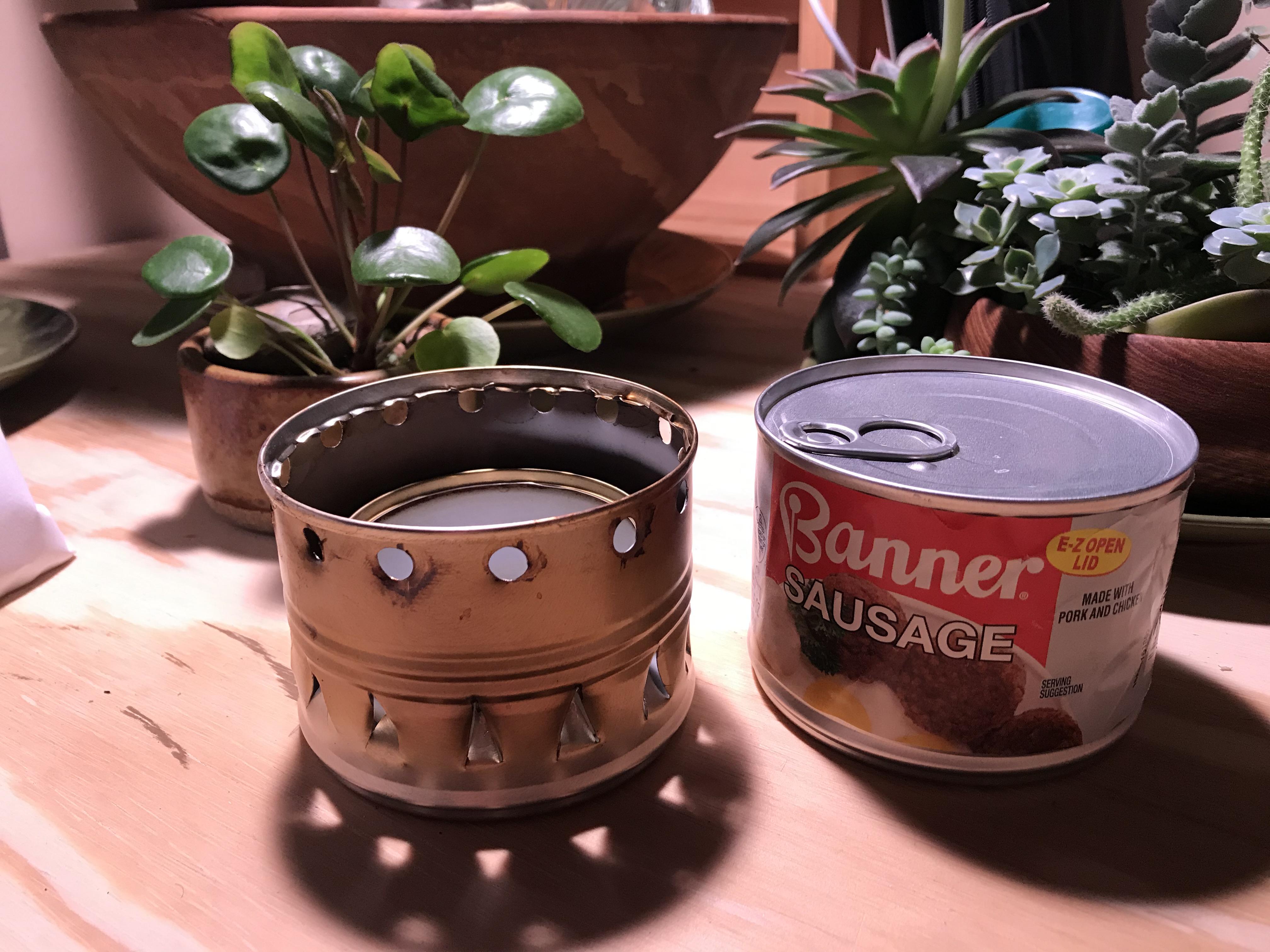
I seem to struggle with getting my larger pots to rest well on a small cat-food can alcohol stove. The Banner Sausage can really increases stability, but does it help with fuel efficiency?

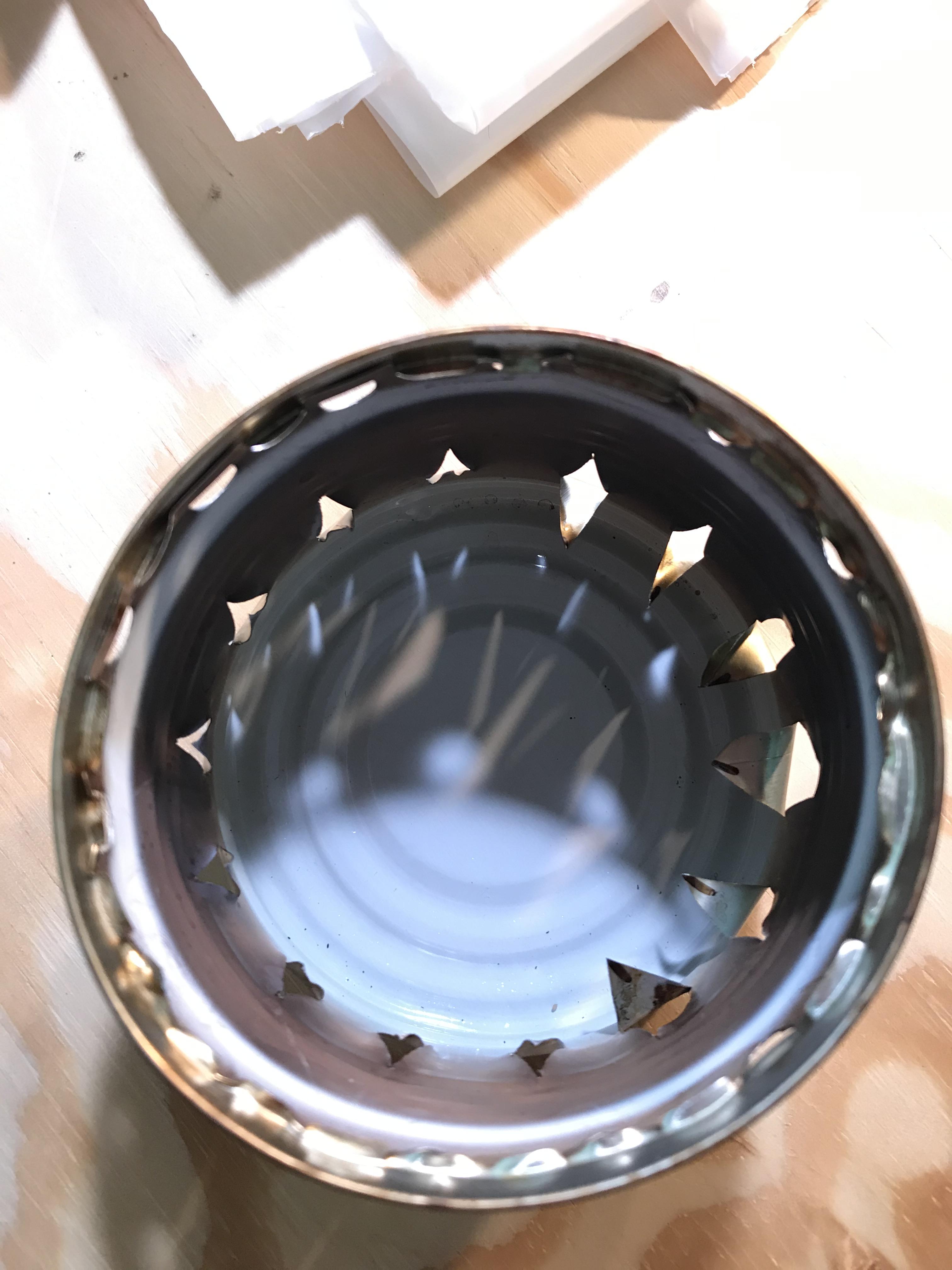
Top and bottom holes are 2 mm centered, and an unperforated cat-food can nests inside to burn.  I tried to blow out the flame, but the outer can worked well as a wind break. I also tried it with a perforated cat food can, and the flame was far too aggressive.

Pot in image is TOAKS Light Titanium 550ml Pot with a 3.75 diameter.

Banner Sausage aluminum can is 0.6 oz.
Matthew / BPL Moderator
PostedMay 2, 2021 at 12:15 pm

I’m definitely not a guru. To me it looks like your flame is going too far outside the pot to get ideal thermal transfer. I think you’d be better off with a TD Cone and a stove that burns straight up in the center like a starlight or TD’s version.

If you don’t want to go that route then a center firing stove, a bent wire stand and some heavy duty foil or aluminum flashing for a screen would  probably give you better performance.

James Marco BPL Member
PostedMay 2, 2021 at 1:01 pm

You likely have too much inflow of air, ie too many air inlets. Air outlet is fine, depending on how you balance the entire system with the reduced inflow. Alky burns rather constantly, ie alcohol releases the same amount of energy later as earlier when mixed with air. Of course, it is possible to oxygen starve a system, alky is fairly tolerant of this. As soon as enough oxygen finds the combustion it will join in, so to speak (it is actually a lot more complicated.)

Soo, my suggestion would be to reduce the air inlets by 25%. If, and only if (IFF,) your external flames seem to reach higher on the pot, indicating the reduced oxygen (air) is too much, then increase the inlet air. As you can see this depends on elevation and combustion efficiency more than your exact wind efficiency. From your picture, it looks like one side is not extended beyond what you are expecting. The other side is. A large amount of wind will cause flames to light and extend beyond your pot, but this is expected due to turbulence. Otherwise, I would say you are doing fine with efficiency. Note real great, as you would with a fully enclosed pot/windscreen/burner system, but good enough to work.

PostedMay 2, 2021 at 2:13 pm

Your best bet is to develop a pot stand that will work with your original cat can stove as that works.

By scaling up, you are now entering the world of stove dynamics which is a deep hole to delve into.  The height of the outlet ports will drive your fuel evaporation rate.  It is also driven by the stove material and wall thickness.  Performance will also be driven by the diameter of your stove as well as the distance from your outlet ports to the bottom of your pot.  So many variables, so little time.  It is a deep rabbit hole,  enjoy the journey or leverage what you have.  Best wishes.

PostedMay 2, 2021 at 3:11 pm

@matthewkphx

I initially thought the same think about the flame coming out at the side, because that is what it does with a simple cat-can (flame emerges where oxygen is present). Then when I looked through the flame into the center of the stove I realized that the flame is originating from the unperforated  cat-can oxygenated by the vents in the base of the banner can. The cat-can lip is 1 inch below the Banner can lip,  so it is acting as a center firing stove.


@jamesdmarco

I closed the vents approx. 25% the left side (for visual comparison), and will close the rest on right side before testing tonight (can only see flame clearly at night).


@jonfong

My thought is that the Banner can housing is the pot stand.

I will try it tonight with a leaf blower set on low ( wind speed around  140 miles per hour), and see at what distance it extinguishes the flame, without the foil shield.

Viewing 5 posts - 1 through 5 (of 5 total)
Loading...