Putting aside the joking, I’ve tested these today on dried and green Aussie yellowbox and stringybark
there are at least 3 fatal errors in here, I will detail as follows – correspondingly there are some design choices that I would not rely on in the bush AND DO NOT RECOMMEND – you should make up your own mind before doing so. This is where shaving grams can reduce the effectiveness or even possibly cause injury and is stupid. It was fun to try but I will be frank here.
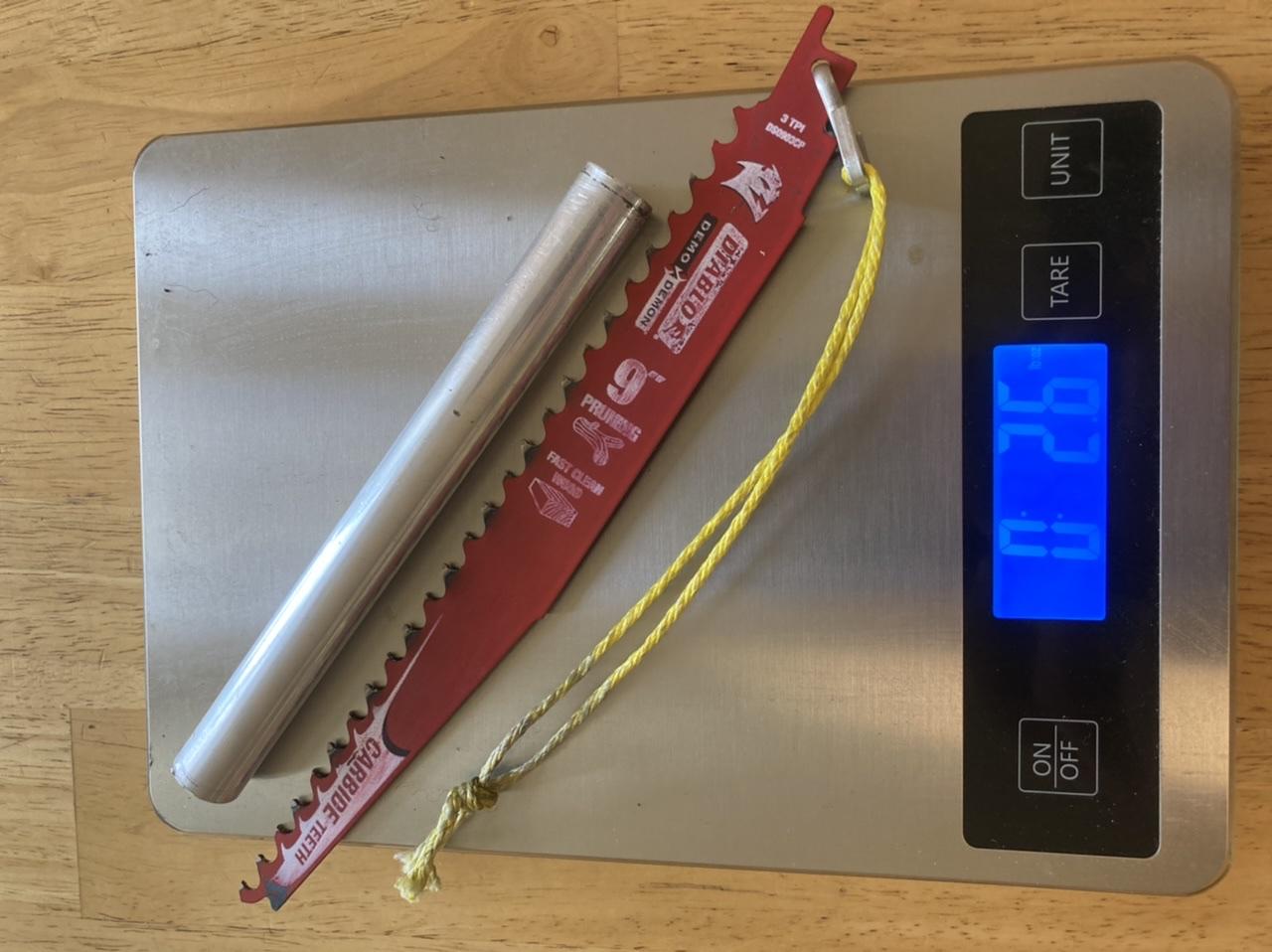
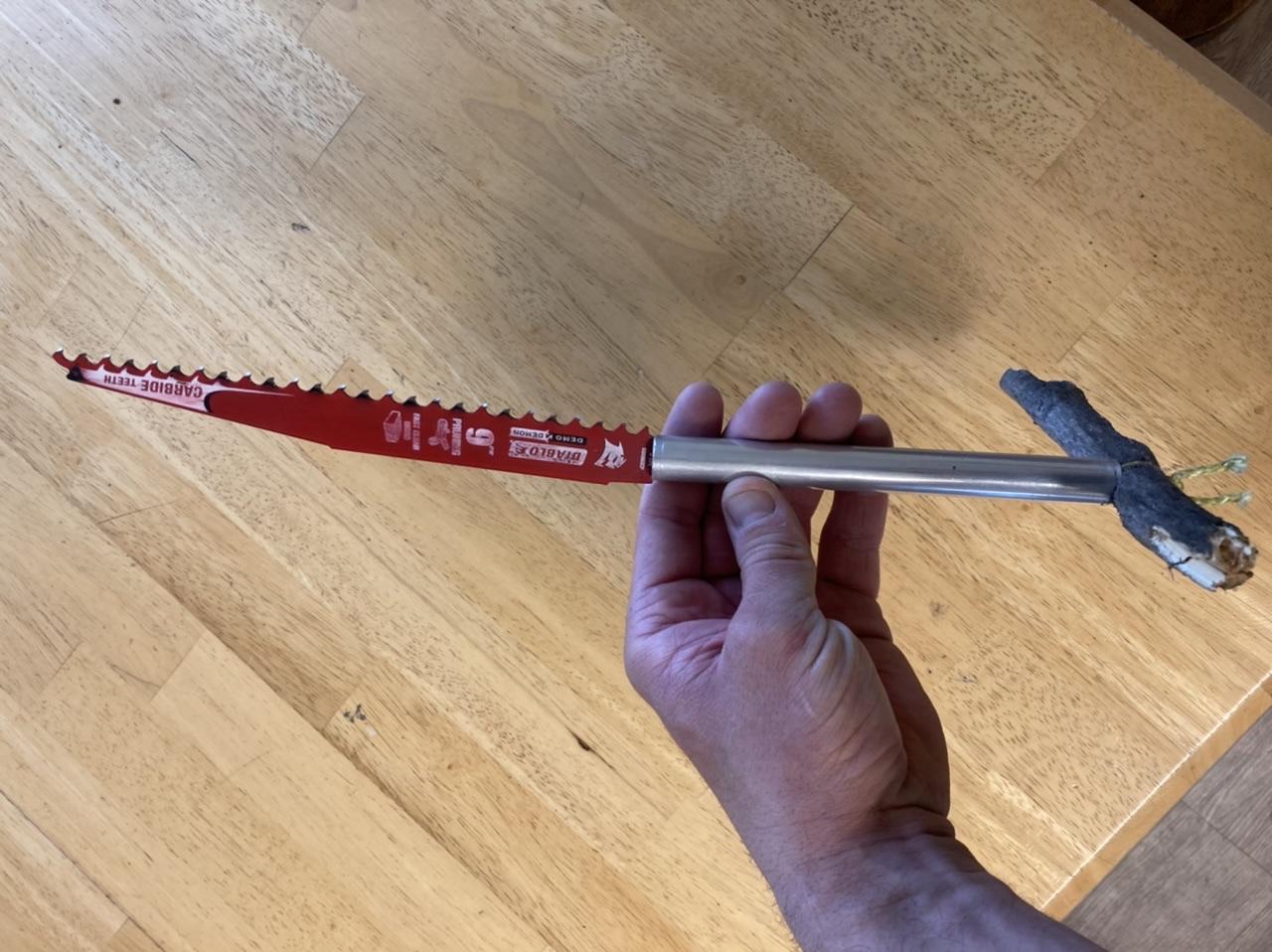
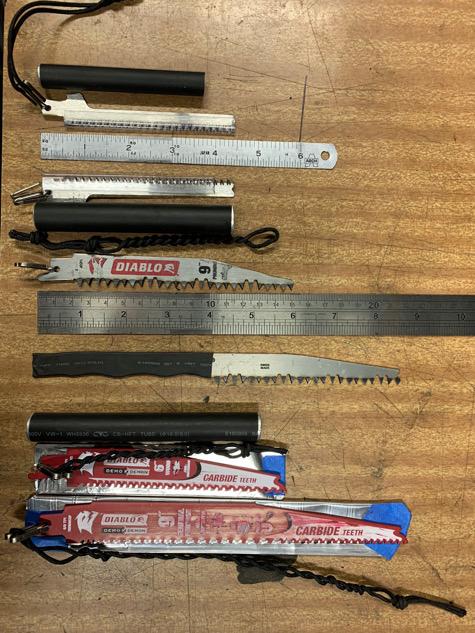
In summary I will only recommend and use the original design saws (heavier gauge red blades, heavy duty split pins and longer larger handles). They weigh a whopping 20-30g (about an ounce) more than the lightest but are safe, effective, reliable, and actually easier to use.
The flaws and my observations are:
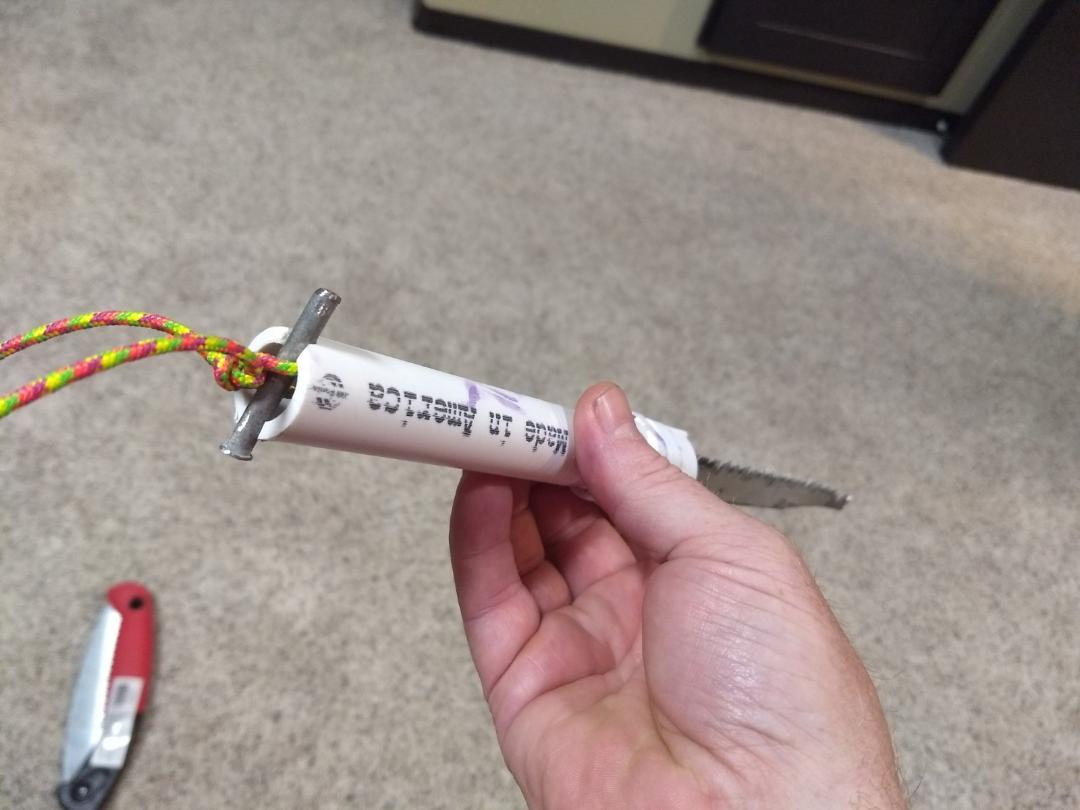
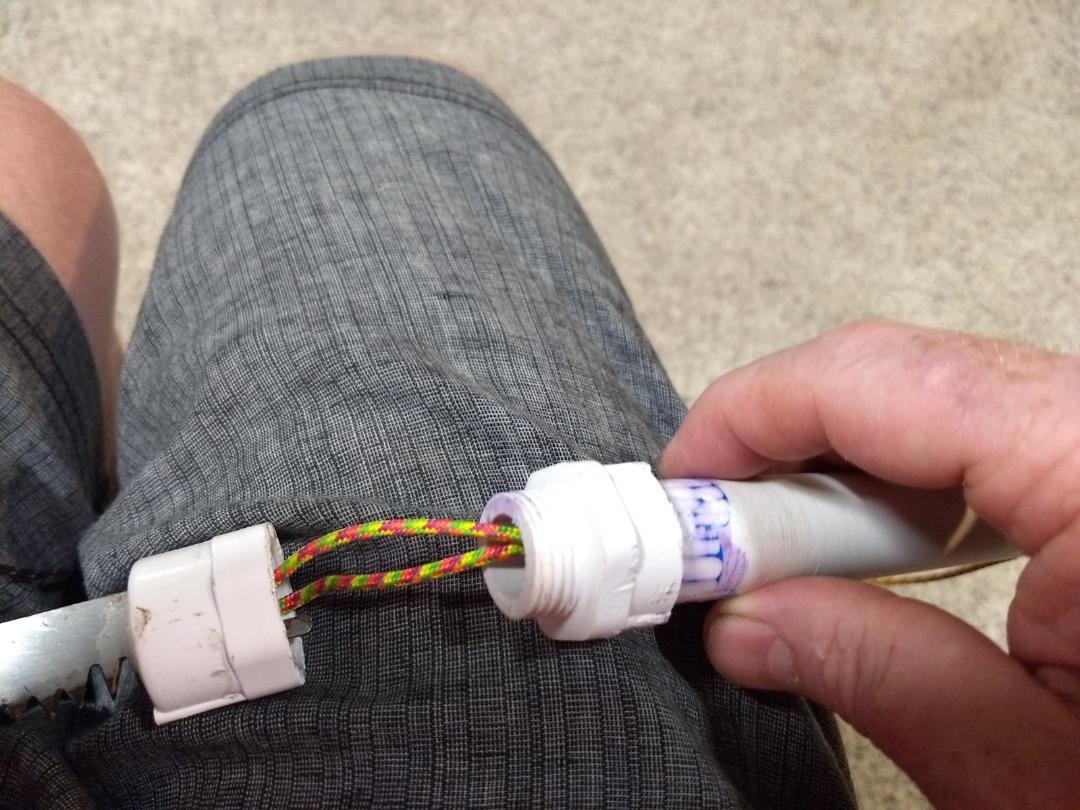
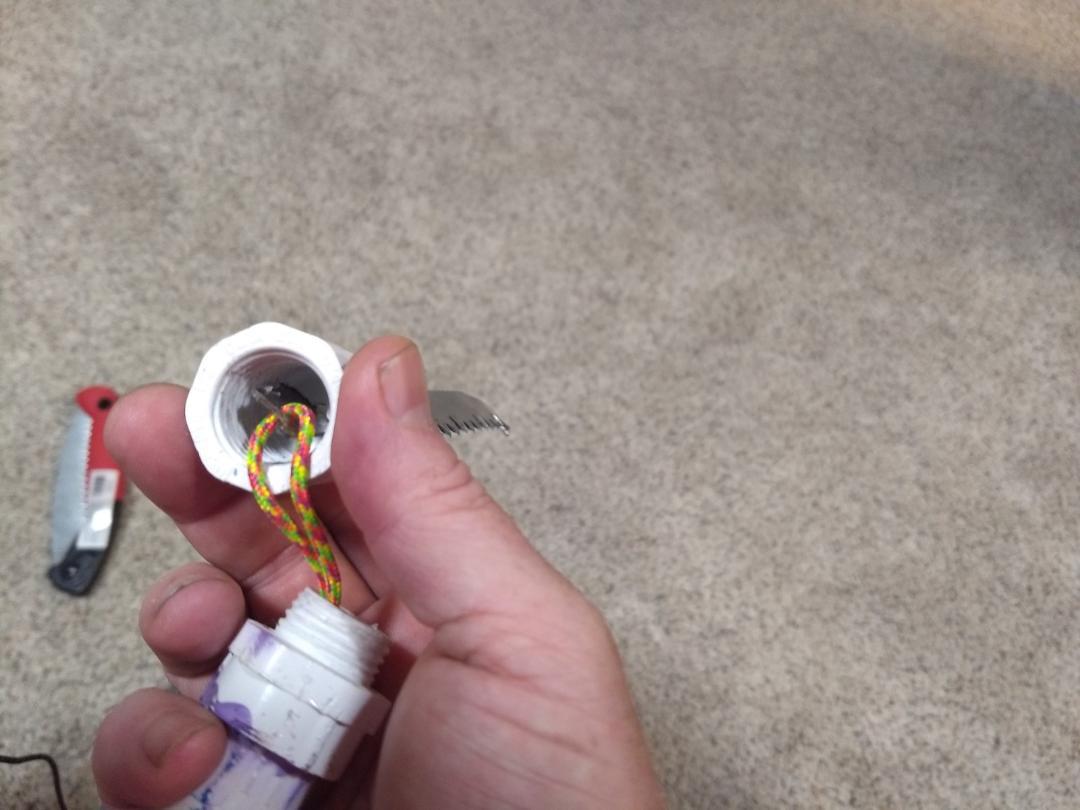
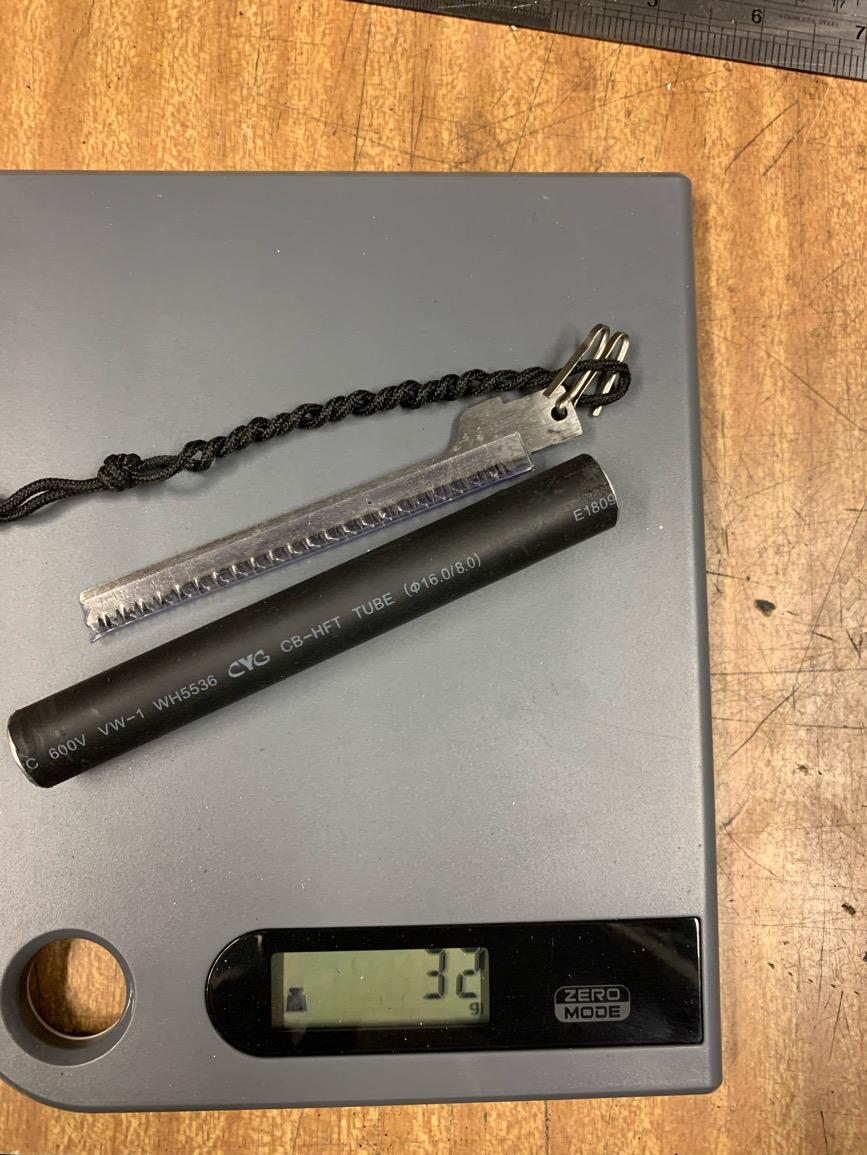
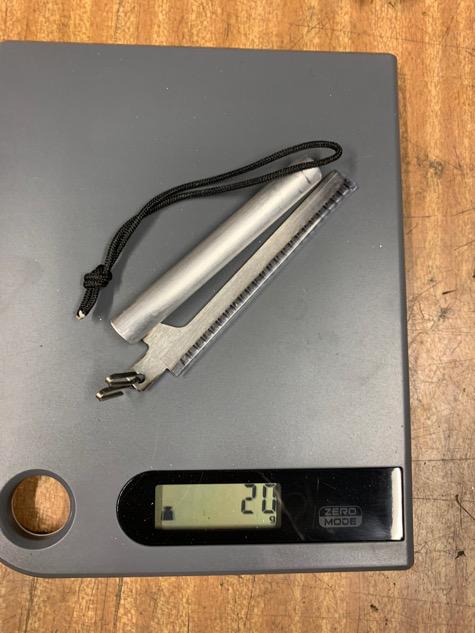
1. all tensioning designs using the knifepoint system – I tried lighter split pins to drop a gram but this is a fatal mistake, you need the strength of the 3.2mm or even 4mm gauge pins. It only makes a 1g difference – yes, 1g! these pins when bent are the crucial lateral stability for the blades, critical for safety and also reducing effort in sawing as you can relax and focus on the cut.
2. I cut down the split pins and again, this a mistake – full length is better (remember they provide the lateral stability) -longer is better
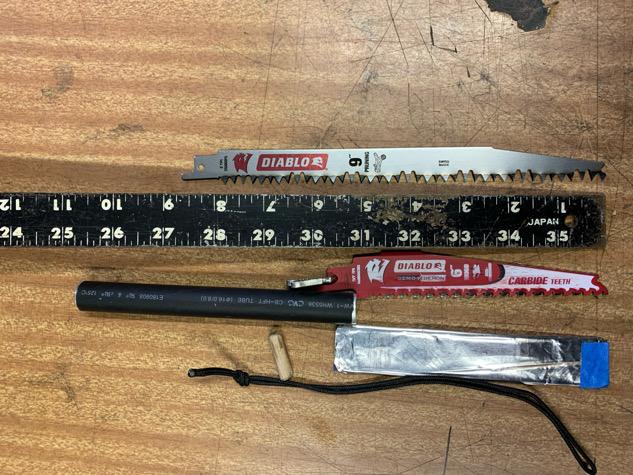
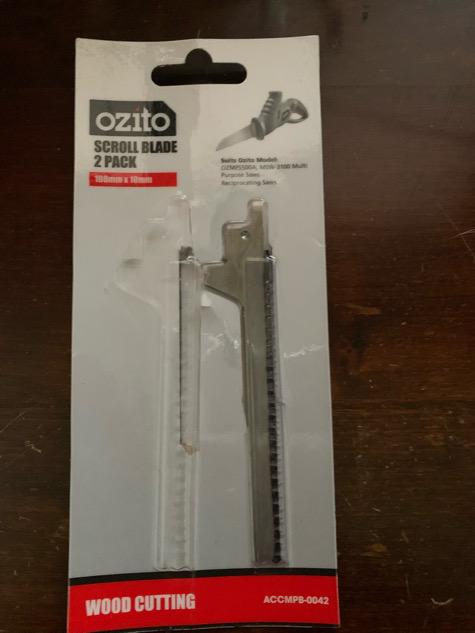
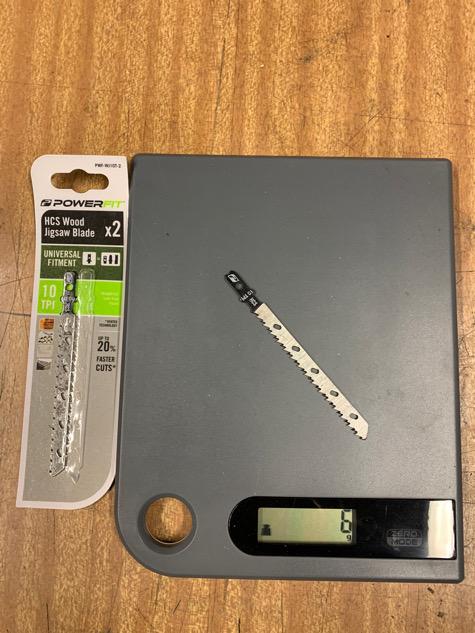
3. the ozito scoll saw blades are very light because they are thin gauge- and unfortunately (and somewhat predictably) have reached the point where they flex slightly in a hand held diy saw. After all they are designed for a high speed electric reciprocating saw, not a human arm. They don’t flex as much as the coghlans folder saw blade (which is why I don’t want to rely on that in the real bush situation, I’ve busted one doing so and that’s it). But also the final straw was that the blade has very fine teeth (tiny length and 10th I count) and it’s not enough even for dried hardwood sticks – it does cut them, but too much effort. (The original designs using even a 6” blade with 6 tpi and longer teeth are like a hot knife and butter). I will not be using these scroll blades in real life situations.
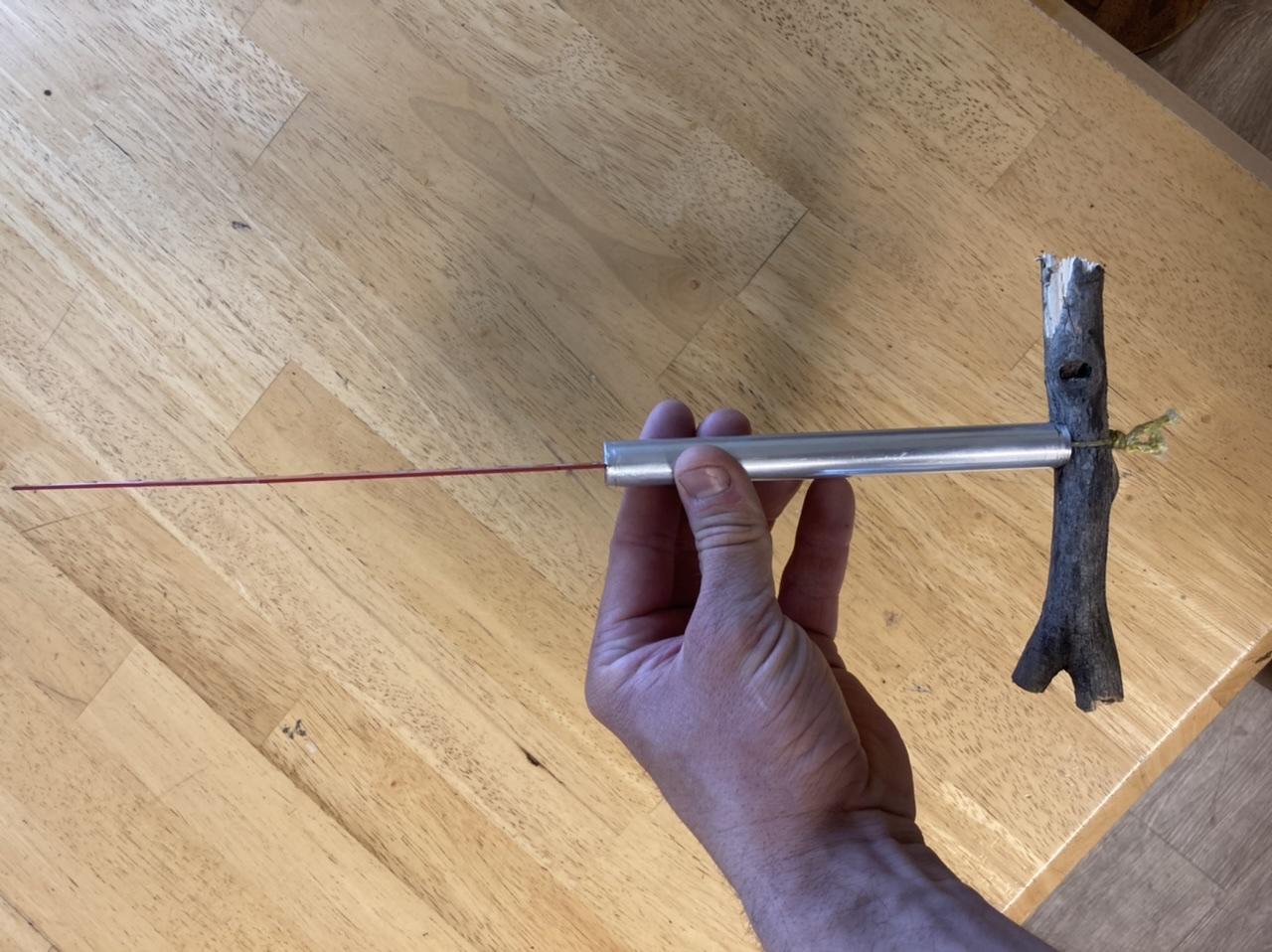
4. the thinner shorter tube handle is ok and can work but is a safety hazard and tires the hand faster – I prefer the large one for grip and safety – and a larger diameter works better with the toggle system for tensioning the blade. I will stick with the larger longer ones.
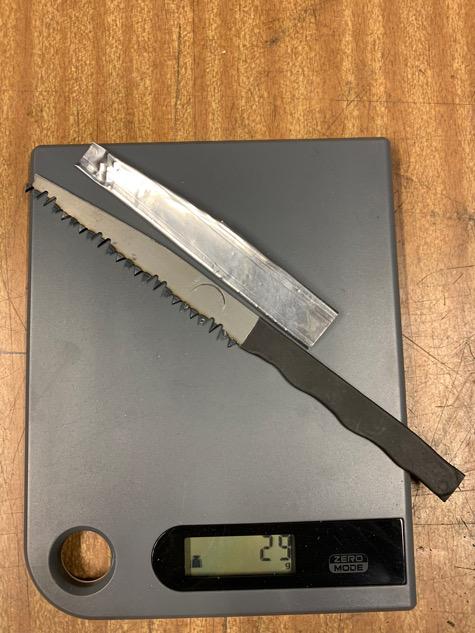
5. the fixed blade saw ala theultralighthiker design is very hard on the hand with just tape or heat shrink tube and needs a grip added, plus I feel very unsafe using it as I could slip down onto the teeth if tired and forgot – the saw teeth are just too deadly, and the handle is just too short (and can’t be longer or you lose blade saw length) – you need about another inch between top finger and the saw teeth (or a guard) – I just don’t like having to constantly be so careful to avoid a catastrophic hand injury out in the bush for the sake of the weight out a mouthful of water. The teeth on this saw are deadly also. I won’t be using this one for real either.
so – I WILL be using the heavier gauge Diablo blades with larger diameter longer Al tube or original carbon knifepoint handles and heavy duty pins for real everyday use, but with the finer tpi red Diablo blades which still cut just fine and don’t have the deadly sharp teeth (general purpose and wood, 6/9tpi) – these finer blades are also easier on my older joints. I will limit using the pruning teeth blades to a full length bowsaw (also in the car along with the axe, for when the chainsaw runs out of petrol or jams). Not for backpack fishing.
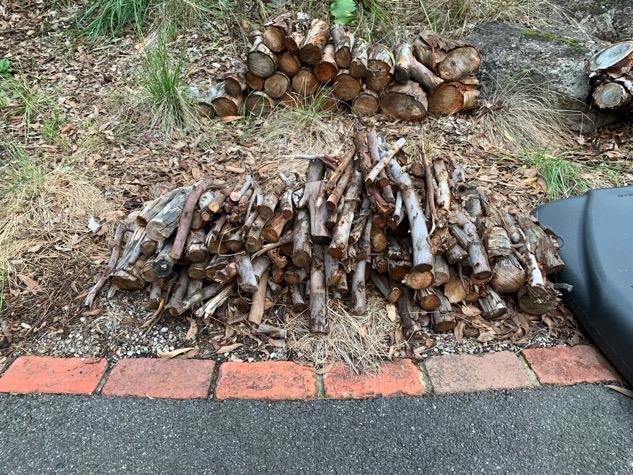
Here’s an example of a small pile of wood that I cut while it was green (tree came down in a storm, used a chainsaw for the trunk – not show- and used these tensioning saws with the 6” and 9” red 6/9tpi blades one morning about 6 weeks ago – it gave me a couple hours of saw time in controlled conditions to test and prove out the original designs so I know I can rely on them (and they are safer when you get tired when cutting the stuff the thickness of your wrist ): </p>
</p>






 Thanks david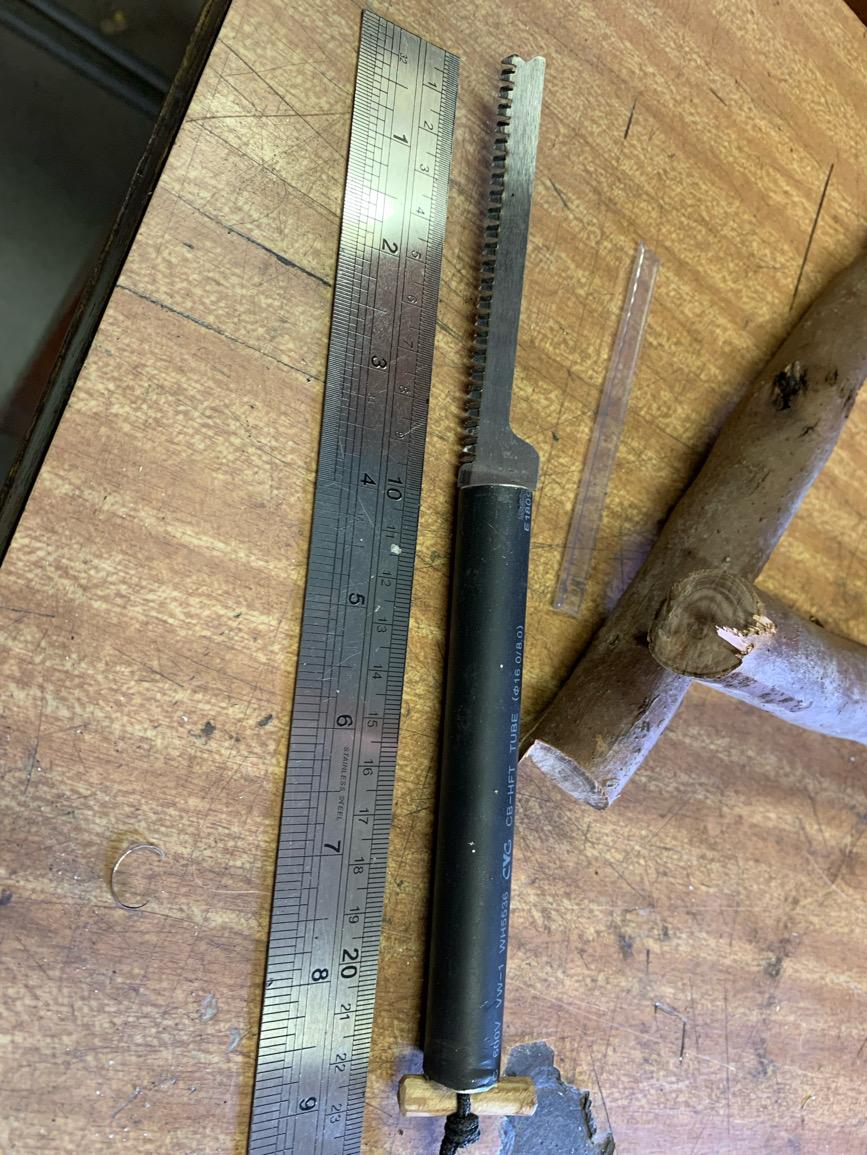
 </p>
</p>