“Aerogel” that’s flexible enough to roll up is a mashup of traditional polyester insulation and aerogel particles – not pure, rigid, brittle aerogel. But a few weeks ago I got curious and ran some numbers for an MYOG “aerogel” sleeping pad.
Bottom line: “aerogel” is crazy expensive, ~$1,000 for a full-length, wide, R-5 sleeping pad (my goal), and not significantly better for backpacking than existing options.
Threw away the numbers, so here’s what I recall:
– An R-5 sleeping pad made with “aerogel” would be less than an inch thick, and might roll into a nice tight bundle.
– But you are sleeping on what’s mostly an added layer of polyester insulation – not very cushy for many camps.
– Surprise! It would weigh about the same as a lightweight R-5 sleeping pad.
– Traditional R-values are a weird unit: degree Fahrenheit square-foot hour per BTU. Most “aerogel” makers report thermal resistance in other units that are a PITA to convert to traditional R-values. I covered several sheets of paper trying to figure out how to get from A to B. Wolfram Alpha helped some, but not enough,
For lightweight backpackers, aerogel seems to be a product of the future – the far future.
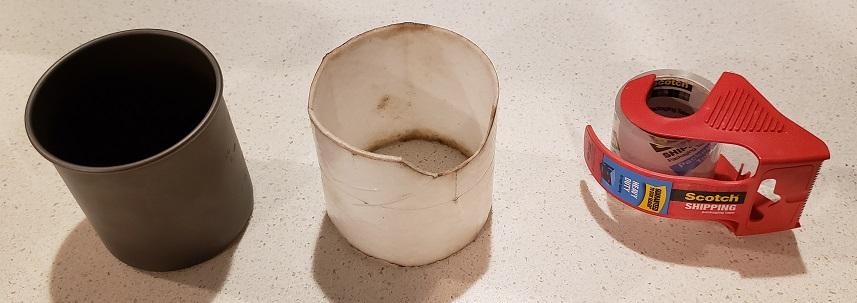
Except maybe pot and mug cozies.
— Rex