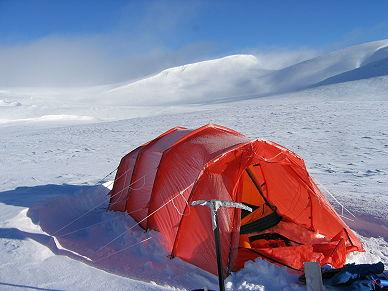
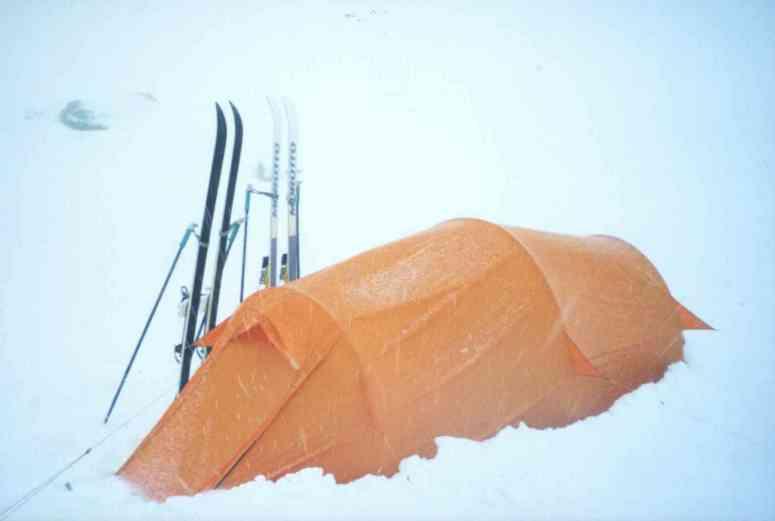
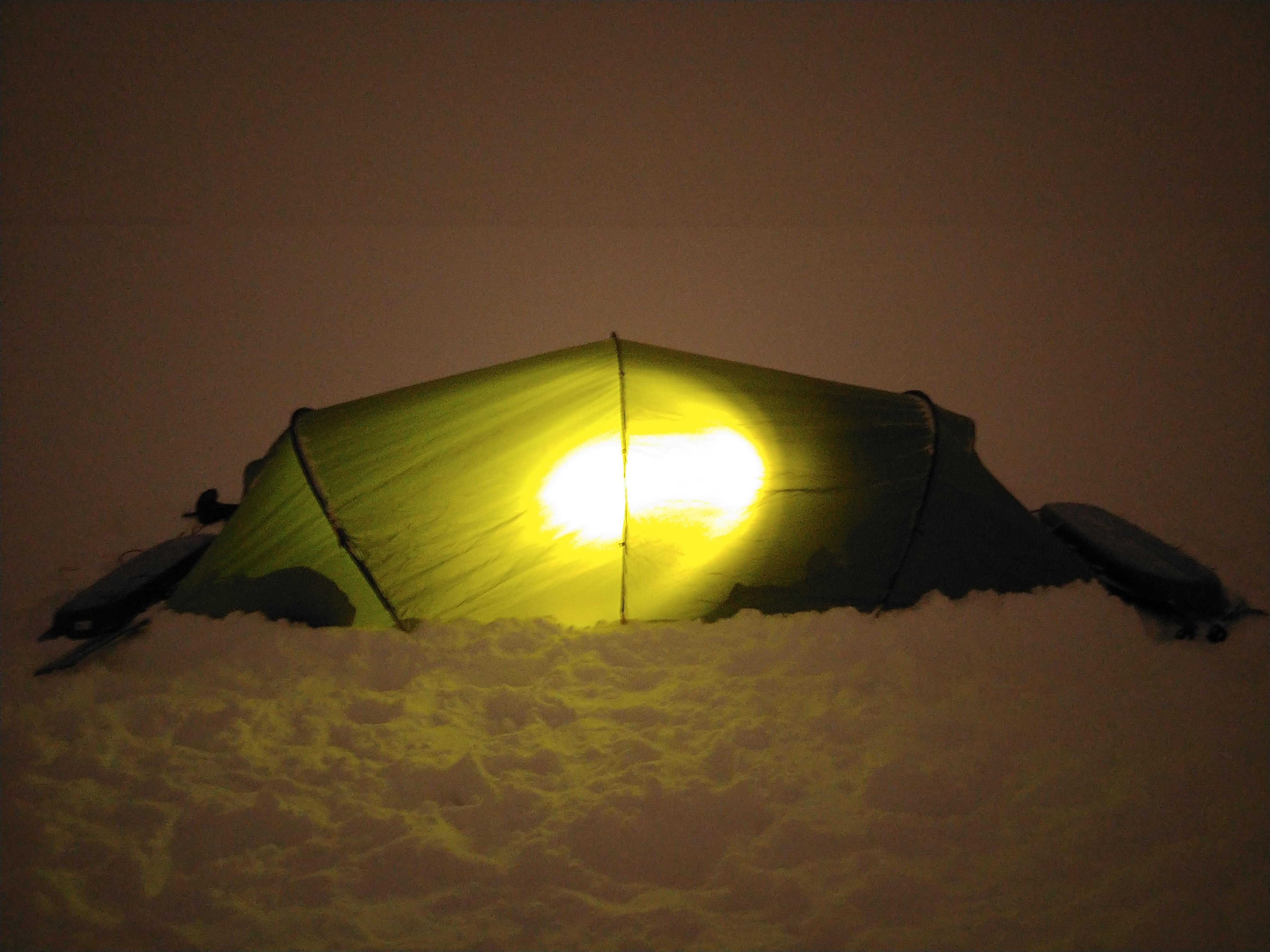
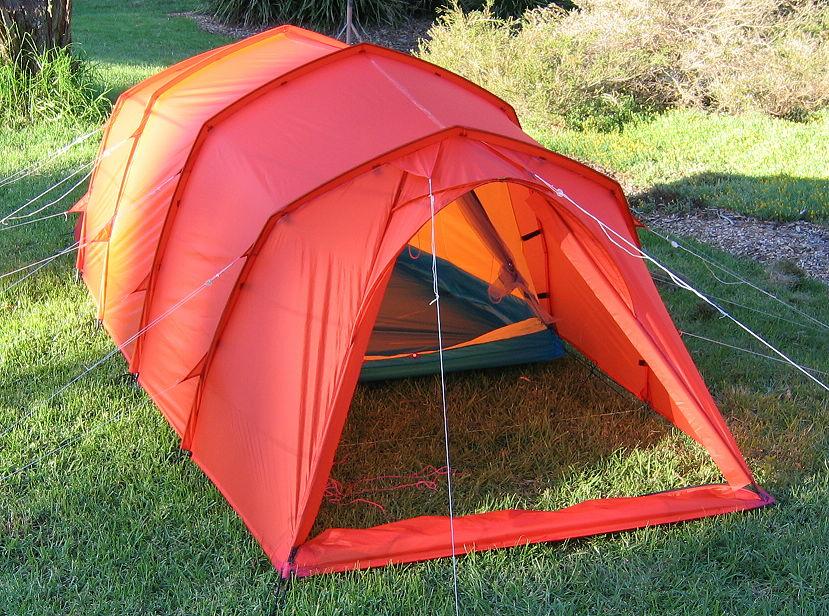
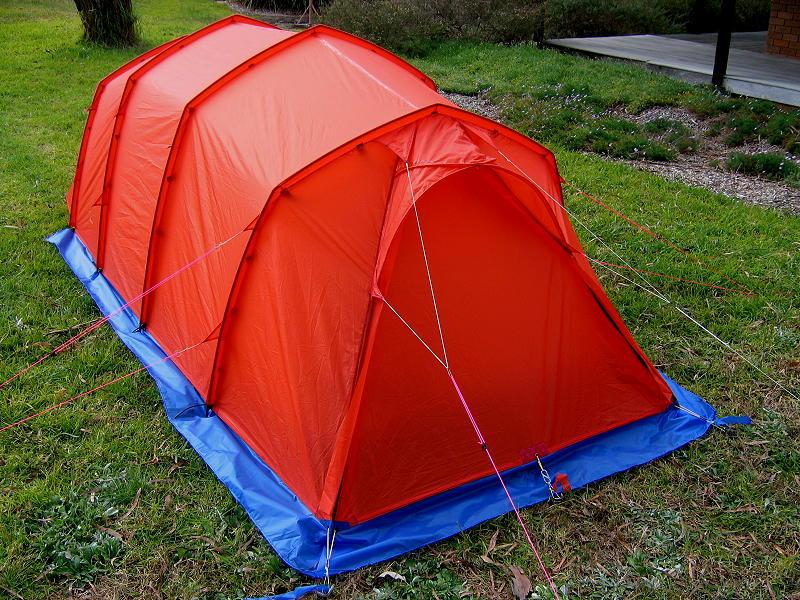
Both sides of a tunnel tent are much closer to vertical than horizontal as the walls get closer to the ground. Even when the tent is pitched with the rear facing the wind, and even with lower wind velocities closer to the ground, in a severe storm winds can be unpredictable and can vary in terms of strength, direction and distance from the ground.
The lightest and also most effective way to address the vulnerability this creates is the one Roger is already using, and that is with side guylines from the poles to the ground. With external pole sleeves, guys are anchored at the base of the sleeves, as is the case with Roger’s tunnels as I understand it. Also, in severe winds it may be necessary to anchor guylines to the front and rear of the tent, one typical method being to string the guys in an A shape, allowing room to get in and out at the front and rear of the tunnel. Roger has a nice photo of a tunnel anchored in this fashion.
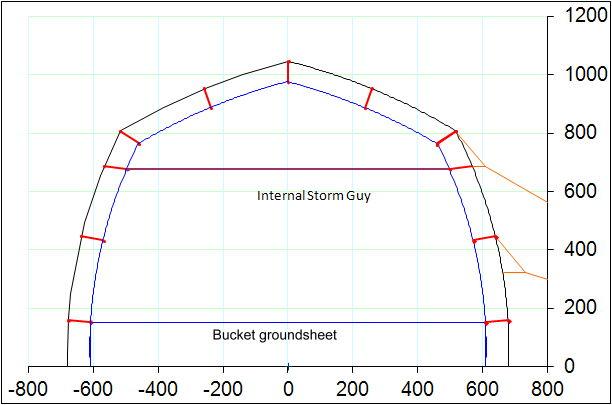
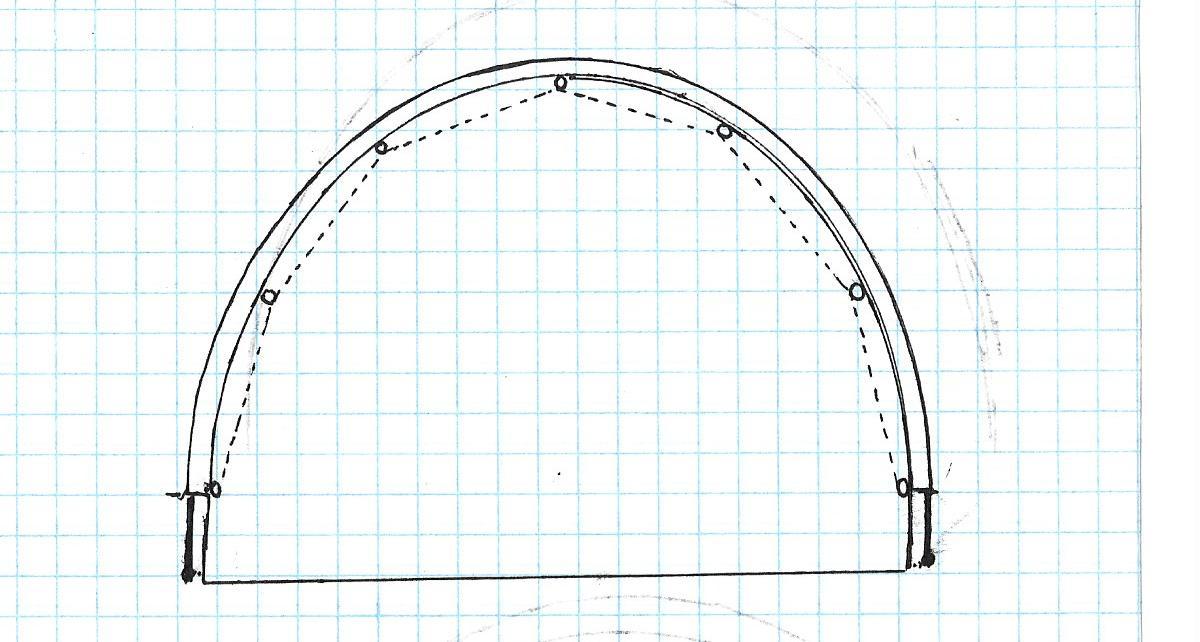
There are also various ways to string internal guys, used for example in the Warmlite tents for many years. I understand this can be very effective; however, it also impedes movement inside the tent, and IMO, side-guys that are well anchored on the outside of the tent, at both the stake and the pole ends, make more sense. If you are going to reduce space with internal guys, why not just change the arc of the poles into a gothic arch with an elbow at the top that will make for a pole that is stronger than a hoop. This reduces space inside, but for me anyway, is not so irritating as internal guys.
A concern with tunnels is that the sidewalls present closer to vertical faces to the wind than some other designs. A truly aerodynamic shape would present more sloping faces in as many directions as possible. The trick is to accomplish this without creating a lot of wasted tent space sloping close to the ground, and resulting extra weight.
Also, any tent, tunnel or otherwise, should be constructed so that it pitches and maintains walls that remain taut, in order to prevent flapping fabric that increases the likelihood of stress damage, and also to limit balooning if wind blows into the canopy, as can happen with tarps and even some tents that do not come all the way to the ground. I once visited a New Balance outlet north of Sebago Lake in Maine, USA, where they were having a tent sale, and a huge tent had been erected. But they had neglected to place walls on the sides of the tent, and it was ballooning so badly in heavy winds that it looked like it was going to take off and fly at any moment. A very dangerous situation with such a large tent made of heavy canvas and supported by heavy timbers.
These comments may sound like some pretense to an engineering background, but not so. These are just observations derived from observing tents over the years, with a bit of common sense added.