Topic

A question for the old timers… about drinking in the woods

Viewing 6 posts - 26 through 31 (of 31 total)
Terran BPL Member
PostedSep 11, 2026 at 7:44 am

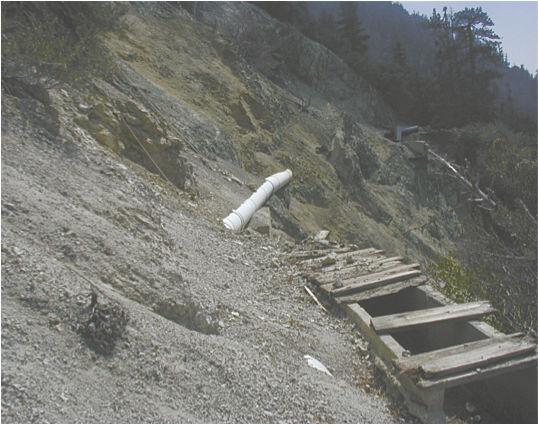
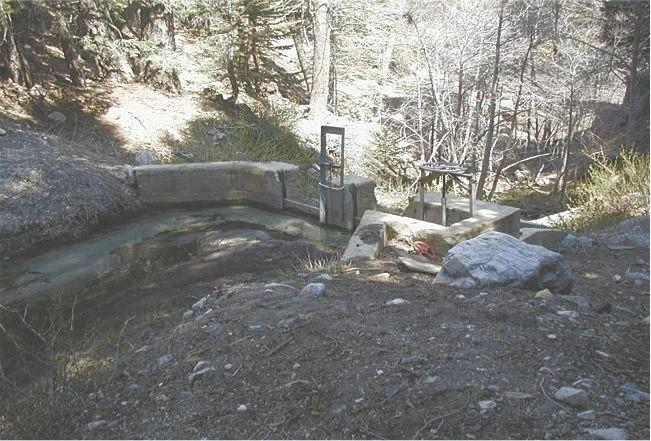
The flume above Banning, California, coming down from the East fork of Whitewater. Secluded. Built in 1909. Signed by the “Zoo Crew”.  Fourteen miles long. Rock and concrete covered with planks. A boardwalk thru the woods. If you need water, it’s flowing under your feet. Even some small trout. I believe the Eastfork diversion dam has been abandoned since then, letting the water flow.

Local history…Yes. There is or was trout in Whitewater. Planted by a guy named Kitching (Kitching Peak PCT) by horseback in the 30’s.

The picture is actually the Southfork dam that diverts water into Eastfork. I believe they’ve both been abandoned now.
https://backpackinglight.com/wp-content/uploads/hm_bbpui/3856548/ts8jsnsoorsbfgigq5yrq4bjy17hd27m.jpg

AK Granola BPL Member
PostedSep 11, 2026 at 9:11 am

That little shed is almost like a cartoon still! All you need is Wile coyote! Did you look inside?

Kevin Babione BPL Member
PostedSep 13, 2026 at 5:46 am

There’s a padlock on it – I couldn’t find a photo, but it looks like it’s been there since the shed was built.

Kevin Babione BPL Member
PostedSep 14, 2026 at 1:28 pm

No – corrugated metal.  It’s in an area that was basically clearcut at the end of the 1800’s – early 1900’s.  I think they used dynamite for clearing and leveling some of the railroad grades.  Basically, the lumber companies cut down ALL trees and then gave the land to the state for them to reforest it.

Terran BPL Member
PostedSep 14, 2026 at 7:55 pm

No, historical tin-sided dynamite sheds were purposely unreinforced. While it may seem counterintuitive to house highly volatile explosives in a flimsy, unreinforced structure, this design was a deliberate and widespread engineering safety choice in late 19th and early 20th-century mining, quarrying, and railroad construction. [1, 2]

The “Weak Roof and Walls” Safety Strategy
The guiding safety principle for storing explosives like dynamite in lightweight sheds was blast directionality and debris mitigation.
Preventing Shrapnel: If dynamite was stored inside a heavily reinforced concrete or thick stone building, an accidental explosion would transform the building itself into massive, lethal projectiles. The heavy stone or concrete chunks would act like shrapnel, flattening surrounding worksites and killing workers hundreds of yards away. A tin-sided or corrugated iron shed, by contrast, would simply shred into lightweight, less lethal foil or vent outward with minimal heavy debris. [1]
Directing the Blast Upward: These sheds typically featured flimsy tin sides and an equally thin roof. In the event of an accidental detonation, the energy took the path of least resistance, blowing straight upward into the sky rather than outward into adjacent structures or workers. [1]
The Role of Earth Berms: Instead of reinforcing the building itself, safety engineers reinforced the surrounding environment. Unreinforced tin dynamite shacks were almost always built inside a depression or surrounded by massive horseshoe-shaped earth banks or blast berms. If the shed blew up, the unreinforced tin allowed the blast to escape instantly, and the surrounding dirt walls deflected the shockwave upward and away from the mine or camp. [1, 2]

Viewing 6 posts - 26 through 31 (of 31 total)
Loading...