Hi Guys,
Thanks for such thorough feedback, lots of valuable contributions! Some responses…
“Can anyone here name a trailhead in the Western United States that could be accessed by public transportation where this scooter could actually be useful?”
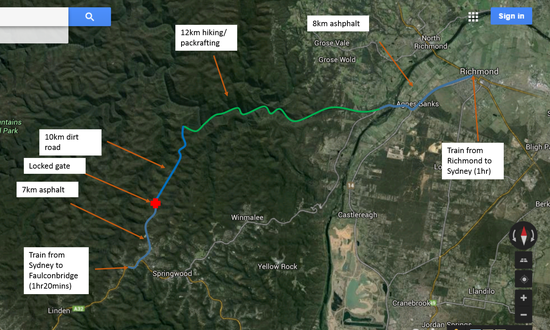
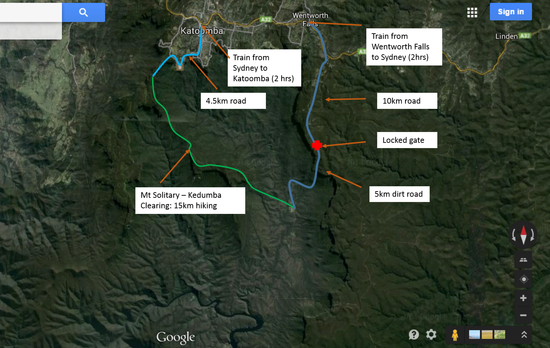
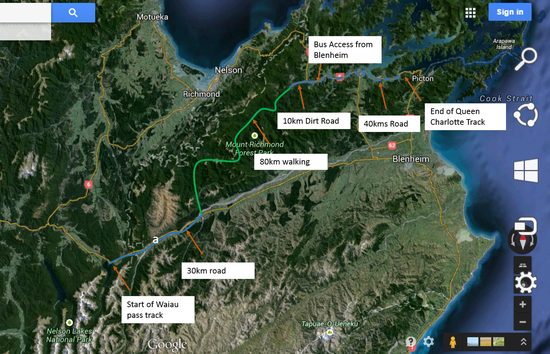
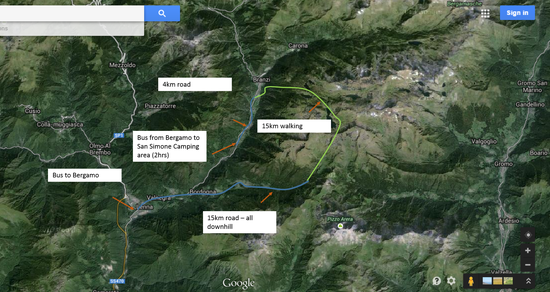
This is good to know. I have unfortunately never been to the US (hoping to go this June!), but below are some maps of trips in OZ, NZ and Italy where I would have found it useful (all images courtesy of Google Maps). I would have also found it really useful on tracks like the Great North Walk and Bicential Trail which cut between dirt access roads and hiking trails.


“I can buy a car with gas for $800”
It is true, at the moment this device is expensive. I am doing what I can to reduce the price within a reasonable weight range but whilst starting out with low volumes this will be difficult. It is also targeted at a fairly small range of people, those who probably already own packrafts, paragliders, mountainbikes etc.
Finally, cars and fuel are very expensive in many parts of the world and are also carbon intensive, so where there is a reliable bus/ train network, this thing would save a good deal of money/ CO2 emissions.
“What is weight rating are you thinking of”
Preliminarily at 120kgs – giving an average large man (90kg), 30kgs of extra luggage. I could potentially make both lighter and heavier versions though.
“Is the deck larger than a razor scooter”
Yes, wider and longer.
"Roads End back to the valley would be an adrenalin filled ride”
That is the idea! To make road bashes accessible and fun, in the same way packrafts made river crossings and floats accessible and fun.
“How much experimenting and miles/kilometers have you put on this?"
The earlier prototypes were pretty crude beasts and they worked fine in the city and on dirt trails, but were fairly bulky and heavy. They worked fine, but certainly weren’t elegant. Once this prototype (the first to utilize CAD) is finished I will be out as much as possible!
“How far would you travel on one of these?”
My normal road bash (walking) is between 10 – 30km, with an average around 15km. I reckon 30km would be fine (This was a section of a thru hike), but I assume, most would be in the 10 – 20km range?
“Would a scooter be practical for any of these? No. Take a bike and lock it to a tree when you get to the trailhead”
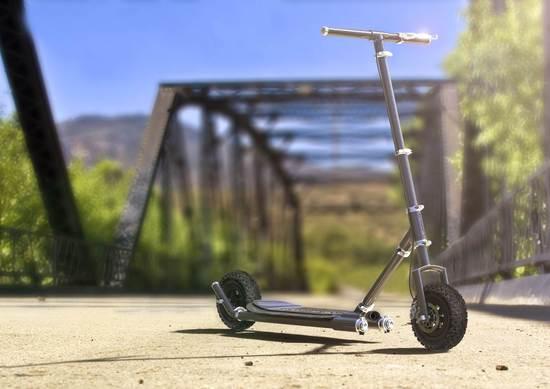
Bikes are great; fast, fun and all terrain. Their problem however is that they are heavy and bulky. Transporting a bicycle on many public transport systems (e.g. public buses), is often very difficult, while a scooter can break apart and easily be stored in an overhead luggage compartment (or a small bag). Locking your bicycle to a tree also locks you to coming out of that same exit for the return trip.
There are a bunch of really exciting outdoors trips where you can enter via one entrance and then hike or packraft some distance before popping out of another exit on a different transport line (see pics for some ideas). Alternatively, it can be useful for connecting trails on longer tips.
“Would the other tools be practical? Not for me… I also couldn’t justify the price… I could get a new tent and lighter sleeping bag and have some money left over”
This is good feedback. Which tools would be useful? Just the hiking poles? Seat?
My original idea was to bundle enough products together that is became a fairly affordable package.
E.g.
Full carbon WW paddle = $500+
Carbon tripod = $200+
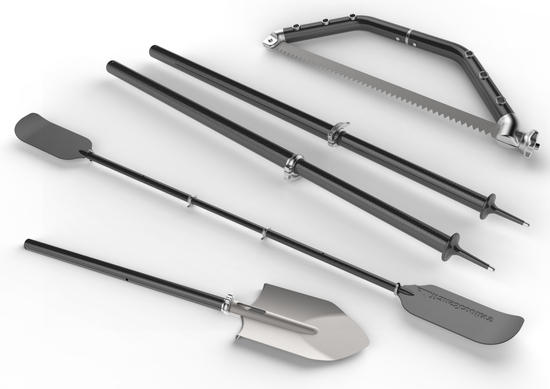
Carbon hiking poles = $100+
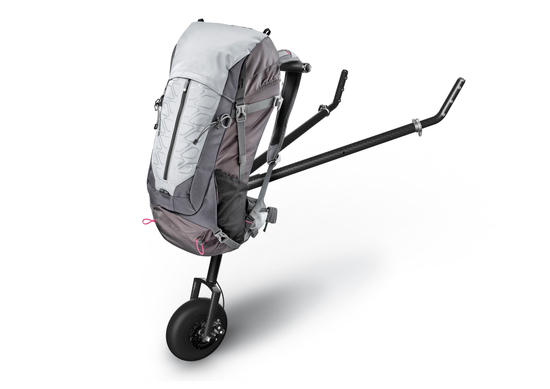
Carbon hiking trolley = $500+
If however you will never use these items, the value will not be there. I can see that in its current form this scooter is only likely to appeal to a small subset of people, maybe 0.1%, of hikers but if I can find 50 or 100 people globally it may be worth doing an initial run (and I can modify them from there). For example if you are an adventurer with 3 tents and 3 sleeping bags, you may be looking for some new equipment.
“It doesn’t seem like a scooter is all that efficient. But it is more convenient to transport than a bike?"
Exactly right. Not as efficient, but far easier to transport and far lighter to carry. Two ideas for the future are also adding some pedals and an electric motor, but these (especially the second option are still a way off).
“I would rather pay for a folding bike than a scooter”
Hmm, more good feedback. Would anyone be keen on a seatless bicycle? The lightest folding bicycle I could find on the market was far far heavier than 3 pounds and would be difficult to lug with you on long trips.
“blog it. Who knows? Maybe even a kickstarter once you have more data”
Exactly! The next stage of the plan is to produce 10 – 20 and send them out to testers around the world to see how well they work in different environments. If this goes well, I will feed the changes into a final production model. Just while the idea is new and the design is easily changed I am getting as much feedback as possible from potential users (you guys)
“If you come up with a scooter that can handle prolonged, somewhat rough trail use yet remain light enough to carry for long stretches, I think you might find a market. People are only willing to pay and carry so much for simple convenience, but they'll pay a lot more to try a totally new sport”
This is exactly what I am going for. There is no chance I can ever compete on price with mass produced metal razor scooters, however the idea is, that this will be able to cop much more of a beating, open up new adventures and be light enough to carry in a bag.
“down hills without brakes.”
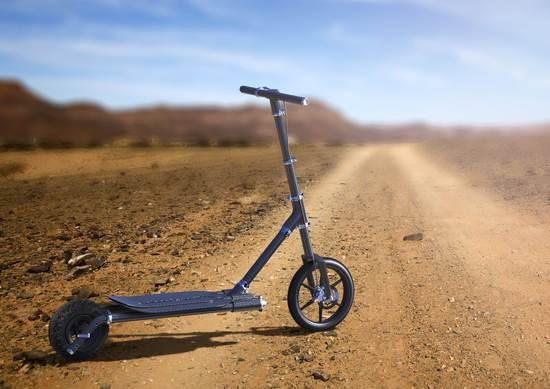
The current model will have front disc brakes and a rear pressure brake. The idea behind the disc brakes being that you can run a bunch of different sized wheels on the same fork.
“Uphill is really hard work”
This is one of the big downers of a scooter. Generally on uphills I jump off, put my bag on the front and push it up, which at least saves me carrying the bag, but is not ideal.
“variable height footpad”
This one can run a bunch of wheel heights, by utilizing dropouts (which connect the rear wheel to the frame), which both have multiple mounting positions and which can rotate. This allows you to quickly spin them round and raise the deck height substantially when you need a lot of clearance.
“your audience will be very small, and the prices you quote will significantly reduce even that audience”
Indeed, I am thinking the same thing for the first ones at least. The idea is to start small and hopefully keep on adjusting the idea until there is a larger audience. Maybe try and make an ultralight bike or electric scooter instead?
“We have shared it on http://www.planetpackraft.com”
Thanks Ivan!!
“I wonder if there could be a pole(s) created that could be used as a paddle for packrafting, a pole for trekking, tent pole to keep your shelter up, frame for your pack”
All of these (minus the pack frame) are already part of the scooter I am going to publish the designs so you can make/ 3d print more connectors, but other tool suggestions could be: fishing rod, bow, trail maintenance tools and ski scooter.
Thanks again for all the contributions. Keep them coming!
Jeremy.