Topic

How many ponchos to make a quilt top?

  • This topic is empty.
Viewing 16 posts - 26 through 41 (of 41 total)
PostedJan 9, 2015 at 10:57 am

Justin, no thanks on the bet, I think it’d be silly for either of us to lose money over this discussion.

Nick, I got your PM, I’ll send the tyvek out today. It’s probably not originally what you are looking for since it’s much less breathable (and probably more water resistant) than Propore, but it’s easy to work with and making your own stuff is fun. I made a bivy ouf of 1443R a few years ago and got some good use out of it.

PostedJan 9, 2015 at 3:00 pm

Justin,

I've worked as a … for the last 10 or so years at … and I spend a considerable amount of my time at work dealing with thin film coatings. So I agree with your comment completely: "I find it amusing when people speak with such strong conviction about something they have no experience with…"

Edited to delete personal info.

PostedJan 9, 2015 at 10:22 pm

Justin,

In this thread I posted a theory about the nature of the fabric coating you've done in your garage. Instead of disputing my assertions with a different theory that explains my mistakes, you have called me presupposing, disingenuous, arrogant and said that I have no experience. I originally posed the statement to you because reading some of your posts made me think that you have a lack of fundamental understanding of fabric coatings. Your lack of a scientific response, and instead use of ad hominem attacks, makes me think that my original assessment of your understanding as a naive dilettante was correct. Quite frankly instead of deciding to talk fabric tech you decided to be a jerk. I have no time to suffer fools.

I'm out of this discussion. Have a good weekend.

Edited for iPad typing.

PostedJan 10, 2015 at 5:07 am

If the Maxima has an air porosity of 1.21 CFM when new, I'm amazed you can suck air through it when new, let alone after adding a coat of silicone; my experience with windshells with a comparable "breathability" is that it's almost impossible to get air through them.

Aaron Sorensen BPL Member
PostedJan 11, 2015 at 10:52 am

I used to live in the SF bay area and made a down quilt for sleeping out in foggy conditions.

Made with M90 in and out but with no sew seams on top.
The seams were sewn to a layer of primaloft 1.8oz scrim that doubled as the top layer for the down baffles.
Inside is 9 ounces of 800 fill.

The quilt works perfect for bay area conditions.
Good and cozy down to 35* and the fog never got into the down.
The scrim added about 7-9 degrees of warmth over a standard 9oz fill quilt but also added 7oz to the weight.
Not too bad for how good it worked in wet conditions.

As far as a layer of heat sheet goes, many of the sleeping bag type heat sheets are much tougher than the thin ones.
I would still go the better quilt route any day.

PostedJan 14, 2015 at 5:16 pm

Wow-

This discussion really was derailed.

I like Dave O's suggestion to sew on ties to fasten the poncho over the existing quilt, since the ponchos are already ordered.

My thought would be to use some of Dutch's Argon or Thru-hiker's Momentum as a top layer if a new quilt were to be made. We are professed light weight if not ultra light weight enthusiasts, after all.

My own solution to making much of my gear water resistant if not water proof is Atsko's Water Guard. I tested if for BGT years ago and swear by the stuff.

Good Luck, All!

Richard Nisley BPL Member
PostedFeb 1, 2015 at 2:17 pm

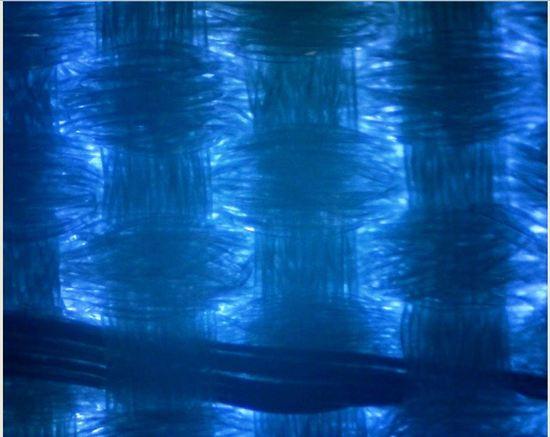
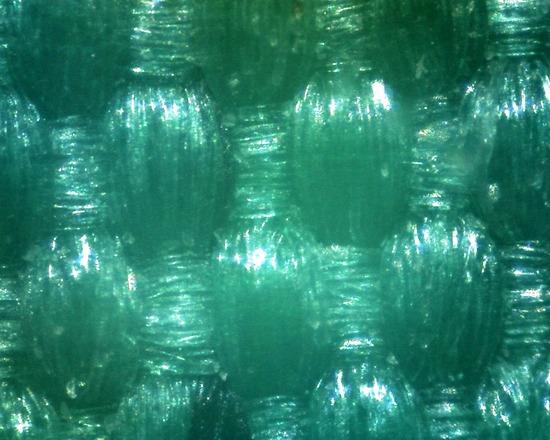
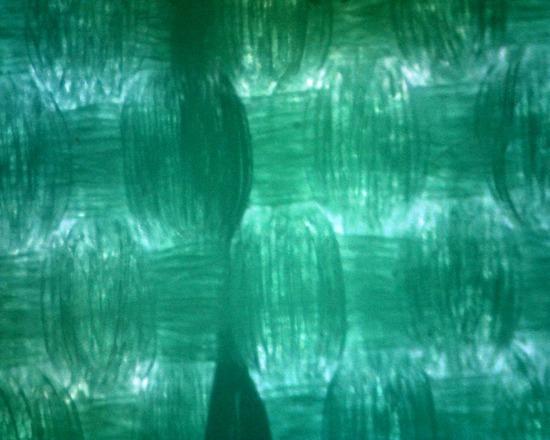
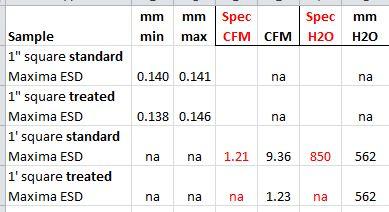
Justin Whitson sent me two sample sets of Maxima ESD to test. One of each was standard and the other was treated with a silicone solution by him.

Results Table:

1

Untreated Maxima ESD at 1.5 mm FOV:

2

Treated Maxima ESD at 1.5 mm FOV (top lit and bottom lit:

a

b

As Justin stated, his coating maintained air permeability in the coated fabric. Unfortunately a relatively low water pressure broke through the coating.

There was a good DWR on the untreated fabric. Another possibility is that the .005 mm coating he added didn't bond well to the DWR.

PostedFeb 1, 2015 at 6:16 pm

Thank you, Richard.

The two micro graphs look identical to me – did you perhaps post the same image twice by accident?

PostedFeb 2, 2015 at 1:29 pm

Thank you for doing the work Richard. I didn't realize that the Maxima ESD fabric had any kind of DWR on it (neither DIY gear supply, nor other sites mention it having same), so i didn't ever try to wash it out to begin with. Before treating other fabrics, like 1.1 oz nylon that i knew was DWR treated, i put it through a couple of special washes to make sure there was no DWR before i silicone treated it.

Seems like the silicone didn't bond well because of the pre-existing DWR.

Thanks again

Viewing 16 posts - 26 through 41 (of 41 total)
Loading...