I need a stuff sack the size of a 13 oz coffee can, which incidentally is my pot and holds all my kitchen. How large a sack would you suppose that is? I did terrible in geometry so I am in no way trying to figure out the dimensions of a cylindrical object LOL.
Topic
Liter Question
Become a member to post in the forums.
- This topic is empty.
A liter of water weighs one kilogram
One kilogram weighs 35.3 oz
Not sure on the density of roasted coffee beans or grounds to plug in the numbers of d=m/v
Fill your coffee can with water, pour it into a measuring cup, and see how many fluid ozs you have. I suspect it's close to or a bit under a pint aka 16oz aka 1/2 liter-ish.
It will be close to a 1.5L but there is an easy way to do it because a liter fits inside many shapes…


do the same with the height, leave some slack.
Now match those measurements with the given linear size of existing bags.
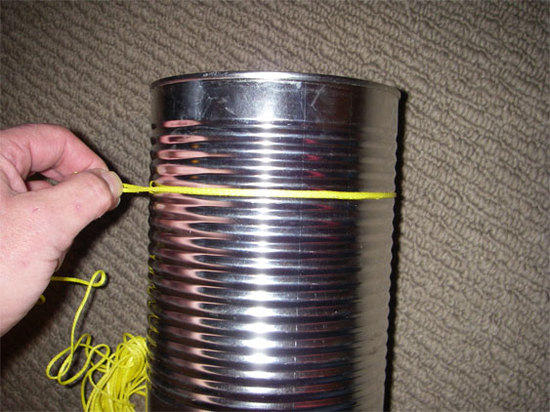
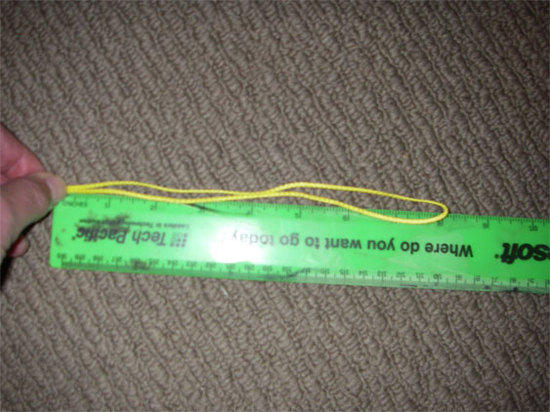
Possibly not all that obvious but the string is about 2" longer than the circumference.
That of course is to allow the pot to slide inside the sack without a fight.
And.. yes you need to pull the string taut against the ruler but I can't do that with one hand.
Um – do you want the volume, or how to make it?
For the latter, do what any experienced gear maker does: wrap the fabric around the pot and pin it and mark it.
Cheers
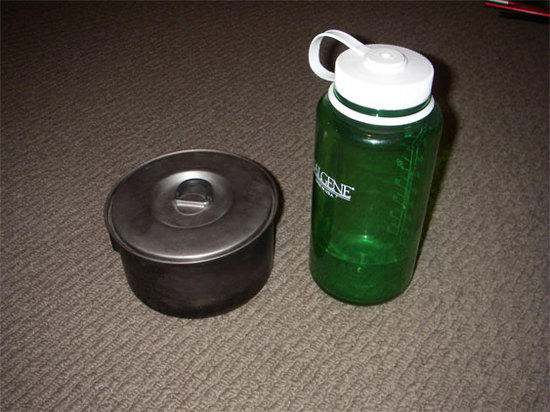
Just in case it is still not clear why thinking in liters does not work here, these two containers both hold 1 liter :

To get the volume I agree just fill with water then pour off into measuring cup. Or, measure the radius of the can (half the diameter), square it, multiply by pi (3.14…), then multiply by the height of the can. If you measure the can in inches then the resulting number is the cubic inch volume of the can, there are 61 cu in per liter.
Pouring water from your container into a liter container with indexed markings is the easiest way and ONLY precise way if your container is not a perfect cylinder. If you want to calculate the volume of a cylinder is 3.14159 x radius x radius x height. (include the radius twice). The radius can be measured by taking the width of the round part and dividing by 2. If you take your measurements in inches you will end up with cubic inches, and there are 61 cubic inches in a liter. If you make your measurements in centimeters there are 1000 cubic centimeters per liter. For REAL fun do it both way and compare your answers. Make your geometry teacher proud.
Never took geometry. Measure the height and width. Add a couple inches to the top so you can close it. That's what size you need.
Ken,
You sneaky devil. Making it simple!
This post reminds me of that ole joke…. How Many BPLers does it take to screw in a light bulb?
Didn't it come with a snap-on lid?
Wow, Franco — talk about "a picture is worth a thousand words"! Great visual illustration! :^D
Thanks Valerie but I see that pictures don't work well for some.
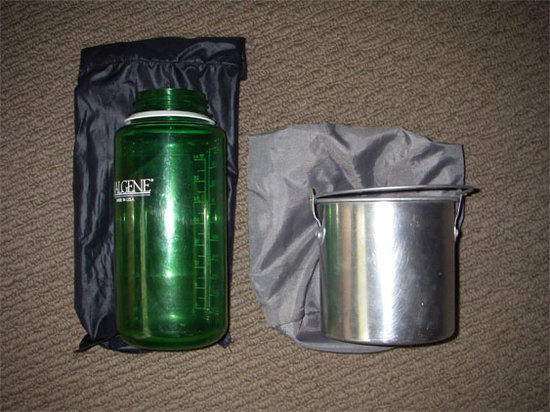
Read carefully the replies after my post and then look at this photo :

Both of those sacks are just wide enough to slide the "pot" in without a struggle .
I folded the top to show the needed extra fabric there.
Note that you need to allow for extra room at the bottom as well as the top because most sacks don't have a shaped round base (like the grey one has)
Become a member to post in the forums.