


I’d switch to trail runners with a rubberized wrap around gator if you wanted a little more ankle support. At least switch boots.
Topic
Become a member to post in the forums.
 .
.
I’d switch to trail runners with a rubberized wrap around gator if you wanted a little more ankle support. At least switch boots.
Thanks for the suggestions. I switched boots a couple times over the years & these are the only ones I can find local after a years of looking that are really large enough to not cause blisters or foot problems (with proper break in and time on a boot stretcher)
Even after months of training and physio, my ankles are too weak for trail runners after many breaks and tears over the years. I may try them with ankle braces next year though.
Following up on DWR’s suggestion, I looked into measures at the source beyond regular hygiene (clean and dry) and found some stuff that might be of general interest
At home:
On trail:
AK, I’m pretty sure its not fungus, I had athletes foot as a kid (fun!) and this isn’t nearly as bad (no rash, much kinder scent). Antibacterial would probably make athlete’s foot worse, killing bacteria lets fungus party.
I’ll try this a week before leaving, hopefully slaying the dragon!
PS Bill, thanks for the spray bottle link! Will try if I can find good powdered vinegar
I use diluted mouthwash for foot soak.
Listerine is anti-fungal, good option if that’s the problem. If its bacterial, could back fire
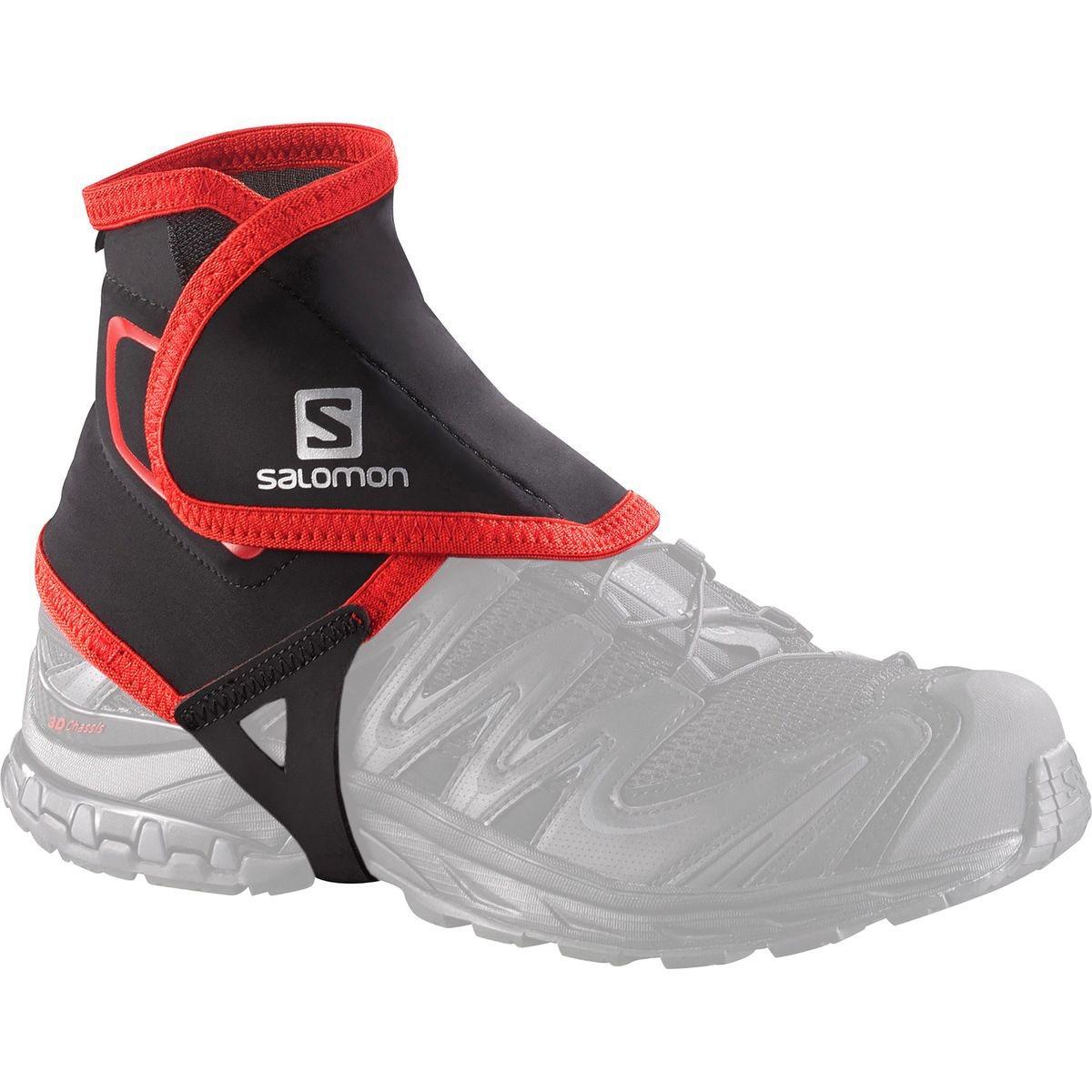
How supportive are those gaiters? Might convert me to runners just yet
Methyl salicylate (wintergreen oil) in some mouthwash softens dry skin and buildup under the nails.
While those gaiters are not sold for ankle support, as you see, they wrap the ankle. They’re a stretchy fabric with a Velcro closure. Similar to a wrist brace. They can attach to the front and back of the shoe and then it’s a pretty hefty strap underneath. More agile than a boot. Better support than high top tennis shoes.
Topo sells a pair that hooks into the back of their shoes. Topo shoes are also wider. There’s good prices on last years shoes.
‘I bought the Solomon gaiters when I switched to shoes. I was happy with them, but found that I didn’t need them.

Air drying prevents most clothing odors. One suggestion not yet mentioned is HotHands chemical heaters. Remove insole, open and shake heater packet, and drop in your boot. That should dry your boot even in humid weather.
If you re-seal a partially used heat pack (perhaps in a ziplock), then you may be able to re-use it. You will have to experiment to know how many to pack for your trip.

“Remove insole, open and shake heater packet, and drop in your boot. That should dry your boot even in humid weather.”
Or maybe raise the temp to optimum bacterial growth conditions :(
It seems to me that one or both are the source(s) of the problem:
* Some very stinky critters growing on your feet… and then colonizing your boots (maybe see a dermatologist or some other doc)
* Materials that make up your book are particularly great at growing them critters (sterilize them periodically or get a pair of boots or other footwear that is made with different materials)(I guess it’s possible the stinky critters came in your boots when they were new…)
Everyone keeps talking about breathable footwear being the answer… but… I can remember decades ago we wore full grain leather boots and they never dried out on any trip… and I never had bad stink in the and never treated them for such. But a few years ago I had a pair of boots with breathable panels (non-gortex) and the stunk so bad I could not put them inside my tent… I did treat them with alcohol as stated above and it took the stink away… but it came back… kept treating periodically, but the ultimate solution was to ditch those boots… they were just a great environment for growing stinky critters… I have less breathable boots that never came close to that stink… So… I’m not convinced that drying them out will be the solution….. my 2 cents :)))
Drying certainly works; using a boot dryer at home will kill most bacteria. Temperature doesn’t matter if they’re dead.
The question is whether it can be done on trail in difficult conditions? Drying is usually possible with most clothing; if not today then tomorrow when the Sun comes out. Just hang clothing on your pack rather than stuffing it.
Boots are more challenging, because we tend to put them on and leave them on most of the day. When conditions are humid enough to keep them damp all night, then it can be difficult to get them dried out at all. Breathable boots/shoes have an advantage in that they dry some while wearing them. Probably not completely dry, which may be required to kill the critters. David’s leather boots are no doubt excellent, but maybe not a cinch to keep dry.
I didn’t make up the Hothands idea on my own. I read it somewhere as a tip from a mountaineer. I do not have first-hand experience with the method.
Shrug… a lightweight experiment would be to take a pair of the heaters along on the upcoming trip. Try them after a few days to see how well they work. Also try re-using them. If success, then consider carrying more next time. If not then the cost to experiment was low.

Maybe to reduce foot odor, have drier socks
It takes a day or two to dry my boots out after a trip. Not possible to dry out during a trip – overnight is just ~12 hours when it’s cooler – very little drying. If I get the boot wet crossing a stream, it takes days to dry. They’ll dry some while I’m wearing them during the day, but mostly I think my socks absorb the water from the boots and then I can dry the socks. I have WPB mids which are harder to dry.
I think some of the micro organisms that cause odor will just go into a dormant state and re-awaken when the boot gets wet again. My boots don’t smell now, after they’re dried. They do stink some during a trip.
Sometimes I wear the same socks for a week. That is a definite no no for foot odor. I should wear a different pair of socks every day. If they’re just damp I’ll wear them in my sleeping bag and they dry out after a few hours. If they’re wet, I put on my other pair of socks and dry out the first pair over the next day.
One nice thing about hiking in the Sierra: I can rinse and wring out my socks/clothes and lay them out on a boulder in the sun. Sunlight is a disinfectant. Relative humidity tends to be low. Things dry out quick–within hours. So, one extra pair of socks alternating each day, or several days, and I'[m good. Boots are left in the vestibule. Again, low RH helps here.
But I tend to stop hiking around 4 pm, if not earlier, when there’s still lots of sun. For dedicated hikers who only stop to eat and sleep, this may not work.
Oh and I bring a pair of pool shoes for in camp, so my boots can cook a bit in the sun.

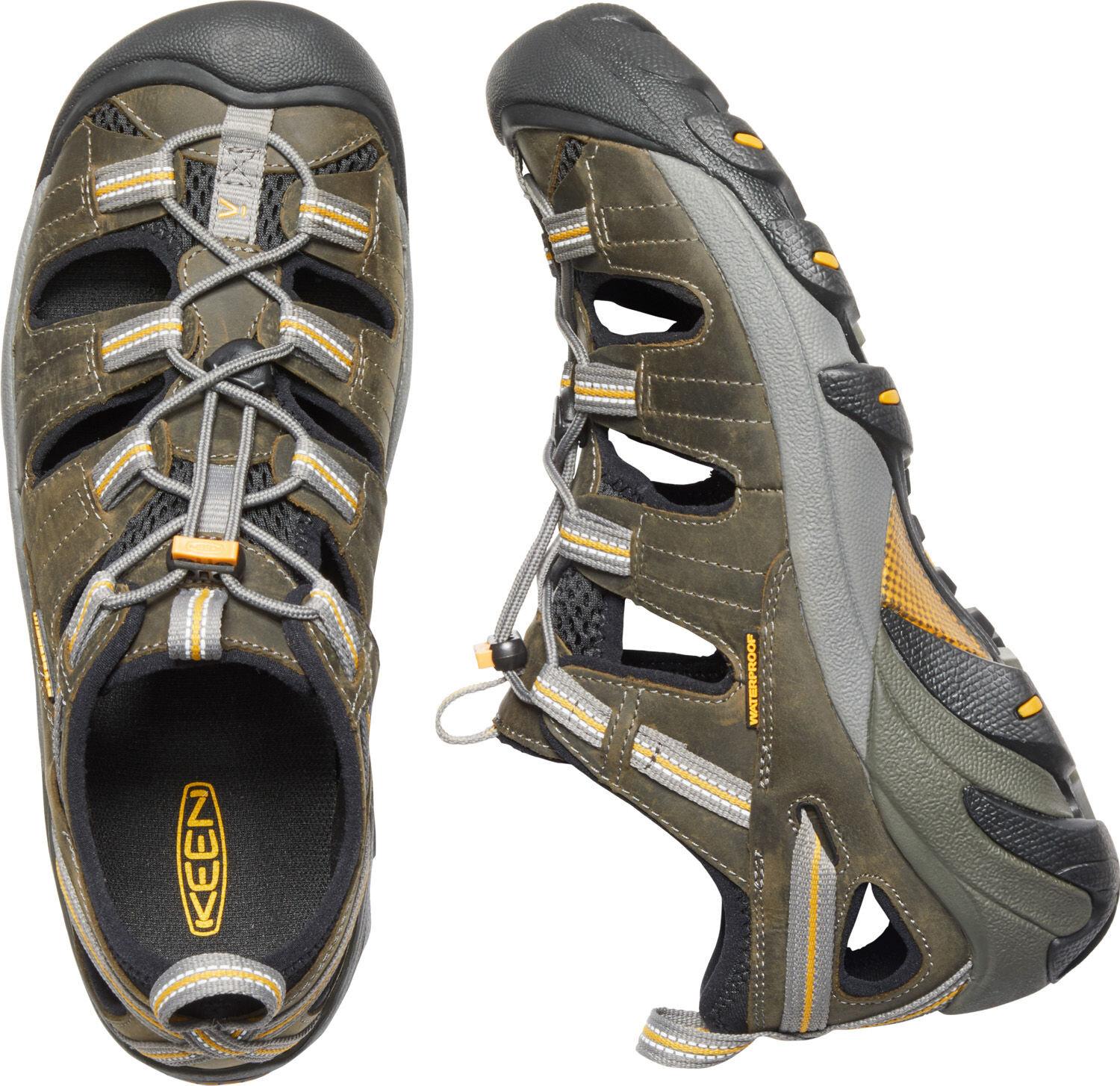
No problems whatsoever when I scrub my feet with a stiff brush a couple times a week and wear Birkenstock Arizona sandals year round at home. Away from home and especially on or off trail I wear Keen Arroyo IIs. They are super ventilated. Can’t stand closed in boots or shoes that have insufficient ventilation. Waterproof shoes and boots takes days to dry. So when it rains my feet are going to get wet but it’s easy to remove the 3030 pressure relief insoles and dry everything. Normally they stay very dry when wearing short socks. Zero blisters over the last ten years.
These don’t have rock plates but have the support l need with the pressure relief insoles over very rocky terrain. I’ll never use boots or shoes with insufficient ventilation ever again. Around camp or crossing streams I wear sandals that are pretty much light flip flops but with a strap system instead of a yoke. Healthy feet need to breathe. YMMV
this is definitely a case of different solutions work for different people
in the interest of just putting out all the information so people can make informed decisions:
I’ve done mesh shoes but dirt gets in through the mesh. I had one pair that had several ounces accumulated. I cut a slit in it and got most of the dirt out, then there were slits, but they were already mesh so added slits didn’t make that much difference. Still, I prefer leather.
with mesh shoes, if I walk through water that’s one inch deep, it will get in. Then, for the rest of the day it will be wet. They’ll probably dry pretty good by the next day, but then I’ll walk through 1 inch deep water again.
I use leather mids. I don’t lace the top row of laces, so from the point of view of ankle support, they’re like shoes. Fully laced mids are uncomfortable. I understand why this would make people not like mids because of this.
With the mids, I can walk through water 4 inches deep and not get wet. And it keeps dirt and rocks and sticks out. I also wear breathable gaiters.
I have WPB liners which do keep my feet drier from external water, but more damp from sweat. And it takes much longer to dry. Maybe next time I’ll just get plain leather mids without WPB liner. If treated they’re pretty good at keeping out external water. A mid 20th century solution.
and mids have stiffer soles. which is better stepping on sharp rocks. Not that they couldn’t make shoes with stiff soles or mids with soft soles, it’s just a convention
Jerry, if we had to do as many creek crossings as you I might be using your methods. Usually if the creeks are running high enough there might be a couple of crossings. Then I’ll just take the footwear off and cross barefoot. With poles it’s not too bad unless it’s snowmelt.
They do make shoes with rock plates but I find them harsh on the heel though many like them. A lot of this has to do with the terrain and geographical climate. I probably wouldn’t wear the super ventilated Keens in heavy snow or constant rains though they worked fine on a snow hike earlier this year. But they didn’t get very wet earlier this week in the rain which got my hat and shirt wet.
Our terrain here is what I’d call mostly rocky, predominantly wilderness suite granite and Oracle suite granite. I’ve used Italian Scarpa boots (among others) at one time but my heels didn’t like them nor did my knee tendons. Everyone has to decide what works for them at a given time.
yeah, same here, I sometimes cross barefoot if it’s deeper
I did some creek crossings recently wearing Keen Targhee III close toe sandal with bison wool socks. They didn’t seem to hold any water. Feet felt dry on the other side. I wear them in the snow around the house. I kind of wished they had a light rock plate.
It seems my crossings are always 5” deep.
s.
Girlfriend wears Keen Voyagers and those definitely have stiffer soles than my Arroyos.I don’t know how they stack up against the Targhees but I’ve heard good things about them.

There is a product called “On Your Toes” that you can buy on Amazon. You only have to apply it on your foot every couple months and it prevents foot odor 100%. I’ve been using it for years and my boots have zero smell.
Kris R, thanks for the suggestion but unfortunately not available in Canada (under $152(!)).
It uses zinc oxide which is antibacterial, but they don’t list the bactericide ingredient which makes me a bit nervous if it really lasts months. Gold Bond & Dr. Scholl antibacterial foot powders only last a day or so according to their instructions so I’d be less concerned if OYT listed that nuclear option ingredient
“but they don’t list the bactericide ingredient which makes me a bit nervous if it really lasts months.”
No kidding. And no thanks, without a lot more info.
Baking soda
Its effect is pretty mild, there are better options out there.
“Sodium bicarbonate (NaHCO3) does not have any direct antibacterial effect but it has a cleansing action by loosening debris …. It also increases the pH .. and prevents acidophilic bacteria overgrowth.”
David – They do say it’s FDA approved but I guess they are keeping the ingredient secret? Yea its a bit concerning not knowing what it contains but one thing is for sure it definitely works :) http://footodor.co.uk/pages/info.htm
You don’t need a fungicide. You mostly need to dry your boots.
Become a member to post in the forums.
 A Cult-Classic GMT Reimagined for Everyday WearInspired by the famously bezel-stripped Rolex GMT-Master worn by Marlon Brando in Apocalypse Now, the G2 Apocalypse turns a piece of 1970s film and watch history into a practical everyday GMT. Its restrained 39mm design pairs a Swiss Ronda quartz GMT movement with sapphire crystal, 150 meters of water resistance, strong BGW9 lume, and USA assembly. The result is an accurate, low-maintenance travel watch with a story collectors will immediately recognize.
 © Beartooth Media Group Inc.
 Loading...