


Can't yoiu 'see' better because one picture is with a 100 lumen bulb and the other is 140 lumens?
In this case, it appears the high CRI bulb is the 100 lumen one, so the "better" results are with the dimmer bulb.
Topic
Become a member to post in the forums.
Can't yoiu 'see' better because one picture is with a 100 lumen bulb and the other is 140 lumens?
In this case, it appears the high CRI bulb is the 100 lumen one, so the "better" results are with the dimmer bulb.

"It has become my goto light for climbing. Very lightweight for it's output and runtime."
+1 Wish I'd had one back in the day.
While I like a good headlight, sometimes the best light isn’t in a headlight format.
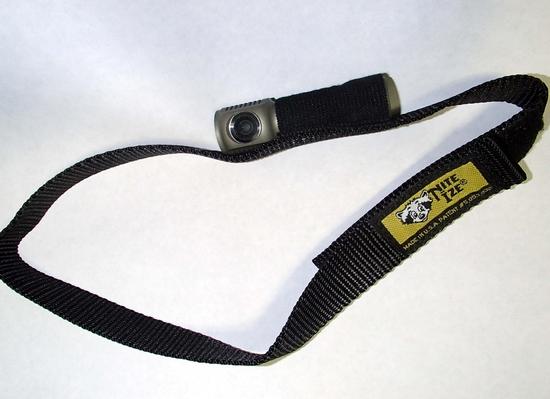
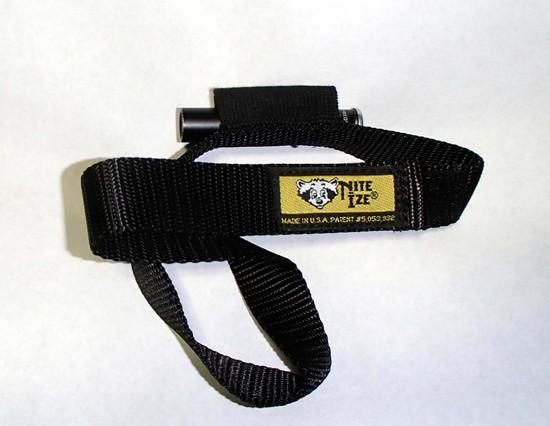
I picked up this headband a while back and it’s been quite good. The headband has a velcro closure to fit any size head and small elastic pockets that can hold most small handheld lights (up to about 3/4 inch diameter) which allows it to become a pretty decent headlight. It’s nice to be able to have a handheld and headlight option with the same light.
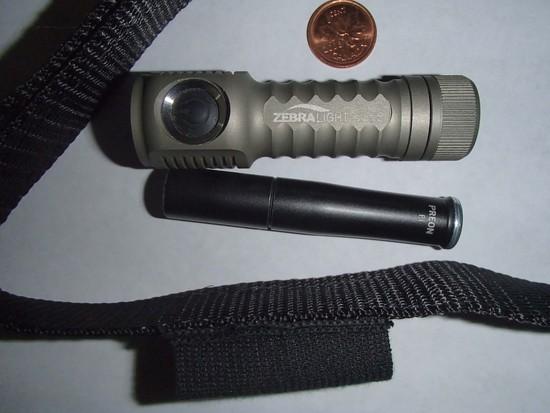
I throw the strap in my pack on trips (fishing trips mostly) when I carry a small handheld light but might occasionally need hands-free operation. The strap has two elastic flashlight loops, a larger diameter one sits on top of the smaller diameter loop. I can fit my Zebralight AA flashlight in the larger loop and my 4sevens Preon AAA light in the smaller loop. A do-it yourself project could make it much lighter but since it only cost me $4 (at MEC) and weighs 1 oz. it wasn’t worth the effort for me to do it myself.
I have an EOS and I have a Fenix HL30. I use the HL30 with sanyo enloops and the run time is pretty amazing, much much longer than the EOS with similar levels of output. The HL30 isn't super light but I also rarely carry an extra set of batteries since the run times are so solid.
Amazing, Longer, Solid….
Got any numbers?
Google is your friend.
http://www.candlepowerforums.com/vb/showthread.php?294901-Princeton-Tec-EOS-Review
http://www.candlepowerforums.com/vb/showthread.php?353158-Fenix-HL30-Review-(2xAA)
^ The Princeton is using outdated tech. Based on my findings, using sanyo enloops in both, the Fenix has significantly longer run times while at the same time having a brighter beam.
The one thing I like better about the Princeton is the screw to close the battery latch, other than that the fenix wins hands down. For the most part I use the medium setting which I find is plenty, the low setting is nice while trying to find something in a tent or read a map without being blinded.
If you're looking for super light there are better options but they will come with compromises as well. The Fenix is also fairly cheap.
I'm always looking for new lights though so I'll be checking this thread often.
This is known as "DavidT Carry" over at CPF. It's an alternate carry rig for a headlamp, specifically a Zebralight. It weighs 0.2 oz for the band, which is a flat boot lace, a Walgreen's elasticized Finger Sleeve, and a cordlock. With the (vintage) H50 light and no battery, this rig weighs 1.0 oz. Add a lithium AA and you're up to 1.6 oz total.
Dual usage, of course, on the lace, sleeve, and cordlock, if needed. (Lace can come in darned handy for a bow saw.)
If you wanted to get even more minimalist, you might be able to replace the finger sleeve with two o-rings, but I haven't tried it.
It can be used around the forehead like a traditional headlamp, but it's also very useful worn loosely around the neck, which is how I often carry this. And unlike the stock head band, you can easily wind it up and stick it in a pocket.
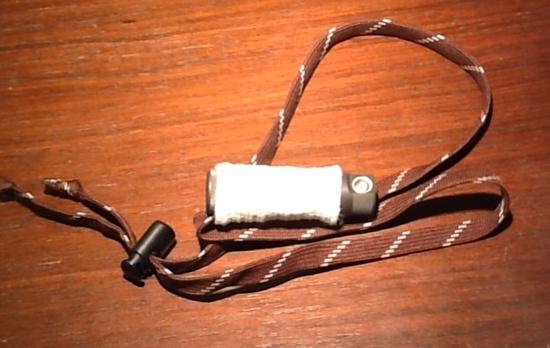
PS: Not sure Walgreen's carries the elasticized finger sleeves anymore. But Amazon does.
PPS: Those of you who are Zebra enthusiasts will certainly have a good joke at my old H50, Zebralight's first headlamp. The reason I keep it around is, I like the old style lock-out twisty switch, which is great for travel. You can't turn it on accidentally. I once turned on a H501 in my pocket by mistake and it got too hot to touch. The H502 has a recessed switch and is very unlikely to accidentally switch on, but the old H50 is foolproof. Sadly, the H50 beam is pre-w and pre-c, so it has that flat tint–which is OK for reading in a taxi cab, the main job of this travel setup. For backpacking, I switch out for an H501w or an H502c.
Good headlamps that use 2 batteries? I like to use rechargeable batteries most of the time and most head lamps that I know of use 3 or 1 battery which makes charging annoying.
Princeton Tec Byte is one.
Until recently parasitic drain was an issue, but supposedly it is fixed in the current version.
Thank you Greg.
For 2-cell AA headlamp, try the Spark SD-52. Even comes in neutral tint, and with interchangeable bezels for flood/spot switchover. Highly waterproofed.
that few people, (nobody?) has mentioned black diamond headlamps. having the most exposure to the things i work with at REI on a daily basis, i consider BD lamps to be the best lumens per $ and bang for the buck concerning features like; dimmable; lockable; red.
still my favorite light is the petzl e-lite. im so sorry REI stopped selling it.
Could anyone who has tried a few of the Zebralights comment on the differences, color wise, between the regular, the 'w'(hite), and the 'c' models.
I'm thinking H31 flood in this case.
TIA
-Mark in St. Louis
I own all three from zebralight. The difference between w and c is relatively subtle; the difference between w/c and regular cool white is very pronounced. If I'm working with a camera, I select the c for better color rendition. If I want a little more brightness, I select the w.* Both w and c work very well for viewing flora at night; the blue tint is just brighter overall. There are comparative photos taken with w and c at Candlepowerforums, if you dig through the archives.
If I were buying all over again, specifically for backpacking, I'd not consider the regular cool at all, and I'd be happy with either the w or the c. And I'd likely buy the H52fw (flood warm white), even though what I own now are the full-floods (the H50, H501, H502) because the H52fw would give me a little more throw if I needed to trail hike at night. The full floods excel at camp setup.
* Remember that it takes about 100% increase in lumens for one light to appear significantly brighter than another, because the eye sees light in a logarithmic or 2nd power relationship. You *might* be able to see a 20% difference in a side-by-side controlled test, but there's no reason to chase marginal increases in lumens. If one guy's light is 200 lumens and the other person's is 240, that's bordering on an indistinguishable difference, especially in the field. I generally don't upgrade until I see something 50% brighter, and even then, the difference is subtle.
Delmar,
From a March 2012 post over at CandlePowerForums on the Spark SD52 –
"Only thing I have not yet said here in my thread, is that I do find this light to be a bit finicky. In bolsters mini review several of us are talking about how this light does not turn on to the setting we last left it on, and that on occasion it takes multiple clicks to turn this light on…. this unfortunately is my experience as well. It happens so regularly now that I have considered returning it. I don't want to be in the woods clicking this light 6 times to get it to come on, and at $100.00 it should not do that, period. "
"I just don't get it either. My ST5 works just fine, but I do run it on a Lion cell 90% of the time. The lower voltage of the NiMH must be the key to the performance issues?"
Is this still an issue?
Thanx.
What do you think of the H31FW? I would like to go CR123 since my Steripen uses the same batteries. I have a PT EOS AAA already.
TIA
-Mark
SD52: As I mentioned in my SPF review, sometimes the initial press of the switch gets me to my last used setting; other times it gets me to the beginning of the cycle (low). This has been the main criticism of the SD52. To me, it seems a minor issue, because it takes me maybe a second to correct. If I turn on the light and want a medium level, and it defaults to low, I just hold down the button and it ramps up to medium in less than a second. What causes people to get their underwear in a bunch is that it's supposed to remember its last setting, and frequently, it does. Just not always.
I don't consider the above to be the SD52's major drawback for backpackers. Its major drawback is that you're carrying a larger, heavier body, when you could be carrying a lighter single-cell body and a spare cell, for less weight. Its secondary drawback is that when the cells are exhausted and it drops out of regulation, the light goes out. Suddenly you're in the dark. If you reach up and turn it back on, it will light again (the battery having had several seconds of rest), but it's disconcerting to suddenly find yourself in the dark.
Personally I would never choose my headlamp because battery cells are sold in multiples of two; that doesn't compute for me. But if someone really wants a two-cell AA light, it's hard to find a finer light than the SD52, despite its idiosyncrasies.
Mark: Not sure you're asking me, but I'll opine. The CR123 Zebras are excellent choices also, and make sense if you have standardized on CR123 for your other gear.
At CPF, after MUCH argument, and the headlamp forum being dominated by backpackers, it does appear to me that the -fw version of whatever zebra headlamp appears to be the most popular with backpackers. It's floody enough for camp chores, and throwy enough for night hiking, and does a good job rendering greens and browns at night. It is a compromise light that can do dual duty. I don't happen to own a -fw, I am partial to the full floods (the HXXX series), but if I were to do any night hiking I'd get some sort of a -fw zebralight.
I have a 460 NW Spark Headlamp.
It lasted through 2 sets of batteries before it completely died.
The rep acted like I was an idiot that couldn't work a headlamp.
Finally got a replacement.
2 battery uses latter and it's dead again.
It looks like a well put together light, but for the money, I would stick with a Zebra Light.
I do a lot of night hiking. You need a light that can light up enough to keep you going at a good pace and keep you from tripping every 2 minutes.
I have found that 60 lumens works perfect and can even work with a little running. On non-technical trails, you can get away with 40-60 lumens and 20-40 just walking around.
Because I found at least 60 is my magic number, I then looked for the lightest regulated flashlight that would put out 60 lumens all night (10+ hours). Well there isn't one made yet, unless you go with a 3 cell light. The closest thing is having to switch a battery once with the Princeton Tec Remix Pro.
so for technical, all night trails, I hold a Fenix PD32-G2 in my hand.
If I can make one more comment about lights that come with a RED LED. I own several, including a dedicated red zebralight. However, we have been sold an exaggerated narrative regarding red's ability to protect night vision. It is partially true, but largely misunderstood. Let me explain the important points without getting into physiology.
A very dim white light (like the sublumen modes available on quality headlamps) can outperform a red LED for preserving night vision, if the red is bright and the white is dim. The red does not confer a blanket protection as many people think. The general rule is, "if you can perceive color, your light is too bright for preserving night vision." So if you use a red light, turn it so low you don't notice red. Ditto for white–if you are perceiving colors in what you're looking at, your light is too bright to efficiently preserve night vision. If the red and the white are the same appropriate dimness, then the red (or NVG, green) wins. See what I'm saying?
Loads of people have a bright red LED on a cheap headlamp and think they're preserving night vision when they aren't. So adding a bright red LED is a marketing gimmick (but a dim red LED, or NVG, is a good thing). The dimness counts more than the color. So if you have a white light that can go sublumen, it can act as your night vision light, and can preserve your night vision better than someone who has a bright red beacon for a headlamp.
In a nutshell: having a "red option" on your lamp for night vision isn't really necessary if you have a white light that will go sufficiently sublumen. "If you can perceive color, your lamp is too bright for preserving night vision," is the collective wisdom of people who get into the weeds on this topic.
This topic has been discussed in voluminous detail at CPF. Look for posts by a visual physiologist and professor named Bowzer who posts frequently on this topic.
Well I suppose I could just get a fancier, more expensive charger.
I have a 460 NW Spark Headlamp.
It lasted through 2 sets of batteries before it completely died.
The rep acted like I was an idiot that couldn't work a headlamp.
Finally got a replacement.
2 battery uses latter and it's dead again.
It looks like a well put together light, but for the money, I would stick with a Zebra Light.
thanks for letting is know about this
I was considering the spark 460 as i can get it at half price
But my headlamp needs to be "totally" reliable … Of course we know all electronics can fail, but i need something with a reputation for reliability as if it dies while im climbing or on descent, it can be a very dangerous situation
And not to mention a no questions asked warranty where u dont have to argue should something go wrong …
Looks more and more like a petzl nao or the new RXPs from mec are in the cards for me
;)
"The Princeton is using outdated tech. Based on my findings, using sanyo enloops in both, the Fenix has significantly longer run times while at the same time having a brighter beam."
The EOS has been around for many years and is basically obsolete. Perhaps a better comparison would be the Fenix vs the VIZZ, the successor to the EOS.
>> I then looked for the lightest regulated flashlight that would put out 60 lumens all night (10+ hours). Well there isn't one made yet <<
Interesting comment and I have always evaluated headlights similarly. My requirement has always been to find a light that will allow me to "walk out" in an emergency for 8 hours and make it on a single AA battery. I know that 8 hours is an arbitrary number but it's what seems reasonable to me. I haven't found an AA headlight that will do that yet. The new Zebralight H52w AA Headlamp comes very close, which is why I have it on order.
Zebralight says that the H52w AA headlight will run at 50 lumens for 7.5 hours on a 2000mAh eneloop. They also state that the run time will be longer with Energizer AA L91 lithiums which is what I use in my lights while hiking, so I may get my 8 hours out of a lithium battery in this new headlight. I find 50 lumens to be good for trail walking once my eyes adjust. I also always carry a spare AA Lithium in my pocket (terminals taped) as a backup (.5 oz penalty). My Fenix HL21 is rated at 43 lumens for 6 hours so the Zebralight is a significant improvement.
> But my headlamp needs to be "totally" reliable … Of course we know all electronics can fail, but i need something with a reputation for reliability
Well, we ALL feel that way. All the top brands experience failures. If you read CPF closely for a year or two, you will see people bitching about SureFire unreliability, Spark unreliability, Zebralight unreliability, Petzl unreliability, and so on. The more popular a brand -> the more people own it -> the more failures reported. For example, you never see a Dosun failure reported (nobody owns them).
Each person experiences different failures and arrives at different biases. For me, Petzl failed, and my Sparks (despite quirks) are extremely reliable. Doesn't mean you'll experience the same. Hopefully I don't become one of these headlamp bigots that says, "Because Petzl failed for me, you should never buy one." I know plenty of people who have had great luck with Petzls, and I don't think they're unreliable. In that case I was the unlucky outlier.
If you want to stay at consumer-level prices (under $200), best you can do is buy a good brand (Petzl, BD, Zebralight, Spark, Surfire, Princeton, various others), test it immediately with a dunk (for waterproofness), and carry a spare if your light is mission-critical. All the cavers carry spares.
If you can spend $300-1000-2000, you can get really durable lights, like the cavers use.
Were all bigots on BPL =P
What i find interesting is that petzl probably sells more tikkas alone, and likely even more of a single model say the tikka 2 … Than all sparks, zebras, etc combined
But you generally find more failure reports of some of these cheaper brands
Of course its possible that most people just take their petzls back to the retailer, or dont frequent the internet
Any headlamp can fail … Petzl had some issues with the myo xp i believe
But in general they are pretty reliable and used basically everywhere ..
Theres a certain spark dealer in canada that tests the sparks he sells for waterproofness as sparks are ipx8 rated … The ones tht fail the waterproof test he sells for half price
Again … All electronics can fail … Make sure you buy it from somewhere they dont argue with you
;)
Become a member to post in the forums.
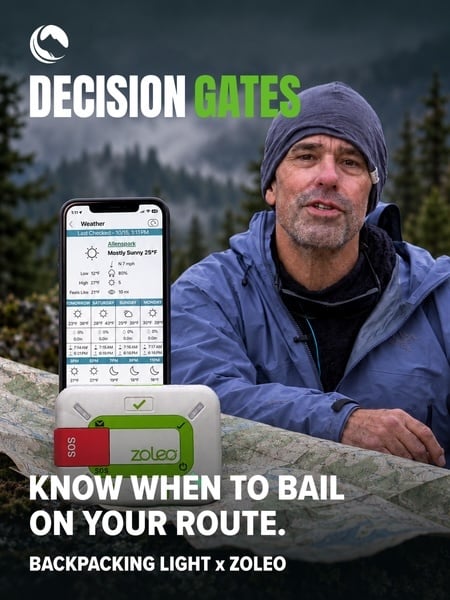 How to Plan with Decision GatesKeep going, change your route, or turn back? Watch how decision gates help structure these choices in our YouTube video.
 © Beartooth Media Group Inc.
 Loading...