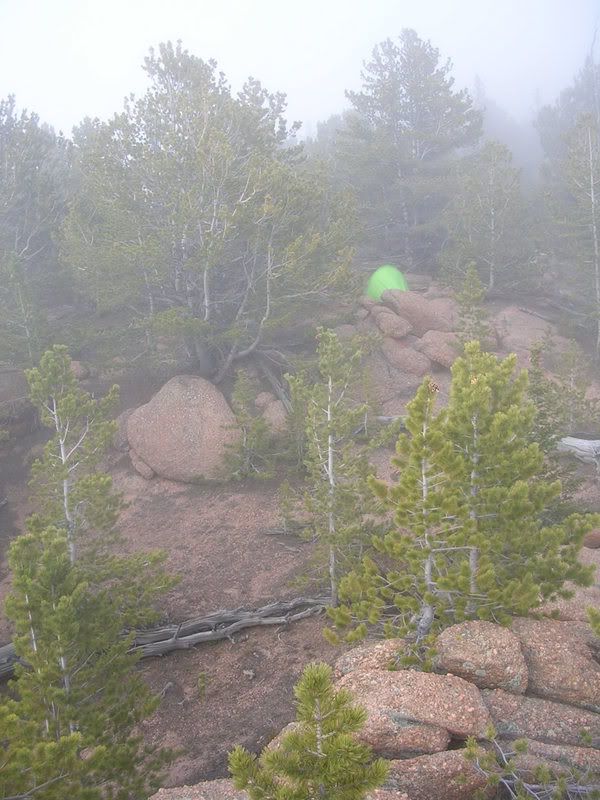
Brett, only if it was possible. I have been on some exposed ridges on some serious mtneering routes where it would have been more dangerous to get off the ridge (terrain and avalanche/rockfall considerations). All one could do was button up and stay put. The climbing gear was left ouside and away from the tent but once, I actually saw the head of my ice axe glow—St. Elmo's Fire.
Even in those situations, there was some level of site selection to help mitigate the risk of lightning strikes.
Of course,one really should try to get away fom exposed places (preferably) before an approaching Thunderstorm strikes. Failing that, stay away from sharp changes of terrain, like cliff edges, prominent landscape features such as tall trees and rock pinnacles. Don't take shelter in a shallow cave or a summit shelter (like the one atop Whitney where several people were killed or injured a few years ago). In a group, spread out—10-20 feet or more because lightning disharges will travel through the ground —-we want some survivors to administer 1st aid and CPR to the unfortunate members of the party. Hunker down on top of your pack/foam pads to help provide a measure of insulation.
If you feel the hair of your head raising— KYAG (aka duck and cover– pray to diety of choice–as it was called during the Cold War) because a very, very local strike is about to occur.
Incidentally, there is some debate on whether the amount of metal in a tent frame really adds to the risk of strike or not. Also, that Carbon-fiber poles are also conductive. Finally, of course, the odds are with you for not being struck by a ratio of several hundred thousand to one.
Finally, the photo posted above was taken from an educ. source in the public domain, not by me. In all my time exposed to various thunderstorms I have few very good pictures I've taken of lightning and what I have is all on film based stock. One of these days (or so I say to myself), I'll digitalize my archives.