


…could you upload some pics of the bear can in you pack as well?
Topic
Become a member to post in the forums.
…could you upload some pics of the bear can in you pack as well?

"It's nice to hear the bear canister is working for you with this ruck. I'm pondering a JMT hike in the next couple of years and would prefer to use the Ohm instead of purchasing a Circuit."
Yeah, and the sucky thing is since the Berikade is a bit wider you can't go by that. I found the Bearvault fit a small Exos ok, but to get the Berikade in felt like seams were about to burst. No good.
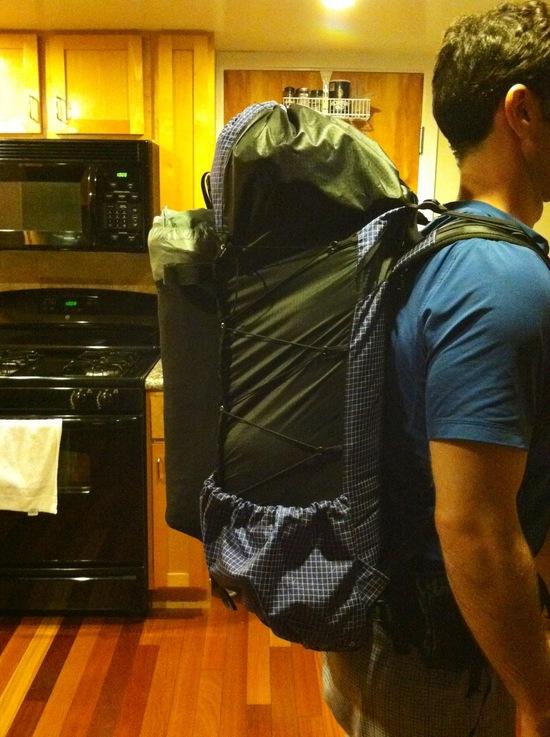
Hello. I moved the belt to the lowest setting, providing the longest torso adjustment on this pack size. The photo is a bit darker, but I hope you can still see where the belt attaches to my waist. Would love feedback and suggestions on this adjustment.
See below photo of the BV500 in my Ohm. My Circuit really isn't much bigger in terms of volume. I think ULA really promotes the Circuit as the bear can capable pack because of the extra back padding (mitigated by using the sleeping pad) and the beefier suspension via an aluminum stay (mitigated by keeping pack weight down).
FYI, I have my fingers crossed that the slightly wider Bearikade will fit as well as the BV500. I have one arriving next week.
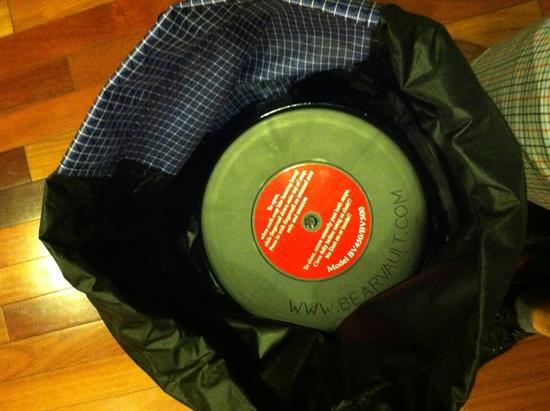
Actually, that looks pretty good. I knew I was in trouble with my small Exos 48 when the bearvault just barely squeezed in. LOL
Anyway, one of the few benefits of not having a frame.
Pack looks a bit better now. Gonna go out on a limb and say it is probably as good as you are going to get, and to declare victory. With this style of pack you are going to have to put some of the weigh on your shoulders, and if it feels good to you then maybe switch to worrying about something else.
However I don't withdraw my advice to, just as an experiment and as a future reference, see how the same stuff feels in a pack with more backbone. Don't forget to fill the bear can with 7 day of food first!
At first I didn't notice much of a difference but it seems that the camera is several inches to a foot higher for your most recent photos. Is it safe to say that where the load lifter straps are sewn to the ruck is about 1" higher than your C7? When I wear my Ohm 2.0 w/ a 20lb ruck, I carry the weight on my hips. I think as long as you aren't carrying the weight on your shoulders then my opinion is this is probably ok but an inch or two taller on the torso length wouldn't hurt.
YMMV.
nm
Interesting. The following questions aren't meant to be argumentative; I'm just trying to learn and understand:
Some of you pointed out that my Crown fit was suspect because load lifters were not angled enough (at perhaps 30 degrees?), but you're giving Sean a pass on his Ohm, and his lifters are at much less angle, approaching flat if the pack sags a little (lifters look about flat in Sean's first photo). Just curious why 30 wasn't enough for the Crown, but 0-5 is OK for the Ohm?
Also, some thought my shoulder straps wrapped too much–don't Sean's wrap about the same amount? Maybe a scootch more?
What I notice as a big difference between the two fits (aside from Sean obviously being younger, better looking, more muscular, and having better posture) is where the hip belt hits, relative to the elbow (the elbow being in proximity of the iliac crest). My photo (old guy on left) would indicate iliac crest about 1" below the top of the side of the belt. Sean's elbow seems a long distance from his hip-belt.
Sean, exactly where is your iliac crest hitting on the belt?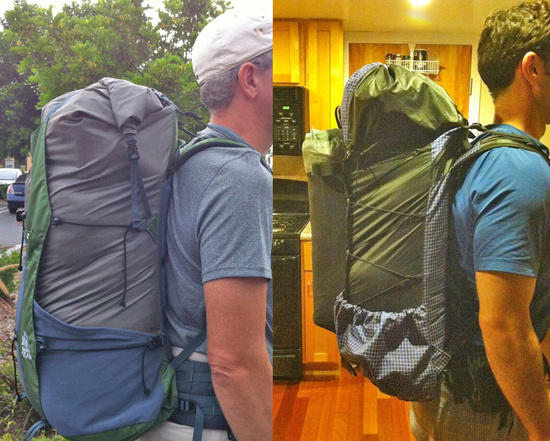
nm
That first picture looks better than the second imho. I don't like my straps to wrap around the shoulder to much.
When I'm on the trail I am constantly adjusting my straps to change things up. Change is good on packs, what feels good for 30 minutes will change. Heck, at least you have load lifters, you have tons of adjustment leeway.
I called Chris at ULA after sending him the photo I posted here. He agrees that I should try a large for comparison and he is sending one this week. Thanks to Delmar for creating this thread (and for all of the compliments), and for all the great feedback from everyone here. I'll post another photo early next week with the hipbelt adjusted at the shorter end of the new longer pack.
"Some of you pointed out that my Crown fit was suspect because load lifters were not angled enough (at perhaps 30 degrees?), but you're giving Sean a pass on his Ohm, and his lifters are at much less angle,… Just curious why 30 wasn't enough for the Crown, but 0-5 is OK for the Ohm?"
I'll just tell you what my mom told me when she let my sister get away without doing her homework, but not me – "its because we expect more from you".
But seriously you need a "real" frame to get the most out of the load lifters. With a real frame the load lifters will help transfer the weight back to the belt. With a very iffy frame or no frame the most that the load lifters can do is pull the pack closer to your back, so in Seans's case it matters less. Basically I think we have resigned ourselves to Sean being an underachiever in the load-lifer category. ;-)
From what I've read from various pack manufacturer's guys tend to wear their hipbelts low (sometimes too low) and ladies may wear their hipbelts too high. I know, I know generalizations….
I've had the best comfort wearing my hipbelt so that the middle of the pad is aligned with my iliac crest (which looks more like your pic with the granite gear pack)
I can't tell too well from the photo (angles, body size, etc) but it looks like Sean might be wearing the hipbelt a little lower. However one should be using lighter loads with a frameless, or lightly suspensioned, pack (I know another generalization) so it may matter less in Sean's case.
Of course, it all comes down to personal fit and comfort with your particular pack / load / hiking style.
"its because we expect more from you"
LOL LOL I have heard that my whole life! You're channeling the spirit of my parents! Maybe you are some long lost relative, Mark.
Regards the "floppy frame" issue of the Crown: I have cut down my CCF sit pad to fit in snugly with the Crown's plastic frame (which resides in a zippered compartment). Really adds a lot of rigidity for +1.8 oz. Haven't tested it yet. Curious if it will turbocharge the lifters, will watch for that.
@ Dave U – yes, I did catch your comment about the pack fitting. Thanks much.
A breadcrumb for anyone subsequently reading this thread, trying to figure out the mysteries of fit. Regards the origin point of the shoulder straps on an internal frame pack, I found this quote in Backpacker's Field Manual, p 41-42:
"For an external frame pack the straps should come off the frame about even with the top of your shoulders. If the straps drop too far down, the pack is too small, and too much weight will be pulled onto your shoulders. if the straps go too far up, the pack is too large, and too little weight will go onto your shoulders. For an internal frame pack the frame stays or frame structure should extend 2 to 4 inches above your shoulders. The shoulder straps should follow the contour of your shoulders and join the pack approximately 2 inches (5cm) below the top of your shoulders."

No offense Delmar, but the advice from Backpacker has been so contradictory over the years–even issue to issue–that I don't put much stock in their comments.
Also, they're just wrong. There are a variety of ways that frames can work–i.e., virtual frames, dual stays, framesheets, single stays, framesheets with stays, etc.–, and it's best to understand the benefits of each system and the various tradeoffs in configuration than to make blanket statements such as that.
nm
I don't think he is referring to Backpacker magazine, but something called the Backpacker Field Manual.
He did say "Backpacker's Field Manual" so I assumed it was the magazine. But I checked, and there is a book with that title as well. So I could have been mistaken about that part.
Either way, it is still poor advice.
"I don't think he is referring to Backpacker magazine, but something called the Backpacker Field Manual."
The fact that it is call a "Field Manual" makes me wonder all by itself. Does this same manual also recommend 6 lb boots and a 2 lb stove?
Anyway, +1 on disagreeing a bit. Ultimately if there is a frame that can handle the weight I don't see any difference in the basic principles involved. If you need to carry partly on your shoulders then the wrap is unavoidable. If you would like to get the weight off our your shoulders as much as possible then straight back is more or less ideal, though you can still rebalance with the load lifters as a crutch for a bit of wrapping around – but only of you have an appropriate frame for the weight you are carrying. Otherwise, as people have been pointing out, all they do is pull the pack closer to the body.
Over the years I have retreated from my initial convert fanaticism that the weight of the pack should be minimized, to the more moderate and sensible view that it is weight you *feel* when you wear the pack that is most important. I realized this can not be measured with any device, and therefore can't be bragged about when posting my gear list.
"Over the years I have retreated from my initial convert fanaticism that the weight of the pack should be minimized, to the more moderate and sensible view that it is weight you *feel* when you wear the pack that is most important."
hear him, hear him!!
OK, I take it you guys don't like the excerpt quoted from BFM. That's fine, be cool, relax, I'm not quoting it as if it were the Koran, but the perspective from BFM does echo some of the commentary in this thread, provides another perspective (a wrong one, as y'all have emphasized), and seems to echo rather closely what pack fitters at REI have told me (certain to invoke a fresh round of criticism of REI).
I can't tell if you're asking about BFM because you're curious, or just to rip it, but since you asked: it's a second edition 2005 book written by one Rick Curtis, "…director of the Outdoor Action Program at Princeton University, one of the largest and most successful college outdoor programs in the country. He lectures regularly on topics ranging from outdoor leadership to risk management. Rick has been backpacking around the world for more than twenty-five years." (From the back cover.) It's not a book exclusively about light or ultralight, but there are sections about light/UL woven in throughout. No 6-lb boots are recommended (where did you get that idea?); he recommends running shoes for 20-lb packs.
I'm not uncritical of the book myself–almost one half of it is devoted to wilderness medicine, and is prone to call for fantastical medical accoutrements that would never actually be carried unless you had a large group with one person's pack devoted to all things medical. And the section on Leave No Trace is insultingly paternal and stupefyingly pedantic, to the point I had to leave the book in the corner a few days before I could pick it up again. (I don't appreciate being lectured to, as if I'm a vandal.) I don't know if it's fair to judge the book's pack-fitting advice by the sections I didn't like, but the fitting information it contained is not rare or unusual–I've encountered similar at many other sources. Here at BPL is the first place I've encountered the "no wrap shoulders even on an internal frame" advice. I'm not arguing–I don't know enough to argue on this topic, or even have firm opinions. I'm merely an information sponge at this point. Mia Culpa, etc. I hope you guys know that I really do appreciate your advice and guidance, and I am paying close attention to it.
Mark, your quote on felt weight sounds like sage advice.
Delmar, please know that no insult or offense regarding the BFM is intended. I'm not familiar with the book, and my objection stems only from the universal statement without regard to the context of the different frame systems inherent in UL and LW packs. Unfortunately, given the nature of publishing and the increasingly corporate nature of the outdoor vendors, advice (and "knowledge" in general) has become driven by marketing and meaningless technical claims that reduce complexity rather than acknowledge it. The practical upshot is that, at least for me personally, I tend to distrust those whose experiences I can't verify. That, and I really dislike blanket statements which don't take into account frame construction (seriously–go to REI and see the different systems used in nearly every pack they sell) or individual physiology.
Regarding shoulder wrap, I'm not sure where you drew those conclusions. You'll see a few different recommendations in the forums and in the articles based on the wide ranges of experiences here. The trick is to match your individual body, preferences, and (potential) pack together. Personally, I disagree with Mark here–with the HMG Porter, my currently preferred pack, I like some shoulder wrap, just not the two inches recommended in your quote–more like one. Of course his approach has its merits, but it doesn't fit my trapezius muscles and puts too much stress on the front of my shoulders. For me this is uncomfortable and even painful after fifteen minutes wearing a pack in my house, but for others it works very well. With lighter loads, you have more room to develop and appreciate your personal ideas because there is usually less penalty for error and (sometimes, but not always) the assumption that you'll tailor it to suit your needs.
Even so, there are some basic facts about pack fitting which don't often make it into marketing campaigns, where models are more often than not wearing poorly-fitting packs stuffed with nearly weightless fillers for dramatic visual effect. I'd recommend you start with Dave Chenault's BPL article "How Packs Work." It's a great introduction to the subject, though not without debatable claims.
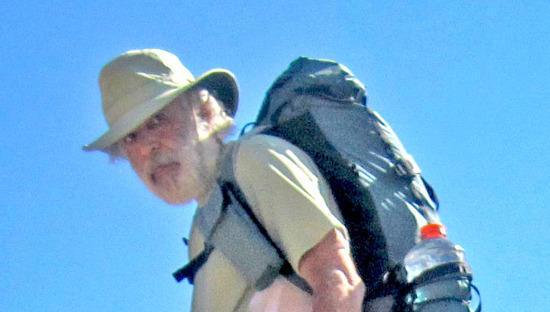
Above: Here is a 35lb load with my McHale Bump. Kind of hard to see the shoulder strap, but there is no shoulder strap wrap. Note that I have a lot of curvature in my upper back. This works perfectly for me. The shoulder straps keep the pack stable and the weight is carried by the hip belt.

Above is my McHale LBP 36 (no load lifters). Again, no shoulder strap wrap.
Also load lifters are not needed with a "lightweight" back. If a lightweight pack has load lifters, the manufacturer is trying to compensate for a poor design, mostly the lack of a proper frame, IMO.
The only time I use load lifters is in winter on extended trips. The heavier weight causes the yoke to shift and the pack pulls away from my back. With my McHale LBP, frame extensions are added to the internal frame, along with load lifters; Dan calls this system P&G Bayonets with a By-pass Harness. Now the load lifters are adjusted independently from the shoulder straps. When both the lifters and shoulder straps are adjusted I get a tiny bit of shoulder strap wrap. The frame extension is several inches above my shoulders and the angle of the load lifter strap is approximately 45 degrees. Unfortunately I don't have a picture to show.
Below is a picture of one of my external frame packs. No shoulder strap wrap.
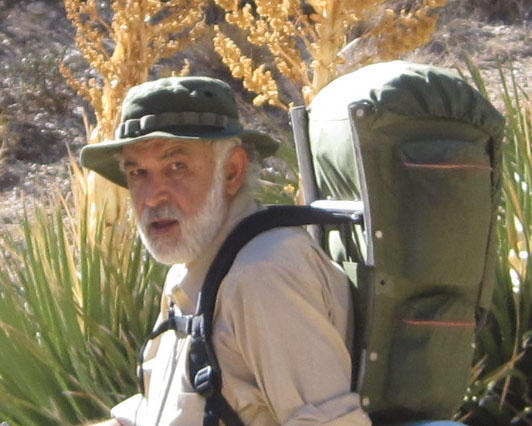
Anyway, it works for me.
Edited for spelling.
"…my objection stems only from the universal statement without regard to the context of the different frame systems inherent in UL and LW packs."
Point well made and taken. Thanks for the Chenault article ref.
Sometimes people sound obtuse when they're simply trying to learn, so please forgive, but: if the "back part of the shoulder wrap," (which Nick dispenses with completely — thanks for the photos, Nick) is problematic, prone to causing shoulder pain, and if load lifters on light internal packs serve to pull the the shoulder strap away from the back of the shoulder (this is certainly the case with my pack, and appears to be the case with Nick's pack, too), aren't the load lifters serving to minimize or negate the "back wrap of the shoulder strap" problem? Just curious.
Become a member to post in the forums.
 Vaer C4 Tactical Field SolarDurable timepiece for wilderness users - 20ATM (200m) water resistance, 120-click bezel, 316L SS casing, sapphire glass, solar-powered, Epson VS-42 Japanese movement, C3 Lume, USA assembly.
 © Beartooth Media Group Inc.
 Loading...