Dale suggested I do a review with some details and pictures. A few disclaimers here – This is my first pack I have owned since getting into UL backpacking. I also realize there are others much more qualified to write a review like this. So take this with a grain of salt.
My goals for a pack:
– ~2 lbs.
– 50-60 liters
– it needs to actually fit
– carry 25 lb loads, or up to 30 lbs for a short while if needed.
– cost effective
I know there are other packs that could fit most of these categories, but honestly, for me the REI Flash 45 is the ONLY pack that fits all of these categories. Other packs were either too short in the torso, too big in the waist belt, or cost too much – all of which were dealbreakers for me.
First off, I packed it with pillows, sheets, and empty water bottles. I realize this isn't ideal, but the wife insists on not pulling out all of my gear tonight.
The pack is designed well. The features are not over-the-top, but also not minimal. I won't list the details of the pack here since they are listed online, but I will highlight a few design features that I think are helpful to know about. I know some might not like the bright detailing, but I like it. Not only that, but it feels solid. I have no reservations about the materials. Of course, if you go bushwhacking, the mesh on the outside panel could potentially tear…but that's not a negative IMO, because this pack isn't made for that.
From the front – I have a bed sheet rolled up to show how a shelter or rain gear might fit into the front mesh pocket. Rolling your gear might be a better option that just stuffing it. The pocket holds things fairly well, but the open design makes it a little more susceptible to gear shifting around…but not much. The pocket is continuous from the sides, to the front. This gives you more room, but like I said, can make it a little easier for gear to shift around.

From the back – The mesh feels solid, and the foam backpanel feels solid as well. More details to come with suspension.
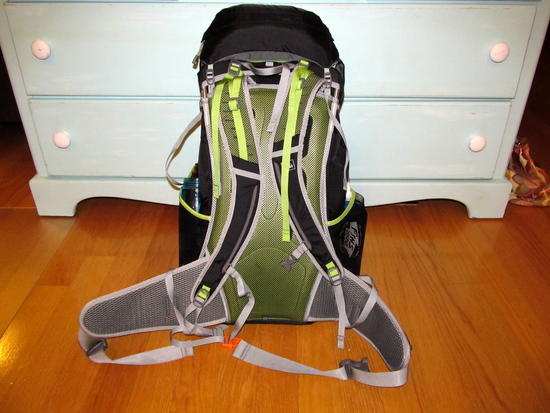
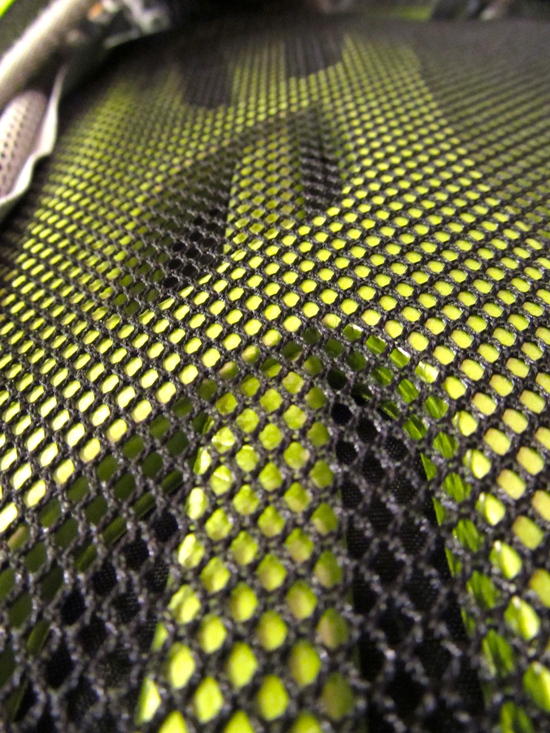
The foam in the backpanel is double-layered. It seems like it would breathe well. Not quite as well as an Osprey Exos, but well enough (just a guess).
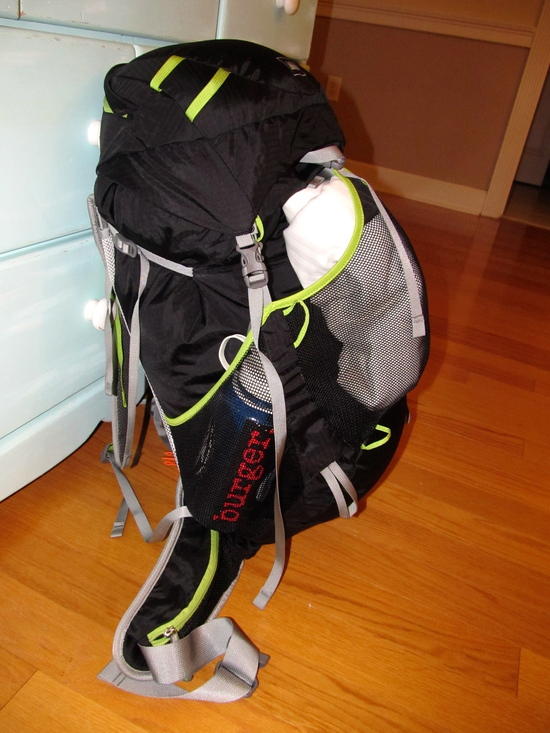
From the side – the mesh panel, which I do love, is deep/wide enough to fit a 1L nalgene, or two smaller ones. It shouldn't have any problems keeping any bottle secure. I do wish it had another compression strap underneath the mesh pocket, like the Osprey Exos packs.
On to some suspension details.
The load lifter straps are excellent! The buckle in the middle lets you adjust the angle of the strap to optimize the lift. This is perfect for getting a custom fit. Not sure if other packs have this feature, but I have not seen it before.

The webbing on the belt is floating, and not secured 100% to the padding. There is a sliding buckle underneath the pocket that helps it distribute the load between the padding and the frame of the pack. In the picture, you can see two sets of webbing. The buckle is hidden, but I pulled it out to show this design. The bottom webbing runs from the wire frame to the padding, and the top webbing runs from the sliding buckle to the main buckle. So when you tighten it up, the sliding buckle pulls on the second set of webbing, which then transfers the load effectively to the frame of the pack. Both the waist belt and the frame get pulled toward your hips. This result could also be achieved by securing the frame directly to the hip belt. Yet the way they have done it here seems to remove the need for waist belt stabilizers.

You can see where the belt webbing is secured to the pack. That's the pocket where the wire frame sits.

THIS is where I am probably the most excited. I am showing you the size large Flash 45. This is the belt tightened to it's absolute limit, and I measured it to be ~24". It's listed as fitting waists from 34" and more. My waist is 31". I think what allows this is the previously mentioned belt webbing attachment system. While most packs attach the webbing to the belt padding, this system allows the buckle to slide over the padding a little further. It really does seem that the only thing keeping the belt from tightening even more is the fact that the hole that the webbing comes out of is slightly too small for the buckle to pull through. My guess is this was a very intentional design.
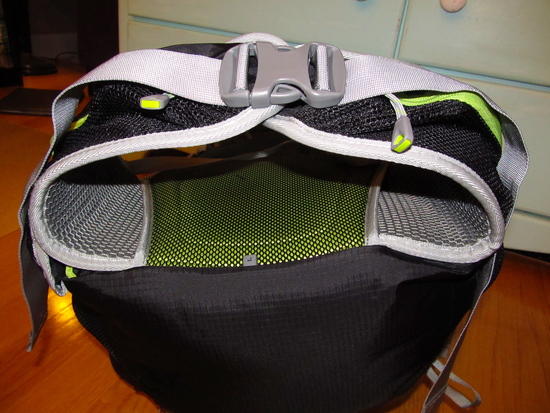
And lastly, while you can remove the lid, the closure on top is messy and leaves too much of an opening. The lid weighs ~100g, so I think it's worth it to keep it. A few ounces isn't going to make or break your trip. Plus, the extra storage is worth it for rain gear and other small items that are best kept separate.
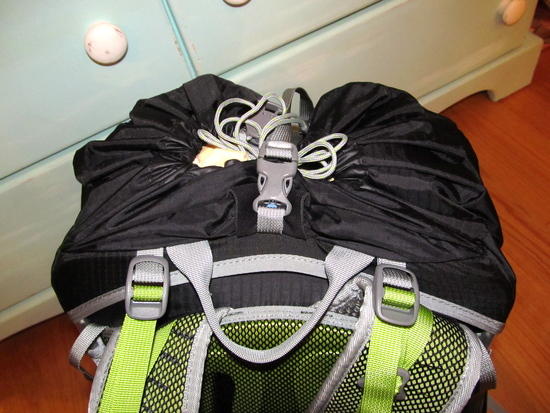
Well, that's a lot. Let me know if you have any questions about anything I did or didn't cover. This is a great pack, and there are only two things I would change: a lower compression strap under the side pocket and a roll-top closure.