ADVISORY – 15 photos imbedded
Background & Request
My environment is 4 season pacific rainforest, boil-in-bag cooking, often on windy and exposed shorelines. I like the Micron Ti 2.5 canister stove. I use it with a ti mini solo pot and a myog windscreen, made a few years ago from some sheeting I got from Ti Goat (see pictures below). I’ve just built a couple of smaller windscreen designs, and I’m unsure about how to compare the three systems. My request is: given that I have no instruments, limited time and skills, and no testing experience – is there a straightforward way to measure the performance of three competing windscreens?
Current Windscreen – The Adjustable Original
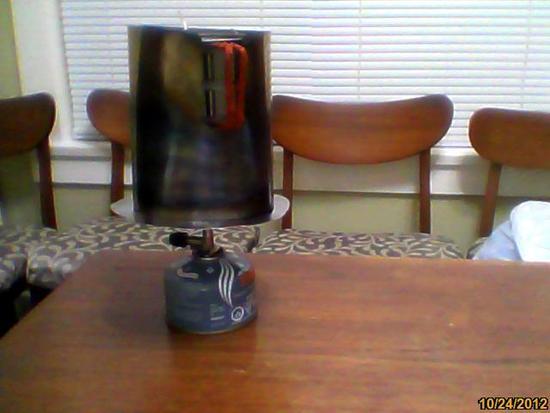
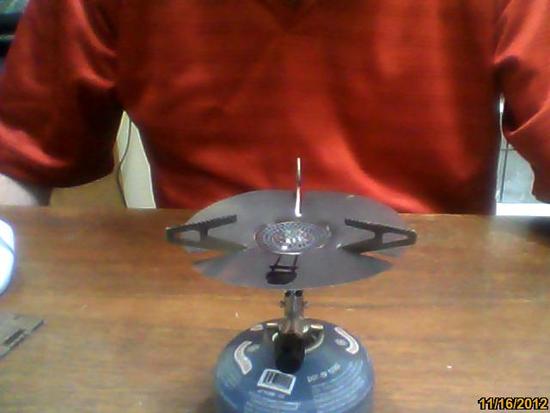
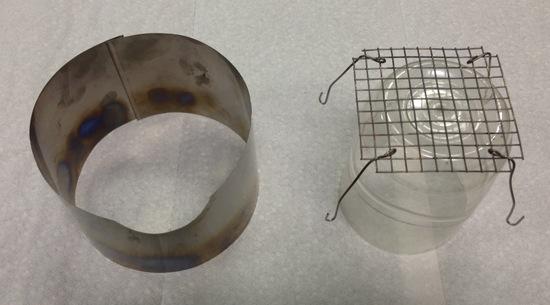
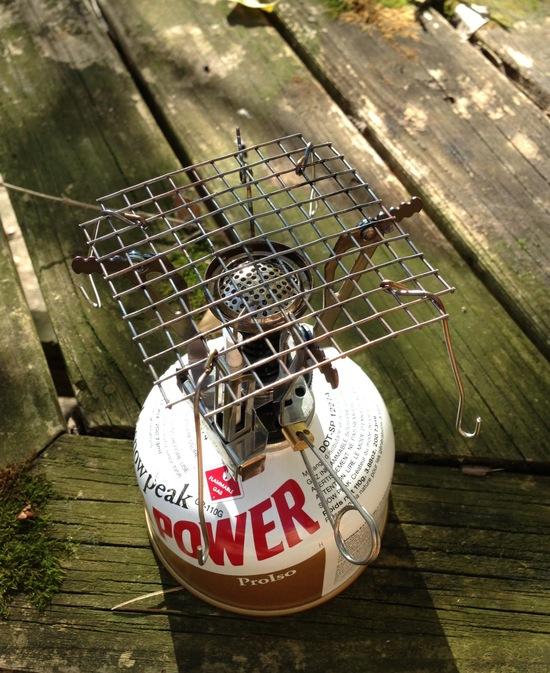
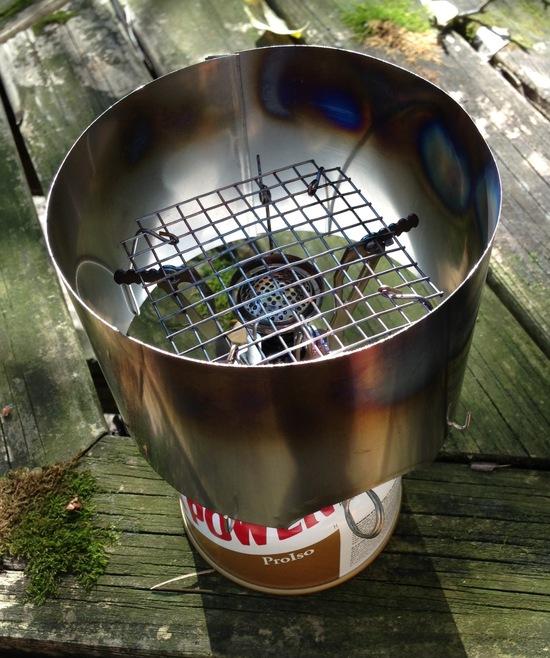
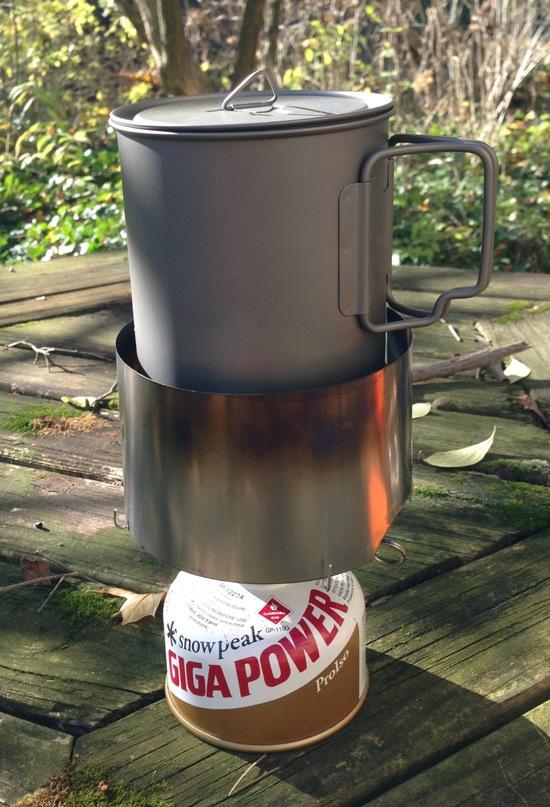
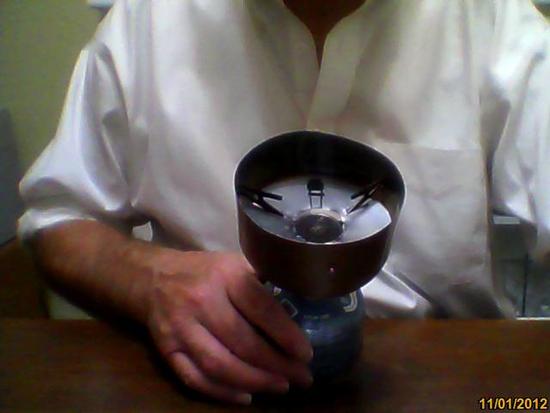
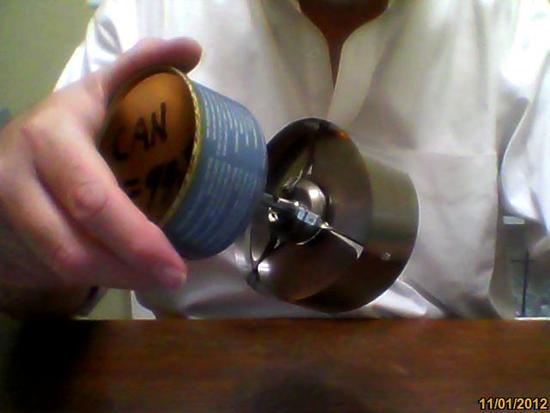
This windscreen was designed work for a variety of pot sizes, and so has an oversize reflector disk that supports an adjustable cylinder above. The cylinder is a simple rectangle, with a cut-out for handles, which is rolled to the desired diameter and set on top of the disk. The system heats all the way up the sides of my pots, the upper wall of a half filled pot gets so hot it vaporizes splashes and the front of the “pouring-out” stream. If I’m out solo I use a low flame and get a gratifying number of boils per fuel canister. If I’m out with others it gets red hot cranking out pot after pot of hot water. Paper clips suspend the lower disk and are used to hold the cylinder together. I’m still using the original paper clips from three years ago. (see pics below).
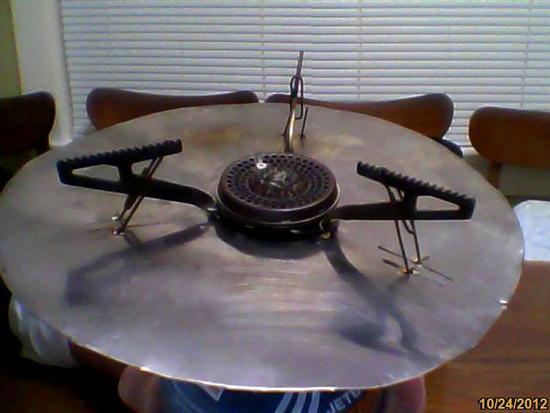
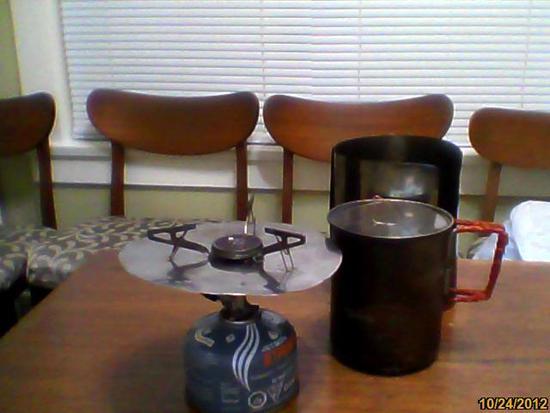
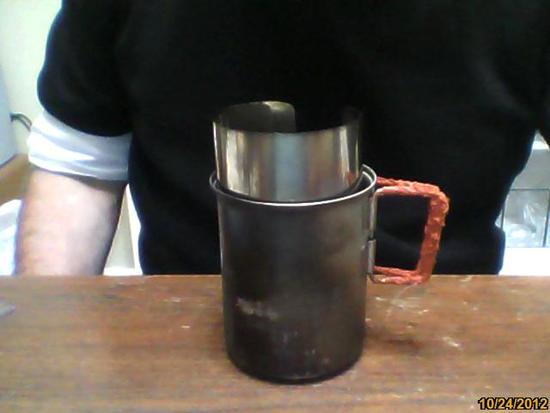
I’ve been happy with this windscreen system, but feel there is room for improvement. My experience has been that when I pick a pot to pack, I almost always reach for the mini solo, so the benefit of a screen that adjusts to differing pot sizes is not being realized. The goals I have set for a new system are:
a) I’d like it simpler – fewer parts, faster setup, less overall “fuss factor”
b) I’d like it lighter – the current disk, rectangle and paper clips weigh 56 grams
c) I’d like it smaller – the adjustable windscreen is 3.6 centimeters taller than my mini solo.
d) I’d like calories/gram of fuel efficiency to stay close to current levels.
Screen Idea #1 – The Three Point Shield
I couldn’t think of anything simpler than a curved barrier facing into the wind. A paper prototype sorted out some details.


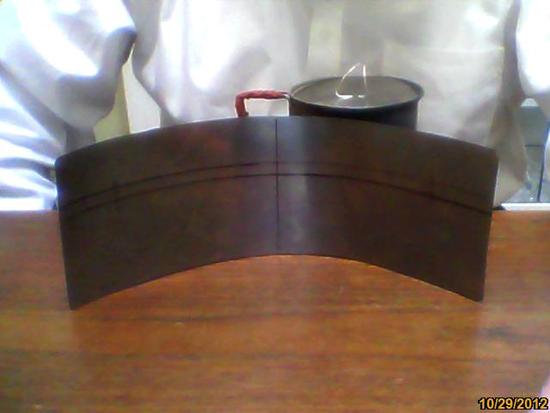
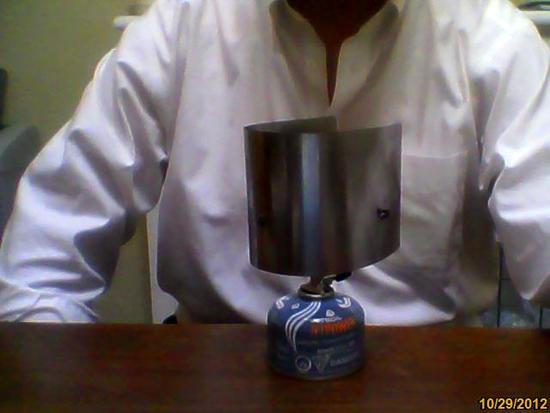
At this stage the ti was too springy to stay on the rear stove struts if I gave the stove a shake. Rolling the screen tightly gave it increasing curvature, until it was slightly compressive on the struts but still expansive in the pot. Attachment slots are at 35% of screen height
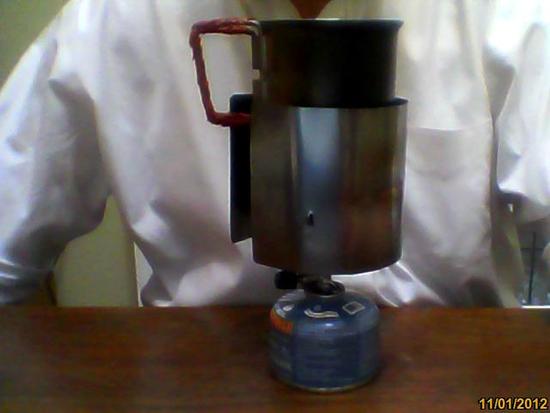
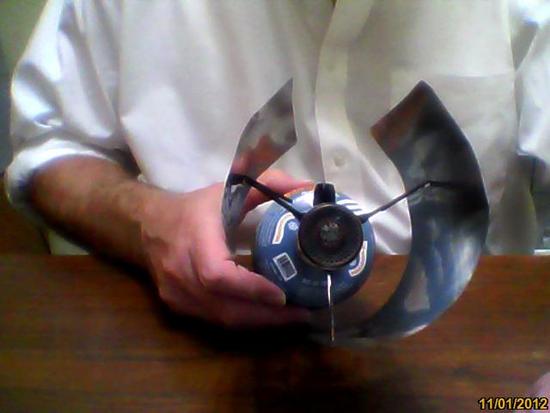
There is ample room to work the stove valve, with or without the pot. So far, the lower part of the windscreen has been cool to the touch during operation.

A minor feature is that the screen can be inverted. I thought this might provide some radiant or reflective heat to help vaporize butane in colder conditions. Testing required.
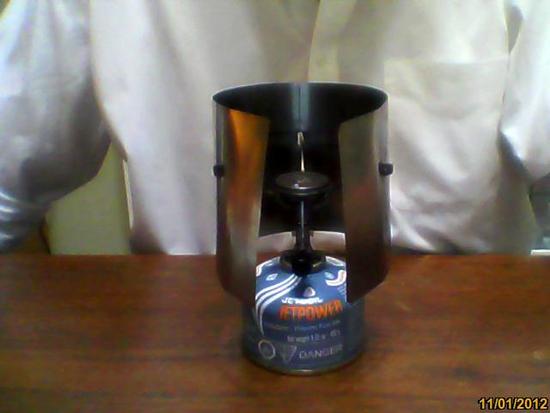
Screen weight is 20 grams; setup is basically snap on / snap off. The screen stows in a few seconds and takes almost zero volume in my pot. The picture below is not an empty pot; there is a windscreen in there.
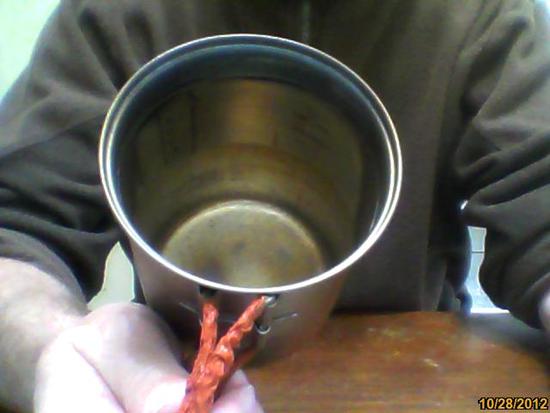
Next I made a small heat reflector disk. Slips on and off easily and weighs 4 grams.

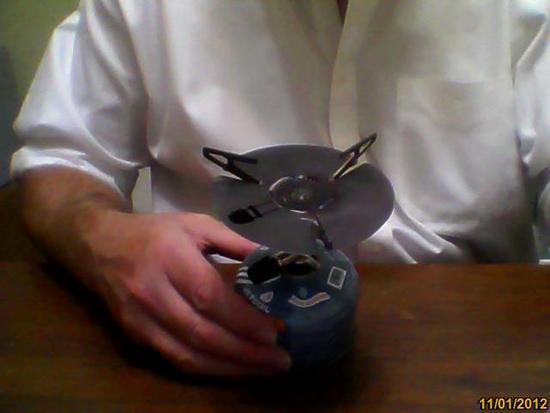
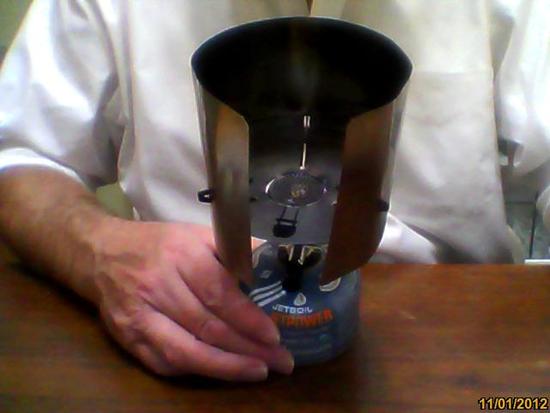
Screen #1 ready for testing. If results show that the reflector disk is the way to go, I’ll trim the bottom 2 centimeters off the windscreen and save 3.6 grams. Adding back the 4 gram weight of the reflector means system weight would see a small increase to 20.4 grams.
Screen Idea #2 – The Ringer
During development of Idea #1 (the Three Point Shield); I used a scrap strip of ti to prototype the attachment slots. The result turned out well, so I decided to make an additional screen to compare and test against the other two systems. A couple of 3 millimeter folds fasten the ends of the strip into a circle. The Ringer weighs 9 grams and works with or without the heat reflector disk, exactly the same as Screen #1.

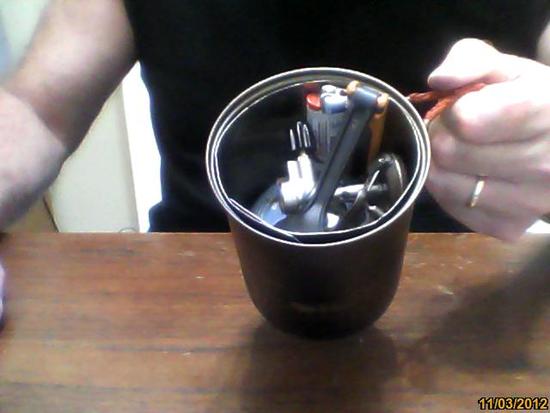
The picture above shows fuel canister, micron stove, folding spoon, lighter, myog ti pot lid, three point windscreen and heat reflector disk, with room for a towel. (n.b. I usually keep my spoon in my food bag)
PRE-TESTING SUMMARY
1) Adjustable Original
(cylinder and supporting disk both required)
Weight = 56 grams
Height = 15.6 centimeters
Fuss Factor = moderate (to me, at least)
2) Three Point Shield
Weight = 20 grams
Height = 11.2 centimeters (fits inside pot)
Fuss Factor = low (no paper clips to worry about or lose, “snap on” ease & speed)
3) The Ringer
Weight = 9 grams
Height = 4.5 centimeters
Fuss Factor = low
4) Heat Reflector Disk
Weight = 4 grams
Fuss Factor = low+1 (because it adds a second piece to the new windscreens)
I’d like to end this post by asking for help from the collective smarts of our myog wizards – my problem is that I have no equipment, little experience with testing, and only a few vague ideas on how to collect useful data. My goal is to determine unit weight of fuel consumed for calories transferred into water. I see comparing, in windy conditions:
a) No windscreen at all
b) Adjustable Original windscreen
c) Three Point Screen without Heat Reflector
d) Three Point Screen with Heat Reflector
e) Ringer Screen without Heat Reflector
f) Ringer Screen with Heat Reflector
Does anyone have a “close enough for horseshoes” testing technique to suggest? Should I use two reciprocating fans, on different swivel speeds, to simulate gusty winds? Can I just weight the canister after each burn, or should I buy six new canisters and rotate them during the tests? Is humidity a factor? What else don’t I know? Etc.
Thanks for any observations shared or advice offered.
P.S. – I can spend 30 or 40 bucks on thermometers and such as needed, just tell me what to buy.