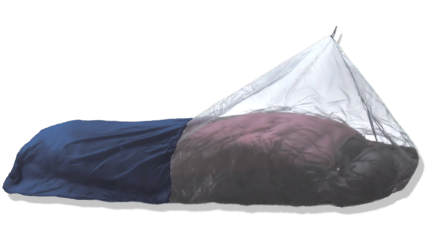
It's all about conditions.
And of course, how people want to deal with the conditiions.
In many of the cases here on BPL, I suspect that there are two main reasons for not using bivvies.
The first is that the bivy is often used to shield rain splash when using a small tarp. However, the 6-7 ounces of bivvy weight could also just as easily be carried as 6-7 ounces of bigger tarp that would cover you without rain spray. So, there is a certain group of users who say, "Just get a bigger tarp".
The second is condensation. This is probably the biggest one.
The breathable bivy, when used in conditions which create condensation, just brings the condensation down from the tent, right on/in to the bivy.
Presumably, a main reason for having the bivy is to keep dry. If the condensation is wetting the bag in the bivvy, it doesn't make for happy users.
However, in low-humidity conditions in some southwestern climates, perhaps condensation isn't a big deal. But I assure you that in the muggy southeast, or in winter conditions which may affect the insulation of the sleeping bag from moisture, ending in "insulation collapse", it can be a big deal.
In any case, condensation can be a comfort problem, and it does happen in bivvies.
Many would prefer to have the condensation happen on the tent walls/roof, and just avoid touching it. Or use a double-wall tent.
In favor of the bivy, it is highly useful for keeping bugs away.
But, so is an inner net-tent which weighs about the same.
I think for all the favorable reasons that I have heard about having a bivy, I have heard an equal number of unfavorable reasons.
IMO, the best way to run a bivy is to have a waterproof bivy, and use a VBL layer inside it to keep your body moisture from condensing inside the bivy or inside the sleeping bag.