Topic

Is there any gear that your don’t go light on?

  • This topic is empty.
Viewing 25 posts - 1 through 25 (of 31 total)
PostedSep 11, 2012 at 6:40 pm

My interest in lightweight backpacking is mainly from a 72 hour/survivalist perspective. If it is too heavy you won't have it with you when you need it and even if you do and you can't move with it you'll have to ditch it at some point… but

I can't imagine selecting a truly light weight knife if I know that I'm going to need it.

Is there any gear that you carry that you could go lighter on, but don't?

HkNewman BPL Member
PostedSep 11, 2012 at 6:46 pm

Not really, except for repurposing (my old multitools go in the snowsports or mountainbike repair kits). My traditional backpacking gear is now used for car camping (Flex-baffled Sierra Designs sleeping bag, original Thermarest regular, camp pillow, Chacos) … and the rest I sold/donated.

PostedSep 11, 2012 at 6:48 pm

Not sure if it applies to your survivalist perspective, but the one "luxury" item that I carry sometimes is a heavy sleeping pad like the bid agnes air core. There are lighter inflatables like the neoair, but I have yet to purchase one. I need to sleep comfortably. If I go solo and hike a lot of miles, I sleep well regardless. On those trips, I carry a CCF pad. The heavy inflatable sleeping pad is nice when I'm out for a leisurely weekend.

I haven't backpacked yet in a location that I couldn't bug out of in under 12 hours, so my "survivalist" perspective is probably much different than other folks.

PostedSep 11, 2012 at 6:51 pm

Also, I went light on my first aid kit. I'll be using everything in my pack if I start bleeding profusely…

mik matra BPL Member
PostedSep 11, 2012 at 7:41 pm

Everything is under scrutiny, everyrhing. It's almost an addiction!! Every time I am at the shops the eyes are scanning and when I see something the hand reaches out uncontrolably and is bobbing the product up and down estimating the weight and the mind is made up before I even realise what I have picked up in the first place. There is always a 'keep chiseling away' at the overall weight.

kevperro . BPL Member
PostedSep 11, 2012 at 8:02 pm

Depends on what you define as light. I balance weight vs. utility, comfort, personal preference and $$$.

I prefer boots vs. running shoes. I like heavy wool socks vs. thin ones. I like a sleeping bag rather than a quilt and I'll carry more clothing than I need most times.

With a bear canister I'm at 12-13lbs in the summer and I add 2-4 more pounds in late/early season hiking.

Jay Wilkerson BPL Member
PostedSep 11, 2012 at 8:03 pm

A Sleeping Pad! A good night of sleeping is worth the weight of gold. Everybody has different comfort levels and I do not want to be grumpy in the morning so I will go the extra yard for a very a luxurious,large sleeping pad.

Paul Vertrees BPL Member
PostedSep 11, 2012 at 8:08 pm

Yes, there is. My inflatable pad! Big Agnes IAC mummy. A good night's rest is so valuable. Makes staying "out there" longer a reality, especially for 50-year-old bones.

Bob Bankhead BPL Member
PostedSep 11, 2012 at 8:56 pm

First match your total gear kit to the conditions you expect to encounter in the area into which you are headed.

Only then can you start to answer that question.

Bottom line; it varies depending on where you're going and what you can reasonably expect to encounter there.

Dale Wambaugh BPL Member
PostedSep 11, 2012 at 9:13 pm

How light? As you mentioned, an SUL knife isn't going to be much help in a 72 hour survival scenario, but there is a whole range of cutting tools from a single edge razor blade on out to an ax or the "sharpened pry bar" type of knife. I opt for a 3.5" quality folder like a Benchmade Griptilian that is 3.8oz. If I want more cutting power in a survival situation and light weight, I would go for a light saw rather than a big knife or ax: 3.5oz vs a couple pounds.

The gist of it is that I want the lightest gear that will function to my needs. In a survival scenario, shelter, fire, navigation, hydration, signaling and first aid come to mind.

We could kick first aid kits around and it comes to minor wound care like blisters, splinters and small cuts and then it kind of blossoms to near military sorts of needs like compound fractures, arterial bleeds, puncture wounds, etc. I think most opt to carry small wound care and hope that improvised methods will take care of the big bad stuff. 3-4 ounces will go a long ways.

Good lighting can be had in light enough forms. The best compasses aren't that heavy. Signaling devices like whistles and mirrors don't have to be heavy. Fire starting methods are light, even if redundant forms are carried. Hydration is simple enough with light containers and chlorine dioxide tablets are super light. I covered tools for making shelters from natural sources. Something like a poncho tarp and light bivy sack will make emergency shelter that is carried rather than found/improvised.

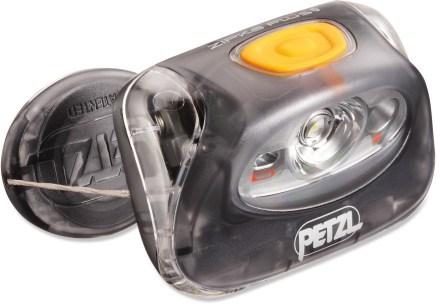
I could go lighter on a knife, but we're talking 2-3 ounces between my "heavy" knife and a lighter folder. I could take a button compass vs my boat anchor 2.6oz compass with mirror. A whistle that is loud enough to functionally deafen the user is all of 0.2oz. My headlamps range from 1oz to nearly 7, but a 3oz one is very functional (I'm not risking my life on a coin cell LED light). My firesteel racks up 0.4oz. My match case (with redundant button compass) is 1.4oz loaded with matches. A silnylon poncho is 7oz— I could opt for a lighter Cuben model, but the question there is really expense rather than weight. A space blanket bivy is 3.4oz. The cobra-braid paracord hatband on my Tilly provides a source of cordage.

I think that it comes down to the shear number of items more than the weight of each. In a survival scenario, I want stuff that works AND a selection of items that will allow me to improvise to handle a whole range of unknowns.

Using good ultralight principles, we should seek out items that would actually be used, have multiple uses, and be of high performance for the weight. That kind of gets into a whole pile of gray areas on what is really going to be used. In a perfect world, you never use your survival stuff, so I say use some common sense, try to fit your CYA items to the terrain and season, and don't try to cover every possible scenario. Seek out gear that gives good performance, use your head, do the best you can.

DON'T GET STUCK IN THE FIRST PLACE, which is very light indeed :)

PostedSep 11, 2012 at 11:17 pm

My 9.3 ounce 1400 lumen Surefire/Oveready 9P and my 8.4 ounce Leatherman TTi Charge Multitool.

Joseph R BPL Member
PostedSep 12, 2012 at 12:27 am

Sometimes photo gear (although the Sony RX100 has been something of a revolution for me in that department).

Sometimes I make decisions to carry more weight for the sake of comfort/versatility – ie, rain shell + tarp versus poncho tarp. Or I carry something a bit heavier than other options on the market because that's what I own (ie, I have one decent compass, headlamp, etc) and I'm not ready to spend XX dollars to save the odd ounce of weight when it doesn't really perform any better.

And all those folks who talk about bringing "heavy" sleeping pads – I don't blame them. A good night's rest is worth more than having one less pound to lug around in your pack. Comfort is always worth considering – you'll have more fun and be able to hike farther, faster when well-fed and well-rested.

John Donewar BPL Member
PostedSep 12, 2012 at 3:30 am

Josh's post in this thread mentioned the wallet.

Here is my take on that same item. I use a clear, waterproof "wallet" that contains my license, credit card, medical insurance card, phone card and CASH.

When I'm out for 1 to 2 weeks on the trail my license is dual use, ID and the ability to drive to and from the trail head. The credit card and cash are for the trail towns and resupply points. The phone card is for the ability to stay in touch in areas without cell phone service when I have to resort to using pay phones in trail towns.

Yes, Virginia these things still exist

Party On,

Newton

PostedSep 12, 2012 at 4:44 am

I'm also a "knife knut" and there are some excellent choices in light weight ranges for survival.

Carry a Mora #2.
4 ounces, including the sheath.
Everything bigger is overkill.
All bushcraft and real survival knives are based on this design.

Regarding carrying heavier, I carry as light as my skills can permit, for all the required gear.
Then, if there is room for me to carry more optional weight, I carry the things that I want to carry. And what I "want" to carry may vary, depending on the purpose of the hike.

John Donewar BPL Member
PostedSep 12, 2012 at 9:12 am

Jay mentioned his sleeping pad.

I have to concur as I recently switched to a small Prolite Plus inflatable pad. I almost doubled the weight of my shorty Ridgerest pad. The difference in comfort and a good night's sleep is worth the weight penalty.

Party On,

Newton

PostedSep 12, 2012 at 10:37 am

My summation ul7 is a luxury, but it's not really all that heavy compared to my ridge rest. It's also less bulky which is nice.

Viewing 25 posts - 1 through 25 (of 31 total)
Loading...