Topic

Looking to go lighter still

  • This topic is empty.
Viewing 25 posts - 51 through 75 (of 85 total)
Ben C BPL Member
PostedSep 17, 2012 at 2:12 pm

Consider a tarp, at about 6-12 oz. I know, it doesn't keep bugs away. I don't like bugs either, and it works out fine for me. Looks like you have a headnet and deet. That will mostly keep mosquitoes away. In my experience, they are also worse at daytime than at night, which is when the tent will do the most good. If I had to have bug protection, I would consider the ZPacks hexamid at about 10-11 oz. instead of 30-45 oz.

Sleeping gear, looks like you are set for years.

Pack covers, shrink bags, dry bags, etc. Its all too much and too heavy. Throw it all in a singles trash compactor and be done with it.

Glad to see you picked up that Hadron. I've really liked mine.

Bag of misc. looks very heavy. Moisturizer? Really? I don't take that good of care of myself at home. Since I'm not bathing, I usually have too much moisturizer(natural oil).

That FAK is a hog.

Once you take care of those things and drop some other useless junk, I would consider a lighter bag. I use a frameless 8 oz bag that I really like. 8 oz. vs. 47 oz. Not everyone loves a frameless bag but I do, and its a lot of weight difference.

Kenneth Jacobs BPL Member
PostedSep 17, 2012 at 2:26 pm

Tjaard

Here is a spreadsheet of where I want to be with my gear and what I’d take on an average trip. The red cells show gear (not acquired yet) that will be a replacement for something else I currently have. I kinda see it as pointless showing what I already have when I wish to move away from that item.

The List – 15.350lbs

HTH

KJ

PostedSep 17, 2012 at 7:30 pm

That is much more understandable, except please add what each item is, not just a model name: "ie: Houdini -windshirt", I know some of them, but not all, plus it helps focus you on the function of the item.

The other thing missing is a conditions assessment. Before you start any design process you need a list of required functions and terms of use. You are designing a backpacking system.

So:
What are the day time temps? Night time? Precip? Sunexposure? Wind?
What are the campsites like?
What is the hiking like? River crossings? Snow fields? Boulder hopping? Scrambling? Etc.
What is the navigation like? clear trail? clear landmarks, cross country?

If you(we) don't know that, how can you(we) decide what you need?

PostedSep 17, 2012 at 7:36 pm

Specific comments:

-What is BA stuff?
-Do you need a SAK-Swisscard? You have a knife
-Do you need the packcover with all the drybags? (This is were environmental assessment comes in)
-You list a long sleeve as worn. since it's synthetic, leave the second one home, the first one will be dry enough to wear at bed time, if it's soaked, go bare skinned in your down jacket or quilt. Again, this is conditions dependant.
-Do you really need liner socks? With modern wool socks most people don't.
-If you do need liner socks, ditch the second pair. Wash your liner and wool socks at night and let them dry while you sleep in a clean pair of wool socks.
-Do you really need tall mid weight socks? In warm weather a thinner sock is less warm. (Conditions?)
-What is the 50' Spectra for?
-Do you really need the Skrink bag(conditions dependant) In warm weather, with synthetic insualtion in the pad, isn't blowing by mouth ok? Would save 6 oz.
-Why do you need a spare stove? Cartridge stoves rarely break. If it does, make a campfire or eat cold food and hike out.
-What's a Snozzle?
-I use my stake bag as a rock sack.
-Is your Hadron hooded? If so, you have a lot of head stuff for warm weather: Bucket hat, rain hood, windshirt hood, down hood, fleece hat, buff. (again conditions dependant)

-no stakes?
– No MAP?

Jake D BPL Member
PostedSep 17, 2012 at 7:52 pm

Definitely read more of the links and get Andrew's book. Your mental blocks are your worst enemy right now and until that changes all of our suggestions are going to hit a brick wall. "just in case" is not a good reason for adding a piece of gear no matter how big or small. I'm sorry that being blunt doesn't work for you but I just say what I think.

I haven't looked at the new list but understand that many people here have DONE the JMT, or similar trails of equal or far exceeding length.

you do not need to wash your clothes on the trail or yourself for that matter. 18 days on LT, 2 showers in town. no biggy

don't waste your money with a cuben pack cover, again, there is a giant hole where your back goes and you have a liner that costs $1. 40 bucks could buy you plenty of other useful things.

Don't put your tent in the same place as your sleeping bag. tents get wet, sleeping bags should never get wet. tents can be easily placed under the lid of your pack (sometimes there is a strap to hold it down too)

keep in mind your bear can is going to take up a LOT of space. space is going to be a premium so you should use it for things you NEED.

PostedSep 17, 2012 at 8:01 pm

I did not see:
Wallet
Cell phone
Camera
Car key

The first is pretty much required in some form, the latter are optional, but common.

Kenneth Jacobs BPL Member
PostedSep 17, 2012 at 8:53 pm

Ben, Jake, Tjaard

I just got home and saw your replies.

Ben, yes moisturizer. When I'm up in the Rockies, my hands get REALLY dry REALLY fast for some reason. This past July wasn't so bad actually…probably because we got so much rain…but my hands tend to get so dry they get snow white and I get painful cracks along my cuticles. Kinda messed up. Sometimes I wonder if it's some kind of odd allergic reaction of sorts, to perhaps high evergreen pollen counts.

Regarding bug protection, it's not that I'm afraid or too much a wuss to deal with the critters. I let them crawl all over me when I'm stargazing. It's just when camping in the Midwest, it's ticks that are the problem. Some places I hike, if wearing shorts, I've got to stop and pick a few off every 10-15 mins.

Jake, thank you for being persistent about the pack cover. I think I'm now warming up to the liner idea. How quickly do you find your pack dries out after getting wet? The downfall of my pack is that I do not have a lid. It's just a pucker at the end of the extension and two perpendicular cross/compression straps.

Tjaard, your totally have me fired up with your suggestions and the questions you posed. Loving the ideas! This s the kind of stuff I need to hear. i.e. – "Do I really need the backup ESBIT stove"…no…no I don't. Maybe for the JMT trip, but not shorter trips. I need comments like that to wake me up some…give me a good shake, heh.

The little lady calls, so I will answer your questions at my next free moment.

Thx!

KJ

Nick Gatel BPL Member
PostedSep 17, 2012 at 9:40 pm

These gear list threads are always interesting.

Ken, the biggest thing is that you can't just take everyone's advice or go get the lightest and newest gizmo. Begin by eliminating redundancy and you really don't need a "back-up" of anything except maybe a fire starter… unless you have cheap junk.

Also what works for me, may not work for you. And visa versa.

Don't take anyone's comments personally. You asked for help and those who posted have taken their time out to try and help.

Most important is to reduce a little at a time and then go out a gain more experience.

Experience always trumps.

Jake D BPL Member
PostedSep 17, 2012 at 9:48 pm

My osprey Exos has a water resistant coating so it does not absorb much water, the straps a little bit but not much as it's a lot of mesh. maybe you need a shower cap for yours since it has a hole on top. will weigh grams and will do the job.

you do not need a backup stove. MAYBE a 3" diameter circle of aluminum foil and 1 esbit tablet if you're going to be paranoid about it.

for your hands http://www.climbonproducts.com/climb-on-bar-1-oz/

you could cut it half and put in a ziplock baggy <.5oz and will last you a whole season of hiking. it is what i use climbing if my hands get beat up.

Kenneth Jacobs BPL Member
PostedSep 17, 2012 at 9:54 pm

Tjaard

I will add the item tags you're looking for tomorrow.

What are the day time temps?

I go all over the place, but do the most trips in Colorado. When I'm out there daytime temps are usually in the 70s until a rainstorm will roll in and it'll drop 15 deg. in a matter of 15 minutes or less.

Night time?

Nighttime temps can be as low as upper 30s to upper 50s.

Precip?

July…varys wildly. Shorter storms maxxing out big time at 45 mins every 2-10 days. August becomes more like clockwork expecting 1 minute to 3 hours sprinkles to showers ever day to 3 days max.

Sunexposure?

Sun exposure depends on if you're going through a valley or not, but when in the sun it's an intense 15-120 "felt" warmth difference.

Wind?

Wind, definitely when going up and down passes and when storms come trough. Depending on the valley you can get a lot of consistent breeze through them.

What are the campsites like?

Campsites are nothing more than perhaps coming upon a slightly worn looking patch of ground that is the primo non-lumpy ground and perhaps a super crude fire. Otherwise it's, "pick a spot". There are a few regulated campsite spots on a few lakes…but that's not the kinds of places I camp. I like listening to the sounds of nature, not others chatting across a lake or general unnatural noises.

What is the hiking like?

The hiking cam consist of boulder staircases to fairly level baby-head littered trails. Most of the trails are quite rocky and turn into small streams when it rains.

River crossings?

Occasionally, if it's wider than a simple log bridge can span.

Snow fields?

Occasionally, if I go earlier than July.

Boulder hopping?

Yes, some trails get to being boulder hopping staircases, always seemingly near lakes.

Scrambling? Etc.

Scrambling, yes when I go down south to Garden of the Gods. I go there at least twice a year. We also free-climb/boulder and do a bit of spelunking…that limestone is brutal though. Lots of iron deposits in it.
Scramble

What is the navigation like? clear trail? clear landmarks, cross country?

Not always a clear trail. Quite often the case over passes and hiking across relatively long mountain faces that have significant vegetation.

Kenneth Jacobs BPL Member
PostedSep 17, 2012 at 10:08 pm

Jake

Thanks for the tip on the Climb On!. My only concern with that is if some of the ingredients used in that (and thus my hands) would be attractive to the critters. Don't want to wake up to a marmot licking my hands. ;O)

My pack, I believe is quite water resistant also. I'm sure I'll find a solution that will work perfectly. This may just be a decision based more on pack design.

As far as the backup stove goes, the one I have is pretty much just a glorified piece of aluminum foil.

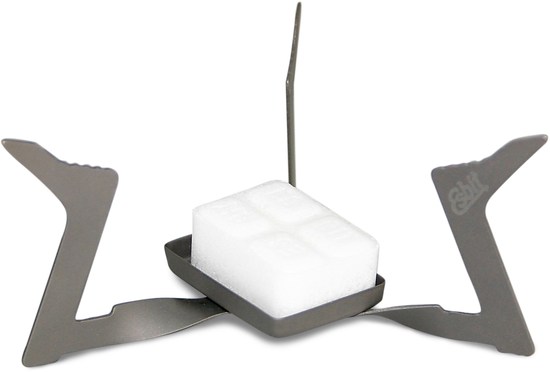
ESBIT Stove

KJ

Kenneth Jacobs BPL Member
PostedSep 17, 2012 at 11:10 pm

-What is BA stuff?

Bathroom stuff – Toothbrush, travel size toothpaste, mini trial size floss, chapstick, etc.

-Do you need a SAK-Swisscard? You have a knife
I bought the SAK-Swisscard primarily for the scissors in it. Was $7 + S&H for the scissors or $14 shipped for the whole card from Amazon. Additionally, the Mora Classic 2/0 + SAK-Swisscard was designed to replace the 4.4oz Leatherman Juice S2 I used to carry. Now I have a more functional knife I can beat on if needed, that I can grip more comfortably and have dropped the overall weight of the package while loosing out on pliers…oh well. I’ll have to see if the rest of the stuff in the Swisscard is really of any use for backpacking.

-Do you need the packcover with all the drybags? (This is were environmental assessment comes in)

This is still in debate (in my head).

-You list a long sleeve as worn. since it’s synthetic, leave the second one home, the first one will be dry enough to wear at bed time, if it’s soaked, go bare skinned in your down jacket or quilt. Again, this is conditions dependent.

The second LS is actually a very effective thermal layer. I use this when it gets super cold and and I am on the move. The tight fit design and fabric do a great job keeping you warm while keeping you dry, very quickly, so moisture doesn’t linger and chill. Additionally, I tend to sleep in the set and adjust my temp via socks, then cap, then additional layers. Both the Nike tops and bottoms are super snug to the skin fit. Lastly, I would definitely not want to be sleeping in my hiking pants at the end of the day. I see plenty of mud out in CO.

-Do you really need liner socks? With modern wool socks most people don’t.

I have found that they help a lot in keeping my feet a lot drier in my Gore-tex boots. Ironic, eh?

-If you do need liner socks, ditch the second pair. Wash your liner and wool socks at night and let them dry while you sleep in a clean pair of wool socks.

Roger! Again, this is the kind of stuff I need people telling me. I’m very inventive and logical, but not always practical.

-Do you really need tall mid weight socks? In warm weather a thinner sock is less warm. (Conditions?)

Yup, conditions apply here. Hot hot in the sun days and chilly nights.

-What is the 50′ Spectra for?

Carrying it for repairs, first aid, replacement for the compression lines on my pack, if I wanted to setup my water filter as a gravity system, extra guy lines if needed, water bladder shower (when we hike down south and it’s days in the 90s), need to temporarily hitch the dog for any reason, etc.

-Do you really need the Skrink bag(conditions dependent) In warm weather, with synthetic insulation in the pad, isn’t blowing by mouth ok? Would save 6 oz.

This is truly a luxury that I choose to spoil myself with. Honestly, the last ting I want to do at the end of a day is blow up my pad and pillow by mouth. Additionally, I don’t feel the moisture from my breath will help anything out over time. At the same time, my hot breath does not allow me to adjust my pad immediately because, as the hot air from my breath cools, the pad gets softer. I run my pad super low pressure, so this tends to have me tapping my hip to the ground when I’m on my side.

-Why do you need a spare stove? Cartridge stoves rarely break. If it does, make a campfire or eat cold food and hike out.

I think this may just move to a separate JMT trip equipment list and exist my shorter trip base gear list.

-What’s a Snozzle?

Here, I’ll let Ted @ Exped explain that one. It’s easier to see it’s purpose demonstrated, rather than trying to write it out. I use this both on my sleeping pad and pillow.
Exped Schnozzle

-I use my stake bag as a rock sack.

Gold! Keep’em coming! I already have a tougher thickness cuben fiber tent stake bag, so that works out perfect.

-Is your Hadron hooded? If so, you have a lot of head stuff for warm weather: Bucket hat, rain hood, wind shirt hood, down hood, fleece hat, buff. (again conditions dependent)

Yes. The Hadron is on it’s way to me, so once I receive it, the fleece hat may be taking an exit.

-no stakes?

The stakes are with the tent weight…I presume. I will have to see once I get the TarpTent Moment.

– No MAP?

Map weight is variable depending on where I’m going. There’s a good chunk of CO that I will never need a map for.

Kenneth Jacobs BPL Member
PostedSep 17, 2012 at 11:23 pm

Wallet

Usually just a few cards and some cash thrown in a ziploc bag.

Cell phone

Just on the JMT for GPS, backup maps, compass, books and other long rain wait-out entertainment. In CO, my phones never tends to work where it would be useful. If I go down south or up to MI, I'm usually with someone else and the phone stays in the auto.

Camera

Usually just my iPhone. I video document my times at certain points to calculate my pace later on, with reminder views and animal cameos. For the JMT, I know I'm going to want a more substantial camera.

Car key

In CO, I usually hitch where ever I need to go or someone drops me off and I give them a 2 hour window in which to randomly pick when to meet up with me on a certain day.

Brian Camprini BPL Member
PostedSep 18, 2012 at 5:30 am

Try a weekend trip doing things totally outside of your comfort zone. Do it when the weather forecast isn't too extreme, stay on trails you know, and make it a relatively easy trip. Leave entire categories on your list at home: ditch the emergency equipment, repair equipment, fire and cooking stuff, water purification, and everything in your general equipment category except your pack and maybe an opsack.

It'll give you a whole different perspective when you are considering what you really need. You can get opinions from strangers on the internet, but until you try some things yourself, you'll really never really get it. Leave the trowel, knife, first aid kit–the whole thing, and all cooking gear in your car or at home. Take a $5 tarp from Home Depot (not light, but just to get a feel for tarping) and some braided mason's line for guylines. Hydrate your potatoes, cous cous, or oatmeal with no stove. Or better yet, just eat stuff that doesn't need hydrating (Snickers or Cliff Bars, veggies, cheese, salami, bagels, crackers, peanut butter, etc). Don't treat your water or just use a couple drops of unscented bleach per liter. Tank up at water sources and then don't hike with more than 16 oz or a bare minimum of water. Bring only the quick drying clothes that you hike in plus one insulation piece for camp, no extra clothing. Maybe bring a cheap driducks rain jacket and no rain pants. Either that or the umbrella, but not both. Or leave both at home and just use the tarp to wrap up in to wait out a short storm–if the forecast is good, you probably won't even have any rain anyway. Get into the mindset that folks have been walking around outdoors for thousands of years without 90% of the stuff on your list, and just for kicks, see how minimalist you can go.

The point is, once you've actually experienced doing things this way, your perspective of what you really need becomes based on first hand experience. And you are less likely to believe that you need something when you really don't–it'll make you more honest with yourself. After a trip like this, you can then judiciously decide to add select things back into your pack rather than the much more painful task of trying to remove them.

Jake D BPL Member
PostedSep 18, 2012 at 6:03 am

"-Do you really need liner socks? With modern wool socks most people don't.

I have found that they help a lot in keeping my feet a lot drier in my Gore-tex boots. Ironic, eh?"

that is because the gore-tex is holding the moisture of your feet sweating IN

going to a non-goretex trail shoe will decrease the weight on your feet and you will be dryer over all. non-goretex dries faster and keeps your feet cooler. your shoes will get wet goretex or not, having them dry faster is what you want.

(i break this rule because the gore-tex versions of my shoes fit me better than the non.. go figure, i accept the downsides for fit, but my next shoes will be different and non-goretex)

also, you keep switching from "regular trips to JMT trip.." make up your mind.

Kenneth Jacobs BPL Member
PostedSep 18, 2012 at 9:25 am

Jake

The Gore-Tex shoes definitely have their perks and their downfalls. The Merrels I have are the only thing I found thus far that fit my ultra wide front foot, narrow heel.

Regarding my answering Tjaard's questions as to why I didn't have a cell phone and camera in my gear list, I'm not really seeing how answering his questions and just stating that those items will be in my gear list for my JMT trip, and that I don't normally carry such things makes me indecisive. I'm still working on all my base gear and not asking anything about additional gear for the JMT. I was merely answering his question in detail.

FYI, I do not have any "regular" trips, as I don't have the privilege of having anywhere I can regularly go on a whim that is truly "the outdoors" living near Chicago. The closest thing to real outdoors near here it about 6 hours away. All my trips require significant travel to places that vary wildly in conditions. California, Washington, Oregon, Michigan (UP and Mainland), Southern Illinois, Colorado, Wyoming, Montana, South Dakota…so yeah…no "regular", but still working on my "regular base gear". Nothing has changed.

KJ

Kenneth Jacobs BPL Member
PostedSep 18, 2012 at 9:38 am

Brian

I actually plan on doing something like this in late October/Early November down in southern Illinois. It's funny you posted this last night, as I was thinking to myself, "What if this whole situation was reversed and I had nothing?". "Things" (or gear in this case) definitely help in some ways, hinder in others. Though in most cases, it is a double edged sword. Happiness and comfort are definitely a choice, and "things" definitely take away from that through responsibility to assets and the resulting stress we put upon ourselves through making our lives more complex.

I only wish that some day I can FULLY live up to the ideals I hold in my head. Sometimes this is hard in the society we live in today…especially when you are in IT. …one reason I'm slowly transitioning away from it and into a career that fits these ideals.

KJ

Mary D BPL Member
PostedSep 18, 2012 at 11:31 am

Ken, I suggest you give up the idea of a "one size fits all" gear list. I have several lists depending on conditions. One gear list most definitely does not fit all trips!

I have three main conditions under which I backpack, and my gear list varies accordingly:
–Cascades summer (nights 35-45 F,days 60s to upper 80s,possible rain,often wet brush)
–Rockies above timberline summer (nights 20-35 F,days 35-80,daily thunderstorms,possible snow)
–Cascades fall-spring (nights 15-35 F, days 40-65, extended rain, probable snow, wet brush)

Winter isn't included because I don't backpack in the winter (can't stand to be cooped up in the tent during the long nights). I also don't backpack in really hot weather because it's too hard on my dog. Of course there are other places I backpack, but I usually just do minor tweaks on these three sets of conditions.

Some of the gear is the same for all, but especially the clothing layers vary. Other variations include whether or not I'll be fishing, fire restrictions, length of daylight and the frequency of water sources where I'm going.

Of course, if you're really good with spreadsheet software, you can set up a single list that will display/print only what is applicable to the trip conditions you set.

For purposes of this weight reduction exercise here on the forum, I suggest you pick one single long trip, research the conditions and set your list up specifically for that trip. Since you're planning the JMT next year, I'd use that one. It's also a trip that many folks here have done and about which they can advise you. Having the single specific list will make things far less confusing for those trying to advise you. You can then easily tweak that list for other trips.

PostedSep 18, 2012 at 11:51 am

When I said no wallet car keys etc. You don't have to answer and explain! :-)

I just meant, that perhaps you forgot to list them in your gearlist.

If you take them along, they need to be weighted and put on the list, if not, then they don't get listed, that's all.

As far as conditions goes, I just meant you need to asses them so you can make sure you have adequate equipment, but no unnecessary. That should tell you why you picked a certain shelter based on campsite style and conditions, or what navi equipment to take based on trail markings etc.
I meant YOU need to list this and analyze your list with it, it doesn't matter to me :-)

Read Andrew Skurka's book, it has a very good explanation of this and shows it applied to gear list design.

Kenneth Jacobs BPL Member
PostedSep 18, 2012 at 6:47 pm

Mary and Tjaard

Thanks for the tips. I never really thought of going at a gear list in more of a database fashion rather than a spreadsheet and classifying gear according to conditions. Should make picking only what I need (and nothing I don't) for a particular trip. Looks like I've got a bit of work ahead of me.

…and Tjaard…NEVER! ;O)

KJ

PostedSep 18, 2012 at 6:51 pm

What I do is tell myself how many hours/minutes/seconds i'm going to be using that paticular item; compared to how many hours lugging it around in the hot sun or blistering cold.

If you decide that its worth it find the lightest version of that item, if you have to, sell old gear to get that item.

Jake D BPL Member
PostedSep 18, 2012 at 7:09 pm

geargrams.com lets you make a master list and then you can drag items to individual trip lists.

Mary D BPL Member
PostedSep 18, 2012 at 7:58 pm

A few random ideas:

For your next few trips: As soon as you get home (while unpacking), list every single item that you did NOT use during the trip. One way of doing this is to put a piece of masking tape on each item when you pack for the trip, removing it when you use the item (yes, you'll be packing out a big wad of masking tape!). At home, take the items that still have the masking tape on them and set them aside. The items you didn't use are very strong candidates for items to leave home next time. You can do this for back yard "trips" (a good way to test lighter gear or going without those unused items.

You have a lot of weight in stuff sacks; consider going the pack liner route and leaving the stuff sacks behind. A 2 mil trash compactor bag weighs a lot less than a bunch of stuff sacks and will give your pack a waterproof lining. Just be sure you get unscented ones (most supermarket trash compactor bags are scented; try the hardware store instead). Some folks use that Exped Schnozzle bag you have as a pack liner. I haven't yet seen the Schnozzle so can't comment personally, but the more multiple use gear you have, the more weight you'll save. For organizations, zippered sandwich bags are a lot lighter than stuff sacks and you can see through them.

The big problem with pack covers is that they do NOT protect the contents of your pack from getting wet. In a heavy rain, water will run down between the pack and your back and soak into the back of your pack. If you slip and fall in during a dicey stream ford (I have!), that pack cover will definitely not keep your vital insulating stuff (clothing and sleeping bag) dry! That's why a pack liner with watertight closure (twist the top into a "candy cane" and tie it tightly) is far better!

As for clothing, my practice is to take only the clothing I would wear ALL AT ONE TIME in the worst conditions I could expect for the specific trip. It's amazing how warm I am (and I'm a "cold" person!) even sitting around in the most horrible weather if I layer my rain gear over my base layer, hiking shirt and pants, puffy jacket and warm hat. The only extra item I take is a change of socks. (Pardon the caps, but there's no way to bold or italicize stuff around here.)

I hope you're also looking at various lightweight gear lists, on this site and others. If you haven't been, I can give you some links that I've used. You of course have to alter them to fit your own circumstances, but they can give you lots of ideas–they did me!

Edit, later: If you're willing to fork over the $25 for a year's BPL membership, it's (IMHO) well worth it to read some of the really good articles in the archives that have gear lists for specific conditions (for instance, there are several related to backpacking in prolonged cold rain). If you want to do this, I can give you links (I have them all bookmarked, so it will be easy to do).

Kenneth Jacobs BPL Member
PostedSep 19, 2012 at 11:06 am

Got my FAK down to 4.7oz from the prior shrink down to 6.5oz:

Includes, Bandages (different sizes) gauze pads, narrow medical tape roll, sterile suture and thread, Wal-dryl, Immodium, Ibprophin, Tylenol Rapid Release, Generic Allergy Meds, Sudaphed, Tick Remover/Lifter w/ Tiny 5X Magnifying Glass, Tweezers, Scissors, Tiny Emory Board, Mole Skin, Antiseptic Wipes, Neosporin, and I believe that is everything. Anyone see anything obvious missing, recommendations?

Also got my Bag of Misc (Sun block, Soap, Chapstick, DEET, Hand Sanitizer, Toothbrush, etc.) down from 10+oz to 5.3oz. Found some great tiny little lunchbox condiment bottles at the Japanese grocery store. Should be able to get this a little lighter still with a lighter toothbrush and making some dried toothpaste dots. If anyone has any other tips regarding stuff like this, fire away please.

Also reconsidering my cooking setup and have a plan for an ESBIT setup that should weigh in right about at an ounce (without fuel). Right now my target is less than 1.5oz, and will hopefully be able to get 2 – 2 cup boils out of each 0.5oz cube in most conditions.

KJ

PostedSep 19, 2012 at 11:16 am

Many people on this thread have posted against pack covers. I personally don't use them either for the reason stated before:

-You need to pull them out and put them on, a hassle and sometimes you delay to long.
-If it rains long and hard, water get's in from the backpanel.
-They can flap in the wind
-Once on, you can't (easily) stow or grab items on the outside of your pack(trekking poles, rain gear, waterbottles, etc)

But, they are not without merit.Some people do use them, including Ryan Jordan(see bivy article pic or his article on spring hiking). They have the following benefits:

-Pack and pockets don't absorb water, keeping it lighter.
-Pack and attached items stay dry when you put it down in mud or snow.
-Items in outside pockets stay dry

So, I just wanted to point out, pack covers are not a bad choice per se, they just have pros and cons like everything else, and need to be evaluated in light of the expected conditions.

Viewing 25 posts - 51 through 75 (of 85 total)
Loading...