


Companion forum thread to:
A Survey of Water Hazards and Water Treatment Methods – Part 5: Filtration Methods
Topic
Become a member to post in the forums.
 .
.
Companion forum thread to:
A Survey of Water Hazards and Water Treatment Methods – Part 5: Filtration Methods

Because it's freezing before and after when I'm sleeping so I'de have to carry it in my pocket.

Too bad there isn't some way to test a filter after it's been frozen a bunch of times.
How much would you pay to have your filter tested and certified ?
"How much would you pay to have your filter tested and certified ?"
I would like Sawyer to test their filter (after freezing) and report the results : )
Thanks for the comment. According to themselves they DO remove chemicals. I have been in contact with them and both their webpage and their E-mail answers claim that they do. I have requested a test report.
If bwtechnologies actually remove chemicals I will choose it before the Saywer filter however if they cant back up their claims the Saywer stays on top!
I have benen trying to get an answer from http://www.bwtechnologies.com for quite some time now! The first replies where prompt and good but when I asked about a test report they have not gotten back to me at all! Suspious!
It seems like the one really serious drawback to filtration is that there’s no way to verify that it’s working (short of having access to a very sophisticated laboratory).
With boiling, I can feel the heat and see the bubbles. With a Steripen, I can observe the light. With chemicals, I can taste and smell the chemicals. There’s no way of knowing if a filter is working. What if I got the “lemon” out of that last production batch?
Is anyone aware of any studies that might give us an idea of how many failures per “X” number of filters manufactured there are?
Is there any way to garner an idea of how effective filters really are?
I made a female/female adapter by hot-gluing two bottle caps together then drilling a hole through the unit. I also made a narrow-mouth adapter for the Nalgene wide-mouth Cantene, which fills much easier than a narrow-mouth bottle or bladder.
So, if you squeeze dirty water from the Cantene through the filter into another bladder, connected with a F/F adapter, you are set up for a back-flush by simply inverting the arrangement and squeezing a bit of the clean water back through the filter then discarding the wash water from the dirty water bladder. Though it is unnecessary to do this often, it is trivially easy to do.


If you don't want to make your own. Look at these.
I’ve used the Seychelle bottle filter for some years now (marketed in the UK as the TravelTap). It’s affordable and lightweight, giving around 1600 litres per filter. Water flow reduces towards the end of its life so you’ll know when it need replacing.
It’s a zero faff system with good flow and no need for pumping, squeezing or backflushing. I simply fill up the filter bottle and any other containers at the source, and decant from the dirty containers to the filter container as I go. There’s an inline version as well for bladder users.
Performance has been validated by a number of NGO tests and Government labs including the US Red Cross and the UK military.
I’ve had a couple of chats with the UK distributor DrinkSafe, who have detailed knowledge of the comprehensive Ministry of Defence testing (they’re a great company to deal with, by the way). Although many backpackers are concerned about the performance of filters with viral pathogens, the Seychelle posted very good results. While viruses are in theory smaller than the micron rating of the filter, it seems that in practice they are normally attached to larger particles which are filtered, so only minimal concentrations get through. The distributor also deals with Sawyer, and in his view the better portable filters should all be effective with viruses – it’s just that most of them haven’t been tested. It’s surprisingly difficult to find authoritative information on this issue, so I thought I’d pass this on for what it’s worth. Caveat emptor..
I put the Seychelle to quite a stern test when I was given duff information and was caught without water in an arid Karst area. I was reduced to drinking from a blood-warm pool contaminated with cow-dung. No ill effects, though I now carry some tabs for additional peace of mind in extreme circumstances. I also do a lot of walking on Dartmoor which has fecal contamination from livestock and have never been infected.
Overall, I’m finding it a pretty good solution.
Become a member to post in the forums.
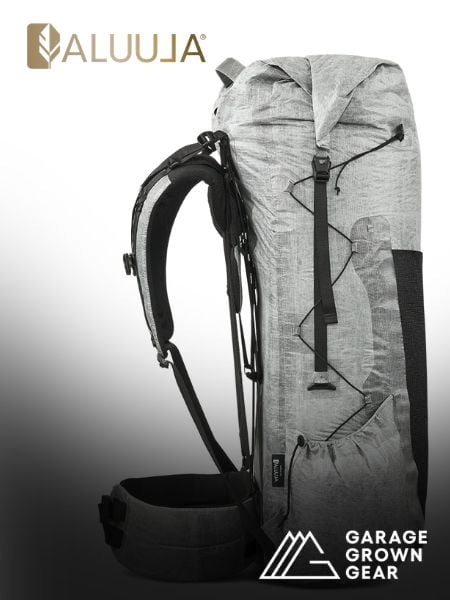 New Gear with Aluula FabricsLighter, stronger, more abrasion-resistant, and highly water-resistant - explore ultralight backpacking gear made with ALUULA Graflyte fabrics. Engineered for exceptional strength, durability, and lightweight performance, ALUULA Graflyte helps reduce pack weight without sacrificing reliability, making it ideal for demanding backcountry adventures.
 © Beartooth Media Group Inc.
 Loading...