Topic

Alcohol cookers…please be careful out there

  • This topic is empty.
Viewing 25 posts - 1 through 25 (of 51 total)
NoCO-Jim BPL Member
PostedMay 19, 2012 at 6:21 am

The U.S. Attorney's Office in Colorado on Friday announced that Fort Collins resident James J. Weber, 56, has been cited for causing timber to burn without a permit. According to a news release from the office, Weber is accused of starting the fire on Monday, when a stove he was using while camping along the Hewlett Gulch Trail lit the blaze. The stove was a small, backpacking-style stove that burns alcohol.

"He turned away for a quick moment," U.S. attorney's spokesman Jeff Dorschner said, "and when he turned back, he noticed there was a fire"

As of Friday afternoon, the Forest Service estimated the fire at about 7,600 acres, with 45 percent containment. About 550 firefighters were attacking the blaze.

http://www.denverpost.com/breakingnews/ci_20654312/hewlett-fire-near-fort-collins-at-7-673?source=rss

John Donewar BPL Member
PostedMay 19, 2012 at 6:33 am

Jim,

Check out this thread on the same subject.

Anyone using any kind of stove could have caused this same thing to happen.

1.)Find as level an area as possible to set up the stove.

2.)Clear the area of any “tinder” where you are going to be using your stove.

3.)A watched pot never boils but an un-watched stove is a fire waiting to happen.

4.)Be prepared with water and sand or dirt to smother any accidentally ignited
material.
(See rule number 2)

5.)When you are finished make sure that your cooking fire or stove is cool and
extinguished.

FWIW Alcohol stoves are not the enemy here. Accidental fires from cooking in camp can happen equally as much with wood fires, wood stoves, canister stoves and alcohol stoves.

Party On,

Newton

USA Duane Hall BPL Member
PostedMay 19, 2012 at 6:40 am

At his age and by the time someone moves on to alky stoves, you'd think they had enough experience and knowledge to be able to know what to do. I guess he was trying to go "Leave no trace". Gotta be careful out west here.
Duane

PostedMay 19, 2012 at 6:46 am

"James J. Weber of Fort Collins has been cited by the U.S. Forest Service for starting the Hewlett Fire.

Weber faces a $300 fine plus a $25 processing fee. The Forest Service will also pursue Weber for restitution, according to a statement issued Friday by the U.S. Attorney’s Office in Denver.

Weber, 56, is a licensed clincial social worker and counselor at the Colorado State University Health Network. He could not be reached for comment.

CSU spokesman Mike Hooker confirmed Weber is an employee at CSU, but the university cannot comment further.

A Forest Service investigation found that while Weber had been camping on the Hewlett Gulch Trail, he was using an alcohol-based camp stove. On Monday, that stove caused the Hewlett Fire, the Forest Service says.

Weber attempted to stomp out the fire but was unsuccessful. The statement says he fled the scene as the fire spread and he later reported to the Larimer County Sheriff’s Office that he started the fire.

There is no cell phone service at the location of the fire’s origin.

U.S. Attorney’s Office spokesman Jeff Dorschner said Friday that Weber did not go directly from the Hewlett Gulch Trail to the Sheriff’s Office right away.

“He went home and he later, first in person and later by phone, reported that he started the fire to the Larimer County Sheriff’s Office,” Dorschner said, adding that he cannot comment on further details of the delay in Weber’s reporting.

Weber was issued a citation instead of facing criminal charges because he caused the fire accidentally, made an attempt to stomp out the fire and reported himself to the Larimer County Sheriff’s Office, Dorschner said."

From the Fort Collins Coloradoan newspaper.

M B BPL Member
PostedMay 19, 2012 at 7:43 am

Yes any type stove could cause a fire. But not necessarily in the same way alcohol can.

To ignore the fact that alcohol may be a bit more hazardous and have a greater possibility of being spilled or knocked over and spread uncontrolled fire is like sticking your head in the sand.

We probably wont know what really happened, but I doubt the guys story a bit.

Dale Wambaugh BPL Member
PostedMay 19, 2012 at 9:18 am

Duane wrote, "At his age and by the time someone moves on to alky stoves, you'd think they had enough experience and knowledge to be able to know what to do. I guess he was trying to go "Leave no trace". Gotta be careful out west here"

Just because he was middle-aged and using an alcohol stove doesn't prove he had any wilderness experience or a lick of common sense. Over the years I've put out several untended campfires that have been left burning and would have low expectations for people cooking on a small circle of bare dirt, regardless of the type of stove that use. Like the comedian says, "you can't fix 'stupid'."

PostedMay 19, 2012 at 9:30 am

I've watched a couple YouTube videos where guys try to refill their lit alcohol stoves. One guy even did it in his living room! My point is that I don't under-estimate the naivety of people – age is sometimes meaningless.

And I've seen the penny stoves pop. So there are a number possible scenarios. Given the ways white gas stoves can fireball, I'm not sure how much "safer" they are. There is just a bit of basic stove "common sense" required with any stove.

But the fact remains that alky stoves are used safely by zillions of hikers. Smokers, arsonists, and campfires are by far the biggest source of man-made forest fires. And lightning is the overall biggest fire starter by far. So it would be sad to have mindless restrictions on alcohol stoves.

PostedMay 19, 2012 at 11:16 am

The Coloradoan has taken the story off their page but from when I read it last night, I think the fire started because the stove was knocked over. Everything must have been pretty dry to quickly start a fire that got out of control. Would've happened regardless of the stove type, but there seems to be a fear of alcohol stoves out there, so it got mentioned in the article.

It seems to me that it was carelessness, and then he reported the fire and got in trouble.

-Jeff

PostedMay 19, 2012 at 12:33 pm

I prefer ESBIT/FireLite fuel tablet stoves over alky stoves and feel they are safer.

This is especially true with my Trail Designs Sidewinder cone with a ti baseplate as the fire containment is very good. Plus I nail the stove & baseplate down with a ti stake through both to preclude wind or my clumsiness from moving it.

But it is still a fire and one STILL needs to clear the stove area down to the soil for safety.

BTW, even a tipped over canister stove could ignite a fire. Viligance is always required. Might even save your life.

Randy Nelson BPL Member
PostedMay 19, 2012 at 2:04 pm

It was very dry. That area hasn't received much of the moisture other areas in Colorado have. There was, and is, a fire ban in place and he was using the alky stove illegally. I've argued before that alky stoves are just as safe, if not safer, than white gas stoves, which have a lot more fuel avalailable and can have seal or improper priming issues. You don't need a large area clear to keep a 1/2 oz of alcohol from spreading to where it can ignite something. But that guy must not have taken proper precautions. No matter how it it happened, it casts a bad light on backpackers in general no matter how careful we are. Most people have no idea what the difference is between types of stoves. And some people are mistakenly saying it was a campfire that got out of control and that recreational camp fires should be completey banned at all times. Fire is a touchy subject around here where we've had some devestating fires, so emotions are often used instead of facts. Very few fires have been started by recreational users. But that's not what people are going to take away from this one. Sad.

John Donewar BPL Member
PostedMay 20, 2012 at 4:42 am

M B,

"Yes any type stove could cause a fire. But not necessarily in the same way alcohol can".

True enough, but since the fuels and stove types are different the way an accidental fire would be started by any of these would necessarily be somewhat different.

The key here is not the stove type it is the attention paid by the stove user to his lit and burning stove while it is in use.

I have seen an denatured alcohol stove knocked over while in use. In this particular instance some other material did get ignited. There was no panic by the stove owner / user. The stove owner had time to deliberately think through whether or not to use drinking water or the available dirt or sand in the area to extinguish the resultant flame. The flame was thoroughly extinguished without further incident.

A normal canister stove threaded on to its fuel canister and burning when knocked over could flare up and ignite any flammable material the flame would touch.

Ultralight wood stoves once lit and in full bloom if knocked over can spill the burning wood and hot coals. Again these sources of ignition could easily produce ignition of any flammable material in the immediate area.

In our quest to be ultralight and efficient we see short, wide cook pots with two or more cups of water sitting atop small somewhat narrow stoves and pot stands. Non remote canister stoves add to this somewhat because they raise the center of gravity by setting the cook pot up higher.

The choice of cook site and the preparation of the site is very important. After that attentiveness is paramount!

Party On,

Newton

PostedMay 20, 2012 at 9:25 am

One particular type of alcohol stove is probably an order of magnitude more risky than any other type of stove, the super easy to make cat can stove, particularly the Jim Woods type, where the pot rests on the stove, which is already very narrow, creating a fairly radically unstable setup, with the alcohol totally uncontained should the top heavy pot/stove setup be knocked over.

I'd agree there are some risks with all stoves, but this one stands alone, and sadly, that stove just happens to be the easiest one to make, and has the fuel super easy to spill out.

Stoves with a stand are far less likely to get knocked over, and a stove like a whisperlight, where the entire unit creates a fairly large footprint has to be at least 10 times harder to knock over than a smaller and radically lighter aluminum can stove of any type.

Sure you can blow up the bigger stoves, but in normal operations this almost never happens, whereas s simple misstep or trip can knock over the light alcohol stoves.

It's also a fact that alcohol when burning in the light is hard to see, which is another factor.

I know when I prime my alcohol stove, I use a little primer tray that rests on the ground, but reading this thread, I am inclined to start using a small aluminum reflector as well to cover the ground.

As you are probably aware, when a pattern of fires starts, and if the park service starts to notice that alcohol stoves were involved, they are not going to differentiate between types or skill levels of users, they are going to ban them, since most users are clueless, that is the right decision, as with bear cannisters.

So this type of discussion worries me a bit, especially the comments that full contained stoves that are virtually impossible to tip over are just as risky as an alcohol stove which weighs a few grams and has no triangulation on the legs at all to stabilize it.

Glad I use a stove with a pot stand, I like these things but I think it's wise to consider the actual risks, especially in very dry terrain cooking during daylight hours.

I used a whisperlite and xgk for decades, and consider my new alcohol stove much more of a fire hazard, with equal care taken with bot to avoid preventable errors, so I try to be very careful with it. But we all know that there are some people who will not be careful.

Bob Gross BPL Member
PostedMay 20, 2012 at 9:45 am

"xgk" [stove]

Geez, I don't think that you can tip over an XGK stove.

–B.G.–

USA Duane Hall BPL Member
PostedMay 20, 2012 at 1:30 pm

I wonder how many folks read their Campfire permit and the need to clear flammable material five feet in all directions or listen to the speil when getting a wilderness permit where required? Even a few feet would help, down to dirt. I too have had the need to extinquish a few campfires in my day that still had wood in them, not the ones where the camper failed to dump water on the coals.
Duane

John Donewar BPL Member
PostedMay 20, 2012 at 2:46 pm

@ Harald,

I appreciate your stable input on this thread. ;-)

"Stoves with a stand are far less likely to get knocked over, and a stove like a whisperlight, where the entire unit creates a fairly large footprint has to be at least 10 times harder to knock over than a smaller and radically lighter aluminum can stove of any type".

"So this type of discussion worries me a bit, especially the comments that full contained stoves that are virtually impossible to tip over are just as risky as an alcohol stove which weighs a few grams and has no triangulation on the legs at all to stabilize it".

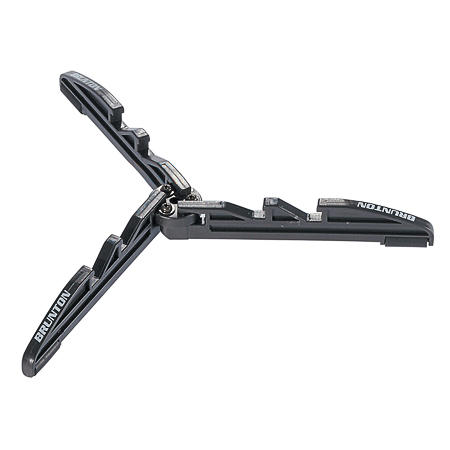
In my post above the canister stove type that I refer to is one that uses the round fuel canister as its base. There is no triangulation on the base of one of these unless the hiker / camper uses one of the stands that are available for these stoves.

Brunton CanStand

I have also seen it suggested that tent stakes and even clothes pins taped or velcro wrapped to the sides of the fuel canister and "sunk" into the ground will add to their stability.

I am in full agreement that a stove with a wider base is much harder to tip over than an alcohol stove that serves as its own pot stand.

On my last long hike I carried one of Huzefa's remote canister stoves. It has a fairly wide triangulated base and would be harder to tip over than a much narrower alcohol stove serving double duty as its own pot stand.

@ Duane,

+1 "…Campfire permit and the need to clear flammable material five feet in all directions…"

Finally I still believe that preparedness, attentiveness and vigilance while using any stove in the backwoods is the most important point. Stuff happens!

"But we all know that there are some people who will not be careful".

"Like the comedian says, "you can't fix 'stupid'."

Party On,

Newton

Mary D BPL Member
PostedMay 20, 2012 at 3:26 pm

Not only alcohol cookers!!!

When campfire bans are in place, you need to check carefully by jurisdiction. Many jurisdictions include wood-burning stoves in the ban. Some jurisdictions prohibit any stove that doesn't have a shutoff valve, which would include alcohol and esbit.

John G BPL Member
PostedMay 20, 2012 at 3:26 pm

White gas stoves are the only type I've had any trouble with. Several times the fire ball engulfed the entire base to within an inch or two of the valve. Ie: no way to shut it off and keep your fingers… I fully expected the fuel bottle to explode like a grenade.

A canister stove that tips over should ignite forest duff even faster than alcohol. It has twice the BTUs after all. At least I should be able to pick it up by the base to get the flame off the forest floor. Of course that takes more time than just stomping out an alcohol stove.

I do agree the achy stoves without pot stands are tippy. The Caldera cone or the Trangia pot stand / wrongs screen system looks much more stable than even a remote canister stove to me though.

Personally, I think alcohol stoves are the safest – given the dangers of using a full / enclosed windscreen with a canister stove in warm weather.

USA Duane Hall BPL Member
PostedMay 20, 2012 at 6:33 pm

In my younger days, I wanted to see how long it would take a empty paint aerosol can to explode in my burn barrel when incinerators were still allowed up here in the moutains. My trash was still burning when I threw the can in, put the screen back over the top and backed off quite aways. It took I believe about half a minute to explode with a loud boom louder than a 22 LR. So your leaking fuel bottle or canister can take quite a bit. If you think your canister may be getting hot, you can feel it, plus the outgoing fuel has a cooling effect on the canister. It will have to get way too hot to touch before it would explode. For example, last Fall I had bped up onto the PCT up here by the Buck's Lake Wilderness and down into Lost Lake. That night, I used my old Optimus embossed model 8 stove. I usually don't use a stove as long as I did that night as I had to boil a couple pots of water for drinking. By the time the second pot had reached a boil, the SRV (Safety Release Valve) had opened and I had a small jet of flame coming out of it. I shut it down. When all was settled down, the fuel tank was too hot to touch as the fuel was actually boiling. So if your stove catches fire, you do have some time. And unlike what I did not do, you can feel your tank/canister before the stuff hits the fan. Now I know when using that old stove to watch it. Also, you should be using any stove on dirt or a nice rock, not duff, that is what burns.
Duane

Robert Kelly BPL Member
PostedMay 21, 2012 at 6:00 am

Totally agree with "I know when I prime my alcohol stove, I use a little primer tray that rests on the ground, but reading this thread, I am inclined to start using a small aluminum reflector as well to cover the ground."

It does not take much in terms of cost or weight carried to put a square of aluminum foil in your kit and use it under whatever kind of stove you have. The forest you save might be your favorite. Just sayin' . . .

Galen Benson BPL Member
PostedMay 21, 2012 at 6:29 am

Last year while camping during extremely dry conditions but in an area still open to wood fires I used an established fire ring to setup my alcohol stove. I used a cone type wind screen and noticed smoke after a few minutes. When I removed the cone and pot the heat produced from the stove had restarted the old coals. There had been no fuel spilled nor had the stove been tipped over. Just the concentrated heat from the stove wind screen combo. It is extremely important to remove all flammable material from under the stove site.

Dean F. BPL Member
PostedMay 21, 2012 at 8:06 am

I'm not sure I'm buying the argument that canister stoves are inherently so much safer than alky stoves. (I concede that they are bit more idiot-proof, and thus deserve some consideration on that point alone, but that's it.) But most of the canister stoves in use nowadays are not remote rigs. The burner sits on top of the canister and the pot sits on top of the burner. They are quite top-heavy and need just as much attention paid to them to prevent disasters such as this one as alky stoves do. I've seen a lot of clueless campers with legless canister stoves perched on non-level rocks with the burners blazing. And I know that I personally have tipped a canister stove over several times in my youth, but never had a mishap with my low/flat alky stove.

There are extreme examples- look at how tall and tippy the JetBoils are.

No, I'm not poo-pooing how easy it is to accidentally kick your lightweight alky stove and send burning fluids scattering into the underbrush. And I agree that setups like the Fancy Feast stove are inherently less stable and demand a bit more care in their use. But an alky stove that uses a pot support or a cone is probably as safe (in the causing-forest-fires sense) as a tall, tippy stove like a JetBoil. You can accidentally kick either one of them over, and the alky stove has the disadvantage of being filled with a liquid accelerant but the canister stove is more tippy and thus more likely to have an incident in the first place.

If you say "Well I take precautions with my canister stove, such as using support legs and being careful to place it level and not tip it over, and I pay attention to it", well then I would answer "I take precautions with my alky stove, like using pot supports and placing it in a stable spot where I won't kick it into the underbrush, and I pay attention to it."

I think that's probably the biggest error the gentleman in question made- he turned away from the stove for too long and when he turned back there was already a fire established to the point that he couldn't extinguish it. I would speculate that he would have had the same problem if he'd tipped a canister stove. From the article it does not sound like he kicked the stove and scattered burning alcohol all over or anything. Perhaps he didn't clear an adequate burn ring, as well.

A remote canister system arguably IS the safest bet, though, if we are splitting hairs- low, not tippy, and doesn't scatter accelerants when kicked over. Well, the safest after not using a stove at all, that is.

Tom D. BPL Member
PostedMay 21, 2012 at 8:29 am

Common sense is important here and doesn't always get followed on the trail. If there is no fuel to burn, the stove won't start a fire. Clear the area around your stove of any fuels, especially light flashy fuels like pine needles, etc. I see people cooking with just a 2' diameter area around their stoves where they pushed back piles of pine needles. This isn't good enough and is a fire waiting to happen. Consider where your fuel would go should it spill. Find or clear an open space with 8-10 feet of clearance. When you are ready to move on, replace what you cleared as best you can. I do this whether I'm using my alcohol stove or my Whisperlite.

PostedMay 21, 2012 at 8:34 am

…and you can do a simple experiment to prove it out. Set up a safe burn area in your backyard, and for "real world" likeness, be sure to provide some dry forest fuel to see the impact. Take your typical canister stove (burner mounted on top of canister). Turn it up to blast mode, and topple it over. Leave it for a few seconds, and then stand it back up. See how long it takes to stomp out the resulting fire – depending on the dryness and amount of fuel, it'll take probably 30 to 60 seconds.

Now, do the same thing with an alchy stove. You'll note some key differences with the alchy stove: first, the fuel pours out and now you're chasing a liquid fire. Second, when you stomp it out, now you've got alchy on your shoes and your shoes are on fire. Third, if you try to pour water on it, you've now spread the fire further (never pour water on a liquid fuel fire). The only way to suffocate and extinguish an alchy fire is to smother with non-flammable material (e.g. dirt) or to let it burn out. Convincing yourself an accidental tipover won't happen with an alchy stove is not a very prudent fire safety habit.

My first test trip with an alchy stove, it was cold, my fingers were shaky, and I accidentally tipped over my alchy stove. Thankfully I was cooking in an established fire ring, but I knew that I wouldn't always have that luxury. The stove went on gear swap shortly after returning.

PostedMay 21, 2012 at 8:48 am

"… he later reported to the Larimer County Sheriff’s Office that he started the fire."

Regardless of what transpired, I respect that he help himself responsible. Obviously there were some preparation mistakes made and I hope the area recovers quickly.

Dean F. BPL Member
PostedMay 21, 2012 at 9:13 am

Convincing yourself an accidental tipover won't happen with a canister stove is not a very prudent fire safety habit, either… :)

OK, I'll try to avoid my usual verbosity and cut this down a bit:

Alky stoves do have their safety concerns- they do use a puddle of flaming liquid, and I'm not disputing that. I'm just saying that trying to present canister stoves as INHERENTLY IMMENSELY MORE SAFE is disingenuous, because canister stoves are still a significant fire hazard, too. (Not to mention this is the first forest fire I've ever heard of being started by an alcohol stove- but maybe that's sampling bias. If you want to ban something ban smoking.)

If a canister stove tips over into a pile of desiccated pine needles then, yes, I would propose that you'll have a serious situation on your hands in about ten seconds. Now, if you really kicked that alky stove and sent flaming alcohol flying over a hundred square yards of dried tinder then, yes, I would agree that might pose a bit more of a problem than if you'd tried to send the canister stove through the goalposts.

If you have an adequate ring there isn't a realistic problem with either stove. Clever comments about flaming shoes notwithstanding, you can stomp out an alcohol fire- we're talking about all of an ounce of alcohol spread on the dirt, after all. I've done it. Or you can smother it with a few handfuls of sand just as easily as burning detritus. And if you've spilled it into pine duff instead of on dirt, well, then your ring was inadequate, wasn't it? A pile of burning pine needles is not hard to extinguish just because it was lit with alcohol- it would be just as difficult if it were lit with a match.

I still suspect that the guy in the article didn't notice the fire until it was too well established to smother- which could have happened with a tipped canister stove, too. It certainly does NOT sound like he kicked flaming alcohol all over the place then ignored the situation for a while, which is really the situation that you are claiming is so unsafe about alcohol stoves. Something else happened here- maybe a spill that he didn't notice, and didn't notice it was on fire because of the well-known invisibility of alcohol flame in daylight. THAT is a stronger criticism of alcohol stoves, which is again mitigated with a good fire ring.

And as I said I think canister stoves deserve consideration for being more idiot-proof. No, I would not recommend an alky stove to a novice camper. Novice campers just try to set their stove on a rock (often not level) to avoid scraping a fire ring.

Viewing 25 posts - 1 through 25 (of 51 total)
Loading...