Great article, and great debate from everyone. This is the sort of honest, evidenced (and sometimes opinionated!) discussion that keeps me coming back to this site.
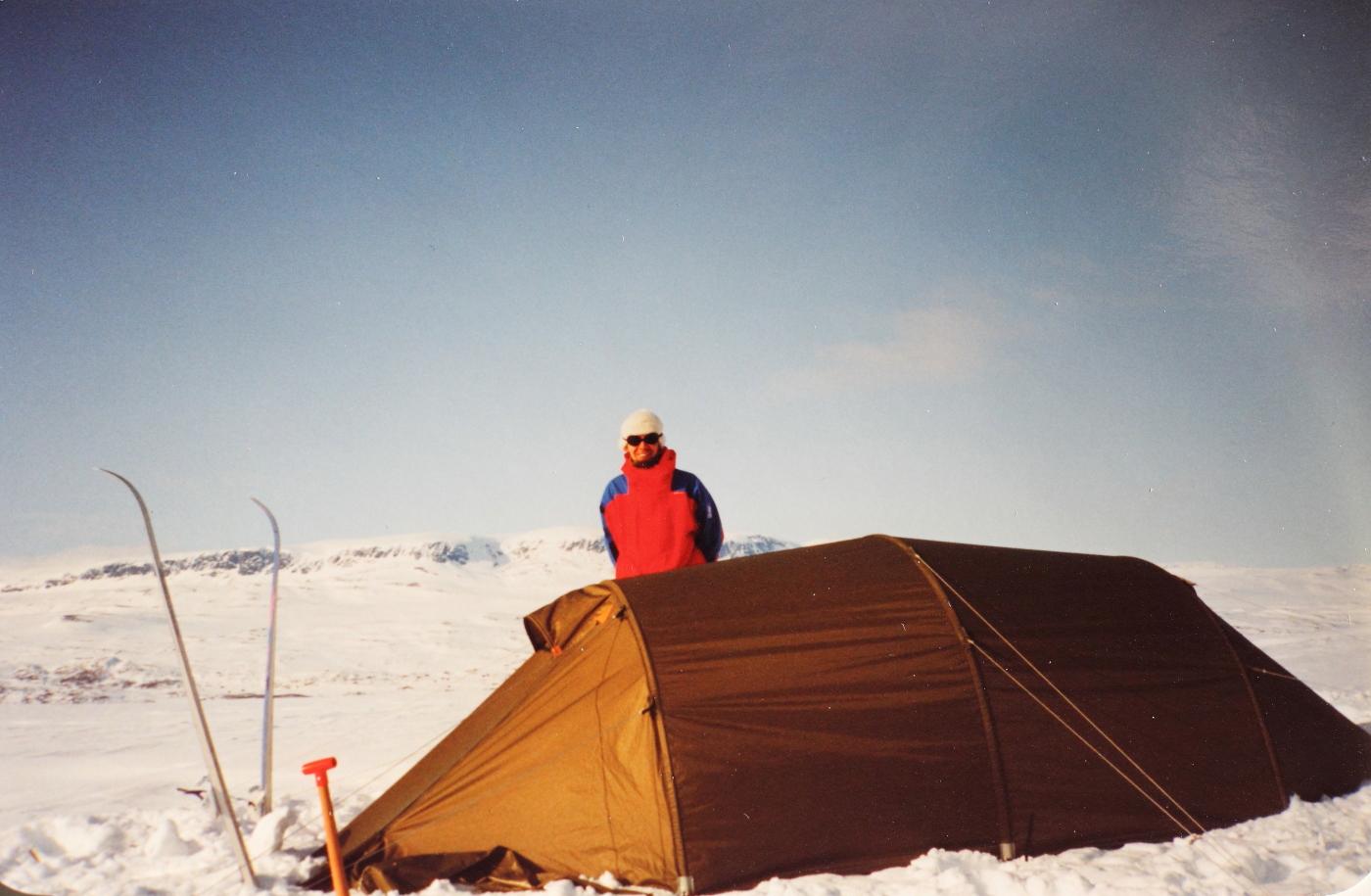
I have had the honour of owning both a Macpac Olympus and a The North Face Mountain 25, which are (I think most would agree) popular benchmarks for tunnels and geodesic dome/pop-ups respectively. Whilst hardly a hardened mountaineer I have had the good fortune (or misfortune) to use both in reasonable anger. So a personal perspective can be added.
The older Olympus was similar in weight to the current Mountain 25.
From my experience the Olympus was definitely easier to set up generally, in high winds and by oneself in trying conditions. I don’t agree with the off-cited idea that the freestanding tents are easier to move about and place. I found the tunnel design actually easier to set up in tight places. Once you are accustomed to the tent it is very easy to estimate where it will sit and pitch accordingly. At worst a slight rearrangement of the end pegs gets the tent into perfect position.
Going against the grain now though but I prefer the Mountain 25. Some of that is due to features that exist in other tunnels but not the Olympus (like the really big vestibule of the Mountain 25 for cooking and preparations). I was never left wanting when I had the Olympus. Having said that – the biggest storm I have experienced was in the Mountain 25 and both me and my climbing buddy felt that the Olympus likely would not have survived (we were worried at several points about the Mountain 25 surviving but it performed well).
Main issue with the tunnel is that you are very dependent on the pegs. Setting up on boggy soil, soft sand or fluffy snow and I would be nervous a peg would pull and the whole thing would come down like a pack of cards. Also setting up on rock, without peg options, it can be hard to get an acceptable pitch (in terms of wind security) with the tunnel.
I accept that a good tunnel may be resist wind really well due to an ability to flex. I always tried to pitch mine with a vestibule end pointing into the wind. But that flexing puts some major strains and shocks on the guylines/pegs. Again – I think you need bomber pegging for tunnel tents in more extreme situations. And the guylines to hold up. I have experienced some of the Kevlar guylines on the Mountain 25 being eventually cut by (I think) constant flying ice. I think a tunnel would have suffered more for the loss of those guylines with the all directions gusts we were experiencing.
The Mountain 25 can be a b#$ch to set up. There is a technique to it in rough weather to avoid damage to the poles and tent but it is never as easy as the Olympus. Two people helps. But once up it is not coming down, and it is a lot more comfortable to wait out a storm (for days if need be). Even if the guylines and the pegs on the ends pull, I doubt the main body is going far with a couple of people and their gear inside. Once a bit of snow has settled the tent is sort of seated in and I expect would hold up in a good wind even without any pegs. I believe (no data to prove) that the Mountain 25 tolerates gusting swirling winds (from all directions) better than the Olympus. The geodesic can be internal guyed as well – something I have never needed to do.
It is much quieter in a big wind which is nice, and the tighter inner means less frost falling on sleeping bags from the flexing inner tent. It still moves about and flexes a fair bit in big wind – but in a more consistent and controlled manner. Maybe not a fully rational perspective, but the geodesic dome feels more secure and so is more ‘relaxing’ to wait out a storm. This is not such an issue for an overnight – but on the third day in a tent and still waiting it matters.
I prefer the fight for 20 minutes setting up knowing that there is little to worry about for the (potentially) days tent-bound after that. However I really wish that the likes of the Mountain 25 could be designed with an easier, integral pitch.
If we can discard some laws of logic and engineering all I ask is a slightly simplified, spacious two-man, geodesic dome type tent, with a simple integrated pitch system, and about 2.0-2.5 kilos ;). I am sure someone here can knock me up something like that!
Despite the above – I agree with what I think is Rodger’s central thesis – that the tunnel tent is a much ‘misunderestimated’ and underappreciated design by many outdoorspeople. And those Hilleberg’s sure look good :)