Topic

How Much White Gas Do I Need?

  • This topic is empty.
Viewing 21 posts - 1 through 21 (of 21 total)
Hikin’ Jim BPL Member
PostedApr 6, 2012 at 1:17 pm

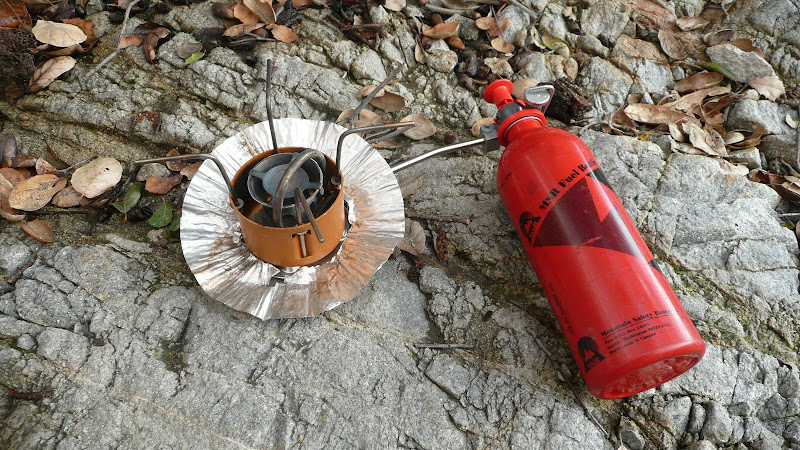
How much white gas should one bring on a trip? I don’t know that I can give you a one-size-fits all answer since so much depends on the individual and conditions, but I’ve got some ideas that may help you get a handle on the issue.

Please join me as I briefly examine How Much White Gas Do I Need?

HJ
Adventures In Stoving

PostedApr 6, 2012 at 2:27 pm

Thanks! I'm new to white gas, and I'll be using it for the first time next winter. This is very helpful, and it'll be a great starting point for my own testing to find out how much I'll need on a trip.

Hikin’ Jim BPL Member
PostedApr 6, 2012 at 4:08 pm

Thanks! I’m new to white gas, and I’ll be using it for the first time next winter. This is very helpful, and it’ll be a great starting point for my own testing to find out how much I’ll need on a trip.

Hi, Andy,

Glad it’s helpful, and you’re taking it the right way — as a starting point.

HJ
Adventures In Stoving

PostedApr 7, 2012 at 8:01 am

Jim – I read your post and I am a bit confused, it seems like your white gas fuel usage it high. Given the energy density of white gas, I would have expected to be far more efficient than what you are reporting. On the surface, it would appear that white gas is only slightly better than denatured alcohol. Could this be due to the inefficiencies of priming? Stove efficiency? Maybe I need to see a side by side comparison to see the apples to apples results. Best regards – Jon

Hikin’ Jim BPL Member
PostedApr 7, 2012 at 8:56 am

Jon,

My numbers are fairly conservative. I’ve rounded up in all cases. My numbers do include priming.

If I were really being mindful about it, I’m sure I could reduce my consumption. Sometimes I’ll leave the stove running for a minute while I add water to something and then put more water back on simply because I don’t like repeatedly priming the stove. My numbers are based on normal use where I wasn’t making any particular attempt to be efficient.

HJ
Adventures In Stoving

Roger Caffin BPL Member
PostedApr 7, 2012 at 11:55 pm

> it would appear that white gas is only slightly better than denatured alcohol. Could this
> be due to the inefficiencies of priming?
This is usually the case. It takes a bit of fuel to prime a white gas stove, and users are often reluctant to turn the stove off between stages. For this reason I usually allow double the weight of white gas compared to propane/butane.

Cheers

Stuart R BPL Member
PostedApr 8, 2012 at 1:35 am

It's been some time since I last used a naptha/white gasoline or kerosene stove, but I always used meths/alcohol or esbit tabs to prime it.

Roger Caffin BPL Member
PostedApr 8, 2012 at 1:50 am

Hi Stuart

Oh ditto! As you know.

Yes, I used to use metho to prime my kero stove, but even so, the whole process did use some kero during the start. And of course, with a kero stove I really did not want to shut it down once it was going. Messy.

Regardless, it all has weight.

Cheers

Hikin’ Jim BPL Member
PostedApr 8, 2012 at 8:42 am

> it would appear that white gas is only slightly better than denatured alcohol. Could this
> be due to the inefficiencies of priming?
This is usually the case. It takes a bit of fuel to prime a white gas stove, and users are often reluctant to turn the stove off between stages. For this reason I usually allow double the weight of white gas compared to propane/butane.

I don’t allow quite double, more like half again as much, but yes with white gas or kero, I allow for a lot more fuel for both of the reasons Roger mentioned.

One of the things I like about the Dragonfly stove is that you can dial it down to almost nothing between “courses” which does conserve on fuel a bit. But it is still running in the in between times. It’s just a hassle to re-light, so I (and many others), leave it running a bit.

White gas and kero type stoves are great for cold weather. The fuel is cheap and typically available everywhere, even in places where canisters may not be. I’m speaking of kero in particular here which in many parts of the world is the de facto fuel standard. But if one is looking for light and efficient, perhaps white gas/kero would not be one’s first choice.

HJ
Adventures In Stoving

Hikin’ Jim BPL Member
PostedApr 8, 2012 at 4:06 pm

And of course, with a kero stove I really did not want to shut it down once it was going. Messy.

The worst part of shutting down a liquid fueled stove in my opinion is releasing the pressure from the fuel bottle. Fuel tends to spray all over.

There is a better way: The flip stop. It works with Optimus, Primus, and MSR stoves*. It does not work with Soto and Coleman stoves*. Naturally, this is technique that applies to remote type liquid fueled pressure stoves only.

HJ
Adventures in Stoving

*At least the ones I’ve tried it on which should be representative.

Ryan Tir BPL Member
PostedApr 9, 2012 at 12:07 am

I'm not sure if this is normal or my fault, since it was my first time with white gas.

After cooking, I turned the valve off to burn of the line fuel. It took a LONG time for it to die. I'm talking 10-15 minute range and the entire time, it was producing a low flame (not blue or hissing, very much like priming flame at 20% strength). Is this normal?

I discovered that I nearly used 300ml on a two night trip. Is the valve not absolutely OFF without disconnecting the bottle?

Roger Caffin BPL Member
PostedApr 9, 2012 at 2:49 am

Hi Ryan

That IS odd behaviour. In fact, I would say the valve on the bottle was defective (or very dirty), and should be replaced.

Cheers

James Marco BPL Member
PostedApr 9, 2012 at 5:56 am

This question comes up all the time. Frankly, it is nearly impossible to answer without knowing exactly a lot of things about how you are using your stove. A lot of stoves can really throw some heat. This leads to buring a lot of fuel. Some stoves don't burn that hot. They use about half the fuel to start with. Priming always wastes a small amount. Some people use plenty and call it close enough. Some people use too little and have to prime twice. It can be hard to judge between the two on cooler morningings. Some stoves are remote, like the ones that Jim shows. Some are self contained, like the Coleman Sportsters…different priming needs. If you do a lot of cooking (bacon, eggs & coffee in the morning, soups for lunch and three course meals for supper) this will obviously take a lot more fuel than someone who only boils water once per day. Fuel usage can vary from less than a fluid ounce per day, to 2-1/2 fluid ounces per day in summer. In winter, more, of course. From solo trips to 3 person trips, it will vary. Soo, there is no one simple answer.

For myself, solo, I boil about a liter(quart) in the morning. This is enough for oatmeal, and coffee. I boil a similar amount at night, skipping lunch more often than not. I usually cook a stew, soup, rice or something at night. Sometimes foraged stuff is also available from the days hike. I plan on simmering stuff for at least 20 minutes in the evening. (I take many rest stops, about 5 minutes each. eating a handfull of nuts, a trail bar, some M&M's or the like, during the day, but I don't stop for lunch.) Generally, I use ~1fl ounce per day. A 10day solo trip will usually use a 12oz bottle of fuel, with a bit left over. With a partner, I bring a 16oz bottle.

Set up can make a HUGE difference in fuel consumption. I use an old SVEA 123 for all camping, 'cept 2-3 days. Then I use alcohol. For the SVEA I use a MIDI pump. This weighs about 1.25 oz, but weighs about the same as the fuel it saves for a week. I don't use a seperate prime, because it makes a mess of things and results in a big flame or fireball. Anyway, 5 strokes serves to presurize the tank. After fuel dribbles down the outside of the stem, I turn it off and light it. Just before it goes out, I turn the gas on and put the pot of water on. Then I adjust the burner to low. Low heat is far less wastefull of fuel.

In the morning (after dropping the tent, packing my bag and changing cloths) the water should be boiling. Even if it isn't, I turn it off…hot enough. I use treated water for the morning, soo, this is no problem. I have breakfast. then sit down with my coffee. After coffee, I pack my gear in my pack, clean up anything around camp, and leave. This usually takes about 1/3oz of fuel, depending on the temperture outside. This takes about 45 minutes. If I am in a hurry, I can skip all but the coffee. I NEED my coffee.

At night, I set up camp and again start boiling about a liter of water. After getting some wood for a fire, I usually make cocoa, then add ingredients for supper and let it simmer for about 20 minutes as low as I can get it. This uses up about 2/3oz of fuel.

Generally, I use a wind screen/heat shield around my old SVEA. The stove only puts out around 4500-5000BTU on max heat to begin with. On low, it is only about twice as good as an alcohol burner. On extreeme savings I can get this down to 3/4oz per day, but, that is a lot of fiddling. Knowing how much I burn lets me be very comfortable with the ammount I burn per day. The usage and consumtion will vary. Do your own test runs. My stuff has been dialed in over the past 30-40 years or so.

With a Simmerlite stove, I use about 3 times as much fuel. It burns hotter, and, it does not simmer as well. A 20oz bottle did NOT last for 7 days, 4 years ago when I tried it. Nice heat though.

Bob Gross BPL Member
PostedApr 9, 2012 at 10:57 am

I used to lead a lot of group backpacking trips, and I nearly always had a central commissary, so I would bring one or two MSR XGK stoves to do all of the cooking and water boiling. I always used 1-liter Sigg fuel bottles, so I did most of the fuel estimation on the basis of how many Sigg bottles I would need. Obviously that varied with the number of people and the number of days. Sometimes it would vary with the complexity of meals.

I estimated that one Sigg bottle would provide a medium flame for four hours, so I figured out how many hours of cooking and boiling would be needed for any specific trip. Efficiency was lost if an inadequate windscreen was in use, so I simply tried to keep everything efficient for all meals.

Of course, the bad factor was snow melting. If it was a snow trip and we had to melt snow to make our water, that easily doubled the time for flame, so it would double the fuel requirement. Snow melting can become terribly inefficient, so we generally left that as a chore for one of us who knew it.

On a long and cold trip, you really need your fuel efficiency to be high. As was already commented, priming can waste a lot of fuel, especially if you are starting and stopping with lots of small meals. I found that through daily use I got my priming practice reduced to a science. I knew how much fuel was in the bottle, so I knew how much air space required pressurization. I knew how much time delay there was between turning the fuel control knob and when the first drop of fuel came though the burner orifice. It became a standard procedure with minimal flare-up. In fact, on the one long and cold trip, we were doing all of our cooking inside the tent vestibule, so we really could not afford any big flare-up that would burn the place down. I discovered that it takes only a big piece of aluminum foil to act as a flare-up guard. On one expedition (10 days or so), my cook team had the same total fuel consumption for three people as the other cook teams with two people, so we must have been doing something right.

–B.G.–

James Marco BPL Member
PostedApr 9, 2012 at 1:22 pm

Bob, 2/3 the fuel consumption is not too bad. The technique you use has a LOT to do with fuel consumption. You must have a good one.

Bob Gross BPL Member
PostedApr 9, 2012 at 1:32 pm

"You must have a good one."

On the first day out, the technique may be rough. After several days of the same routine, it gets polished.

The other detail is that there is no one single definition of "white gas." It varies from place to place, and that takes a little getting used to as well.

–B.G.–

Hikin’ Jim BPL Member
PostedApr 9, 2012 at 3:46 pm

After cooking, I turned the valve off to burn of the line fuel. It took a LONG time for it to die. I’m talking 10-15 minute range and the entire time, it was producing a low flame (not blue or hissing, very much like priming flame at 20% strength). Is this normal?

I’ve never, ever seen a stove do that. There’s something seriously wrong here.

Is it new? I would take it back and complain.

I discovered that I nearly used 300ml on a two night trip. Is the valve not absolutely OFF without disconnecting the bottle?

That is exceptionally high usage. I’d usually get almost a week’s worth of (fairly simple) cooking out of the same amount of fuel. As I say, there’s something very odd going on here. I’m not sure that valve is safe I’d take it back and exchange it or replace it.

HJ
Adventures In Stoving

Hikin’ Jim BPL Member
PostedApr 10, 2012 at 9:37 pm

It’s been some time since I last used a naptha/white gasoline or kerosene stove, but I always used meths/alcohol or esbit tabs to prime it.

Hunh. Interesting. I’ve used alcohol, and I’ve heard of using priming paste, but I’ve never thought of using ESBIT. Does it work well? Do you crumble up the tab first? Does it leave some deposits on the stove?

HJ
Adventures In Stoving

Bob Gross BPL Member
PostedApr 10, 2012 at 10:54 pm

"Do you crumble up the tab first? Does it leave some deposits on the stove?"

That just leaves some flavor in the stew.

–B.G.–

Viewing 21 posts - 1 through 21 (of 21 total)
Loading...