Topic

Create Silnylon Rainfly?

  • This topic is empty.
Viewing 23 posts - 1 through 23 (of 23 total)
whitenoise . BPL Member
PostedMar 29, 2012 at 8:45 pm

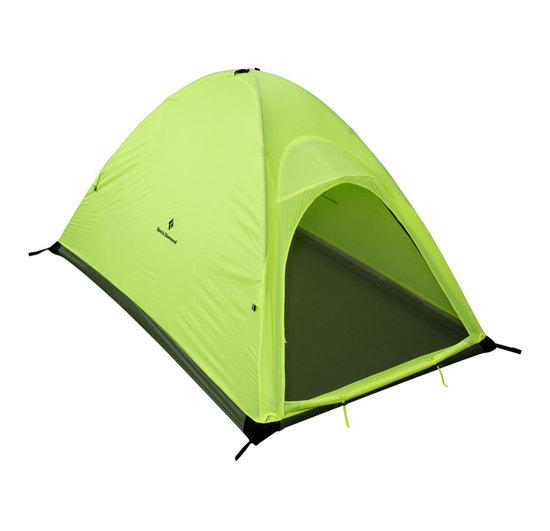
An idea I'm mulling around: I have a Black Diamond Firstlight, which I haven't used yet, but have used my friend's. He's said it's very water resistant, but if you know there's going to be rain on a climb, it'd be a good idea to pack a tarp.

I'm wondering though how difficult it would be to sew a rainfly for the tent out of lightweight (1.1oz) silnylon, how much it would weigh (estimated), and of course, how much it would cost. Anyone want to place an estimate? I think I would just leave the door open to the elements, which would save some weight.

Firstlight

whitenoise . BPL Member
PostedMar 29, 2012 at 8:58 pm

Hehe, well I'm thinking no vestibule at all. Just something that covers all but the door of the tent. Kind of the opposite of the vestibule.

Ken Thompson BPL Member
PostedMar 29, 2012 at 9:04 pm

tt10

Any small rectangular tarp would work this way. Simple as it gets.

whitenoise . BPL Member
PostedMar 29, 2012 at 9:28 pm

Thanks for the response, but I don't think you understand what I mean. I'm saying cover everything except the door, not cover the door. It would also need to be more form-fitting than just a tarp, as I could be experiencing high winds on the mountain.

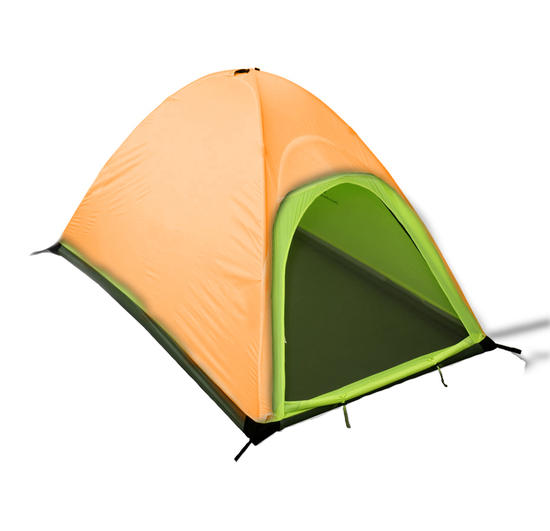
Here's a poor mockup of what I'm thinking of, the orange being the theoretical silnylon fly:

Firstlight with fly

Kattt BPL Member
PostedMar 29, 2012 at 9:38 pm

I am wondering if having Silnylon, which can bead up inside, right next to your tent, will just trap moisture between the two layers and cause some problems.

whitenoise . BPL Member
PostedMar 29, 2012 at 9:38 pm

Gunther, thanks for your thoughts, but this tent has a well-known issue in rain. Read reviews all over the internet. It's not bombproof, it's meant as an alpine bivy shelter, or a small tent for backpacking in good weather. Numerous anecdotes of people getting wet in it.

Personally, my friends have never had such problems and when we used it on Rainier it worked perfectly. I'm just looking into what it would take to make something like this. I don't expect people to understand my justification, but I think its warranted. The idea would be to only bring the fly if we thought there was a good chance of encountering weather. Otherwise, no fly like it was designed. If a little rain blows in, whatever.

whitenoise . BPL Member
PostedMar 29, 2012 at 9:41 pm

Hi Kat, thanks for the response. I think that's a valid concern for sure, as well as ventilation in general. The idea would be that hopefully the combination of the two fabrics would prevent it from getting inside the tent… which may be totally faulty logic. I'll have to consider this.

Kattt BPL Member
PostedMar 29, 2012 at 9:43 pm

I thought you wanted to sew it, not have it detachable. If you want it detachable the area between the two layers could dry out better, but detachable usually means heavier. Also, sewing to the tent means seam sealing. I know you asked a question are we are just giving you our thought about the idea, in general…
I sew, but without the tent in my hands I could not estimate difficulty/time and weight.

whitenoise . BPL Member
PostedMar 29, 2012 at 9:45 pm

Yeah, I was kinda hoping to make it detachable… it would definitely add some weight. The tent is pretty small, about 48" wide by 82" long by 42" high. I'm guessing maybe 3 yards of silnylon, plus seam sealer, plus thread… maybe around 6 oz at the lightest? What do you think about that?

Thanks for your thoughts!

Kattt BPL Member
PostedMar 29, 2012 at 9:53 pm

I don't know. Did you get that number from the weight of the SIL, 1.1? Thread isn't much and seam sealer depends how good a job one does and how thin a mixture. I would not know how to make something that is detachable from your tent, but there are way more experienced seamsters here. I wish I could help more but I have not done anything like this before.

PostedMar 29, 2012 at 10:16 pm

I like this idea as a project.

Venting would be an issue, but that might be resolved by having bottom and middle panel guyouts to pull the fabric out.

It might even work as a cagoule if a hood were added to the top, but that would require a door or vestibule.

PostedMar 29, 2012 at 11:10 pm

didn't realize there was a rain problem. good luck with your build! seam seal if that hasn't been done to the tent already!

Gunther

PostedMar 30, 2012 at 7:42 am

Instead of adding extra fabric you could also consider adding an extra coating. I don't know what material this tent is made of (and I'm too lazy to look it up), but the process is more or less the same for PU or silicone (http://jwbasecamp.com/Articles/Silnylon1/index.html). This is probably a lot easier than sewing an extra layer. It should be lighter too and you won't have any problems with water getting trapped between layers either.

Matt Allen BPL Member
PostedMar 30, 2012 at 9:10 am

I am not sure it wolfed be worth the hassle, but it would be a neat project to try. Please keep us updated if you decide to go for it.

Fwiw, I have owned both the epic and nano versions of this tent. I found the nano to be more water resistant… In fact, I had it in numerous rain storms and stayed dry. It did have some condensation problems, but that was to be expected. I wasn't too careful about venting etc.

whitenoise . BPL Member
PostedMar 30, 2012 at 10:57 am

Thanks for the replies everyone.

Kat, the number is just a wild estimate. I figure 3 yards of fabric is about 3.3oz, plus some webbing to attach to the staking points, plus seams, plus thread, plus whatever else I can't anticipate. :) I could justify 6oz extra for weatherproofness, but your concerns about trapping moisture are still valid.

Eugene, yes I think that's a good idea about the guyouts. Only concern would be the stability of them in a steady wind.

Gunther, thanks man, I'm going to be fastidious about seam sealing. I hear that's the one thing people don't do well enough, and why they get wet.

Mark, I've been told that due to the silicon fabrics they use in this tent (Nanoshield) you both a) won't be able to apply additional DWR on the tent because it won't stick, and b) it might inhibit the current waterproofness and breathability of the fabric. The breathability is really important for this tent, being a single-wall.

Matthew, thanks for your anecdotes, it's helpful to me. I'm glad you stayed dry in a storm; I've heard from lots of people that they stay dry in theirs during storms and only experience some misting during heavy rain. When on a few mountains recently (Rainier included) we left the top zipper on the vent completely open, and left about a five-inch gap on the front door zipper. We had literally no condensation in the morning, even though it was sub-freezing. There was a good wind one of the nights at Muir, though; probably about 20 sustained and gusts around 40.

Thanks everyone. I'll look into seeing whether or not this is something I'm willing to do. Sounds like a fair amount of work, but so many people use this tent that it might be justifiable as a service to the climbing community. :)

PostedMar 30, 2012 at 1:57 pm

Sean
I would suggest that you do not alter/add anything to your tent and try it out as it is.
At worst you may consider taking a light breathable bivvy , the DWR types, that will be more than enough to catch a few sprays.
If you put a silnylon layer on top of the existing fabric, the parts in contact will wet out and you will get a lot of condensation inside.
On top of that if there is any wind it will catch on loose fabric putting a lot of pressure on your stakes and possibly ripping the fly cover apart.
(think of an umbrella catching the wind)
A major cause for tent failure is loose fabric catching the wind.
(that is why I don't take any notice of comments about tents from people that do limp set ups, or I do but they just irritate me…)
Franco

PostedMar 30, 2012 at 2:22 pm

Sean, I would think the extra guyouts would increase stability in the wind.

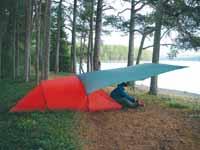
Fwiw, I bring my silnylon poncho when I use my Lighthouse. The plan is to cover the tent and create a small porch. The corners of the poncho attach to the guy lines that the tent already has, and this pulls out the poncho enough to create plenty of ventilation.

PostedMar 30, 2012 at 5:44 pm

Sean,
Because the poles go inside the tent, there will be nothing to elevate and separate the fly from the canopy. Also, because silnylon expands and therefore sags when the temp drops, as it usually does at night, and from what I understand, NanoShield does not, the silnylon will be clinging to the nano. Since the nano is somewhat vapor permeable, there will be moisture passing through it to add to the cling. So, you will have created a moist vapor barrier, and IMO will have tons of condensation inside.

If you can think of a way to suspend a tarp over the tent, as some have mentioned, then you might have something. Like maybe a rectangle pitched with an A-shape, with 4 corners pegged out beyond the 4 corners of the tent, and supported by trekking poles to create awnings at the front and rear. You'd have to create a scale model dome frame, and experiment with swatches of silnylon to see if you could get a taut pitch somehow. With lighter Cuben, it would be even more difficult, as it does not stretch. You'd also have to deal with the wind stability of the tarp.

And when you get it all done, a lot of weight will be added – the sil fly plus many additional pegs. Or, you could stick with what you've got, or look at the MH Direkt 2 or some of the other lightweight domes coming out. It might be interesting to put high quality carbon poles on a Direckt 2 – result under 2.5 lbs packed. The rain pours in when you enter or exit; but it sounds like that's not an issue for you.

PostedMar 30, 2012 at 10:15 pm

I tend to agree with those who say give this tent a chance before you attempt any fly-ish mods. And if you made a silnylon second skin for it, it will definitely have major condensation issues. But IF you do have some leakage issues, I'd suggest just having a small "cap" for the top of the tent, just to cover the flattest part. That would be a compromise between all or nothing – letting most of the tent breathe but giving you added waterproofness on the most vulnerable part of the roof.

PostedMar 31, 2012 at 7:49 am

OK, I'll take a stab.

I'd go for a "hybrid" ridgeline tarp/rainfly. Shape the back (closed) end like the tent but leave the door-end extended like a tarp. Use a hiking pole to prop it up to create a covered porch and give you a little ventilation.

The 1.1oz weight is for a square yard of material, not running yard, and it's also the base material, without the silicon, finishing, seam sealing, etc. I think you'll need 5 yards of fabric (running yards for purchasing, that is.) And I think the finished fly will be in the 8-9 oz range (without any lines or stakes.)

That said, you could just take a basic flat tarp with you and set it up over the tent.

whitenoise . BPL Member
PostedMar 31, 2012 at 11:25 pm

Thanks everyone for your thoughts and opinions — more than I thought there would be, that's for sure!

I'm storing away the ideas and will just try the tent out a few times in less than stellar conditions to see how it holds up. Franco, Matthew, Samuel, and Paul were convincing that I should just give it a shot first before trying anything crazy. Will seam seal it with great care (as per the instructions) and see how it goes. Worst case, I get a little wet in the rain, but I'm willing to put up with that. Especially now that I'm getting a new waterproof Feathered Friends bag. :)

Thanks again, I'll be sure to update this thread if I decide to proceed.

Viewing 23 posts - 1 through 23 (of 23 total)
Loading...