I don't think we truly know enough about the subject or have a method to really test the hypothesis of poles vs non-poles.
So I did some observations on my trip this weekend. Actually I really just thought about what I was doing when I hike, for maybe an hour or so. Not trying to prove a point, nor convince anyone that any method is better.
There is a trail near my house that is a jump-off spot for many of my trips. I can plan many kinds of trips from this trail head. Normally I do not walk back down this trail, because I hate to cover the same real estate twice. The first mile of this trail gains 1,000 feet elevation, and at the one mile point there are some picnic benches. Normally I do not eat breakfast at home, so I find things work best for me to drink a cup of coffee on my 5 minute drive to the trail, hike to the picnic benches and stop to eat a nominal breakfast. Usually I glance at my watch when I hit the benches and it almost always is a 30 minute hike to them. With poles it is usually 35 or 40 minutes. But I don't track it or look that closely.
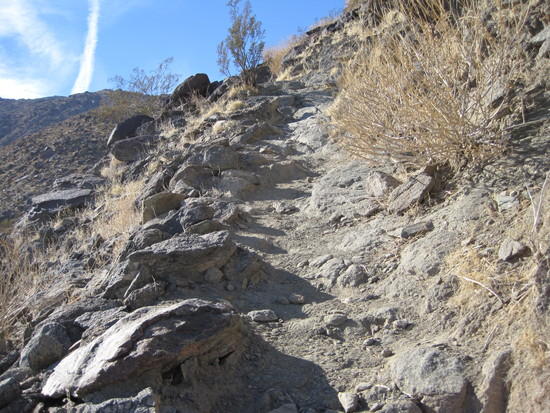
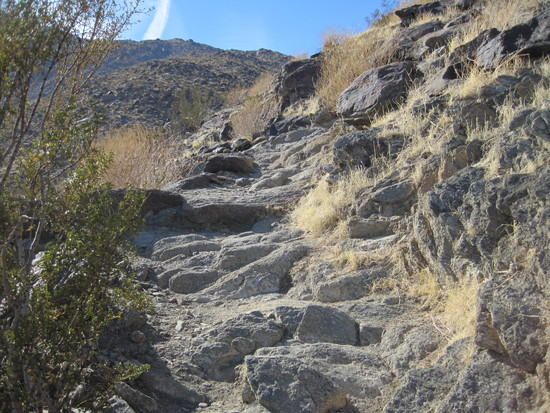
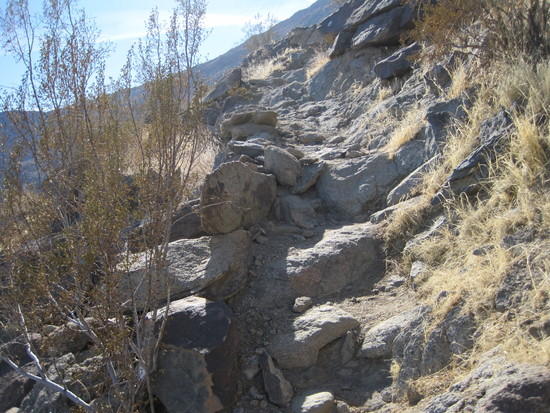
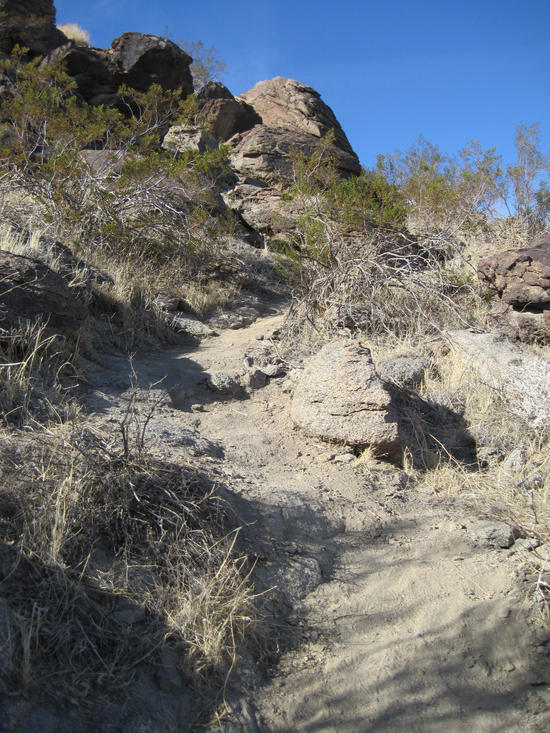
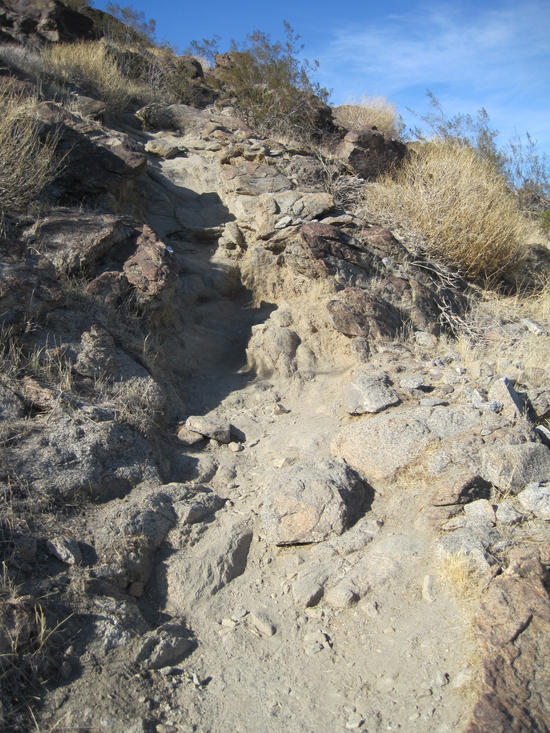
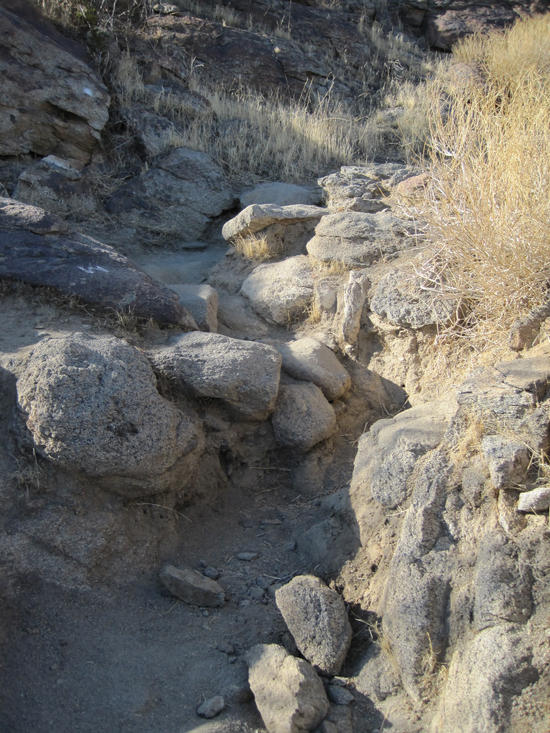
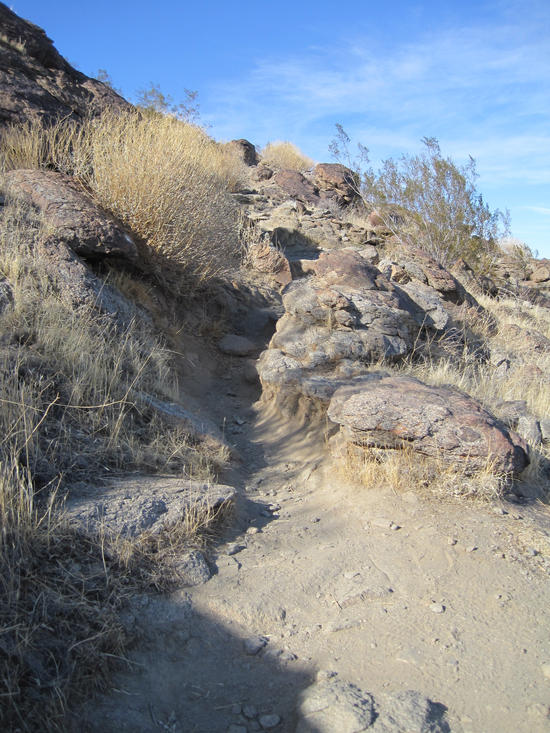
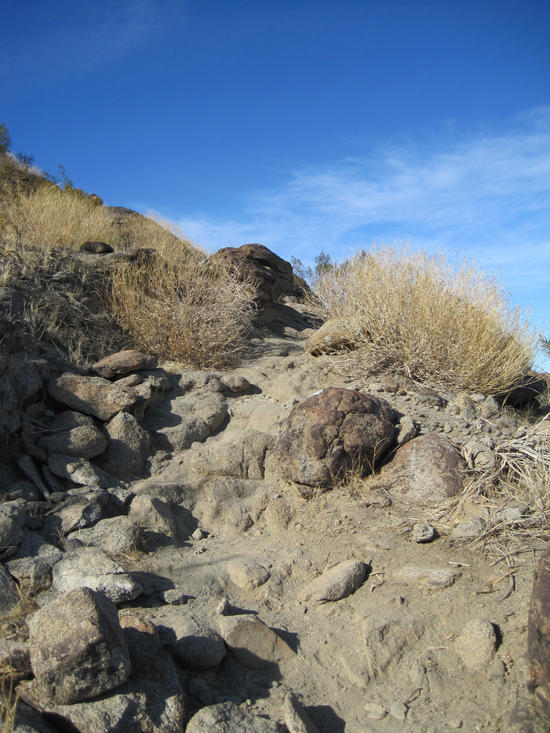
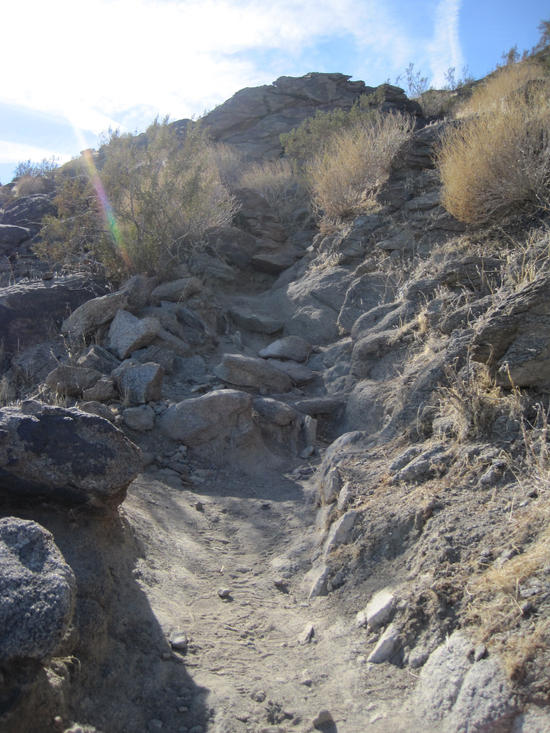
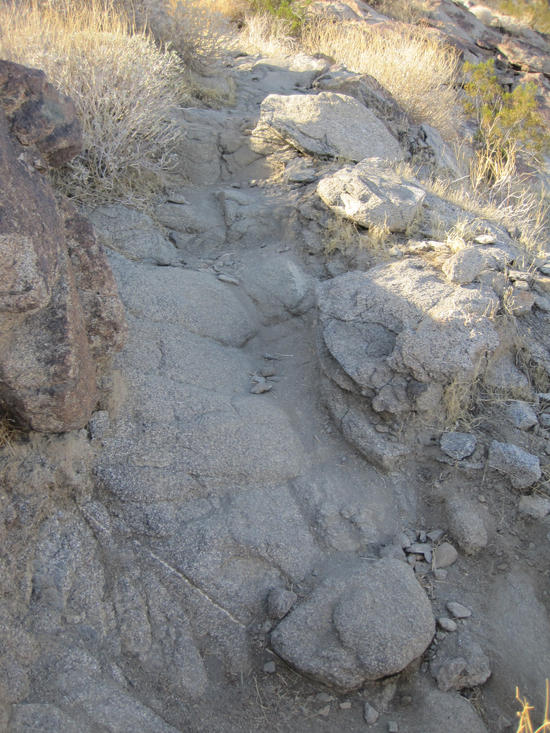
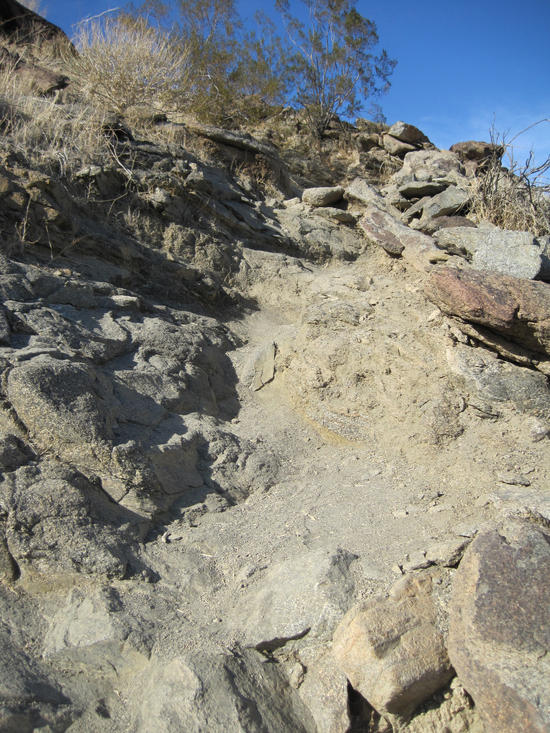
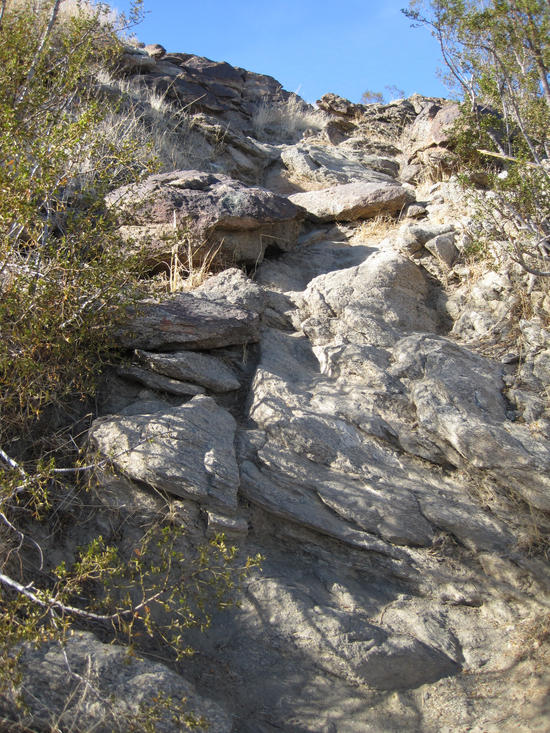
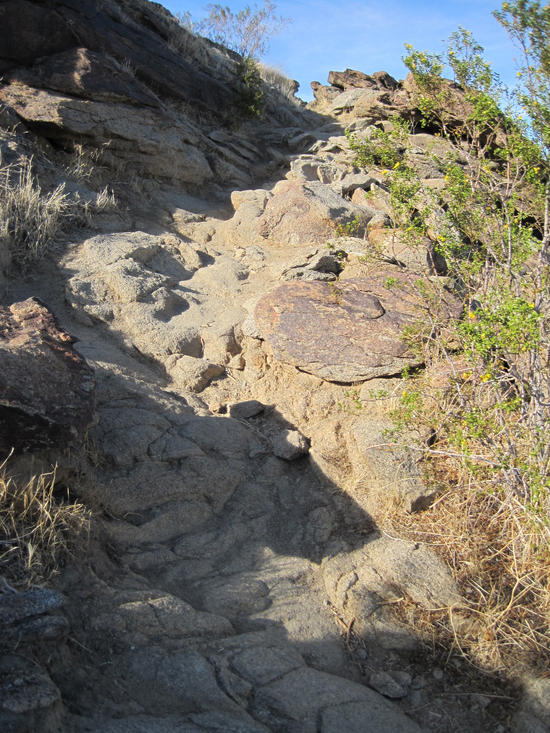
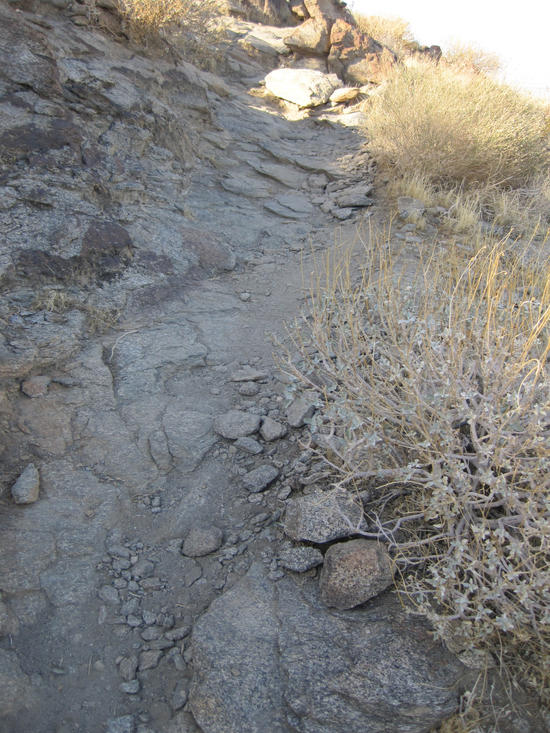
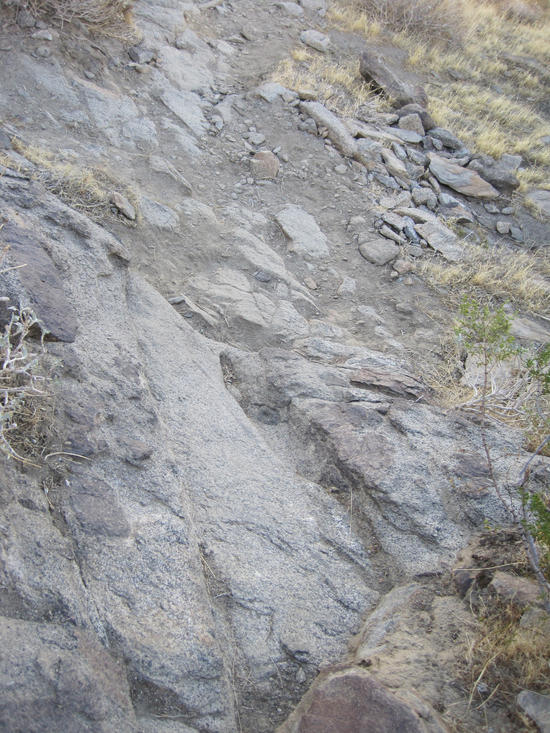
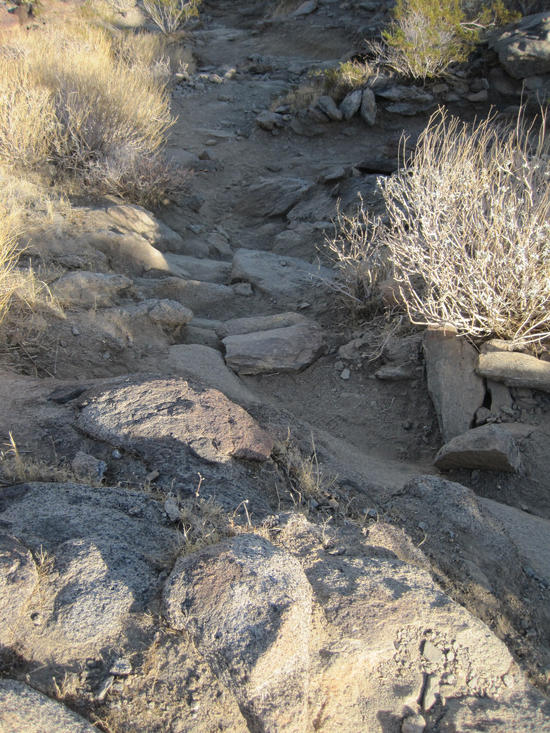
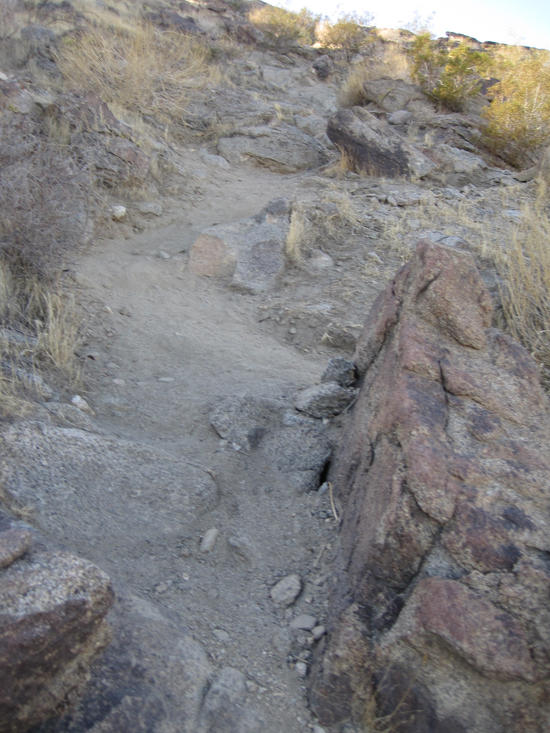
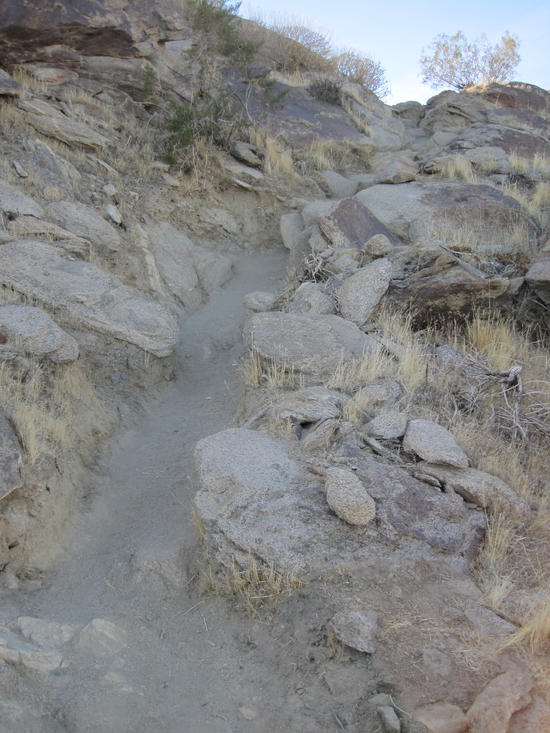
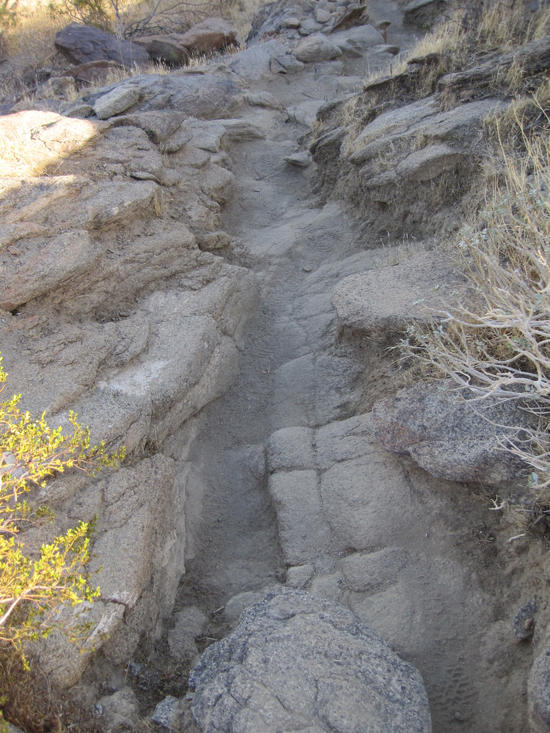
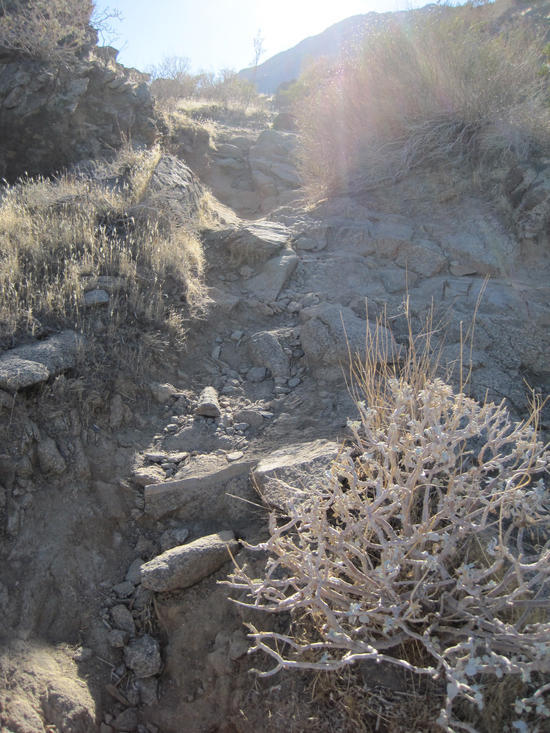
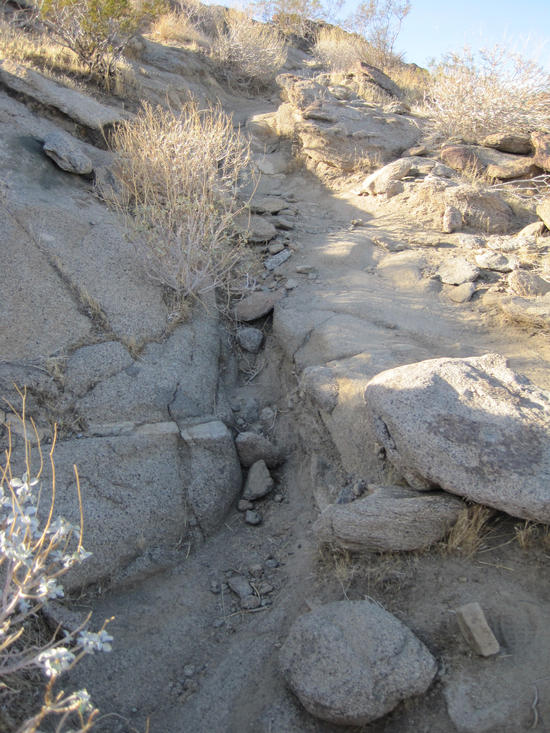
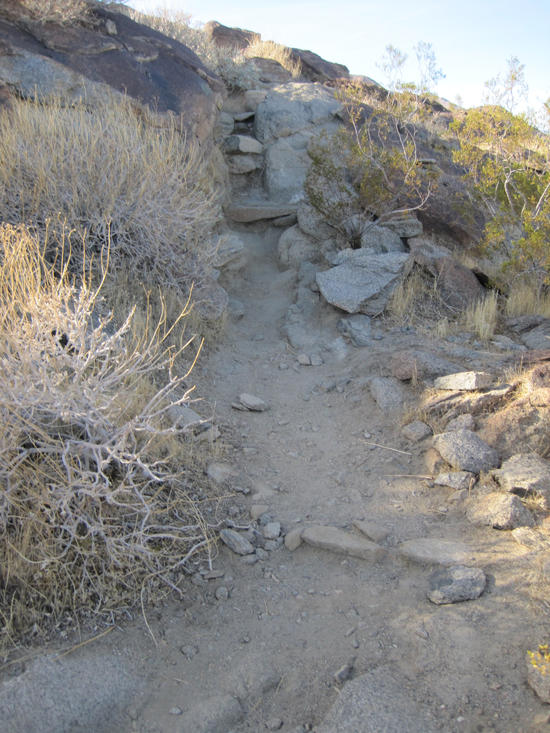
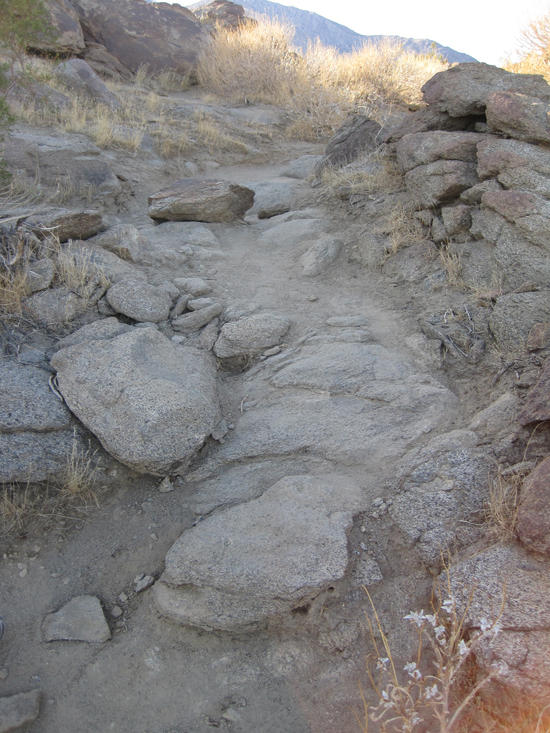
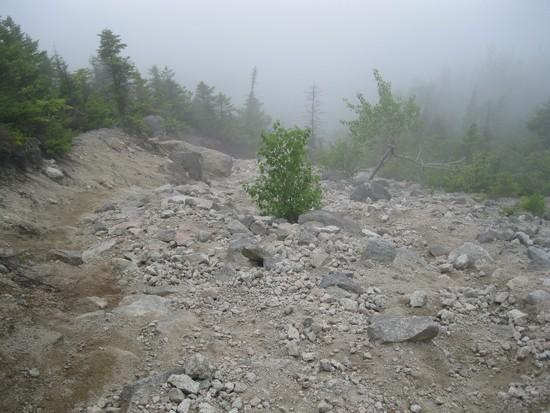
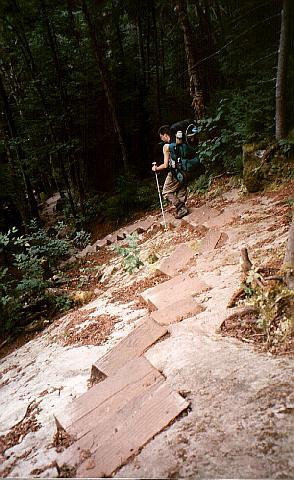
Because I was thinking about this thread, Saturday morning I took several pictures of the trail and it took 40 minutes to get to the benches. This is the kind of trails I often hike. Not well maintained, varying terrain, lots of rocks and shrubs. The difficulty with poles here is that the angle of the trail changes frequently. Also at times I need to step up, may 12 inches or more to get over a rock. Also there are narrow sections with rocks and shrubs, so one would have to hold the poles directly in front of you.
As I started, I noticed that my arms only moved 6 to 12 inches back and forth, much shorter distance than would be required for using poles. I also noticed that had I been using poles, the distance from hand to ground could vary by 12 to 24 inches. Many rocks where one would have to place a pole would be slippery and many spots would require that the pole be placed between two rocks. I also noticed that I was almost always leaning forward. The angle would change according to the steepness of the slope. On some steep stepping up, my body would go to a vertical position, and I would lean forward with my hand on my thigh and push my self forward, not to get up, to to accelerate my forward motion. On several section, I placed my thumbs under my should straps, this just feels comfortable, my arms are moving and all energy expended is carried by the legs. On some sections where I was a little winded, if I hit a section of relatively flat trail, I would walk with my hands on my hips, seems that I get more air in my lungs.
Once I was past the benches and walking, I became engrossed with the things around me and forgot about the "experiment." Occasionally, I would notice that my hands were in my pockets (flat or gentle down slopes), sometimes under the straps, the rest just loosely hanging. I would guess that I use one of the 3 methods 1/3 of the time.
Return down next day. Legs were somewhat tired, but not excessively. At the benches, I remembered to think about walking. I also decided to time it, and I tried to keep my normal pace, and not race down to get a good time. Going down, I slightly lean forward and my steps often shrink to 1/4 the length as normal. But they are quick steps, at times almost a slow jog, which seems the much faster pace would make it more difficult to keep up with poles. I often hop from stone to stone. On narrow sections, where the trail has eroded below the adjacent rocks, I found my self straddling the trail as I kind of hopped from side to side — don't know how one would handle poles here. I pretty much let gravity pull me forward, and it seems that poles would cause on to fight gravity, and put a lot of pressure on the arms. Anyway, the trip down was 21 minutes. Oh, and I had a great weekend as usual.
Some pictures which probably mean little, plus taking them was really, really boring!
:)