


Sounds like y’all got the Statistician’s Blues
Topic
Become a member to post in the forums.
Sounds like y’all got the Statistician’s Blues

Better than just making stuff up
Debatable. I'll spare the fuzzy details as requested and just agree to disagree.
Doug – thanks for the laugh.
Do you guys carry guns? As someone who experiences guns as something totally alien, the idea of carrying a gun into the woods seems anathema to me. What would you have to carry to even have some chance of stopping a grizzly? .50? Seems like you're better off carrying the spray. In the end, prudence wins out, I carry the spray, but I'm cognizant that I'm much more likely to die in my car, or on a patch of ice outside my apartment than I am at the hands of a bear.
I read yesterday that the great state of Montana has just reached 1 million people. Having driven through Montana I can attest that there is generally very few autos on the highway. What a pleasant drive. I suspect that the cases of auto fatalities is quite low from a statistical point of view.
Question: Should I wear my seat belt to help protect me from an accident?
Just because there are fewer fatalities from bear encounters than there are driving in highly populated areas, does not mean one should not carry their own bear spray.
Raw statistics can be interpreted in many different ways and erroneous conclusions are drawn all the time. One has to look at probablities to determine the validity of the statistic. In cases of a bear encounter with a grizzly, what is the probability that you will be mauled?

"Better than just making stuff up
Debatable. I'll spare the fuzzy details as requested and just agree to disagree.
Doug – thanks for the laugh."
Didn't mean to be disrespectful – accusing you or anyone of making stuff up : )
But, a strong point of BPL is there is a lot of data taken to look at various issues rather than just repeating established opinions
Ben guns have been a hot topic around here at times so I won't repeat those threads. Regardless of what you think of guns most knowledgeable people would now argue that bear spray is actually more effective (as well as legal in most areas, lighter, and cheaper).
You can easily compare the probablity that a person in Montana will diee in a car wreck vs. a bear attack by dividing the number of bear attacks and car deaths by the population of the state (accounting for a few extra tourists). But life is complicated so…
1. Lots of people in a state like Montana have almost zero chance of being attacked by a bear because they stay in town or they live in an area with no bears.
2. A park like Yellowstone or Glacier may get a couple million visitors a year but many of them basically drive through and snap a few picutures. These people are relatively unlikely to encounter a bear.
I think the best way to calculate your chances of being attacked by a bear would be to estimate the number of "man-hours" people are hiking in a given area like Glacier Park and divide the number of attacks in that park by that number.
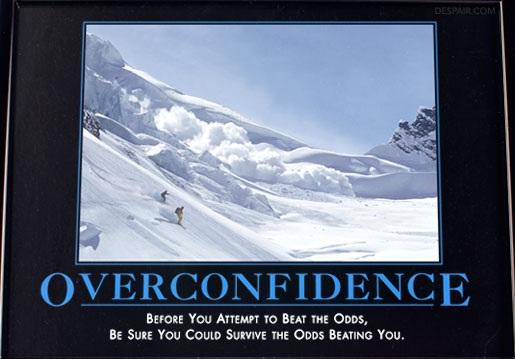
My brother found a book title "How to Lie with Statistics" (I'll be a cynic and guess its probably a bestseller in D.C)
>"In cases of a bear encounter with a grizzly, what is the probability that you will be mauled?"
My own experience:
Mauled / encounters: 0/60
Mauled / close encounters (surprised each other on the trail): 0/12
Obviously, the population-wide number isn't 0, because it sometimes happens. Trying to estimate from the number of people *I know* who recreate at my level still leaves me with 0/500 or so.
Only people *I know of* (friends of friends, people in town) have been mauled. So I'll use people in the area versus people mauled each year (it ALWAYS makes the paper): 1/30,000 residents. There's usually 2 a year and on average, one is a resident (often walking the dog or dealing with unsecured garbage or chickens) and one is a tourist. We get maybe 200,000 tourists a year, but for a few days or two weeks each. And one death in the area in the last 13 years. He got off a .270 round which clipped some hairs and drew some blood, but the bear survived long enough to leave the scene. The shooter did not. The bear was never found.
"You can easily compare the probablity that a person in Montana will diee in a car wreck vs. a bear attack by dividing the number of bear attacks and car deaths by the population of the state (accounting for a few extra tourists). But life is complicated so…"
Don't forget the emotional component and how people actually react confronted by a bear. You are forgetting about conditional probabilities.
"1. Lots of people in a state like Montana have almost zero chance of being attacked by a bear because they stay in town or they live in an area with no bears."
What are the stats fo a Montana resident being attacked by a bear when driving and texting?
;)
Bob – love the summation and couldn't have said it better myself.
>"Do you guys carry guns?"
Ben, I don't. The people I hike with, don't. Unless they are hunting.
>"As someone who experiences guns as something totally alien, the idea of carrying a gun into the woods seems anathema to me."
I started that way. (5th gen San Franciscian). After living here, I do take a more rural view of them as a tool when in the right hands AND my former urban view of them as a dangerous menace in the wrong hands.
>"What would you have to carry to even have some chance of stopping a grizzly? .50?
The State of Alaska recommends .300 Winchester Magnum or 12-gauge with rifled slug as a MINIMUM. The study that it came from confirms the most common choice up here – .338 is easier shooting with a large fraction of the effect of the harder to shoot .375 and the literal "elephant gun" of a .458. The .338 also isn't overly large for the moose or deer or caribou you're going after in the first place.
>"Seems like you're better off carrying the spray."
The professors who have studied all the North American data and seem objective about it agree. Spray definitely, on average, improves the outcome for the human by a bit(and therefore, absolutely, improves the outcome for the bear). Guns are a wash, statistically, for helping the human and obviously don't help the bear.
> "I carry the spray, but I'm cognizant that I'm much more likely to die in my car, or on a patch of ice outside my apartment than I am at the hands of a bear."
I'm cool with that. I don't carry spray myself, I interprete the data as correlating most strongly: quiet people get killed sometimes. Noisy people and parties almost never do. So I yak it up when around water, berries or poor sightlines. But, yeah, mostly I drive careful, avoid hypothermia, falls, etc.
“In cases of a bear encounter with a grizzly, what is the probability that you will be mauled?” They are close to zero. Bear attacks are rare events. I told her that in North America there are an estimated six hundred thousand black bears and sixty thousand grizzly bears. Each year there are millions of times in which each species is close to people and no threat or injury results… I hate to see people’s lives crippled by fear based on ignorance. Stephen Herrero
If everyone always carried spray in bear country, I think it’s likely MORE people would be killed. Three incidents out of dozens:
Bear repellent causes vet clinic evacuations, two employees were evaluated for respiratory distress…
police were dealing with a number of incidents of people being hit with bear spray in the city’s north-central area. Police said there were several victims…
Winnipeg: Bear Spray Forces Apartment Block Evacuation Paramedics called
It’s inevitable that someday there will be a fatal aircraft or car crash because of a bear spray accident.
Very often, people don’t have time to react to a bear attack with any weapon. If there are 3 fatalities per year in North America, 100% use of bear spray might prevent 1. Seat belts save tens of thousands of lives, take almost no effort to use, and add very little additional risk. So the risk/reward of seat belts vs bear spray is worlds apart.
With about 16,929 murders a year in the US and Canada combined out of a total population of about 334,000,000, about 1 out of 19,625 people will be a murderer in a given year.
With about 3 fatal bear attacks per year in the US and Canada combined, and about 660,000 bears in the US and Canada total, about 1 out of 220,000 bears will be “murderers” in a given year. Significant numbers.
I think there are times where carrying bear spray make sense (say, on the Russian River in Alaska, where the brown bears are plentiful and bold.) But leaving bear spray home can also make sense. There are a lot of factors, but to make a rational choice it’s important to have some concept of the relative risk.
In Banff this year they actually required parties to carry bear spray. This was the first year they had done that but with the late summer bears were pushed lower down into the valleys and there were more encounters being reported.
This is in addition to the requirement that in certain areas you must hike in parties of four or larger. And they have spacing requirements for what defines a tight group.
For me I carry bear spray when I am out with kids as there behaviour can be unpredicable and I am not sure how they would react around bear. Also at that point I am being a sherpa anyways so whats another pound.
I also carry it when I am out trail running as the speed you travel and lack of noise lead to increases in the number of animals you see. As well the fact you are running may trigger the predetor instict in animals. Also that all fatal bear attacks have happened to solo hikers or small groups leads me to believe this is prudent. I still am working on a good way to carry it while running that doesn't bug me too much. I haven't encounterd bears while out running but I did almost crash into a deer that wouldn't get off the trail and have ran into two coyotes. I actually took the safety off the spray when I ran into the coyotes but yelling at them for a while scared them off.
In groups of 3 or more I generally don't carry it although if there are inexperienced members of the group who have some fear of bears I carry it to convince them to come out hiking.
I hike mainly in the Canadian Rockies so prime Grizzly habitat.
…
Just for more topical material.
One summer in the CA Sierra, early 90's, I knew of two black bear attacks, both human provoked. Neither reported. You get fines and death threats you see if you do stupid stuff that threatens bears in that part of the country.
One attack involved a camper next to me who left his food out on a picnic table in Tuolumne one night and tried to get the food back. He got swatted in the head and was still dopey in the morning. He refused help.
The other happened in the backcountry when a hiker got between a mama and cubs. He
went to the hospital via h'copter. Never made the statistics for some reason.
So my non statistical opinion
is that many more attacks occur in CA than get reported.
>"don't suggest that others that don't like to gamble are wrong"
I wasn't. I don't think Bruce was. He explicitly recommended spray when in my most common hiking spot (Russian River / Resurrection Trail) on the Kenai Peninsula in Alaska.
>"you have very little control over the situation."
I disagree. I can stay or run (I stay). I talk or be quiet (I talk). I can make eye contact or not (I don't). I can look big or small (I go big). That's not absolute control, but they all shift things in my favor.
>"bear will definitely get the last say."
Agreed.
>"I'd be interested to know how many of you Alaskans carry PLB's (or equivalent)?"
I do about half the time depending on distances, cell-phone coverage, weather, kids along, health of other participants. There are a couple of a saves each year in Alaska from SPOT alone, whereas there rarely more than one fatal bear attack a year to be saved from by any means, so I think the PLB leverages safety more, is lighter, could never gas me, and is multipurpose (bear, avalanche, benighted, injured, hypothermia, etc).
>"As for bear stats, the fact that BC seems to have a sixth of the bears in North America, makes me think that my chances of having a problem with a bear is going to be significantly higher than in other areas of North America. I suspect Alaska is similar."
Agreed. If you mean a problem of human injury. If you want your car or backpack shredded, just go to Yosemite or Sequoia NPs in California with an ice chest in the back seat. 20 years ago, Sequoia was running $60,000 vehicle damage a year.
"Winnipeg: Bear Spray Forces Apartment Block Evacuation Paramedics called"
What is the probability of this happening amongst all of those who have bear spray stored? This has no relevence to carrying bear spray in bear infested hiking areas. Last time I checked, there weren't too many bears walking through Winnipeg.
I suspect that the bear spray purchased in this case was for protection. By the way, Winnipeg is the country's violent crime capital. Manitoba has the highest amount of violent crime of all provinces. Manitoba had the highest homicide rate for the fourth consecutive year. Winnipeg has the country's highest rate of robberies.

Statistics can be confusing when they are not put in the context of other risks or done on a per capita basis. Thanks, Bruce, for putting this into perspective.
Despite a few encounters, I've never had to shoot at a bear before and can therefore only imagine that you would need a cool head, a potful of self-confidence in your weapon and shooting ability, and a very tight anal sphincter to be able to place a killing shot into something with 5 inch claws and 3 inch teeth that is closing the distance between the two of you at 40 mph while bobbing up and down.
IIRC, the lethal target area on a bear's chest is the size of a softball. Even a bazooka is useless if you can't hit the target with it.
You'll also need to decide if what you're facing is a bluff charge or the real thing. Shooting but not immediately killing a Grizzly will virtually guarentee you of getting his undivided attention. Is that what you want?
Listen to the man from Alaska who knows of what he speaks.
.
…
"With about 16,929 murders a year in the US and Canada combined out of a total population of about 334,000,000, about 1 out of 19,625 people will be a murderer in a given year.
With about 3 fatal bear attacks per year in the US and Canada combined, and about 660,000 bears in the US and Canada total, about 1 out of 220,000 bears will be "murderers" in a given year."
Your stats need to be shown in context. How many people backpack annually in bear country as a relation to bear attacks? Out of the 3 fatal bear attacks annually (this is an average over time of those incidents reported), how many people hike in bear country? The first statistic is defined by a total population of victims. The second isn't.
There is no definitive answer here or a truly right way. And every area with grizzlies has different populations and factors. You can discuss forever and nothing will be proven, other than they are big, fast, and potentially dangerous.
I have never hiked in grizzly country, and to be honest the idea does scare me some. Should I decide to go somewhere where they live, I would do my research and listen to folks who do it a lot, such as Dave, Bruce, et al. Then I would select my gear and methods accordingly.
It is like what I do a lot; hike in deserts. I normally sleep with no shelter. I have no fear of snakes or other "dangerous" creatures. I do have respect and operate in a safe manner. Others are terrified. I guess it all comes down to experience and "risk assessment."
I don't have any argument w/ someone who elects not to carry bear spray in grizzly country (I happen to, my grizzly encounters are into the 100's w/ no bad incidents, my only "bad" bear incident was actually w/ a black bear!), BUT this was a youth educational setting and IF I was in charge, every student would carry bear spray, every student would carry the spray where it was handy, every student would get a chance to practice unsheathing the spray and every student would have the chance to actually use the spray (they sell inert bottles just for that purpose).
Would this have changed the outcome, very possibly not, but I as the instructor would feel much better that every student who attended my training learned the proper carry and application of bear spray. What they elected to do AFTER the class would be completely up to them.
I've wrote at some length on my opinion of firearms for bears, so I won't repeat here- I'll just say that I carry a firearm for a living and when backpacking outside of work I don't carry a firearm (unless that backpacking trip also happens to be a hunting trip :) )
My .02
my rule in climbing is that a person new to the sport cannot assess the risks … despite them being a grown adult …
they simply to not have a sense of what can go wrong, the risk involved of certain dangers, and how accidents happen … i will do everything reasonable in my power to not subject them to unneeded risk … with more experienced partners you can knowingly agree to take on a few more risks in the interest of time or other such
yet despite this, i see "experienced" climbers take out new climbers in risky ways IMO over and over again … "you dont need help on a long climb as ive never seen anyone hit by a rock", "this traverse is perfectly safe (and it aint)", "my anchors are good (and it aint)", "you can belay hands free with a gri gri"
i suspect something happens with other risks in other sports… avalanches, bears, hypothermia
remember that just because we are the "elite" (joke) and were highly "experienced" (another joke) … doesnt mean newer or others should do as we do all the time … especially newer participants
like i said avalanche deaths are not that common when one considers "statistics" and deaths from driving, STDs or eating too many cheezy poofs are much greater … but who here goes into avy country during risky periods without a shovel, probe, beacon and some training?
Become a member to post in the forums.
 New Gear with ALUULA Graflyte FabricsLighter, stronger, more abrasion-resistant, and highly water-resistant - explore ultralight backpacking gear made with ALUULA Graflyte fabrics. Engineered for exceptional strength, durability, and lightweight performance, ALUULA Graflyte helps reduce pack weight without sacrificing reliability, making it ideal for demanding backcountry adventures.
 © Beartooth Media Group Inc.
 Loading...