


Whoa! I might have to get a Jam 70 to replace my newly bought Pinnacle just because I kind of like the new hip belt pockets. And the price is crazy low. Wow. You sure you didn't forget numbers in those figures?
Topic
Become a member to post in the forums.
Whoa! I might have to get a Jam 70 to replace my newly bought Pinnacle just because I kind of like the new hip belt pockets. And the price is crazy low. Wow. You sure you didn't forget numbers in those figures?
My mistake on the materials. If I recall the 4.4 oz ripstop used on the Golite packs is about 210 denier. So a bit lighter but if they thought it out well it might last just as long. Since Craig Weisner said his Jam is wearing out after 4 years I guess neither will last forever.

Aaron, I absolutely agree. I've not seen a Crown in person, so I can't comment on its abilities.
I'd just prefer to see folks not see "frame" and assume better load carry, just as I'd rather them not undiscerningly see lighter as better absent all context.
It's not the lack of frame that is the issue with the Jam – it isn't supposed to have one. The issue is with superfluous content that does nothing but add weight. Like load lifters on a frameless pack. Or external / internal padding that isn't necessary because frameless packs are intended to be used with a sleeping pad as a soft frame. Or the fact that there are now framed packs with superior load transfer that are lighter and have (as described above) fabrics with the same or better denier for durability.
It is also not simply stating that a framed pack will carry better. Obviously fit is a concern. But all things being equal, if you had a Jam with stays v.s. a Jam without, the former will do a better job at transferring weight to the hips and carry even a moderate load better.
I started this thread commenting how load lifters without a frame do nothing to 'lift the load.' If you want load lifters to be truly effective, you need a frame.
Paul, that is a picture from their store. i didn't make that sign.
i agree with you about the load lifters. they are not connected to the anything but fabric. however, it will help pull the backpack closer to your back, helping your center of gravity (slightly).
The Jam 35 does not have the load lifters at all. Also, on the peak, the hipbelt was removable, where the jam 35's hipbelt is not removable.
If anyone really wants one of these from the Golite direct store, i'd be willing to pick one up for whoever is willing to reimburse me for the pack cost, actual shipping, and maybe an extra ~$5 for my time.

David, isn't it actually a good thing that GoLite added some features that may not do much good without actually increasing the weight? You can just cut them out, and then you have a lighter pack.
I'm still on the fence about the load lifters–I want to see one of these in person, and I'm interested in Dave's observations. With a rigid pad folded (like in the SOTM), I can see how they might be of use, or they could be totally worthless.
But to me, it's a win-win. If it increases load carry without adding weight: win. If it does nothing and they just need to be cut out, weight goes down: win. If the prices above hold true–another serious win for value.
"I'd just prefer to see folks not see "frame" and assume better load carry, just as I'd rather them not undiscerningly see lighter as better absent all context."
I agree with you as well David. As I have found, going lighter has not always been the best choice for me personally. But what I think it allowed me to do was to find a comfort zone where I have pretty lightweight gear along with a few comforts as well. To each their own, of course.
And to get back to the golite discussion: the price of the jam make it a pretty compelling option. Also, being able to walk down the street to the golite factory store helps as well!
So the Jam's strengths in the 2011 range was only slightly more expensive than the Peak but 10L more capacity, that tended to restrict the Peak to those who never really wanted the hipbelt or only wanted it at times (what I'm using it now for as a travelling bag with some long walks). What we found Peak sale $ vs Jam sale $ was the difference became quite large. The Pinnacle was quite a bit heavier and 10L more. So the Jam was something of a sweet-spot (setting aside GoLite not being light).
So if the 2012 price range is only $10 difference, and being direct presumably discounts won't happen (no dealers to compete with each other) then surely there would need to be some actual weight difference worth not picking the smaller? i.e the Jam 35 needs to be quite a bit less weight than the Jam 50 now? So, if the Jam 50 is the same weight… they need to make the Jam 35 lighter than the Peak?
I onced used a Golite Trek that was too small for me. Tightening the load lifters seems to effectively lengthen the torso length. Might help some people dial in the fit a bit better.
"I onced used a Golite Trek that was too small for me. Tightening the load lifters seems to effectively lengthen the torso length"
Yes, it can do that. Granite Gear has load lifters on the Virga for the very same reason. It just won't transfer the weight to the hips (lift the load) because there is no frame to leverage against.
Some crazy pricing on the products, however. As mentioned before, at those prices a little knife can go a long way without the feeling of guilt.
I've been thinking about this talk of load lifters and trying to picture just how they work. When looking back on all the packs I've used over the years that employ load lifters, it occurs to me that never once did they function as actually "lifting" the load. Every time I can recall they simply pulled the pack closer to the shoulders. So I question the efficacy of load lifters actually "lifting" the load. If you think about it, it doesn't make sense that they would interact with a frame to transfer weight to the hip belt, since they are either pulling the top end of the frame or spar closer to the back, or else, if they are located a little further down behind the back, pulling the top half of the pack up, away from the hip belt. The only way that the load lifters would effectively affect the distribution of weight of the pack would be if they redistribute the weight onto the shoulder straps, which is not how they are usually described as acting. So I think the name "load lifters" is a misnomer, and that they should be called something like "weight huggers" or "load cinchers" since that is more of what they seem to do.
I think a real load lifter would be located at the top of a spar or frame and reach down along the length of the spar or frame, and when you cinch the strap on top the fabric would pull directly up the spar, not horizontally to a shoulder strap. For this to work, however, the back of the pack would have to have some give, otherwise the lack of movement would render the pull of the strap ineffective.
Good point Miguel, I don't think they ever "lifted" much for me. Back when I had a heavier pack I did like having the load lifters to adjust but they wer attached to a frame.
ditto on what is meant by Load Lifters. I thought they rotated the point of weight on the shoulder further around the front when taught, they also allow the shoulder straps to be attached lower down the pack at the rear so when you loosen the load-lifters with a framless pack the pack would maintain a straight back better? FYI my Golite 2011 spends (Peak, Jam) when I used hipbelt and loosened the shoulder straps the frameless pack sagged and Z-shaped and more of the pack went back into contact with me. I'm stil a newbie to frameless and I tried spreading contents and tightening across the length to force a bit more shape but could not remove the Z-shaping effect.
Load Lifters are important when used properly. Going down a long hill/mountain you let them out so the pack tilts back at the top. This balances the pack better.
Going up steeper trails you pull the load lifters tighter to pull teh pack top into your back. This again balances the load for better stability and easier walking.
Better shoulder straps and padded waist belt is good when ergonomically designed (for the "average" backpacker). A few ounces more is OK with me if there is more comfort at the end of the day. I won't nitpick over ounces when and IF the improvements are worth it.
But "OUNCE CREEP" in new gear is to be avoided when no useful advantage is to be gained by the end user.
I vote we dub the Jam the "Ounce Creeper" said in a low creepy voice.
Miguel said,
"I think a real load lifter would be located at the top of a spar or frame and reach down along the length of the spar or frame, and when you cinch the strap on top the fabric would pull directly up the spar, not horizontally to a shoulder strap. For this to work, however, the back of the pack would have to have some give, otherwise the lack of movement would render the pull of the strap ineffective."
This is how McHale does it. There is an extension to the frame structure (bayonet) and then a separate by-pass harness that connects at the top of the bayonet and then threads through the should straps and adjusts at the bottom, independent of the shoulder strap. Adjusting the shoulder strap does not change the load lifter adjustment. Kind of hard for me to explain… it just works beautifully.
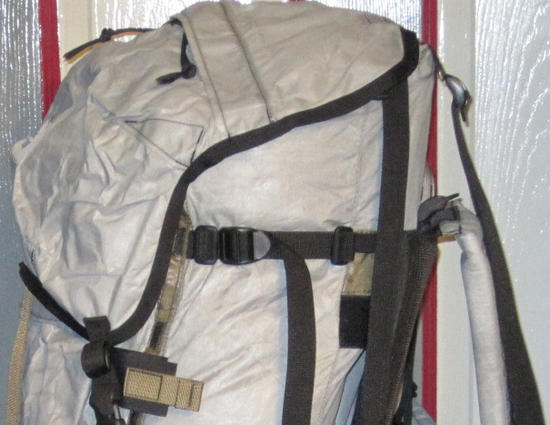
I dunno, I've gotten used to not having load lifters. On my zpacks zero I can just adjust the shoulder straps to make the pack come away from my shoulders or hug them more closely. It does have a hip belt though. If anything I think it would be similar to any other frameless pack. I wonder if anyone else can comment on whether they like them or don't need them. Obviously it will be different for everyone.
I wonder if maybe they could be avoided by getting a perfectly fitting pack?
"I dunno, I've gotten used to not having load lifters. On my zpacks zero I can just adjust the shoulder straps to make the pack come away from my shoulders or hug them more closely. It does have a hip belt though. If anything I think it would be similar to any other frameless pack. I wonder if anyone else can comment on whether they like them or don't need them. Obviously it will be different for everyone.
I wonder if maybe they could be avoided by getting a perfectly fitting pack?"
Great discussion. It seems to me that the purpose and certainly the application of load lifters is not monolithic. Irrespective of pack maker intent folks use them in different ways to suit their own preferences.
In my mind a lot of this has to do with torso length and how an individual ends up sizing a pack. Many packs have a strict torso length (center of belt to shoulder strap attachment) which is a bit shorter than the users actual torso length. Load lifters are in this case (I would argue) necessary to snug the pack in and make the load conform to the user. In this case load lifters are partly a fix, and way as mentioned by Luke to lengthen the torso length. Rietveld mentioned years ago in an article that this gives a manufacturer some leeway with sizing (and thus make fitting a bit more user-proof). The actual torso length of the 2011 and 2012 Jams is 18.5" in Large. Thus they're too short for me without load lifters, but with load lifters fit just fine.
On the other hand, many/most UL backpackers size their packs so that strict torso length is just about or perhaps just a hair less than the user torso length. This puts the strap attachment just a bit below shoulder level when the pack is fitted properly, and obviates the need for load lifters (unless the pack is very large and tall). I would suggest that this approach is sizing is much less forgiving. I've got one pack, which I made, that uses this approach and is extremely comfortable. This comfort is due mostly to the precise fit. I have another pack I made with uses this sizing method, but is really big and has load lifters which help keep things orderly and tight with a big load. I don't cinch them very tight, but I can tell when they're loose. (This pack has a fairly burly foam framesheet which extends to the load lifters, and a stay which extends only to the shoulder straps.)
The third approach is advocated by Zpacks and is to size the torso length longer than that of the user. I have no personal experience here, but on the website Joe mentions he finds this takes pressure off the tops of his shoulders.
Further thoughts on anyones part would be much appreciated. I find this topic fascinating.
"Rietveld mentioned years ago in an article that this gives a manufacturer some leeway with sizing (and thus make fitting a bit more user-proof)."
Correct. But it was also mentioned later that this is a most inefficient way to try to get a wide range of fit options. It is better to simply find a pack that fits your torso.
Regarding load lifters and frames – you are touching on some truth here. Load lifters need to attach to the top of the frame to be effective and the frame must be taller than your shoulder crest to allow load lifters to be effective. Granite Gear for years had load lifters that were pretty ineffective. As of 2011, their nimbus line now has the load lifters attached to the top of the frame allowing an angle of 25-40 degrees. Previous versions did not have this benefit.
Load lifers are intended to move the weight from the shoulders to the hips but the load lifters have to be higher than your shoulders lest they not do what they are supposed to do.
Mchale's system takes it one step further by essentially allowing the load lifters to move without pulling the shoulder harness back. Very nice.
"Any weight beyond what your shoulders can comfortably handle need some sort of frame to transfer weight to the hips."
That simply isn't true. I used to think that a frameless pack couldn't transfer weight to the hip belt, but no lie I can put all the weight on my zero with hipbelt and have finger space under the shoulder straps. The key is to stuff it full and tightly and it holds a rigid shape.
"Frameless packs tend to compress with weights nearing 15 lbs where foam pads, gear, etc. cannot maintain the tension… so a hip belt if of little benefit to transfer weight."
Again refer to point 1. I'm not saying your totally wrong. There just is some exception to the rule.
"The third approach is advocated by Zpacks and is to size the torso length longer than that of the user. I have no personal experience here, but on the website Joe mentions he finds this takes pressure off the tops of his shoulders."
That totally corresponds with my experience with a zpacks pack.
"but no lie I can put all the weight on my zero with hipbelt and have finger space under the shoulder straps"
Hey Phillip – what kind of weight are you carrying?
8-9lbs base depending on sleep setup plus 2lbs of food/day. I'll have to test it to see the max hipbelt weight before it starts to transfer to the shoulders. I usually am adjusting the hipbelt and shoulder straps all day though because I like it to fit differently at certain times. For example today my back got hot so I slacked the shoulder straps up to create some space between my back and the pack but at other times I tightened it up to make my back warmer. Or I'll adjust the hipbelt to take the weight if my shoulders are sore, or I'll et my shoulders take the weight if my waist hurts.
Maybe my back and shoulders are just use to it but I find no use for hipbelts. But maybe these could come in handy…

GoLite has the new Jam line up on their website now: $99 for the 35, $119 for the 50, and $139 for the 70. It would still cost me $13.05 to ship to Montana.
Become a member to post in the forums.
 Mini M!GO Bottle700 mL reusable bottle with a dual-cap design.
 © Beartooth Media Group Inc.
 Loading...