


I went to the Catskills last winter with a buddy that used a jet boil with the family sized pot on it. It was around -10F and he didn't have any issues, I would assume he slept with the canister, but not sure.
Topic
Become a member to post in the forums.
I went to the Catskills last winter with a buddy that used a jet boil with the family sized pot on it. It was around -10F and he didn't have any issues, I would assume he slept with the canister, but not sure.
Unfortunately I can't join you guys. The next week I have a previous committment at work to go on a week long ski trip to Mad River Glen(rough I know). I just can't leave my wife and baby alone for so many nights. If I can I may just show up the first night to meet folks and hang out but who knows. It is awesome you keep planning these trips, one of these days I really want to make it. If you come up short on cook gear and someone is going down from up north I have a simmerlite and 4qt aluminum pot(16oz with the steel bail) I'd be happy to loan out. You can pm me or post on the forum, I live about 35 minutes west of Rutland for reference. Have fun.
…..just curious. ;) Thx.
from the photos I've seen on flickr it looks like they both do.
The one at Melville-Nauheim shelter is directly in front of the shelter. The one at Goddard is off to the side. They're definitely there, though. And there are outhouses at both shelters, too. The one at Goddard is quite nice (big enough to sleep in if you're not worried about the smell)
Browsing down this thread, I am surprised not to see mention of crampons. Hard packed snow over ice is the New Englnad winter norm. Ideal crampon conditions.
Hi Frank.
I’ve never been on this trail, but from others have said, it will be long days, but the terrain won’t be challenging.
Normally we’d all just rock snowshoes and be fine, but with this weather and no snow who knows! :o
(anyone know if it is snowing up there yet? Snow Info)
Mixed precipitation to rain then at some point it is going to change over to only snow for the rest of the week. Hopefully they will pick up around a foot in southern vt by the weekend. I am not taking crampons due to the terrain. I have fairly aggressive snowshoes that will climb up moderate pitch snow/ice mix. Plus still hoping for nothing but snow until March (after today that is)!!! Everyone do the snow dance for 2' on unconsolidated snow when we get there in a few weeks.
Yeah, there’s nothing above treeline on this stretch of trail, and no slab rock either. It would take a lot of ice to make this crampon-worthy. I’m crossing my fingers for a good dumping by this weekend :)
Mount Snow is the closest ski resort, and their reported base depth is 12-24″ right now. Weak.
also important, what are the overnight lows?
well, with all the money spent on gear and the holidays, I'm now broke, and so buying a new winter bag is out of the question this year. i dug out my old zero degree bag that I haven't used in about 7 years. my father stowed it in its stuff sack, in the attic while I was away at college, and I had assumed it was long gone. SO, the question is, how badly damaged/ruined is it, since it has been stored compressed in the worst way possible? It lofted back up ok, but obviously won't be in tip top shape. If it used to be zero rated, anyone have any ideas what I should plan for now? Maybe with extra clothes and a liner it will be ok? thoughts? i never store my bags compressed like this and I know its wrong, but my dad had no clue, and i had thought it was gone anyway. any advice on how to recover its zero rating, if at all possible?
We'd need to know the brand and model of the bag. if it was a high-end marmot, WM, MontBell, etc. bag, then the 0F rating may of been very accurate, but often times lesser bag's ratings are a load of you know what. :p
Assuming the bag was truly good down to 0F (well, how low a temp did you use it in 7 yrs ago?), I'd wash the down bag (on a side loader washing machine with no agitator and with something like woolite or a very gently down-specific cleaner) and then throw it in a nice big commercial dryer with a few tennis balls to fluff it up. After that process is complete, I'd lay the bag flat and measure the actual loft (note that loft will be double sided with top and bottom included) and then search around BPL (using Google Search) for threads where they take into consideration the loft of your bag and the fill power of your down to give you an approx. temperature rating.
Generalizing things… if the bag fluffs up nice after a wash/dry and was truly rated to 0F back in the day, I'd rock it and just make sure I had some clothes to put on if it got too cold. GL!
Adam, down or synth?
all likelihood, if it's been in a stuff sack and not touched since, the damage to loft is minimal.
Loft damage is a bit of a red herring of sorts. The real concern is the amount of compression applied to the lofting material and whether that compression was enough to cause damage to the feature of the lofting material that allows it to loft. In probably 95% of the cases a basic stuff sack will not cause this damage to any lofting material.
Compression sacks I would be more wary of. Stuff sacks are generally sized such that the loft will not be damaged in any real way but that storage and transport will be easier. Where damage can occur in a stuff sack is when it is then further compressed or strained in some way where the lofting material is already highly compressed and a point source impact force can cause localized damage.
From there, if any actual damage did occur, it's affect on the "rating" of the bag will be determined more by where and the extent of damage than if any damage did occur. As well, there is no way to repair damaged loft material without replacing it.
My bigger concern would be, was it ever tested at 0deg when new and how did it perform? Ratings are widely inaccurate, especially the older the rating. It may be that the bag was never going to get *you* down to 0deg when new anyway, so aiming for that magical number now is an exercise in futility…
The short answer: sleep in it in your backyard/porch and find out. It sounds like, if it lofted up "ok" that no real damage occurred. In the end, the only way to find out how well it will perform is to use it.
Ok great advice there. It was a down bag, yes. It was in a regular stuff sack, and it was not in a compression sack. It is an LL bean zero degree from at least 10 years ago. I never used it to zero, but I used it below freezing and had no problems. I eventually retired it because the zero degree rating was overkill for my 3 season hiking. I now use a much lighter and smaller western mountaineering caribou MF which I love. I usually sleep hot anyway. Guess I'll have to try it out in the parents' back yard when it gets cold. What gives, it was 44 degrees today in NYC. $#!+.
I highly doubt it's lost any of it's rating, whatever that actually was at the time.
Check the loft. Lay it out zipped up and flat and measure total loft. Feathered Friends is calling 0F 7" of loft. Western Mountaineering is calling 5F 7" of loft. My WM 5F bag has 7" of loft and works for me to about -10F or so. That won't give you the exact answer to how the bag is doing, but I would try it on our trip if you get to about 6-7" of total loft.
so you are saying to measure it while zipped, top and bottom layers, or are you saying to lay it flat on one layer? just want to make sure I do it the right way.
measure both layers when the bag is zipped up and laying flat on the ground. The best spot to measure is at the baffle. If the baffle stitching is 5-6" in several spots and the middle of several baffles is 6-7" I would guess it is good to go. Measure in more than one spot, say shoulders, waist, and knees.
Also check if you can move down around, it is called continuous baffles. If so you can push more down from the bottom of the bag to the top of you if we have a cold night, or leave it even if we have a warm night.
Jeremy, will the fill power matter or does that just determine end weight?
The way I see it it just determines end weight. low quality fill like 600 takes 1 oz to fill 600 cu.in. high quality fill 850 takes 1 oz to fill 850 cu.in. When they fill it they should calculate the total volume they want to fill and divide by the quality of down. That is why I am thinking check the loft. Loft in down bags is the one factor the can equalize bags and quilts for a general rating. There are other factors, oversized bags are harder for your body to warm up, or if there aren't draft collars you will lose heat more easily through zippers or the neck… I would think for the most part all of those other things would impact a bags warmth by a degree or 2 for each negative component. The big one ought to be how many inches of goose down between your body and the cold air.
Many years ago I lived near the Western Mountaineering facility which was both a retail store and also a down product manufacturing room. The door to the down room was air-tight to keep the wispy stuff from floating all over. They had a large transparent plastic cylinder that could be filled up with one ounce of down. There was a plastic cover that dropped down into the cylinder and was supported by the down. Marks on the side of the cylinder marked off what was 600 fill power versus 700, etc.
Once they knew that their raw down met the spec for the particular product, they could fill the baffles on the sleeping bags, parkas, or whatever.
They generally kept the room air conditioned to drive off excess humidity. Humidity can get into the down and weigh it… down.
What do you do when the price of down goes up? The price of down should stay down.
–B.G.–
So what used to be 700 or 800 fp down might now be 500 or 600 fp down based on the conditions of the attic. That would still cause the sleeping bag to loose loft in the down direction. Meaning measuring the loft would still give a ball park temp rating right Bob?
would running it through a dryer, or even a full wash and dry cycle re-invigorate the down? I was under the impression that the fill power of down would only go down it the down itself was damaged but that normal levels of stuff sack "compression" wouldn't be able to do that?
my has this thread SQUIRREL!'ed…
Based off the nice trail link Walter provided (thanks!), I mapped out the entire thing following the blue trail line as closely as possible.
-> 1.38mi to melville Nauheim shelter 1st night
-> 8 mi 2nd day to Goddard Shelter
or
9.99 miles 2nd day to get to Glastenbury Summit and back to Goddard Shelter
-> 9.38 miles 3rd day back to trailhead
Become a member to post in the forums.
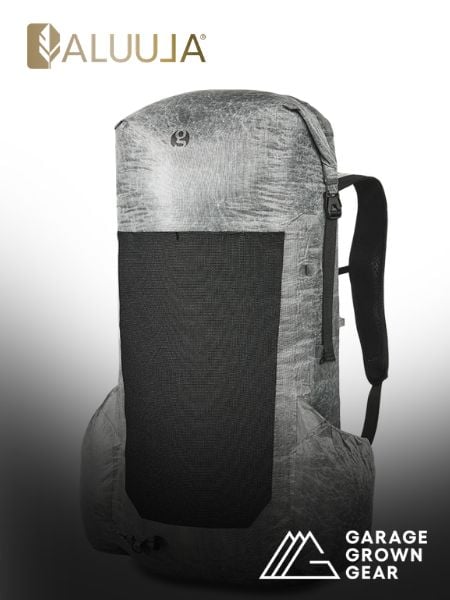 New Gear with Aluula FabricsLighter, stronger, more abrasion-resistant, and highly water-resistant - explore ultralight backpacking gear made with ALUULA Graflyte fabrics. Engineered for exceptional strength, durability, and lightweight performance, ALUULA Graflyte helps reduce pack weight without sacrificing reliability, making it ideal for demanding backcountry adventures.
 © Beartooth Media Group Inc.
 Loading...