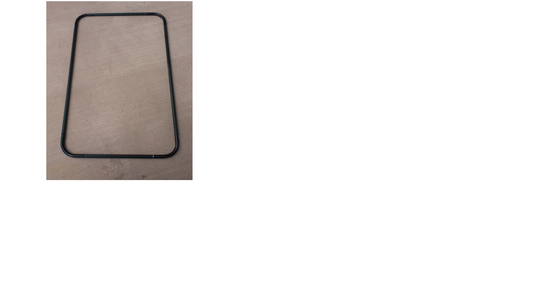
"it's inappropriate to state that carbon fiber won't conform to spaces that balsa will."
******************************************************************
Pretty much just an FYI for those who wish to MYOG or hobbies or what not below:
******************************************************************
Yes/No. If using CF chopped fiber, then yes, its far easier than balsa on super complex 3d shape(backpack frames are NOT a complex 3d shape) as you make a mold and "mix-&-pour" in. Not quite as strong, but still pretty darned good stuff. I take all of my CF fiber scraps and chop them up for use in such "blob" molded parts. Likewise achieving a smooth CF part is rather arduous work. In the end its also a heavier part. If you need the Specific strength and high tensile/compressive stresses then its mighty good stuff.
Working with cloth on flat thin surfaces is fairly easy and quick. So, in this aspect CF is almost as quick as wood. Anytime you go 3d or have to build up corners in small areas, cloth of any-type stinks.
Wood on the other hand can easily be shaped/modified/clamped/glued using far fewer specialized tools that are more readily available to the common Jack and Jill.
Wood is always faster for prototyping in all aspects. Wood is always faster for 1 or 2 'offs'. If you are setting up a production facility then investment in molds will pay back in time savings. Otherwise Wood is always a faster medium to work with. It also does not cause as many health problems when working with its dust than epoxies. In the end wood workers will have just as many health problems as those in handling epoxy products. Difference is Epoxy is dense and therefore and cutting 'smoke' is 'lighter' and easier to suck away than wood dust.
Either wood or epoxy work has aspects that cause harm to the workers. Something to think about if one is going to be working with these materials over an extended period. Lung/Nasal problems. Asthma, Allergies, Rashes, Hives, etc.
Making a tube out of wood is next to impossible on the other hand. Best lightest option generally speaking for carrying weight and rigidity is a hollow tube. Differences with high grade balsa is that its so light structures don't need to be hollow to achieve the same strength. Making a curved beam out of balsa is also fairly easy and VERY quick. Knife/glue, template/drawing, BAM done, install, check it out 10 minutes later. Will take longer making the template/drawing than actually making the part.
High grade balsa 4-6lb/cubic foot is actually MORE expensive than Carbon Fiber on a weight and on a volume basis. Cheap, read; dense/Heavy Balsawood is not as expensive as carbon fiber and is readily available as its used as shipping container wood from SA.
Creating joints with balsa does take some experience. Have to transition between a low tensile material to a high tensile high strength high density material. Quite often one needs to put transitionairy medium tensile materials between say, Super light Balsawood and Dense CF. A quick way is to very simply put glue(CA) on it as it is a super low viscosity glue and wicks into the BW quite readily. So readily in fact that the material SMOKES and if you touch it while it is curing will burn you and thoroughly stick your finger to said material.
PS: My background in composites is mainly in competitive airplane construction. Likewise I have been worked for Boeing in wind design on 787 Dreamliner with a bit of work in kayak construction as well. I have been building/designing RC competition airplanes for near 20 years. Won several. Everything from high lift SAE heavy lifters to Pylon speed racers and sail planes. For instance our SAE plane lifted 25lbs and weighed all of 1.3lbs(structural) with a tolerance for +3g maneuvers. My brother(pilot) still managed to pull a 5.5g(from video) turn at which point the 1/32" balsa wing and carbon fiber spars exploded on the right side turning the entire airplane into so much confetti in the air drifting over the airfield for the next 2 minutes and the 25lb weight went augering into the concrete taxi-way. Thankfully no one was hurt even though said weight went flying through the safety barrier for 10 feet smashing into a trailer.
PPS. Made a "cup" out of laminated balsawood to save weight. Yes, I saved weight, but can't heat said cup over a flame so it was essentially a non starter and useless. On the flip side it insulated the hot coca far longer than my TI or AL cups. It even held up to the 'sit' on and squish test. Not sideways though. Then again an AL/TI cup won't hold up to a sideways test either.