Topic

Sony NEX Lens Impressions

  • This topic is empty.
Viewing 25 posts - 51 through 75 (of 172 total)
PostedOct 29, 2011 at 2:37 pm

From Tony :
Looking at my camera, and I have no idea of what this means, here is what the lens says:

5.0 – 20.0 mm 1:2.8 – 5.8 (Zoom Lens 4xIS)

The 5.0-20mm is the focal length and that gives you the angle of view , the 1:2.8 -5.8 is the F stop (lens aperture)
The F stop is easy to understand . 1 to 2.8 means that the maximum amount of light your sensor gets is 2.8 times less than available at the wide angle end. On full tele you lose 5.8 times.
The 5.0mm to 20.0mm is a bit tricky because to know what it means you need to know the size of your sensor.
My guess is that you have a Canon with a 1/2.3" sensor, that makes your lens a 28mm to 112mm equivalent (in 35mm lingo)
That is the reason why people normally now use that "35mm equivalent" so that you can compare figures.
To verify just go to DPReview and look into the camera data base there.
Franco

Tony Wong BPL Member
PostedOct 29, 2011 at 4:40 pm

Franco,

Thanks for info and suggestion….research really helps give me a sense of how the NEX-5N compares to my Canon SD880IS

The Canon SD880IS works out in 35mm equivalent as 28-112mm.

The NEX-5N 18-55mm lens works out to 27-82.5mm.

The NEX-5N 16mm "Panoramic" lens works out to 24mm.

You were spot on with your estimate on the 35mm conversion- crazy good.

The DPReview of the NEX-5N was really impressive, helpful, and must of it went over my head, but it gave me a lot of good information to get educated.

-TOny

PostedOct 29, 2011 at 5:32 pm

Incidentally knowing the 35mm equivalent also allows you to know how much smaller than a 35mm frame (also known as "full frame" ) your sensor is.
So your Canon 5mm (the wide end) is equivalent to a 28mm. Divide the two and you get 5.6 , your sensor has a diagonal size 5.6x smaller than a 35mm sensor.
The NEX 18mm is a 28mm equivalent, 28:18= 1.5, the NEX sensor is 50% smaller than a 35mm sensor…
Franco

Rick Dreher BPL Member
PostedOct 29, 2011 at 7:13 pm

I was able to handle the NEX-5N, the two new Nikons, and the Panny GF3 and G3 in a store today. If I had to choose among them based on ergonomics and the realities of shooting outdoors in direct sun, I'd go with either the V1 or the G3. They're "shooters'" cameras, if you will and the EVFs are brilliant. The Sony probably has the best rear display of the bunch. It's a good thing the Sony has the big grip, as it's pretty unbalanced with the kit zoom.

The Nikons, while small, are bigger than I'd expected given the small format. They're very refined in finish and layout.

cheers,

Rick

PostedOct 29, 2011 at 11:04 pm

Here is a report from my trip to the Adirondacks earlier this month, shot entirely with the 18-55.

http://www.backpackinglight.com/cgi-bin/backpackinglight/forums/thread_display.html?forum_thread_id=54665

I also own the 16mm pancake and a cheapo 35mm (51 equivalent) Michael Lens ($47 on ebay) which I actually really like, but didn't bring either along.

I like the shots I get from the 16mm, but it's not that much wider than the kit zoom to warrant bringing it along. Every NEX owner should get the Michael lens, IMO. Here's a link:

http://www.ebay.com/itm/Michael-Lens-35mm-F1-7-for-SONY-NEX-3-NEX-C3-NEX-5-NEX-5C-NEX-7-NEX-VG10-/180735730585?pt=Camera_Lenses&hash=item2a14b06399

It has a slight vignetting, and at f 1.7 it can produce a nice bokeh superior to that of the 16mm pancake.

I am looking at the 55-210 telephoto next. I'd like to see some sample shots with it first, though. I'm also considering getting a higher-quality non-Sony lens and adapter, as I have seen some impressive results doing that.

PostedOct 30, 2011 at 7:41 am

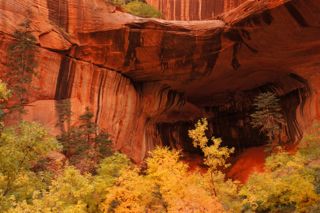
I have the 5N with the new OLED Viewfiner. I love working with it. I like composing in the viewfinder, seeing the exposure in the viewfinder, depth of field at all times, and various other information, such as shutter speed and aperture. Here's a photo from this week taken of the Double Arch Alcove (lower portion) in Taylor Creek, Zion National Park.Double Arch Alcove, Middle Fork of Taylor Creek in Zion NP

Jacob D BPL Member
PostedOct 30, 2011 at 10:17 am

Tony, I appreciate the sentiment but I would not consider my advice as expert, more like friendly words of encouragement. I’m just a dood with an NEX-5N who’s excited about it. You and I should go on a hike sometime in the near future, I’ll let you carry and use the NEX for a day to check it out.

I readily admit that my trip photos are not amazing, and I’m no landscape photographer. I am highly critical of my photographic gear though and I have worked out an SLR kit that I’ve grown very fond of using over the years (mostly for family photo journalism, friends, events, etc…) for photographing people, which is my forte I suppose. On hiking trips I either lug the SLR or settle on the P&S (same one that you have by coincidence), which is “ok” but completely uninspiring to use.

I don’t disagree with the others that suggest high end P&S cameras can produce some nice results. It’s true that making a great photo is all about the photographer, the light, and the subject. Sure, some great photos have been made with all sorts of cameras. Miroslav Tichy even makes his cameras from random bits of trash… that’s pretty low-tech :) Sometimes I process grain, noise, vignetting, desaturation, or off-tone hues (in other words, “defects”) into my photos to enhance the mood. I’ve even done some pinhole photography with my 5D; that’s one expensive pinhole camera! Having the freedom to do work with photos this way is nice. I own several cameras, film and digital, and most of my favorite photos could have been taking with one or more of them, but I might not have got the shot due to having to adjust to the conditions or limitations of the gear. In some cases I might not have even attempted the shot due to lack of confidence. The gear is not the end-all-be-all, but it can inspire confidence and excitement and those are good things for a photographer to have (regardless of the technical merits of the gear). I would say HYOH, shoot with what inspires you, use what you enjoy, and what you have fun with. If the gear inspires you to learn more about photography, that’s an added bonus, if not, don’t sweat it.

I think in the context of the thread, which was originally an extension of a conversation several of us were recently having about the NEX and lenses, it’s gone a little off topic, but still a good conversation about the NEX which I hope keeps going here.

From those of us here who are NEX users there seems to be a concurrence that the 18-55 kit is a good all-around lens for hiking/backpacking, no? I think this makes for a really simple setup, especially by using the camera in Auto or Aperture Priority (which is a good step towards learning a little more but still in realm of simple to use).

I’m guessing nobody here is using this combo, but Voigtlander makes an ultrawide 12mm lens (Heliar 12mm f5.6) that is fairly compact and gives a true “ultrawide” perspective. Here’s a photo of it mounted to the NEX. Here are some photo samples from the combo. I think this would be a sweet lens to have as a companion to the 18-55; although not an inexpensive lens at $550 (without adapter)… well, depending on your perspective this could be also bargain :)

One thing to note about the NEX and non-Sony lenses is anything below 28mm *may* cause some strange color shift at the edges of the image. Some lenses exhibit this, some do not. In addition to that the effect is mitigated with each iteration of the camera (NEX3 being the worst, 5N showing much lesser effect). Just food for thought.

This is a spreadsheet that I started before I bought my NEX. I’m very interested in ALT lenses, so this may not be all that interesting to others but, none the less. This is just a start. Most of these lenses are rangefinder lenses, I think I’ll eventually remove the SLR lenses as the idea with the NEX is keeping it small and light.

So do any of the other NEX users posting here have alternate lenses for your camera? I know a few have been mentioned, can we get a roll call?

PostedOct 30, 2011 at 11:16 pm

how about Samyang 7.5mm Fisheye? They are planning to release the NEX version according 43rumors.com… To my surprise, after owning both ultrawide and fisheye lenses, i found that the fisheye get out more often than the ultrawide lens. It is simply more… dramatic, although that "dramatic" effect wears out after one-two hikes :p

Fisheye also could be defisheyed, and it makes superb VR panorama with simple setup.

Today I'm only using a fisheye, a 20mm mFT (40mm eqv) lens, and a 100mm equiv macro for backpacking but they cover all my needs, sans long-range wildlife.

Jacob D BPL Member
PostedOct 31, 2011 at 8:05 am

I see you do like the fisheye from your avatar (self portrait?) :)

Samyang has shown they can produce some nice lenses, if they came out with a fisheye for the NEX it would sure be fun to try out, assuming it's small and inexpensive.

Eric Lundquist BPL Member
PostedOct 31, 2011 at 11:02 am

I purchased the NEX-5 after our 4-year old Canon P&S was dropped by a friendly person taking our photo. I have taken this as a lesson and now carry a tripod (full size or Ultrapod Mini) to take photos of myself. In the search for a replacement I knew that the camera had to have some sort of PASM mode as we had become accustomed to using it on our fallen Canon. I was also interested in using different lenses but was intimidated by a full DSLR. I found the IQ of the NEX camera to be superb and in handling the camera in-store alongside Olympus' offerings I thought that the NEX's menu was more intuitive and the lenses felt like an actual camera instead of a plastic toy. Thus, I became and EVIL convert!

I purchased the NEX-5 with the 18-55mm and 16mm pancake as a package, which at the time was only $100 extra to include the pancake lens. It would have cost $249 separately if I hadn't bought it as a package.

My wife had an old Pentax K1000 with a few lenses that was not being used so I bought a Fotidox Pentax K to Sony E-Mount adapter to use the lenses on my NEX.

My current setup with the NEX-5 is as follows:
Sony 18-55mm/3.5-5.6 with UV filter to protect lens
Sony 16mm/F2.8 with UV filter to protect lens
Fotidox Pentax K to Sony E-Mount Adapter
Pentax-M 50mm/2.0
Pentax JC Penny – 135mm/2.8 ($8 at thrift store)
Pentax JC Penny – 80-200mm/4.5
Pentax JC Penny – 2x Teleconverter

I've also purchased some second-hand lens filters to help with some of my landscape images. A 49mm filter fits my Sony E-Mount lenses as well as the Pentax-M 50mm. These include a Neutral Density filter for longer shutter speeds in daylight (to get those silky waterfall/moving water photos), Closeup filters for pseudo macro work, and a Circular Polarizer that I'm still getting used to working with.

Lens filters:
ND 4 – At F22 this still lets in a considerable amount of light. Good for fast moving water but I hope to get a ND 6 or ND 8 for better results without resorting to F22. Stacking these filters is possible but IQ suffers with additional glass. Also, stacking filters may result in vignetting at the corners of the image.
Closeup +2 – ok
Closeup +4 – much better for pseudo macro work. A keeper in my opinion. Works great with 18-55 or 50mm lenses.
Circular Polarizer – My newest purchase. It is somewhat difficult to tune it properly with the NEX's screen.

In general, I use my NEX on A/Aperture Priority mode during the day. Only when photographing water features do I turn to S/Shutter Priority. I'll use S or M/Manual mode when attempting to shoot star/night shots. I need more practice in this area and I believe a IR remote would be beneficial here.

I found that on my recent trip to Yosemite that the 18-55 stayed on the camera most of the time. I'll post a link with some images from my trip later this week or weekend. I'll include some unedited images for comparison as well as show the natural vignetting that happened when I stacked my ND 4 and CPL filters.

I think my next purchases will include a Gradient ND filter, ND 6 or ND 8 filter, a Pentax manual focus prime lens in the 24 to 35mm range, a 35-70mm/2.8 zoom (if I'm lucky), and an IR remote.

Eric Lundquist BPL Member
PostedNov 2, 2011 at 12:25 pm

Tony and others,

I’ve uploaded some of my photos from Yosemite last weekend. I primarily used the 18-55mm and my Pentax-M 50mm. Each photo that was taken with the NEX has it’s unedited version for comparison. I included a few images from my wife’s Canon S95 for additional comparison.

Picasa Webalbum

Jacob D BPL Member
PostedNov 2, 2011 at 12:37 pm

Eric,

Thanks for posting those. I took a quick look, some very nice images you have in there. I think the comparison vs. the S95 is interesting. The level of detail the NEX shows on the Tioga Pass shot is a good example (both were pretty slow shutter speeds… both were shot on a tripod?)

Posting the unedited versions was a good idea too. I'm assuming you shot these RAW and exported them from LR without any changes?

Eric Lundquist BPL Member
PostedNov 2, 2011 at 12:58 pm

Jacob,

I would say most of my shots were taken with a tripod. In the Tioga Pass shots you mentioned both cameras used a tripod.

It’s hard to get a full comparison as the Canon S95 was at a much higher ISO, but I don’t think it was needed as the exposure time could have been adjusted to compensate. Perhaps on my next trip I’ll take both and compose each shot myself with similar settings.

Canon S95, ISO1600, 1/6 sec. f/2.8

Sony NEX, ISO400, 1/2 sec. f/3.5, 18mm

You’re correct, I always shoot in RAW except where the camera won’t let me such as HDR and Panoramic images. I have to change to JPEG for those images. The ‘unedited’ images were imported to LR and exported to JPEG without any changes other than resolution and the watermark.

Tony Wong BPL Member
PostedNov 2, 2011 at 1:18 pm

Eric,

Thanks for taking the time to post the photos up with the link to them.

Really startling the differences between the shots.

More so, to see the difference between using software to edit the photos vs. the RAW/JPG shots straight from the camera.

Really tells me that post processing/photo editing is critical to bring out the best in your shots.

I was struck by how much darker the shots were on the Sony vs. your Canon, but that might be an issue of the len/optics and F Stop used, and sensor size, right?

-Tony

Bob Gross BPL Member
PostedNov 2, 2011 at 1:30 pm

"I was struck by how much darker the shots were on the Sony vs. your Canon, but that might be an issue of the len/optics and F Stop used, and sensor size, right?"

No, that is probably from the metering pattern.

–B.G.–

CW BPL Member
PostedNov 2, 2011 at 1:32 pm

I'd be more inclined to say it's the aperture. The S95 is quite a bit faster/brighter than the Sony 18-55 at equivalent focal lengths.

Jacob D BPL Member
PostedNov 2, 2011 at 1:48 pm

Well, just looking at the two shots posted by Eric directly above you have…

S95: f2.8, 1/6s, ISO 1600
NEX: f3.5, 1/2s, ISO 400

…(I peaked at the EXIF data) the S95 has 1 full stop EV more than the NEX. If the camera(s) was being used in auto, or any of the modes that give auto exposure then Bob is correct, there are some metering differences going on.

If Eric was shooting in manual, then he just underexposed with the NEX a little :P

FWIW, I don't trust the numbers from the meter on the NEX. I'd have to do a controlled test with a gray card, but it seems to me that the exposure reported by the meter is higher than the actual exposure. This could also be because I'm using non-Sony lenses, I haven't looked with the 18-55 yet to see if the results are similar. Instead of relying on the exposure shown, I use the live histogram which does seem to be accurate (otherwise I would be really unhappy!) and doesn't jive with the metering. I haven't heard anyone else complain of this so I'm guessing it's due to the lenses, but just more food for thought. By the way, I'm referring to shooting in manual mode and I use spot metering.

One more 'FWIW', Tony, the RAW files will look much more subdued than jpeg files directly out of the camera. The camera will apply it's own processing to the jpegs, whereas it leaves the RAWs alone in that respect.

Eric Lundquist BPL Member
PostedNov 2, 2011 at 1:55 pm

I can't remember if this was shot with Spot Metering or Multi on the NEX. I played around with that feature a lot on this trip trying to expose the white granite with the dark shadow covered valley floors.

I do underexpose almost every image on the camera by -0.3 and I find it's easier to recover lost details from dark vs lighter objects. I also think that there was a thread over at DPReview stating that one should underexpose by -0.3 on the NEX.

Jacob D BPL Member
PostedNov 2, 2011 at 5:22 pm

Rick, for some comparison shots would you prefer to uprez the smaller file or downsample the larger one (or leave them at their native resolutions)? I will make some comparison shots to post from a couple of different cameras vs. the NEX-5N and handle the resolution accordingly.

John Nausieda BPL Member
PostedNov 9, 2011 at 3:51 pm

I went the other way around and moved from a Nikon 880 with a 3x tele and a wonderful wide converter to a Canon s95. I even managed to mount both those lenses to the Canon , but I am thinking I will skip them on an upcoming trip to China. If I take my lightweight tripod I can use stitch assist for any possible wide angle I want . That leaves tele. So I shoot big and crop. I can shoot HDR with the tripod. I use the self timer in low light. My setup will be so small that I won't need a camera bag. You want clarity -image stabilization is much better now. Still not enough? Then a tripod.

PostedNov 9, 2011 at 4:51 pm

over here in korea they're pushing the samsung mirrorless camera. hard.

but, you can find the nex (and accessories) if you look hard enough. i noticed that i was never using zoom on the stock lens so i tracked down the wide angle. got it cheap. AND the thing fits in my ULA circuit hip belt pocket…which is really the key.

PostedNov 12, 2011 at 8:02 pm

The Sony NEX series is intriguing, I would be the first to hop on board if it weren't for the ergonomics and paucity of lenses. The Sony feels a bit akward with bigger lenses, which wouldn't be so bad if the lenses were of a higher caliber. I will be the first to acknowledge that I have serious camera lust issues, but I have so far held off purchasing one of the newer offerings of Sony, Panasonic or Olympus.

The Sony, because of the sensor size, would appear to be the best performer, but the selection of lenses is limited and from the testing I've seen, rather mediocre compared to other lenses tested. Now, lens tests aren't everything and certainly, in the hands of the capable photographer, any decent camera can be made to do wonders. But the difference between the lenses offered on Olympus and Sony seem to be worlds apart in terms of vignetting, barrel distortion and overall performance. The Olympus cameras have smaller sensors and do not perform nearly as well in lower light – but the video is excellent and the JPEG quality might be better.

And herein lies the rub – when thinking about cameras, think about the system you will purchase. What systems will be around in five years?? The good thing about DSLRs is that most of the Canon, Pentax or NIkon lenses work with most DSLR bodies (the caveat to this certain lenses will only work with the higher-end lineups). What will the future of the m4/3rds or Sony system bring? Because while bodies may come and go, you want to keep lenses. Good lenses are often far more expensive than the bodies. Re-investing in a new body and new glass every few years gets darn expensive.

Finally, on the entire backpacking subject, what is good enough? How much money do you sink in a system? How important is photography to your trip? Is it the point of the trip itself or does it serve as a reminder? I struggle with these questions. My P&S cameras do not produce nearly the image quality as my DSLR did – but then again, I actually use my P&S cameras while the DSLR often sat in the pack. Oh, the torment.

Dirk

Rick Dreher BPL Member
PostedNov 13, 2011 at 10:12 am

All good questions, Dirk. Overall, I'm unconcerned about the relatively small sensor difference between 4/3 and APSC, both of which are leagues apart from P&S sensors while only being moderately different from each other (especially in the Y axis). Noise and low-light performance are more products of chip and processor design than anything else, and each generation yields performance nobody dared imagine two years earlier. Advances in PP software pretty much eliminate any remaining differences.

As a result, I think we can feel free to choose the system that best suits our backpacking needs and stop worrying about whether the image quality will be there. It will. As you note, it's all about the lenses and the ergonomics and the ability to keep the camera at hand at all times. And when in use, can you actually compose and focus? (Not so easy in sunlight with a rear display.)

Having handled them side by side, I would choose a Nikon V1 before an NEX despite the V1's relatively tiny sensor and paucity of lenses. The V1 gets so many things right I was unprepared for how much I'd like it, while the NEX reminded me more of a smartphone fitted with a giant lens. Basically, it was like comparing a tool to an appliance. However, based on lens and accessory selection, I'd be most likely to go ยต4/3.

Want even more dissonance? Fuji is informally admitting they're planning on jumping into the mirrorless fray, capitalizing on their X100 and X10 success. An interchangeable lens system with the X100 viewfinder would turn the category on its head, and Fuji color science and lenses have always been strengths. Which leads to the final obvious question: are Canon's marketing folks still at a kegger? DSLR sales are headed for a steep downhill, if not an outright cliff, and they seem remarkably unconcerned.

But it's almost Christmas and I must shop for others. :-)

Cheers,

Rick

Viewing 25 posts - 51 through 75 (of 172 total)
Loading...