Topic

Sony NEX Lens Impressions

  • This topic is empty.
Viewing 25 posts - 1 through 25 (of 172 total)
Eric Lundquist BPL Member
PostedOct 25, 2011 at 12:45 pm

This thread was created to migrate the photography talk about the BPL Trinity Alps trip to a separate thread.


@Tony
,

I’ve found that the 16mm pancake is very easy to carry. I use a padded sunglasses case attached to my shoulder strap D-rings to carry it as well as a lens pen. When carrying the 18-55mm or my 50mm/f2 it stay’s put but I can’t close the zipper which is a concern. (I’ll upload a photo of the setup later.

The Trinity Alps trip was my first overnight with the 50mm lens (~70mm equivalent on NEX). I’ve always brought the 16mm along but I thought that with a larger group I would want to take more portrait style photos. I found that it was more useful for closeup pseudo macro shots of leaves than for portraits.

Using the Pentax adapter for the camera, I think I might look at getting a used Pentax 40mm/2.8 pancake as a replacement for my 50mm. A little wider for portraits and it should fit into my carry system. I haven’t brought my kit zoom (18-55mm) with me on any outdoor trips as I like to shoot wide open quite often and at f3.5 I don’t always get the bokeh I’m looking for. I’ve found with prime lenses that I can usually move around for composing my shot or crop the image when I get home.

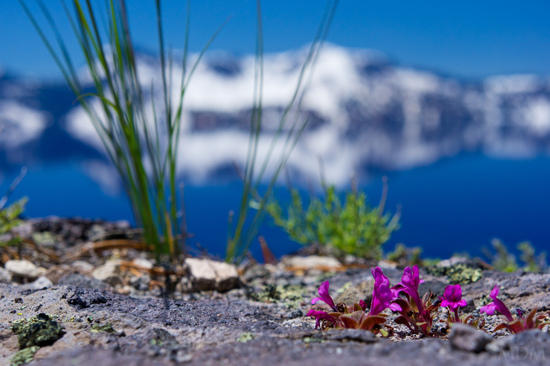
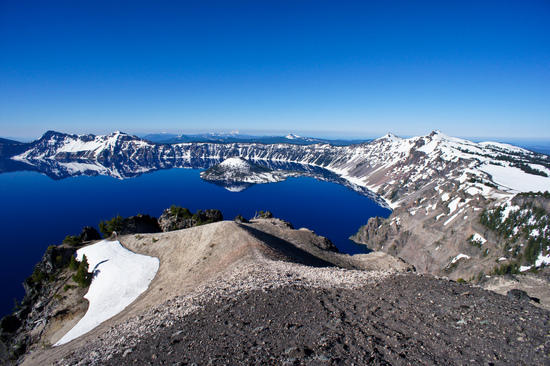
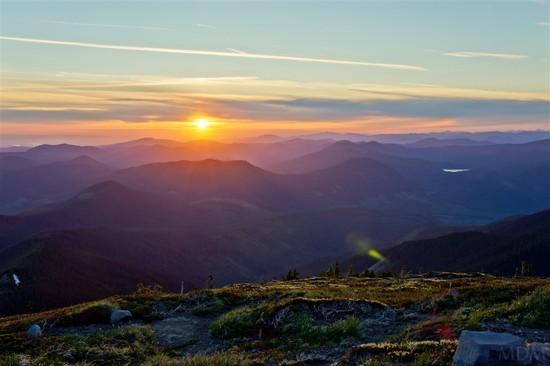
An overnight trip to Mt. Tallac shot with my 16mm only.

Tony Wong BPL Member
PostedOct 25, 2011 at 1:50 pm

Eric,

Really appreciate your feedback and helping me with this transition for me away from pocket cameras.

I love the shots and thanks for sharing them.

I do see that there is a "ring" in the center of the images and the outer corners are much darker.

Is this because of the pancake lens?

Honestly, I don't know squat about cameras and f stop….thought I think it is refering to the apperature size or speed, which allows light into the camera's sensor.

My other concern is that with any larger camera, I will be taking less shots because of the hassle factor.

For example, on my recent JMT trip in Aug, I think that in 16 days I took 3000 to 3900 shots with a simple pocket camera.

I am that sort of shooting fool….though, I do find that I need to take multiple shots of the same scene/subject to allow for motion blur with the limitations of the pocket camera.

-Tony

Eric Lundquist BPL Member
PostedOct 25, 2011 at 2:03 pm

The darker corners is called vignetting which can happen naturally on some lenses. I actually prefer the look and edit my photos in Lightroom to create the effect. It is not a result of using the pancake lens.

F-stop is the aperture size, lower number means larger opening for more light to hit the sensor/film. Many photographers refer to low f-stop lenses as fast glass (usually f/2.8 and lower).

With the pancake lens and the camera attached in front of me I'm more inclined to stop a second and snap the photo. With a larger lens attached I sometimes reluctantly keep trekking on.

I used the stock battery and took over 300 photos during the trip and had about 8% battery left when I got home. Most reports show that 300-400 is the number of photos per battery that you can expect from the NEX. So I wouldn't plan on 3000 shots without a constant supply of fully charged batteries along the way.

If you're not into learning about f-stops and don't think you'll want to swap out lenses you could look into the Canon S90/S95/S100 lineup or one of the large sensor/fixed lens cameras like the Sigma DP1 Cameron had on the trail.

Roger Caffin BPL Member
PostedOct 25, 2011 at 2:34 pm

> the outer corners are much darker.
Yeah, vignetting. It means the lens is not matched to the sensor. OK, some like this as an artistic effect, but personally I see it as a defect.

> in 16 days I took 3000 to 3900 shots with a simple pocket camera.
And this is much better than taking only 30 because the camera was too complex or inconvenient or packed away 'for safety'. Photos are not just 'show-off art', they are memories.

In all this preoccupation with DSLRs and multiple lenses, it is sometimes worth remembering that some of the world's great photos have been taken with the equivalent of a Box Brownie. OK, most phone cameras are just crap, but a good simple 'pocket camera' can take superb photos if used correctly *and frequently*.
:-)

Cheers

Tony Wong BPL Member
PostedOct 25, 2011 at 2:43 pm

Eric,

Again, I really appreciate the education.

The only photography class that I has was in junior high when I was 13 or 14 yrs old….35 mm black and white camera.

F stop totally makes sense to me now.

I am willing to learn….as my interest is just capturing better photos.

The essay that Jacob has on his website, Hike It Like It, was very helpful for me to understand sensor size.

http://hikeitlikeit.com/2011/photography-and-backpacking-1/

Given how much time I put into my photos and photo essays, it seems logical for me step to something better.

I am not even terribly concerned about weight….maybe I am concerned about bulk in that it may cause me to take less photos.

I have noticed that friends of mine who have a DSLR, they take a fraction of the shots that I do…what they take is great, but fewer of them.

I prefer to document my trips simply so I don't forget them. (My mind is shot!).

Good to know about the 16mm lens and that darkness at the edges is not from the lens.

Still, they are impressive shots you have.

Soonest that I would get this is next year…need to pay off some other bills before I can consider new toys, but just like backpacking gear….fun to research the hell out of what is out there in the market.

Any reason you did not get the NEX-7?

-Tony

Eric Lundquist BPL Member
PostedOct 25, 2011 at 2:57 pm

It sounded like Jacob was in the same boat when considering cameras. The NEX was fairly new to the market when I jumped in. They now have an upgraded NEX-5N which has a added a touch screen to it's feature list as well as a new Sony A-Mount adapter. The NEX-7 wasn't on the market when I bough my camera and is too Pro-DSLR for me anyway. I like the simplicity of the NEX interface and chose it because it didn't have all the buttons and dials.

Jacob D BPL Member
PostedOct 25, 2011 at 3:12 pm

I have lots of thoughts on the subject, but tied up at the moment. In the meantime everything you need to know about NEX compatible lenses (just about any rangefinder or SLR lens you can imagine) you will find here:

http://www.fredmiranda.com/forum/topic/969329/89

Start at page 90 and work your way up, once you reach the end start at the beginning :) You will see more there than anyone can "tell" you about a particular lens.

Tony Wong BPL Member
PostedOct 25, 2011 at 9:51 pm

Jacob,

Holy Cow Man!

You were not kidding….lenses, lenses, and more!

Maybe I don't want to know how expensive they are, but the results are pretty amazing.

I can see how this can be just like tweaking your backpacking gear…

-Tony

Jacob D BPL Member
PostedOct 26, 2011 at 8:27 am

WOOOSH!

That was the sound of you going down the rabbit hole, Tony. Welcome to the matrix :)

As far as lenses go, you’ve got two general options:
a) Sony E mount lenses with autofocus and electronic aperture
b) “Alt” (third party) manual focus, manual aperture lenses adapted to fit the NEX
c) Ok, technically there is a third option for Sony A mount (SLR) lenses… but big and heavy

The Sony E lenses are ok in my book, from what I’ve seen most of them are very decent. I’ve only used the 18-55. My main gripe is the limited line up, which doesn’t make the most sense for a 1.5x crop body. This is the way I view the E-Mount lineup…

– 16/2.8 (24mm equivalent) – The somewhat fast aperture suggests that it might make for a ‘normal’ lens, but it’s really too wide for that. Getting too close to people will distort their proportions. For landscape use the 18-55 @18mm is equally a good option at a similar focal length.

– 18-55 (27-83mm eq) – A very nicely built ‘kit’ lens. The image quality doesn’t reach out and grab me but it’s surprisingly good.

– 24/1.8 (36mm eq) – Not released yet. If this lens flops I think a lot of people will be disappointed, including me. If it’s a good lens (which it should be at $1000) then it will really strengthen the overall lineup.

– 30/3.5 (45mm eq) – Short macro lenses are ok for flowers, you’ll never get close enough to bugs to get the macro magnification. Slow-ish aperture for use as a normal lens.

– 50/1.8 (75mm eq) – Not released yet. The focal length is neither here nor there. Not wide enough for use as a ‘normal’ lens, a little short for a dedicated portrait lens. They should have made this either a 35/1.4 or 75/1.8, or 90/1.8

– 18-200 and 55-210 zooms – Well, these big zooms may be more useful for general travel. I don’t think many UL backpackers will want/need them.

What Sony has done is created a really fine and interesting little camera in the NEX, but fallen short in their lens offerings. Even despite that the camera has been a HUGE hit in Japan (and around the world). The combination of a compact body, large sensor, and excellent sensor performance is a winner! Putting alt glass on digital cameras is nothing new, but the sensor on the NEX really shines with good lenses, and the small size makes for a very compact package when using the classic rangefinder lenses.

The classic manual focus lenses require a few things…
– First, an adapter to convert (whatever) mount to an E mount
– User must know how to manually focus
– User must know how to set the aperture on the lens

These are not difficult skills to acquire. Since the advent of cameras, photographers have been able to master these things. Prices range from dirt cheap to drain your bank account. Once you know what you’re looking for eBay is a good place to shop. KEH is another.

edited to add a couple of “by the ways”…
1. A little self promotion, Tony you may want to read this on lenses if you have not already.
2. Congrats on having your photos selected for the Nat Geo book!

Chris Townsend BPL Member
PostedOct 26, 2011 at 8:40 am

Good advice from Jacob. I'd just add that the new focus peaking feature means that it's easy to focus manually with the NEX.

I think the 55-210 lens could be useful for telephoto landscapes and wildlife shots. I often carry the 55-250 with my Canon 450D and use it enough to justify the weight. I intend getting the 55-210.

Jacob D BPL Member
PostedOct 26, 2011 at 9:13 am

I agree, this is a pretty neat feature. Between peaking and the MF assist magnifier it's hard to go wrong. Really bright sunlight made things a little more difficult for me on my first trip out, but overall it wasn't a problem. I really wish the NEX-5 had an integrated view finder, but I don't think I will buy the add on.

I didn't mention it above, but my backpacking kit consists of the 18-55 and Voigtlander Nokton 40/1.4… until I get a fast 24mm lens anyway, then the 40 will be out. I carried this on an across the chest strap with the spare lens in my backpack side pocket wrapped in a cloth.

Tony Wong BPL Member
PostedOct 26, 2011 at 3:19 pm

Jacob & Chris,

Wow….I am getting an awesome education here on photography!

Appreciate the listing of the lenses that are and will be available for the camera.

Photography almost seems like UL backpacking…right lens for the specific situation.

$1000 for a lens….I might be afraid to drop it. :)

Looking at the shots that have been displayed on the other thread and the forum link you provided, I can tell you that I am sold with green envy of the spectacular shots that have been captured.

Good news for me is that I won't be purchasing this til sometime next year, which means there is time for new lenses to come and to chose from.

This has definitely been an eye opener.

Also, it is great to get your opinions on what lenses you would carry, which carries a lot of weight in terms of helping me decide what I might want.

-Tony

Roger Caffin BPL Member
PostedOct 26, 2011 at 4:52 pm

In all of this it is easy to lose sight of the bottom line, and I am not talking about dollars here. It is 'what do you want to do with your photos?'

If you want to make wall-sized prints, then a DSLR and primes may be the (only) way to go. But how many really do that? Really?

If you want to look at your photos on a screen or a TV and put them on a web site, remember this: no matter what resolution your camera has, your screen is unlikely to be better than 1,600 pixels wide. That is a far cry from what some of the expensive cameras and lenses can offer. In fitting your precious photos to a screen you are going to lose most of that wonderful resolution. in fact, HOW you edit and reduce the photos will be more significant than what camera you used to take the photos. Many display technologies do a lousy job of that reduction, usually to get fast processing.

It is instructive to remember the story of the modern video zoom camera. Such animals were originally large, expensive and heavy (think broadcast camera), until the legendary head of (I think it was) Sony had a meeting with his optical designers. He wanted a zoom lens for a small hand-held video camera.
The 'experts' told him it could not be done.
Why not?
Because the resolution would be too poor.
Well, what sort of resolution could they get?
It would be under 1000 lines, and that's terrible.
But the sensor has only 760 pixels across (or about that then).
Well, yes, but …
Build it and show me.

So they did, and it wowed the world. (It was also hugely profitable!) We now have small hand-held video cameras with excellent zoom. To be sure, the resolution is only just enough for the sensor, but any more would be wasted.

Mind you, I still say most phone cameras are crap. But look at the glass bead they use for a lens!

Cheers

Jacob D BPL Member
PostedOct 26, 2011 at 8:38 pm

Roger,

The difference between the Canon SD880is and Sony NEX is night and day, regardless of what one does with their photos. The thread topic is "Sony NEX Lens Impressions" after all.

Roger Caffin BPL Member
PostedOct 27, 2011 at 2:13 am

Hi Jacob

Yes, I understand what the thread topic is.

Let's ignore the fact that the 880 is several years older than the NEX, and focus on the price: the NEX is sort of double the historical cost of the 880 before you add lenses. Adding lenses boosts the cost even higher.

My question then is whether the **use you are going to make of the photos you take** can justify the rather significant extra cost. The cost of the gear is after all one of the 'impressions' I get.

Comes a day when the technology is good enough that the old mantra cease to be significant. For on-screen display, perhaps we have reached that day?

Cheers

Chris Townsend BPL Member
PostedOct 27, 2011 at 3:06 am

Good points Roger …. but I think choosing a camera involves more than just the resolution. Cameras with APS-C sensors, like the NEX series, have much better dynamic range than compacts with much, much smaller sensors. For landscape pictures this makes a difference. Also, larger sensor cameras mean less noisy images at high ISOs so low light pictures look better, as do ones where a high ISO is needed because you can't hold the camera steady due to the wind (or being out of breath).Having interchangeable lenses makes a difference too, as you can decide which lenses to take on which trip. Of course now you can have a tiny sensor compact with interchangeable lenses – the Pentax Q.

The end use of images is significant of course. But even for web use better dynamic range makes a difference. High ISO images taken with a tiny sensor compact can look awful on the web too.

If you'll always be taking pictures in bright light then a tiny sensor compact and a low ISO will be fine. In fact many camera phones will be fine. I took images with my Android phone on the Pacific Northwest Trail last year that appeared in a magazine and looked okay. But in anything other than good light the phone pictures were terrible.

Jacob D BPL Member
PostedOct 27, 2011 at 7:39 am

Hey Eric, I just realized that the NEX has bulb exposure. Did you happen to use yours on the Trinity trip (or any other) for doing star trails or slow exposure on water?

Eric Lundquist BPL Member
PostedOct 27, 2011 at 8:06 am

I haven't used that feature yet as I'm trying to figure out a IR remote instead. I'm too afraid of camera shake even with a tripod. Still, I'll have to give it a go and see how it turns out sometime.

Edit: I have found that using the 16mm lens it has to hunt for autofocus when doing 20-30s nightsky shots. Any tips to eliminate the hunt for autofocus?

Rick Dreher BPL Member
PostedOct 27, 2011 at 9:24 am

The easiest way would be MF mode preset on infinity. I don't know how the AF lock functions on these cameras, but unless there's a "toggle" on/off option I'd avoid AF entirely.

Cheers,

Rick

Tony Wong BPL Member
PostedOct 27, 2011 at 9:45 am

Roger,

Appreciate your input and hear what you are saying.

In fact, one of my concerns is that a newer, more complex camera might mean taking fewer photos.

My motivation is not that I want to print massive mural sized photos.

This is all about preserving memories, docummenting my travels, and sharing it with others with my photo essays.

My desire to "step up" has to do with having a larger/better sensor so that I can have images that better capture what I have seen.

I really don't know a lot about photography, but when I see the photos that others have taken with this camera or larger DSLRs, I am struck by how clear, sharp, and vivid the images are vs. my humble Canon 880.

And it would be nicer to have a camera that performs better in low light situations, which the larger sensors found in larger or more expensive cameras.

In some ways, it would be nice to not have to fuzz with interchangeable lenses, but it seems that stepping up to a larger sensor camera means detachable lenses.

I can live with that if the trade off are pictures that are "better" than what I have now.

Ultimately, I think it comes down to the simple fact that I am willing to spend the money and take on the extra weight for the pure self enjoyment of being able to look at the photos later on that look "nicer" than what I am getting now from my trusty SD880.

-Tony

CW BPL Member
PostedOct 27, 2011 at 9:58 am

Just because you can change lenses doesn't mean you have to. A lot of people, including Ryan J., shoot with one lens most of the time. Ryan generally uses a 35 f1.8 lens on his D7000 and that's my combo for most situations as well.

Jacob D BPL Member
PostedOct 27, 2011 at 10:02 am

Tony,

You can of course leave one lens on the camera at all times, like the kit zoom. I don't change lenses very often when I hike. Something like kit lens for the hike, change to fast prime in camp (or don't change at all). You still get the benefit of the bigger sensor.

You can use the NEX like a P&S (same is true of just about any camera). It has full auto mode, it also has some other modes such as a really neat panorama sweep mode, automatic HDR, and an evening capture mode that takes several fast shots and merges them in camera to greatly reduce the effects of camera shake. These are more 'auto' modes and I have not fully delved into them, besides the panorama – which is pretty cool.

These are all conveniences that your camera, and many newer cameras don't yet offer. I think if anything you will take MORE photos with the NEX (shudder) ;)

Additionally you can customize the few buttons that are on the NEX. I know you've discovered the technique of locking exposure, you can customize one button on the NEX to do this, which is a better way than using a half press on the shutter and recomposing because there is no focus involved with the single button lock (the SD880 can do this too, but it's a multi button press). Just an example of another way that you can leverage the camera as an even more powerful P&S

(edit: Chris beat me to it)

Jacob D BPL Member
PostedOct 27, 2011 at 10:13 am

@Eric

That may be a valid concern. The NEX is so small and light it might be tricky. Weighting the tripod like we were talking about might solve the issue. Then again it looks like a basic off brand IR remote can be had for ~$10, small and light to boot.

PostedOct 27, 2011 at 10:23 am

almost bought a DSLR, so glad I didn't.
Lens range is limiting factor unless you get a converter and go for manual, which, at the moment is something I'm not doing for backpacking and climbing use at least.

crala flwrs
llaosrk
hood sunset

Rick Dreher BPL Member
PostedOct 27, 2011 at 10:56 am

Hi Tony, may I offer a suggestion? Go through your existing photos and parse your shooting habits. By which I mean look at the zoom settings you used most often, what light conditions you shot in (and the various ISO settings), what subjects you shot most commonly and–very importantly–which photos you really like. i.e., What shots transcend the chasm between snapshot and treasured image? (Some photo software can give you camera setting statistics, which is a big help. If 62% of your shots are at the widest zoom setting, that's a clue.)

After doing this with a few hundred or better, a couple thousand shots (one Saturday kid soccer game for me) you should have an idea of what sort of photographer you are. Do you like sweeping wide-angle scenery? Do you like compressed scenery through a long telephoto view? Do you like macro wildflowers and bugs? Do you like portraits? Do you like evening time exposures? Do you like marauding deer and other large critters?

Once you've self-examined, look around at others' work and see what they're doing that you'd like to yourself, but aren't because of either technique or equipment. I wouldn't spend a nickle until determining what I'd like to accomplish with my images that I can't now. Sometimes it's a learning hurdle; sometimes it's a gear hurdle.

Nearly every camera has an "Auto" setting that delivers trustworthy results 90% of the time, so if you buy something completely unfamiliar you can still successfully use it immediately upon charging the battery. Cameras are easy. Then, as your skills expand you can take it off Auto and control it yourself to enhance and extend your vision. Don't be intimidated by gear.

What I find gets in the way of shooting a lot while on the go is lack of easy access. DSLRs are crappy backpacking companions because they're not easy to comfortably keep at the ready. The new mirrorless system cameras are much smaller, presuming they're fitted with compact lenses. A chunk of the size advantage bleeds away as lens size increases, though. And there exist fixed-lens compacts that take images that compete with the most expen$ive dslr, they're just not as flexible.

In sum, before opening the wallet try to decide what you'd like to accomplish. The gear is actually pretty unimportant compared to clarity of vision. The big mistake is buying a "metric" camera when your needs are actually "Imperial." Then, the camera stays in the toolbox, unused.

Cheers,

Rick

Viewing 25 posts - 1 through 25 (of 172 total)
Loading...