


Yeah, thats about it. Mostly the moccasins they wore were the longer, higher variety. Many were over the knee.
Topic
Become a member to post in the forums.
Yeah, thats about it. Mostly the moccasins they wore were the longer, higher variety. Many were over the knee.
> I just do not see how low tops can provide as much ankle support as a boot that comes above
> the ankle, its just not possible.
I was field testing some mid-height shoes two days ago. Yes, the top of the shoe came above my ankle and was meant to provide 'ankle support'.
The reality was I had to cut the end of the walk short as the rubbing from the high tops was causing extreme pain on my ankle. If that was 'providing ankle support', then I don't want to know anything about it at all. Sadly, only too common.
> Between the rocks and the mud, I would not be enjoying myself in low tops
That's why we wear gaiters over our low-cut joggers. They keep all that stuff out, while not inhibiting the free movement of our ankles.
But it's a free world: to each his own.
Cheers

My observation from a few of each:
high tops have stiffer soles, nothing to do with the height of the top, that's just what they happen to do
stiffer soles are better when you're walking on rocks
less stiff soles allow the edge of the rock to poke through so it's painful
on rocks, with low tops, you have to watch where you're walking more

"but I just do not see how low tops can provide as much ankle support as a boot that comes above the ankle, its just not possible."
Unless you have some solid (like hard plastic) top collar on your boots, and you cinch it reaaaalllllll tight, your boots aren't providing any more support than low tops. My own experience is this: I used to have lots of ankle problems when I hiked in boots, including a tendency to often twist my ankle. That problem has disappeared since I've been in shoes. No exaggeration.
"Native Americans wore moccasins, true, but they also didn't try climbing 14,000 ft peaks"
You sure about that? You really think the native americans didn't want to go high, had no interest in standing on top of the world, or just finding the most advantageous spot to spy either enemies or food? I think you're wrong. I'm no historian, but I think it's just human nature to explore, not something we invented in the 20th century with the advent of hiking boots.
Sure, its human nature to explore. Its also human nature to survive. I'm sure first nation peoples visited mountaintops, but also regarded such places as dangerous, and would prefer to be in an environment more suitable for survival. I also think they would have killed for a waterproof boot :)
With or without a hard plastic top, some material is better than no material. With a low top, the ankle is exposed. With a higher boot, the ankle is at least going to come into contact with a material, which will give some support.
"A good boot is never clunky or "an accident waiting to happen" maybe you just need to develop more muscle in your legs?
We could flip that and say maybe you just need to develop stronger ankles… but in all seriousness, many have dropped boots for trail shoes, have been happier as a result and then want to spread the word.
"Native Americans wore moccasins, true, but they also didn't try climbing 14,000 ft peaks."
Fwiw, I've used trail runners for fifteen 14'er summits. Granted, they were hiking, not climbing 14'ers, but I know many people who do class III's in trail runners.
Of course, those same hikes have been known to be done in boots. :)
"We lost a very well-known girl here in Australia once, when she jammed her boot between two rocks while crossing a river. She drowned. Very unfortunate."
Yeah, that could have easily have happened wearing the Keens or Montrails I have too. The soles are actually a bit stiffer than the Chuka's I wear. They seem to be softer rubber and have really good traction on wet rocks.
Too bad you had trouble with the mids. They would have saved the hassel of playing with gaitors. The effect is the same, though. Shin and ankle protection against trail debris. Yes, often enough ankle blisters are a real problem.
As far as ankle support, they provide so little, I don't bother thinking of them that way. They don't supply anything meaningfull. A full boot does, but even this is only a couple pounds. Unless it is really stiff, like ski boots, just not enough support if it also supplies the flexibility needed for cross slope traverses.
Obviously different terrains.
Become a member to post in the forums.
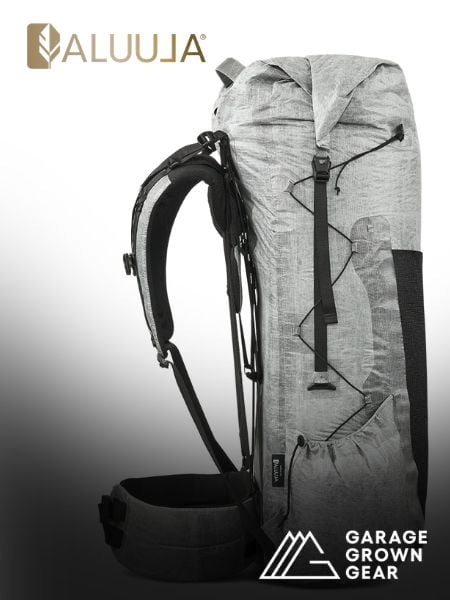 New Gear with Aluula FabricsLighter, stronger, more abrasion-resistant, and highly water-resistant - explore ultralight backpacking gear made with ALUULA Graflyte fabrics. Engineered for exceptional strength, durability, and lightweight performance, ALUULA Graflyte helps reduce pack weight without sacrificing reliability, making it ideal for demanding backcountry adventures.
 © Beartooth Media Group Inc.
 Loading...