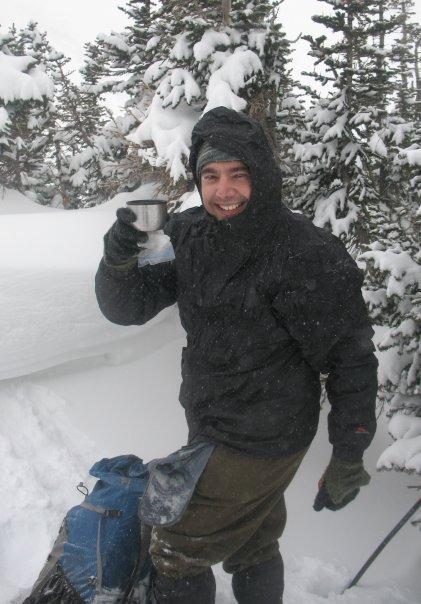
Weight is not usually a big deal on a day trip, so I'd go with what seems easy – which would be the thermos. I'd much rather just sit down and crack open a thermos for a nice hot drink right now than have to deal with a stove. Now, if you're talking about the kind of day trip where you are pushing it for a long day and want some safety/emergency resources, then a stove makes sense. Though whether a Jetboil is such a great idea for winter use is another question entirely.
Topic
thermos v jetboil for ski touring
Become a member to post in the forums.
- This topic is empty.
Another vote for a thermos.
When it is negative temps and the the wind is whipping, I do NOT want to futz with a stove.
I crack open the thermos, slurp some hot goodness (chix broth is my favorite) and call it good!
funny how a thread can take off in a different direction :)
Hydrating before taking off (whether hiking, snowshoeing, skiing, etc) seems to be very important in maintaining optimum performance. I believe Dr Seifert out of Bozeman is doing a study looking at the effects of hydration on skiers, should be interesting.
Personally, hydration before hiking (snowshoeing/skiing/etc) seems like it's as important (or maybe more important) then hydration during said activity. I am in the opposite of camel camp, might very well be an individual thing, but I do much better w/ more water than less.
back on topic, I have a .5 liter thermos that weighs ~ 10 oz, not ul, but not overly heavy
Hi Sarah
> yes dehydration can be a real issue with certain medications and body types.
I will NOT argue with you over the issue of medications. I have little or no knowledge of what fluid intake might be needed under those conditions. If someone is taking medications they should disregard what I wrote.
Body types is another matter, open to argument about what that means. I'll pass on that subject.
Cheers
> "id like to see any significant climbs done on 1 L per day without heavy hydration before and after the climb"
> I'd like to see one done on 1 L per day period.
Hang on guys – two very different things are being confused here. The first is how much water you need to carry for the day; the second is how much water you might need in over 24 hr period. As James D commented earlier, you don't have to carry the water if you can drink overnight.
> quite probably taking valuable electrolytes with it and exposing you to the risk of hyponatremia
It is worth while reading up on hyponatremia (drinking too much water). Athletes have collapsed and died during long-distance events from this – possibly more often than from dehydration. We know from military studies that (healthy) people can recover from even severe dehydration in a very short time. Have a read of a very good refereed/published medical paper on this found in the FAQ:
http://www.bushwalking.org.au/FAQ/FAQ_Noakes.htm
Cheers
"Hang on guys – two very different things are being confused here. The first is how much water you need to carry for the day; the second is how much water you might need in over 24 hr period."
And therein lies the rub. A significant climb, in my book and I suspect in Eric's, can easily chew up 24 hours, or more, including the approach and exit segments. For me, getting off the mountain, over technical terrain, tired, sometimes at night, and back to trailhead/camp was especially critical. Not a good time to go dry. We always carried 2 liters on longer climbs. And then there is always that time when things don't go quite according to plan and you end up spending the night somewhere on the mountain. Been known to happen. ;)
Cheers
Hi Tom
> A significant climb, in my book and I suspect in Eric's, can easily chew up 24 hours, or
> more, including the approach and exit segments.
True, very true. But perhaps we have left the realm of light-weight walking or day ski-touring here, and moved into alpine climbing? Different game, different rules.
Cheers
There is no sense in carrying more weight than you need. I am in full agreement with Roger. 1L or so is all I carry on most day hikes.
Camel up in the morning. Hike and camel up in the evening. IFF you are doing strenuous work, extreme alpine climbing, sure, you need more water. Adjusting what you carry to the conditions is no different than using small tarps and light bags with some cloths. This IS ultralight hiking. Thinking about what you do is perhaps the most important thing. Knowing what your limits are and pressing those limits are what it is all about (within the confines of personal safety, of course.) I would go light.
Day hike, right? Here's the approach I would probably take. Feel free to critique or call BS on my approach or science.
For hot drinks, soup, etc. I would use a Titanium Thermos. It's pretty close to .5L , and it's super lightweight (albeit expensive). This would be used for lunch (extended rest stops) and the return trip down the mountain.
For water replenishment I would use a .5L or 1L Platypus. This would be used for the trip up the mountain. As long as you drink up before it freezes, you should be good.
For "emergency" on-the-go water I would use a ziplock freezer bag filled with snow (about 100 mL), placed under an armpit or some other warm part of my body–while I'm moving. Bring high-calorie snacks to power this unique and amazing system.
For emergency overnight water I would use a Sierra cup and an Esbit tab or two that I had brought along.
If your pee is clear to light yellow, then you're good. If your pee is dark yellow or orange, then you should drink up.
Note(1): Consuming protein requires that the body makes pee in order to flush the urea out of your system. So, for a day trip, leave the T-bone steak at home and swap it out with a coconut cream-filled Krispy Kreme.
Note(2): IIRC, caffeine is a diuretic (makes you pee). Coffee and tea drinkers need to be aware of that and take it into account when deciding what to fill the thermos with (as well as what to drink in the morning before beginning the hike).
Note(3): Scottish shortbread cookies (with real butter) and Celestial seasonings apple cinnamon tea make a great combination.
Hi Roger,
"True, very true. But perhaps we have left the realm of light-weight walking or day ski-touring here, and moved into alpine climbing? Different game, different rules."
You've got a point there, given the example I used. I confess to being prone to thread drift upon occasion(s). Alpine climbing is definitely a different game. However, I do think the same basic principles of human physiology apply equally to climbing, walking and ski touring. For me, the key criteria used in deciding how much water/food to take are duration, intensity, environmental conditions such as temperature, and elevation gain-loss/altitude. I can think of many "day hikes I have been on where 2 liters of water would be an absolute minimum to get through without reducing the enterprise to a survival march. On many of them water was available along the way, on others, not, in which case prudence, if not safety, dictated an extra liter or so.
Cheers
Become a member to post in the forums.