Topic

Why am I still cold with this winter quilt?

  • This topic is empty.
Viewing 25 posts - 1 through 25 (of 35 total)
Jason Swadley BPL Member
PostedDec 18, 2010 at 8:16 am

I was cold last night when I shouldn't have been, and I need your help figuring what went wrong. This was my first time with a quilt.

Conditions: 20F inside state forest shelter

The setup:
-JRB High Sierra winter quilt rated to 0
-GG Polycryo groundsheet
-1/8 Thinlight
-Large Neoair
-Goosefeet down booties

I started off the night in my wool long underwear, midweight wool top, and OR balaclava and gloves. Far too cold.

Added WM Flash and MB down pants. Adequate, but not toasty. Shouldn't I be overheating at this point?

My questions:
1. Why wasn't I too hot with all that down at 20F?
2. My feet froze in the booties. I think this was because I forgot an extra pair of socks and mine were damp, but even after mostly drying them in my pants for several hours, my feet were still icy. Why is this?
3. The quilt wasn't keeping in the heat. I slept with it draped over me, without tucking it in. The parts touching me were warmer, but most of it was cool. Should I have completely wrapped it around me like a bag? Wrapped it around the pad? Tucked it in?
4. The Neoair was cold to the touch. Do I need a down mat?

Brian Senez BPL Member
PostedDec 18, 2010 at 8:32 am

I think there are a few contributing factors to you having a cold night. Your pad setup gives you a total R value of 2.9 which is not adequate for 20F. You were losing a good deal of heat to the ground. Only wearing an OR balaclava on your head does not sound like enough. It is important to have good head insulation. Consider getting a down hood similar to what is available from katabatic, nunatak, and jrb. The quilt has a claimed rating of 0-5F, having some type of strap system to control drafts is important. something to secure the quilt underneath you in at least two places.

I try to get myself dried out completely before bed. After dinner I move around a little to generate some heat then get in my quilt and eat a few handfuls of gorp. The high fat content helps warm me up.

Brian Camprini BPL Member
PostedDec 18, 2010 at 8:39 am

My first guess would be lack of insulation under you. I don't have experience with a neoair, but 20F is probably beyond it's limits especially since most shelters have very cold floors (just air beneath them). Sleeping on the ground at those temps would have probably been a lot warmer than the shelter floor.

You might have also had some drafts around the quilt–definitely tuck in if it's cold. Of course your metabolism, calories in your system, etc, could contribute to it too. I'll bet a cheap foam pad combined with your neoair would have made for a very different experience, though. Pick up a Walmart blue pad, a z rest, evazote or ridgerest before you go buy a down mat.

Mark Verber BPL Member
PostedDec 18, 2010 at 8:43 am

My first guess would be not enough insulation under you. Most most people I think the NeoAir+1/8 pad would only keep you warm enough to the mid 30s F. With would be especially an issue if the shelter had a concrete floor which will suck the warmth right out of you. Do you need a down mat? That, or a thick foam pad. For snow camping I always want a good thickness foam pad to use around camp as well as when I am sleeping. See Richard’s chart in a thread insulation for sleeping. The thread is a bit different, but gives you a sense of the NeoAir + 1/8 pad.

It also doesn’t sound like you had enough insulation for your head. Depending on a variety of issues 25-40% of body heat exits through the head & neck given uniform insulation on the body.

Damp socks certainly didn’t help your feet. But even more likely it sounds like you were chilled so your body was constricting the capillaries to extremeties to keep your core warm.

Unless your quilt is large enough to seal out drafts as it settles around you, you really want it to be wrapped around you. If you wrap it around the pad you leave air gaps which makes it less warm.

–Mark

Jason Swadley BPL Member
PostedDec 18, 2010 at 8:44 am

Thanks Brian (x2) and Mark. Brian the First, you're right, the balaclava wasn't enough, so I added the hooded Flash, which kept my head warm enough.

This may seem like a silly question, but how do you–you personally–tuck in your quilt?

And if the point of a quilt is freedom of movement, but you have to tuck it in, why not just go with a bag?

Thanks for all your help.

PostedDec 18, 2010 at 8:44 am

To piggy back on Brian's response never wear damp socks to bed your feet will never warm up even in down booties. I know from experience. You also probably needed thicker socks for sleeping.

For quilts you need to tuck everything in and leave zero drafts. Just like a sleeping bag you need to retain as much heat as possible.

Not sure about the pad I hammock camp so my underquilts take care of business.

A balaclava alone won't retain enough heat. You will need a beanie and probably a good face mask at 20*F. A down balaclava would also work like Brian stated.

Jamie Shortt BPL Member
PostedDec 18, 2010 at 8:57 am

Jason, I think people over estimate the impact equipment has on sleeping comfortably and underestimate the impact skill, technique, and ones body make up. I have been putting considerable thought into this as the last several trips I have taken with a friend he struggles through the night while I tend to sleep fine. We are similar in age, weight, and condition. One night in particular was really brutal on him.

To answer your question I would say yes you should have been able to stay absolutely toasty in the gear you describe. One thing to consider, how sure are you the low was 20 degrees. Could it have been colder?

Assuming the low was indeed 20 degrees lets consider what can impact comfort

air temp
ground temp
wind
your body's natural ability to deal with cold (cold natured, hot natured, etc)
your body's current condition when going to bed (tired, wet, hungry, thirsty, etc)
insulative items (quilt, jacket, balaclava, etc)
ground insulation (mat, pads, etc)
sleeping position (back, side, stomach, etc)
sleeping technique (head inside quilt, quilt tucked under mat, etc)

Here are my thoughts. My coldest night "under me" was in a shelter. I suspect the plywood floor quickly lowers in temp as the air temp lowers. You might be better off sleeping on the ground which can provide natural insulation and is buffered from extreme temp swings. Just a theory. I know a lot of folks use neo air, but I am suspicious of sleeping on air, especially when the temp is below freezing. I've had great luck with foam pads but 1/8" does do much. For those temps I find a 3/4 length GG nightlight pad to work like a champ. And it weighs 10 oz before trimming. Mine is just over 6 oz.

Consider your condition. Make sure you are well hydrated before going to bed. Make sure you eat something hot for dinner. I also have a cup of hot tea right before turning in. I also find it best to hike right close to the time I will camp. Before going to bed you might want to take a quick walk or do a champ chore like gather fire wood.

Consider your position. I believe sleeping on your back is the most efficient. It took me a year to train myself to be able to sleep on my back (just for this purpose), but now I can do it just fine.

Consider your quilt use technique. First it is critical the quilt wraps under you. I know some disagree, but I think it is best to not wrap the quilt under the pad. Wrap it under you with the pad beneath. JRB quilt don't come with under straps, but they do have loops that make it easy to add. The lighest is to simply use shock cord with a couple of cord locks to make them adjustable. I was also have you consider using a 7-8 oz bivy with breathable top. MLD superlight, ti goat bivy, BPL new vapr bivy, etc. Until you learn how to sleep and seal off the quilt a bivy will help reduce heat loss from gaps and wind.

DO NOT pull the bag over your head. Your moisture will go into the bag in dampen the down resulting in loss in insulative ability. Keep your head out, cover your head with a balaclava (walmart sells for 5 bucks) or better yet use a down one from Katabalic.

I'm at a loss for your feet. They should have been fine. I'm guessing its just a function of your core temp not being maintained and thus the first place your body draws heat away from is the extremities. I only sleep in a single pair of socks in this temp. I use a MYOG quilt with nearly identicial dimensions to yours but weighs significaly less 20 oz.

Hope this helps,
Jamie

Ron D BPL Member
PostedDec 18, 2010 at 9:04 am

Hi Jason – I use a Nunatak quilt rated to 20F. Down to around 30F I can just use it over me, lower than that I use the straps around the pad, when it is getting down around 20-25F I redo the straps around my body. When it gets near the limit of your quilt you have to use the straps and you start losing that freedom of movement. I love a quilt for most 3 season use, but for really cold weather I think a bag is better. I'll also echo the other comments on your pad system, I would try for at least an R4 at 20F.
Ron

Mark Verber BPL Member
PostedDec 18, 2010 at 9:04 am

There are several reasons for using a quilt. Freedom of movement is one of them. In warmer conditions you don't mind letting in little drafts. If fact, that is why I use a quilt on three seasons trips… I typically want to easily vent heat so I don't overheat.

When it gets colder though, unless your quilt is sufficiently large to prevent those drafts (most aren't) then you have to choice between warmth and freedom. In these cases I choose warmth.

As to why a quilt in the cold? Some people like them because it combines well with high loft clothing. All things being equal, I would take a warm bag when it started to get cold. Reasons why I don't? Sometimes it's because I was surprised (expecting 30-35F and getting <10F). Mostly though, it because my bag is being loaned to someone on the trip who really needs it, and I know how to push my 30F quilt down to around 10F due to sleepung warm, have appropriate clothing to supplement (most critical piece being a cozy Down Baklava from DownWorks), knowing some techniques, and being able to operate on little sleep :-)

–Mark

PS: Once you have enough insulation, you also need to make sure you have eaten and drank enough for your body to be functioning properly. The "coldest" night I ever spent was in a 30F bag when it was 45F out… but I haven't eaten enough food.

Jamie Shortt BPL Member
PostedDec 18, 2010 at 9:20 am

One more small observation or question. Did you "form" the footbox. Your descriptions sounds like you might not have. It is crtical in colder temps to velcro the foot edge together and close off the end by drawing the cord tight. I also recommend putting some socks into the tight hole that is formed to completely seal the foot end. Also make sure to draw the quilt snug around your neck (not too tight). I also tie my JRB quilt together behind my neck. And just to emphasize, you need to tuck the quilt under you sealing it off.

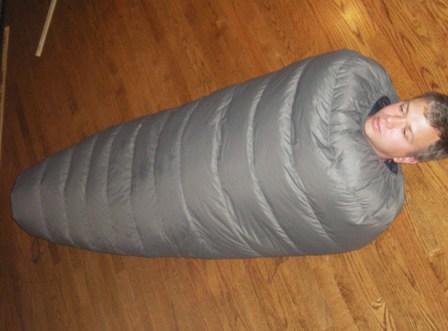
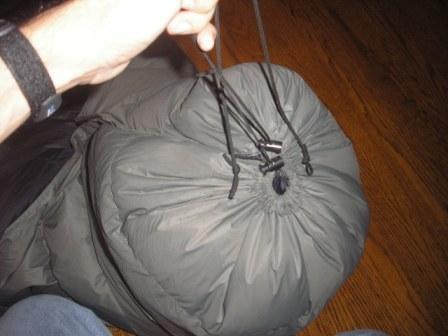
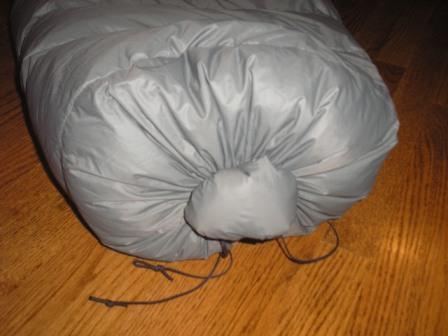
Here are some pics showing the technique. This is a MYOG quilt, but it is almost identical in dimensions to your JRB quilt (I have a JRB stealth myself for 40+ degree nights).

Quilt Position
Sleeping position

Forming footbox
Forming footbox

Plug Hole
Plug hole – this is a plug I made, but a pair of socks work too

Jamie

PostedDec 18, 2010 at 9:26 am

I agree that the pad system was insufficient. Switch to a 1/2" full length CCF pad to pair with the Neoair and you should see a huge difference.

PostedDec 18, 2010 at 9:28 am

I agree with what others have already said

you also want to fluff up your down quilt or bag. I give mine a good shaking when I take it out of my pack in order to fluff up the down. Recently I started eating a hand full of nuts right at bed time, I also keep a high calorie snack inside of an OpSak in case I do wake up cold.

Jamie Shortt BPL Member
PostedDec 18, 2010 at 9:44 am

Yes JJ! I forgot this critical piece of technique…. "Fluff". This begins at home…make sure you do not store your quilt in the compression sack at home. Store it loosely to maintain loft. On the trail I prefer to store my quilt loosely packed in the bottom of my pack or in a large stuff sack. As soon as you get to camp pull the bag out and make sure to fluff it up. Shake it out and then let it set for a bit before crawling in. To maxamize loft with a JRB you can also grab the long edges with the center hanging down. Shake the quilt to allow the down to shift into the middle a bit. This will increase the loft in the center while decreasing it along the edges. Since you tuck the edges under you you dont need much down here.

Who would have thought sleeping and maximizing your sleep system could be so complicated. Good technique weighs nothing, but can make more difference then any pound of gear.

Jamie

Jason Swadley BPL Member
PostedDec 18, 2010 at 9:57 am

All,

Thanks for such a helpful discussion so far. (And Jamie, what fantastically helpful posts – thanks for taking the time, and for the photos). I had the footbox sewn in, and I did loft the down before getting in, but my quilt technique was pretty woeful otherwise.

Things I'll be changing for my next winter trip:

1. I may stick with the quilt, but I think a bag may be easier and less troublesome for winter. I think I'll go with the WM Apache MF.
2. I'll take along my POE Ether Thermo 9 which has a R value between 7-8.
3. I'll make sure I eat more & better before bed.
4. I'll sleep on the ground.

Any other lessons I'm missing?

Hiking Malto BPL Member
PostedDec 18, 2010 at 10:19 am

I found that my bivy really help avoid the drafts and keep additional warmth in.

John Donewar BPL Member
PostedDec 18, 2010 at 11:47 am

+1 for the use of the bivy.

If a quilt is sized right and has a sufficient amount of material they can be self tucking.

I will try to describe my tuck and roll method of quilt "donning".

Insert your feet into the footbox while sitting up and then close the snap closure at the top of the quilt. While still sitting up put the top opening over your head and adjust the drawstring closure to your liking. Put your arms inside, lie back onto your pad(s) and gently "roll" side to side once or twice while keeping your legs straight. Your top quilt is now magically self tucked. If your quilt is properly sized it will stay that way unless you roll onto your side or go all "fetal position" during the night. ;-)

The trick is to properly size the circumference of the quilt around the shoulders, hips and waist area. The length of the quilt is the second element. If it is too long there won't be enough "tension" on the material to aid in tucking it underneath your body as you roll side to side.

I hope this explanation/description is clear, understandable and helpful.

Party On,

Newton

James holden BPL Member
PostedDec 18, 2010 at 12:56 pm

as other have mentioned
– do not sleep with wet socks on yr feet … take them off and dry them under yr armpits
– get FAT before sleeping … beefsteak does wonders
– pair up the neoair with a 1/2" pad
– tuck the quilt in, using it like a blanket loses warmth out of the edges … same as using a blanket at home
– have sufficient head insulation
– fluff up yr quilt before sleeping in it
– make sure yr going to sleep WARM … if needed do situps in it or warm it up with a hot nalgene .. if you go to sleep cold youll stay cold

i dont think you need anymore equipment or anything different except for a thicker foam pad … just a bit more techique

honestly 20F should be pretty comfortable at those temps with most of what you have … ive easily done bivies in the open at those temps with less

the main culprits i suspect is not tucking in the quilt, ive found that when i do that with a bag (used as a quilt) it takes away 10F or so from the rating … and the 1/8 pad

to me the KISS of a bag makes it worthwhile …

Dale Wambaugh BPL Member
PostedDec 18, 2010 at 1:18 pm

I find that sleeping in an open shelter seems much colder than an enclosed tent; likewise for simple tarps with open ends and clearance between the tarp and ground.

I slept on my porch while testing my sleeping gear, which is very similar to a three-sided shelter. I felt the draft, regardless of any appreciable wind. I used a self-inflating pad or CCF pad and didn't really notice any problems with the ground feeling cold. It is a 2x timber floor. Plywood is denser and would be a little colder, but my guesstimation is that the difference between the two would be small compared to dirt. I did immediately feel the difference in the sleeping bag shell porosity and any openings. As another writer said, a bivy would help a lot– just like a windshirt for your sleeping system.

I'm sure a shelter with a concrete floor would be colder. In the summer, it would probably feel good, or may even radiate heat if it was in the sun all day. In the winter it would be colder to sleep on concrete than snow.

I'm a side sleeper and move around, so I find that a mummy bag stays with me better than a quilt. For my use, a quilt is warm summer weather stuff.

PostedDec 18, 2010 at 1:36 pm

Definitely make sure that quilt is fully tucked in. It makes a HUGE difference. The footbox should be sealed up tight, the sides should be tucked under your body and the top should be snug around your neck.

Keeping your head warmer will definitely help a lot too. I find that my body can be hot, but my teeth will chatter if my head isn't insulated sufficiently.

Those two things might have been enough to keep you warm. The other tips are definitely worth considering though.

Joe Clement BPL Member
PostedDec 18, 2010 at 1:41 pm

I always use the straps on my quilt when it's cold, makes a huge difference. You don't have to make them super tight to stop drafts, and it's still easy to move. And I'd also second the recommendations for another pad. I guess they work for some, but I can't help but think the Neoair is the most over-hyped, mis-applied product in history. My POE Max Thermo worked well for several years before Thermarest lost enough market share to be forced into the Neoair. For really cold nights, look at an Exped Downmat, or one of Bender's lightweight down air mattresses.

PostedDec 18, 2010 at 8:04 pm

I'd freeze to death on a dinner of ramen! Proteins and Fats will keep your furnace running long after carbohydrates are burned up, and will help keep you warm through the night.

Ryan C BPL Member
PostedDec 18, 2010 at 8:09 pm

FWIW:
I recently was able to reach 6*F in a Marmot Helium 15*F bag using a regular length Thermarest Ridgerest foam pad combined with a Neoair. Clothing worn were 200wt wool baselayers, Patagonia R1 pullover and balaclava, MontBell Alpine Light Parka, insulated pants, and Goosefeet socks. Having the hood of the Helium and Parka made a huge difference because I felt like my eyes were going to freeze at 10*F.

EDIT: I had not eaten anything for hours. It was adequately warm but probably would have been better with some fresh fatty calories.

Joe L BPL Member
PostedDec 19, 2010 at 7:31 pm

I second what most of the others said about adding a down hood or balaclava, fatter food, exercise just before bedtime, avoiding getting cold feet since it is hard to warm them up when laying still, half inch foam pad between you and the NeoAir, bivy sack, etc. Nunatak and Jacks R Better both have down hoods that are cheaper than down balaclavas.

Your shoulder size (while wearing your layers) may be too big for the width of your quilt. For example, a Nunatak Specialist quilt is cut wider than a somewhat similar Nunatak Ghost for the specific reason of better tucking at colder temperatures. JRB's winter quilts are wider than their summer quilts.

Fasten your quilt around your neck to seal over and cover your shoulders just like the add-on neck seal in the WM Apache that you are considering. Put two elastic cord+cordlock straps on your quilt, one that you can fasten using both hands behind your back about belt high, and another one below your butt. Avoid straps under your shoulders and pelvic bones if you side sleep. You can sew the attachment (grossgain ribbon) tabs onto the quilt. If it is your first sew job, it will not look professional but warmth is the goal.

Viewing 25 posts - 1 through 25 (of 35 total)
Loading...