


Please explain the exact method used to get CLO of 7.4 for the 24 ounce Cocoon UL 240 synthetic quilt.
Topic
Become a member to post in the forums.
Please explain the exact method used to get CLO of 7.4 for the 24 ounce Cocoon UL 240 synthetic quilt.
The CLO value is a specification provided by the insulation manufacturer. It does not include any CLO contribution by other parts of the system, or its design.
Sam, thanks for the reply.
I would however expect BPL to provide the derivation of the 7.4 figure, like 2 layers of XXX type insulation at YYY oz per yard times DD yards with a material CLO of ZZ per ounce. Without the details your CLO figure is not credible and it gives no reliable estimate of the likely temperature range for this quilt. How exactly did the manufacturer determine the CLO? We also need these figures so we can compare with other quilts both synthetic and down.
If a two piece business suit is 1.0 CLO you are claiming that this Cocoon is the equivalent of sleeping in 7.4 business suits.
I think this Cocoon is potentially a fine product but on the web site there is not enough information to make a sensible consumer comparison.
I will also be very interested to read a review of the Cocoon UL20 Quilt, so that the subjective features can be evaluated..
I am interested in how the clo value is so high as well.
In one of Richard Nisely's graphs he gave the REI Sub-Kilo a clo value of 8.
the Sub kilo is a ~32 oz down mummy bag rated to 20 degrees.
the quilt style vs the mummy should account for a few ounces meaning that these two bags would be about equally as warm.
I dont think i can believe it, but if its true that means great things for synthetics!
You could assume the Marmot Hydrogen Sleeping bag has a CLO of 6.0 with its temperature rating under EN13537 at 30F (-1.1 degrees C)(mens comfort rating).
BPL is saying that the Cocoon is rated at CLO 7.4.
Under the same rating scale the Cocoon would have a mens comfort temperature of around 10 degrees F. (minus 12 degrees C).
Real world product testing may confirm this, however I await a review or a shoot-out with the Marmot Hydrogen.
To be fair, I have zero information on the CLO of the proprietary synthetic insulation used in this quilt. I do know the quilt uses 240 g of said insulation.
Having said that, I used a quilt with 7.5 oz of Climashield XP insulation during a blizzard in Montana in Oct 2008 and we had temps to the low teens (I'm pretty sure Andy Skurka got 11 or 12 degrees on his watch). I was quite toasty.
I would expect this quilt to run about the same. Of course, temp ratings are very subjective and that's why you won't find one on BPL products.
> …Of course, temp ratings are very subjective and that's why you won't find one on BPL products.
We try very hard not offer insulation information consisting of only subjective data. The CLO value is an objective bit of data and we feel confident in providing that for the thinking person's comparison between products.
Subjectively speaking as an individual I've had the UL 240 used in conjuction with a NightLight pad under my torso pad, a DIAD pad under my feet, and the Cocoon puffy clothing at morning temps of freezing without a thought of being cold.
Thank you Chris, presumably you were wearing extra clothing sleeping at 15F in the blizzard. I take your point and Sam's (also wearing additional clothing) that subjectively the Cocoon would adequately performs to below freezing temperatures.
If Cocoon actually has 8.5 ounces of insulation (not verified, see below) and for a typical Combat XP insulation of 0.82 CLO per ounce (manufacturer's claim) then the CLO for the Cocoon UL240 would be 6.9. A CLO of 6.9 would provide a men’s comfort temperature of approximately 14 degrees F (minus 10 degrees C).
Loading your product dimensions into the Excel spreadsheet for quilts on the website of Enlightened Equipment, I get an insulation weight of 7.4 ounces. This would give a CLO of 6.0 for Combat XP. This would be equivalent in theory to the CLO 6.0 for the 30 degree F (-1.1 degree C) Marmot Hydrogen.
As I said previously, I await a proper review of the BPL UL240 Quilt, to assess the claimed CLO of 7.4 in the field.
I only wore what I walked in plus a powerstretch balaclava.
Clothing:
RAB Vapour-rise trail pant
Ibex Outback l/s shirt
Smartwool microweight s/s shirt
Patagonia Houdini
Smartwool Trekking sock
Mountain Hardwear Powerstretch balaclava
This can be confirmed by Sam, Ryan J., and Andy Skurka.
I'm also very interested in a review and more informations about performance because I'm considering to buy one.
But: my WM Apache MF in large with 595 g/ 20,9 oz down fill (total weight 35,2 oz) is rated under the European norm at 24,8 F (- 4 degrees C) for women and 14 F (- 10 degrees C) for men, comfort temperature. It's really hard to believe that a synthetic bag with 25 oz total weight can be in the same range. I would even be surprised (positively) if the quilt could cope with my normally used Cumulus Quantum with 12,3 oz 850+ down (warm enough for me to a little below freezing), weighting 24,1 oz.
I find it interesting that BPL Marketing is saying "Trust Me" to a crowd of anal quants known for picking apart even the slightest hyperbole when it comes to equipment.
BPL has found a combination of materials that has eluded all the big guys? Possibly.
I look forward to the final explanation.
Is there any size info on these quilts? The sizing link on the page shows the old 60/90/180 quilts but no info on the 240.
I am having difficulty retrieving the original specs used in the manufacture of these quilts. I am hesitant to attempt to measure them by hand as it won't provide information worthy of comparison to other brands. If you'd like an estimate, compare with the BPL UL 180 quilt. I will provide this information as soon as I've retrieved it.
> "BPL has found a combination of materials that has eluded all the big guys? Possibly."
I would say not just possibly, but probably. In fact, almost certainly.
I vaguely recall some discussion about prior generations of BPL quilts using custom manufactured insulation without the scrim layer? That could effectively boost CLO value per ounce to a range that would calc out.
But don't expect them to come clean on exactly what's in there. It's probably listed as 'proprietary' for a reason!
Until BPL backs up the 7.4 CLO claimed I doubt if many hikers will buy the quilt.
The manufacturer should be able to verify the calculation.
I started as a skeptic, and tried to compare with down sleeping bags with similar CLO. I now think BPL may be in the ballpark with this figure, but I will wait until the Cocoon UL240 is properly reviewed, even if it is a BPL review.
We have a policy regarding reviewing our own products as we walk a fine line acting as both a retailer and media outlet so you won't find a proper, written review of our products within our own pages.
However, I am in the process of sourcing more evidence of the 7.4 CLO value for the UL 240 Quilt for the skeptics in our midst.

The clo value we report is a manufacturer’s spec (the insulation manufacturer, not us) based on using a guarded hot plate test on the insulation. One example of the test is ASTM C177, although I don’t know if this is the exact test the manufacturer used.
The clo of the insulation doesn’t mean a whole lot in the field. The construction of the whole product does, and should consider the fabrics, method of construction of the insulation in the product, etc.
We are currently doing heated mannequin research and testing on the Cocoon Clothing and Quilt systems, and will have that data in the spring, which will be much more valuable than the clo of the raw insulation.
I wouldn’t expect any product to be a magic bullet, including the UL 240 Quilt. The technical specs on it are very good but if you don’t know how to use a quilt, then they really don’t matter. Good technical specification is not a substitute for subpar skills.
You would be better spending your time studying this, than calculating clo rates:
If there is no scrim layer that means a more efficient quilt but not as durable right? I'm okay with that but it would be nice to know if this is a quilt you don't want to over-compress. Is this an issue?
This thread is almost 2 months old and I wonder whether more information or reviews have come up for the BPL UL 240 quilt.
I want to buy a synthetic quilt for a thrupaddle of the Yukon and my 2 options are the BPL UL 240 quilt and the MLD Spirit 30 degree quilt. I have posted a correspondent thread on the forum but no answers yet. It seems to me that no one has ever bought the BPL quilt….
As other members have already complained the specs for the BPL quilt are pathetically little. I would really like to buy one but you don't give me any data for that decision beside "Trust me…".
MLD has at least put out some sort of temperature rating for their quilt and it has been tested by Andrew Skurka. It is also considerably cheaper than the BPL one. So what is the difference between the 2 quilts and why should I buy the BPL instead of the MLD? Please give me some arguments on which to base a buying decision.
Also: What happened to the other BPL quilts that were offered in your shop earlier like the 60 or 180? Are they permanently discontinued and if yes, why?
I really want to be your customer, but you make it really hard….
Thanks for any info,
Christine Thuermer
There is ~50% more insulation in the BPL quilt. I haven't tested it personally and don't have one on hand so I can't give direct feedback. However, I have used a quilt from MLD (no longer made) with roughly equivalent insulation, and I found it warm to the low teens while wearing my winter trekking layers. I was in a 'mid with no bivy.
Ryan would have to answer as to whether or not the 60 and 180 will make a reappearance.
> It seems to me that no one has ever bought the BPL quilt….
We have sold quite a few of these quilts but it is my estimation that since much of the U.S. is currently experiencing winter conditions most people have not had a chance to put the quilt to much more than a few days use.
> MLD has at least put out some sort of temperature rating for their quilt
As we have not performed any of the costly yet objective temperature testing on our quilt we do not feel confident providing a temperature rating. MLD may feel confident in providing this information but I cannot comment on that with any accuracy.
> Also: What happened to the other BPL quilts that were offered in your shop earlier
We are a small company with limited production capabilities and at this time our money and efforts are being directed toward our current line of insulated clothing and quilt. In the future we may opt to offer our 60 and 90 lines again.
Thank you for your interest, Christine, and thank you Chris for providing the information you have to offer.
"Until BPL backs up the 7.4 CLO claimed I doubt if many hikers will buy the quilt."
oh my … i guess we see that somebody worries about bpl fortunes. how sweet.
i own a very nice western mountaineering apacheDL, and i am seriously look'n at buying a (an ??) Ul240 quilt. clo don't matter. if pinhead tech features mattered, "i doubt many preppies would buy the i-phone" either.
it would be nice if the UL240 was as effectively as warm as a WM apache DL and weighed a bunch less. that would be very cool.
i will sit here until a few proficient UL240 owners weigh in, or i might just buy one and know for myself.
Peter wrote "it would be nice if the UL240 was as effectively as warm as a WM apache DL and weighed a bunch less. that would be very cool."
I looked up the WM Apache and found it to have 19 ounces of 800+ down 4 inches loft and is rated at minus 10 degrees C and weighs 32 ounces.
If Peter thinks the UL240 quilt at a weight of 24 ounces replaces the Apache , then I think he will be disappointed in his purchase.
The UL240 would be more equivalent to the WM Summerlite at 19 ounces ( 10 ounces of 800+ down) and rated at zero degrees C.
However, as Christine says, the UL240 may be superior to her Summerlite on a long trip in very wet conditions.
Aussie Dave
Canberra Australia
David – I can't send you a PM so I have to ask a you question that's not related to this thread here: What's kind of bivy/shelter is that in your picture?
Kane,
the photo is on the CDT in New Mexico,
its a home built bivvy with self-supporting nano no-seeum netting held up with two thin double fiberglass hoops. The current bivvy is kite tyvek but I have earlier made one with spinntex. Ideal for cowboy camping and weighs around 7 ounces. I also carry a SpinnTwinn tarp for bad weather.
best regards
Aussie Dave
Become a member to post in the forums.
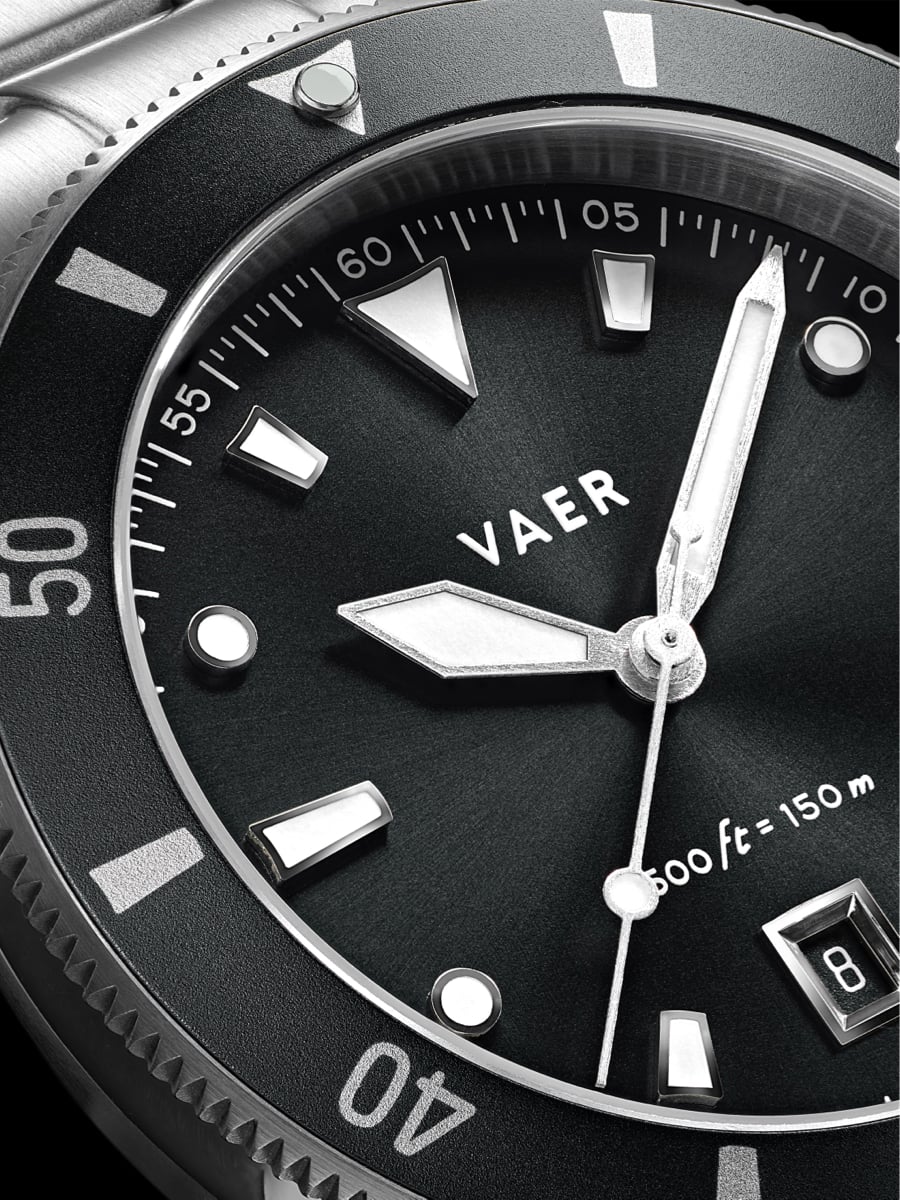 DS2 Meridian: Vintage Dive Style, Everyday ReliabilityInspired by the streamlined "skin diver" watches of the 1960s, the DS2 Meridian combines vintage proportions with the durability of a modern everyday tool watch. A reliable Japanese Miyota quartz movement delivers set-it-and-forget-it accuracy, while 150 meters of water resistance, a locking screwdown crown, sapphire crystal, and strong Super-LumiNova make it ocean-ready. Available in multiple case sizes and starting under $250, it's an approachable way to get classic dive-watch styling without sacrificing everyday practicality.
 © Beartooth Media Group Inc.
 Loading...