We just returned from an incredible 5 day backpacking trip to the South San Juan Wilderness in SW Colorado. This is a neighboring wilderness to the larger and more popular Weminuche Wilderness, has 45 miles of the CDT going across it and is known as Colorado's wildest corner. We arranged a shuttle and thru-hiked a section of it. The route we took is shown in the TOPO map below. We had a group of 10 backpackers, 7 of which were hangers.

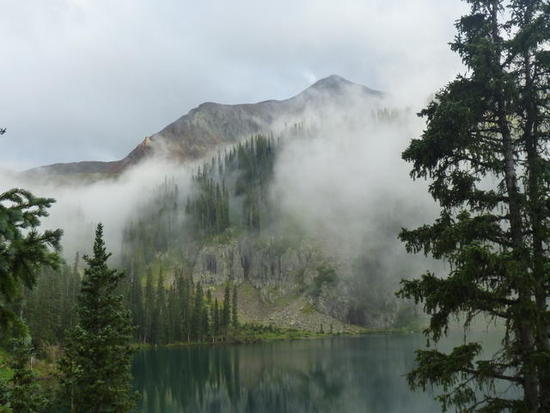
We started out near Ellwood Pass, at around 11,600 ft elevation. The first day we had a relatively short hike over the Continental Divide and down to Crater Lake. We camped at Crater Lake for two nights at just above 11K ft to let ourselves acclimate to high elevation and do some peak bagging and fishing. The weather was constantly changing and it rained frequently. The clouds drifting across the lake gave us some really nice scenery.
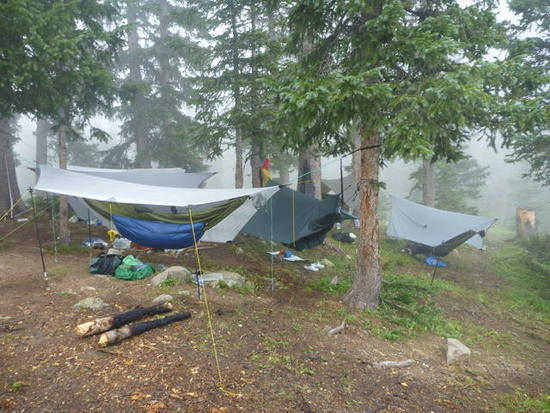
There was a good variety of hammock gear along on this trip. In the foreground of the picture below you can see my Warbonnet Blackbird hammock with integrated netting (~23oz), with a Te-wa 2/3 down underquilt for bottom side insulation (~13oz), and a MLD cuben fiber hex cut hammock tarp (~6.5 oz). I used amsteel whoopie sling style suspension, which is just about the lightest and easy to adjust method out there. I used my GG hiking poles to put the tarp in "porch mode" when sitting around during the day. To round out the gear discussion, I had my ULA Circuit pack along, and used a Golite Ultra 20 for a top quilt. I used a BPL 550 & tri-ti Caldera Cone stove w/everclear for cooking, Micropur tablets for water purification and a 4L platy for camp water storage. I used a couple of SmartWater bottles for water on the trail, and a Blue Desert SmarTube Hydration System. I had a Houdini windshirt, Snowpeak UL umbrella, North Face Diad hard shell, and Montbell Peak Shell rain pants. I rarely used the hard shell rain gear, but on at least one occasion it was nice to have. I also had a lightweight spinner rod along to catch some of those delicious native cutthroat trout.
On day 2 we climbed back up to the CDT for a day hike to summit Montezuma Peak.

We headed South along the CDT to reach the approach point to Montezuma Peak (13,150 ft).

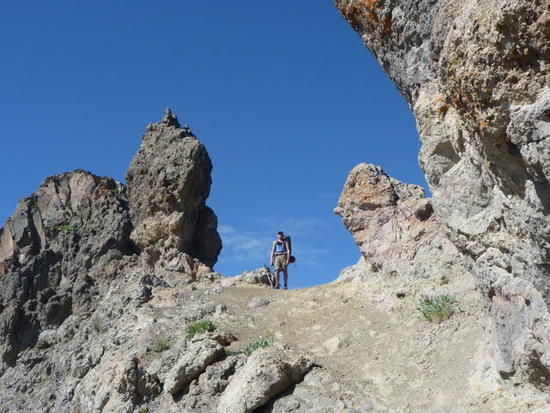
The line we chose to the top required a bit of scrambling.
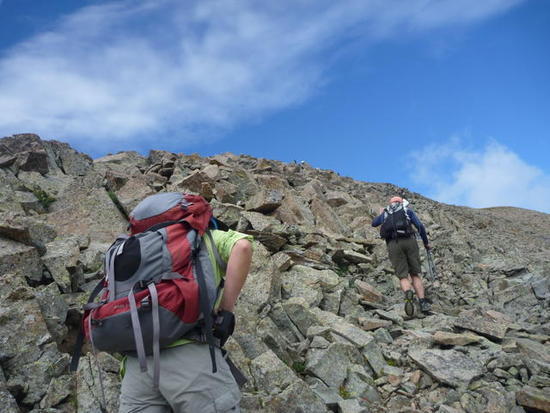
But the views up there were expansive and mind blowing.
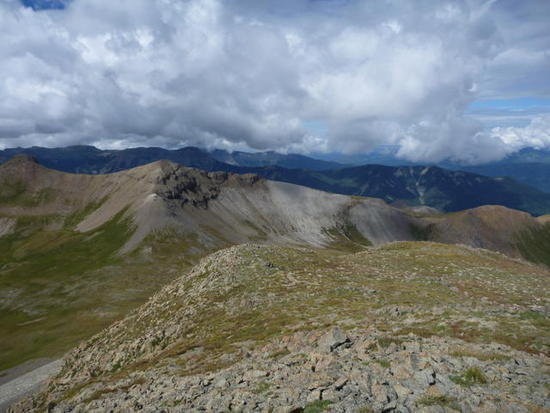

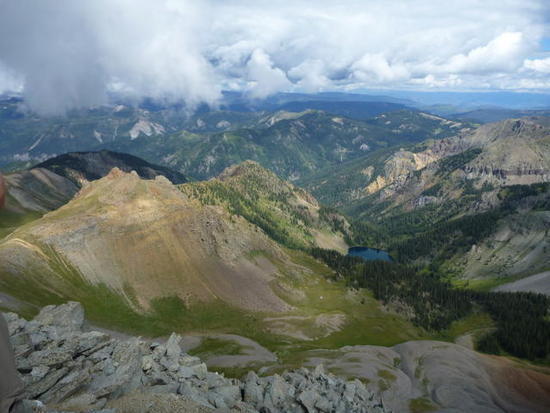
The next day we headed south on the CDT for around 12 miles towards our next campsite destination. Elevation ranged from around 12K ft to 12.5K ft most of the day until we dropped down to Adams Fork.

Adams Fork was an incredibly beautiful glacier carved valley, with a stream running through it. Beautiful native cutthroat trout seemingly coming out of nowhere from that little shallow stream.

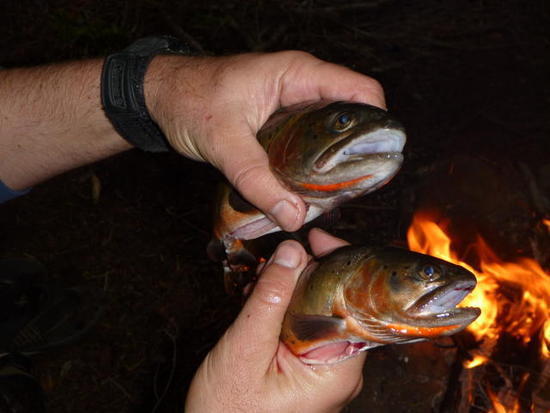


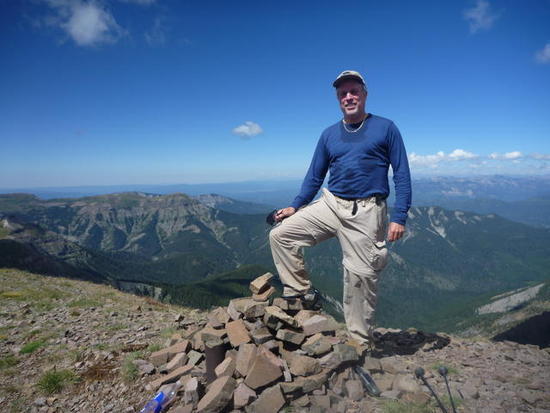
The 4th day we backpacked out of Adams Fork and up to the Continental Divide again, and went over to climb Summit peak, at 13,300 ft the highest point in Archuleta County.
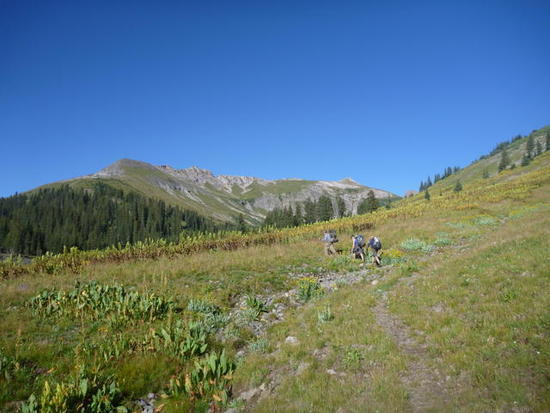
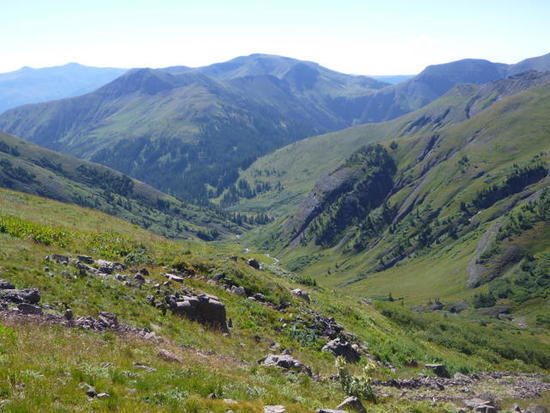
We dropped our packs on the trail when we reached the approach point and climbed to the summit to experience more incredible views.
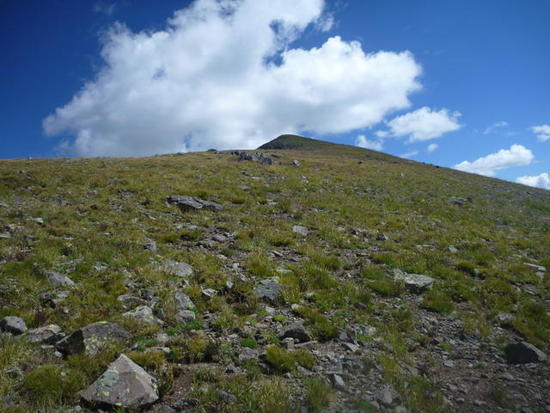
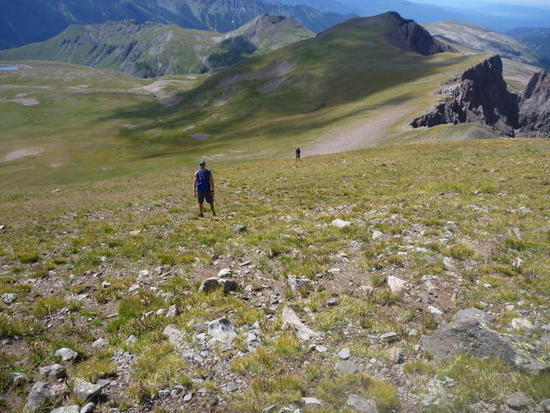
We then crossed back over the Continental Divide and hiked down to Quartz Lake to camp for our 4th and final night.


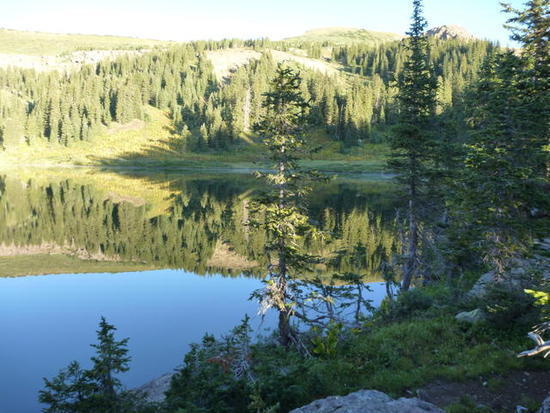
On the 5th day we hiked out on the Little Blanco trail to our pickup point, and went into Pagosa Springs to celebrate and enjoy eating some food that was not boiled in a bag.



Here are parts 1 and 2 of Youtube videos that have a narrative of this trip.
http://www.youtube.com/watch?v=9xCd-VtTlbI
http://www.youtube.com/watch?v=Coy2ChgMsyo
All in all, it was an amazing and memorable trip that I won't soon forget. There were several ground dwellers in our group that got a good look at hammock life and I suspect we'll have a couple of converts in the near future. I'll have a hard time topping this trip on my next big outing.