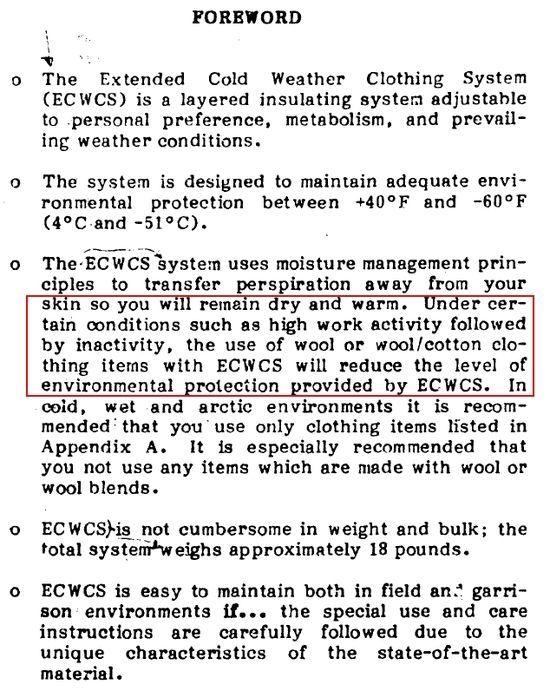
That is true, in one sense, however, here in Canada, where REAL cold is a regular aspect of life and where we work outdoors in sub-zero temps. extensively, you will find a substantial number of people with decades of such experience who will only wear wool. Lynn Tramper mentions one major aspect of synthetics that I soon found when I first began wearing "Lifa" for snowshoeing, skiing and working in the late '70s; I have tried many different makes and styles and bought my last set of LJs in synthetic from MEC's main store just two years ago.
I wore these on an "easy" trip, an eight day horse pack into the "Chilcotin", hunting Mule Deer and Moose. It didn't get very cold, maybe only 0*F at night, yet, I NEVER felt really WARM with this on and just switched to my Smartwool medium Zip-T and MEC merino longies for the rest of that trip.
When snowshoeing in the mountains of S.E. BC, where I was born and raised, I would wear a medium merino wool "union suit", a medium sweater and this was fine down to -20*F, while moving with an average 45-60 lb. pack on my "11×60" Chestnut shoes. When, I would stop to melt snow to rehydrate, I would put on my shell and, when colder, my Egge double down duvet.
I never felt cold, could vent moisture laden air and could wear the base layer all day and night and stay warm and dry and odour-free. I find that Icebreaker does the same thing for me, but, miss the old "Mellofleece" merino "union suits" from "merrye Englande" that we all used to wear.
Based on working with the Canadian Forces Survival School in the Rockies, when I was with the Alberta Forest Service and comparing notes with their SAR techs, plus working with fellow Canadian Coast Guard people, while with them here in BC, I am inclined to think that BC loggers, in winter, work at least as hard as any military people do in respect of physical energy expended. Wrapping 1" steel ropes around 6 ft. thick logs while working in several feet of snow and at sub-zero temps on very steep mountain sides is VERY "physical" AND you do not "slack off" or you "go down rhe road", that is, get fired.
So, I am not convinced that any synthetic is "better" for strenuous activity in serious cold weather than top grade merino wool. I prefer cold weather and usually hike more in the cooler part of the year than during the heat of summer and I wear merino, Primaloft vests/jackets and eVent shells, by choice, and find these very efficient for me.
Each to his/her own and if a person finds Capiline more comfy for them, in their area and activity type/level, then that is the "best" for them. I tend to take these "scientific" evaluations as "guidelines", but, I prefer to go with what my own body tells me and merino just works so well for me that I doubt I will ever go back to synthetics…but, who knows what "wonder fabrics" may appear in the future…… :)