I think a lot depends on where you are.
Back in the mid-1970's, I went on a vacation to the Canadian Rockies with the then husband and three of our 4 kids (the youngest turned 8 during the trip). We spent several days in Wells-Gray Provincial Park (beautiful and wild place!) and one day hiked up a trail. I kept noticing fresh bear sign (ripped-open logs, overturned rocks and clawed trees) and finally persuaded hubby (far less familiar with such things) that we should retreat. I have no idea if the bears who left the signs were black or grizzly, and I wasn't about to stay around and find out! While black bears in the Pacific NW are extremely shy of people, I'm quite willing to believe that BC bears (just north of us, actually) are less so. Would this have something to do with less hunting pressure on the bear population of BC?
The husband, by the way, later (while we were in Banff) distinguished himself by climbing on top of a dumpster in which a black bear was seeking garbage, closing the lid and quickly jumping off. This was really stupid for two reasons–first because of the bear (yikes) and second because it was only 10 days after the cast had been removed from his broken leg.
All animals can be unpredictable, especially when confronted suddenly. One of my most heart-pounding moments was in the Tetons when we suddenly came upon a cow moose with a young calf. Fortunately, mamma and baby decided to leave! From long experience with domestic animals, I know they can be unpredictable. A rancher friend was gored seriously by a cow (purebred and a show animal, which was why her horns hadn't been removed) with a newborn calf. Another was dragged to death by a horse. And we all know about the sweet and lovable dogs that decide to turn nasty (which is why I keep a really close watch on my sweet, lovable, wimpy Labrador when my 4-year-old grandson is around–any dog will bite if sufficiently provoked, and a 4-year-old can be quite provoking).
Don't take any animal, wild or domesticated, for granted!
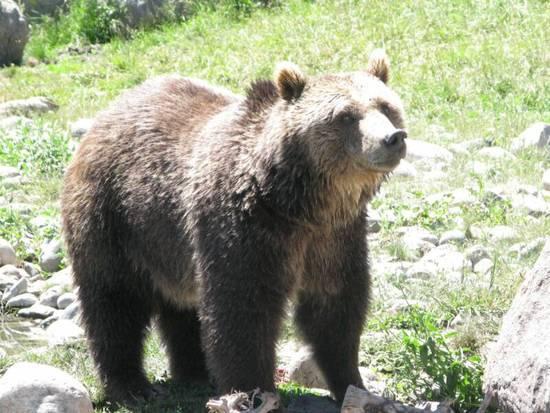
I've read that the proper behavior when meeting a bear is not to appear threatening or yell or wave your arms (that's what you do with cougars, not bears) but to speak quietly and slowly back off, giving the bear his space. You don't make eye contact, either (eye contact, again, is for cougars, not bears)–bears find this threatening. It sounds as though some people posting here have confused the different behaviors recommended when confronting these two very different animals. I suspect I need to read the book about BC bears, too.
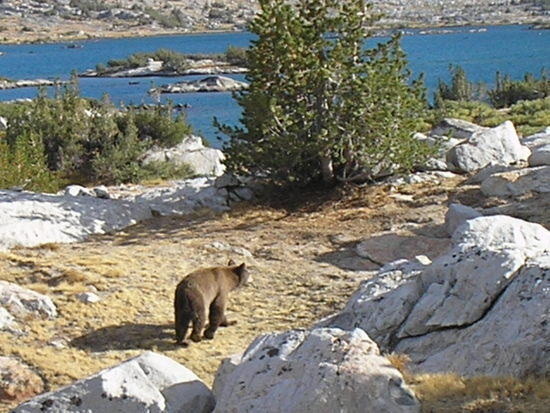
My personal experience (discounting roadside bears in Yellowstone, fortunately much less common than when I was younger) is of seeing the rear ends of black bears leaving the area. The one cougar I ever saw in the wild was a tawny streak disappearing into the forest (good thing, because my companion had her rifle ready). In other words, no real experience. Of course, while growing up in Wyoming, I heard lots of bear stories, some of them funny, others horrifying.