WINTER GEAR LIST
for long cold expeditions:
NOTE from Mike! :
This is n overview of what I take as an instructor on a winter NOLS course (the students usually take more). As I look at this list, it is decidedly NOT lightweight. I will make a follow-up list (and then camp and test it with a prudent winter set-up in a more lightweight style. Winter is cold and travel requires gear, so it is very difficult to truly out "light"
Lots of explanations and self editorializing in this long-winded posting. Sorry, no weights given. I would start to cry if I totaled it all up.
_______________________________
When I winter camp, I concern myself (in this order) with personal comfort, efficiency and then (finally) lightweight. I don't note SAFETY, because that is inherent in comfort. Cold is a serious hazard.
1. COMFORT
3. EFFICIENCY
3. LIGHTWEIGHT
This list is for my role as a NOLS winter instructor. This means (approx.) 12-days in the mountains camping. The team is (approx.) a total of 13 team-mates (10 students, 3 instructors).
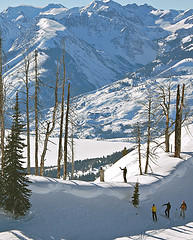
The GOAL is to camp and travel in a winter mountain environment with a focus on safety and leadership. We travel in avalanche terrain, and these skills this is a key part of the curriculum. We also ski a lot! These courses are amazingly rewarding.
When I winter camp in the Northern Rockies, I never bring a tent (sometimes a tarp) so I need to cook outside.
I'll add that I also bivy out under the stars if the weather is calm. And the calmest night's are usually the coldest. My record for sleeping out, no shelter, no ground cloth, no bivi-sack is about 38 below zero. I have a VERY warm down sleeping bag.
_______________________________
Here's my layering system for a long format winter camping trip (10 days or more)
C L O T H I N G S Y S T E M :
==========================
_______________________________
NEXT TO SKIN:
1. TORSO – long sleeve light weight poly top (LW capaline)
2. LEGS – light weight poly bottoms (LW capaline)
3. My onesy – One piece pile (100 weight) outfit (sleeveless with a vest looking top) Full leg zippers, and half moon bomb bay butt-flap.
4. TORSO – Hooded light weigh pile (100 weight) jacket, with arm-pit zippers, full front zipper, and lots of pockets (more on those below).
5. LEGS – GoreTex bibs with full side zip legs.
6. TORSO – Light weight wind-shirt (Sometimes I travel with this instead of the GoreTex parka)
– – – – The above 6 items are my primary body layers. I put these on inside a building *(usually my house) and I take these off (up to 30 days later) before stepping into the shower. THese remain on for the most part CONTINUOUSLY for the entire time! (Note: I try to always sleep in my bibs, unless they are really wet and caked with ice)
– – – – The ability to have a lot of zippers is essential to my "system" – This is (for me) really helpful in the comfort and efficiency department. Using the side zip pants I can vent heat very efficiently. Skinning uphill, I open up all my zippers and thermo-regulate without removing many clothes, and skiing down hill, I zip up and save that heat loss.
_______________________________
INSULATING CAMP LAYERS:
A. Cocoon hooded parka [insulating]
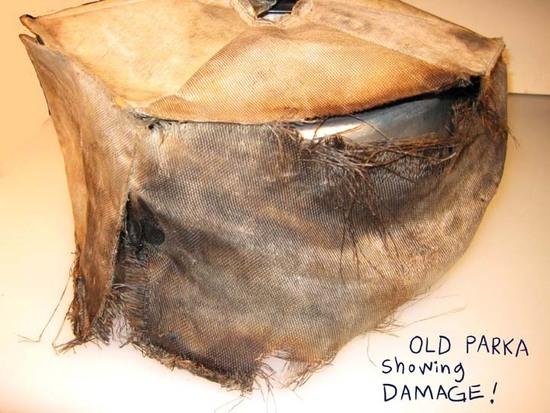
B. GIANT down parka. I mean BIG and warm (NOT lightweight) [insulating]
C. Feathered friends full zip DOWN pants. [insulating]
D. Light weight hooded GoreTex parka, with pit zips and full front zipper. (XXL sized to fit over EVERYTHING)
_______________________________
FEET during travel:
* Plastic Tele Boots with therma-Flex inner liners
* One pair of socks (I do NOT wear liners)
_______________________________
HANDS:
* Big Glove Shells
* Probably 6 pairs of liners in various thickness, all synthetic pile.
* a pair of hard ware store work gloves with synthetic back and leather palm. (Most of my touring)
* Big mittens
NOTE:
I take a LOT of gloves. I like warm hands, I ski for fun, I dig a snow shelter to sleep, and I do a lot of avalanche analysis and snow study. Gloves get soaked, there is no "magic" glove system. I like warm hands! Changing the wet line to a dry liner is EASY! I dry the wet gloves in an inside pocket.
_______________________________
HEAD:
* warm wooly hat
* baseball sun hat
* neck gaiter
* silk weight balaclava
* Sunglasses
* Goggles (in hard case)
_______________________________
FEET in camp:
* MEC expedition booties
* extra foot beds
* dry socks
* Hot Socks (integral designs) sleeping socks
NOTE: I carry 4 pair of socks. I change them every day and I am always drying a pair in my "drying pockets" in my hooded pile jacket.
_______________________________
SLEEP SYSTEM:
* 35 degree below zero Feathered Friends Bag
* Compression stuff sack (yes, I use it for the big sleeping bag)
* Full length EVAZOTE yellow pad (winter style)
* 3/4 length thermarest pro-lite pad
_______________________________
SHELTER:
* Silnylon tarp (simple rectangle) 10 x 8
_______________________________
AVALANCHE GEAR:
* Tranceiver and holster
* Shovel (voile)
* 230 cm probe
* pit data kit (including data book)
* Snow saw
_______________________________
SKI GEAR:
* T2 Telemark Boots
* Tele Skis (with G3 pivot bindings)
* ski poles (adjustable)
* knee pads
* Skins
* kick wax (1 blue, 1 purple)
_______________________________
PACKING:
* day pack (GoLite Pursuit)
* Kiddie sled (home-made)
* Sled duffel (a HUGE duffel for everything)
* minimal stuff sacks
_______________________________
COOK GEAR (shared between 3 team-mates):
* MSR whisper-light
* 1-liter fuel bottle (MSR red)
* stove stand (hunk of ply wood)
* THE NOLS FRY BAKE!
* 4 liter titanium pot – with foam cozy
* 2 liter titanium pot – with foam cozy
* 2 lids (shared for 3 vessels)
* stove fuel stored in 2 liter soda bottles
* spatula
* dip cup
* the "lamp shade" (an aluminum pot retrofitted to cover the water pot, increases efficiency melting snow)
_______________________________
EXTRA STUFF:
* head lamp
* water bottle with bubble wrap insulation (nalgene soft sided vessel)
* 500 ml nalgene water bottle (hot drink mug)
* sun-block / lip balm
* minimal repair kit
* bandana
* toiletries (minimal)
_______________________________
THINGS I DON'T TAKE:
* tent
* ground cloth
* thermos
_______________________________
EXTRA BLAH-BLAH-BLAH:
The list above is NOT lightweight. I simply cannot sacrifice safety and comfort (I need to monitor novice winter students too).
I cook outside in a snow kitchen, and I usually sleep in a snow shelter. I am VERY fast at digging, and I can create a home pretty quick.
When I work for the school I will often base camp near pristine ski terrain, spending up to four nights in one spot.
The areas I will travel are in the Northern Rockies (the Absorokas, the Tetons, the Gros Ventres, the Snake River Range, etc). Camping is between 9 and 11 thousand feet at a northern latitude in the heart of winter. (the sun goes down early, so a lot happens at night with a headlamp).
30 below zero is NORMAL at night. I've had 8 feet of snow fall during a 9 day course. I will be with a team of up to 14 or so, teaching winter skills. Last year we out in a major winter storm, our team (13 total) got stuck in snow shelters for 5 full days at 10,000 feet in Grand Teton National Park.
I'll add that I have skied some of the most amazingly perfect Rocky Mountain champaign powder, on long 2000 vertical feet runs, day after day, in the deep wyoming back-country, with a team of beginners – and then skied back to base camp (by headlamp), stood upright in the deluxe snow kitchen, brewed up a pot of Hot Chocolate with fresh Ginger – Eaten a greasy fried load of cheezy tortillas (with beans and rice and frozen chili peppers) – Sat around with the students (mug of hot tea in hand) and looked up at the trillions of stars as we re-lived the day – and then climbed into the igloo, warm, stuffed and tired – WHEW! (I'm gettin' all excited as I write this!)
(link)
http://www.nols.edu/courses/locations/teton/skiing.shtml