


so how many grams of weight would actually be saved by using a less safe, questionably reliable container that might actually contribute to gumming up and destroying your stove ??
Topic
Become a member to post in the forums.
.
so how many grams of weight would actually be saved by using a less safe, questionably reliable container that might actually contribute to gumming up and destroying your stove ??
Well, several points in your statement are incorrect.
1) They are *not* “less safe…” I have tested these by dropping them from a fire tower. No leaks, no drips. I repeatedly jumped on them. They did not deform, bend, dent, split or start leaking even after impact from my heel. After several impacts, I managed to pop the top off though. But this remains a reasonable level of testing.
2) I have been using the same set of bottles for 20 years or so. I only had to replace one after I ignited the stove but forgot to close up the fuel bottle and melted the top a little causing the bottle threads to deform a bit. User-error.
3) I have never had sludge or gooey stuff leach out of any soda bottles as was said. Only once in 20 years did I find a bad fuel cap, but simply dumped the fuel into my paint brush cleaner and replaced the top.
4) I have been running my SVEA for twenty years with WG out of soda bottles. I finally had to change the valve because it no longer sealed off (worn out) but it was never damaged otherwise.
If anything, the plastic soda bottles are more reliable than metal bottles that can dent and leave the threading leaky. I sort of doubt the old SIGG bottle would have stood up to the heel impacts I used for testing the plastic bottles.
A 16oz soda bottle filled with fuel, with a separate fill cap weigh *less* than a pound. The density of WG needs to be considered, at around .79, compared with a fluid measurement. So 16floz*.79 oz/1 fluid ounce of water=12.64oz. With the bottle and 2 caps for it weighs in at under 15oz.
My old SIGG 11oz/325ml fuel bottle with two SIGG caps (one solid, one with a fill tube) goes around 5-1/4oz or 150gm. So, overall, the weight savings is around 2.5-3oz for a better quality fuel bottle. (Note that the SIGG filler is also scorched from a similar accident many years ago. In both cases, I simply put my cup over them.)
+1 to red tape to mark any bottle carrying fuel.
I’ve used a lot HPDE containers from the recycling bin for transporting gasoline and they work fine. I lean towards non-food containers for safety reasons (less likely to be confused for food or drink). 1-liter motor oil containers work well and pour nicely through those smaller openings.
As Ryan noted 20 posts up and 12 years ago, LPDE softens when used for gasoline. I learned that using an LDPE container sold as a camping fuel bottle in the 1970s. I’d use it for an hour if, say, I needed get gasoline from a station to an empty car, but never rely on it over many days.
+1 on revived threads. Like Jerry Brown, zombies, and Robert Downie Jr, who doesn’t like a good comeback?
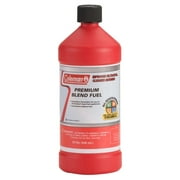
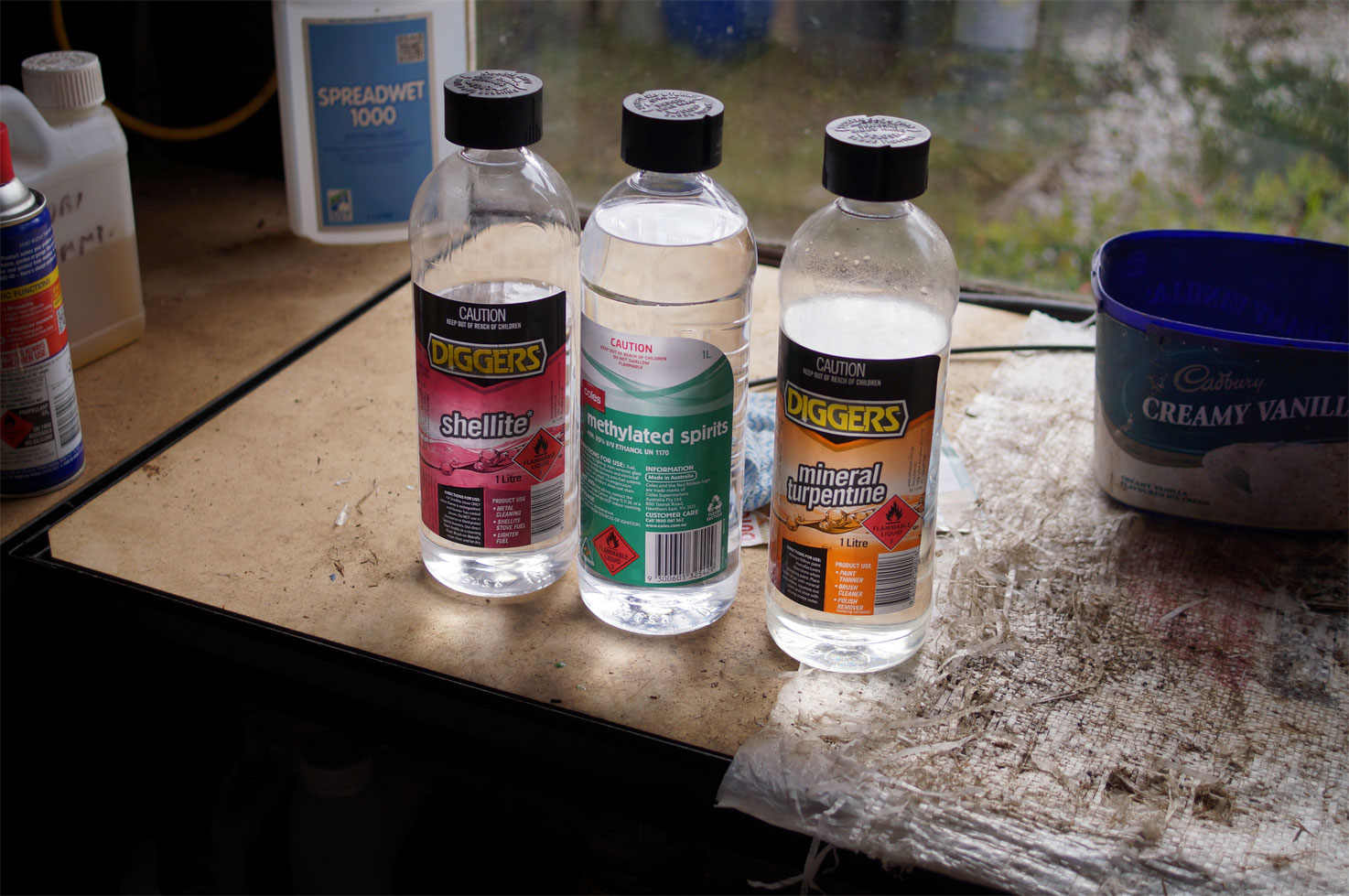
White Gas/Coleman Fuel/White Spirit is called Shellite in Australia.
Sold like this :

PETE or PET.
It has been sold like that for decades.
WalMart and others stock this 32 ounce size.
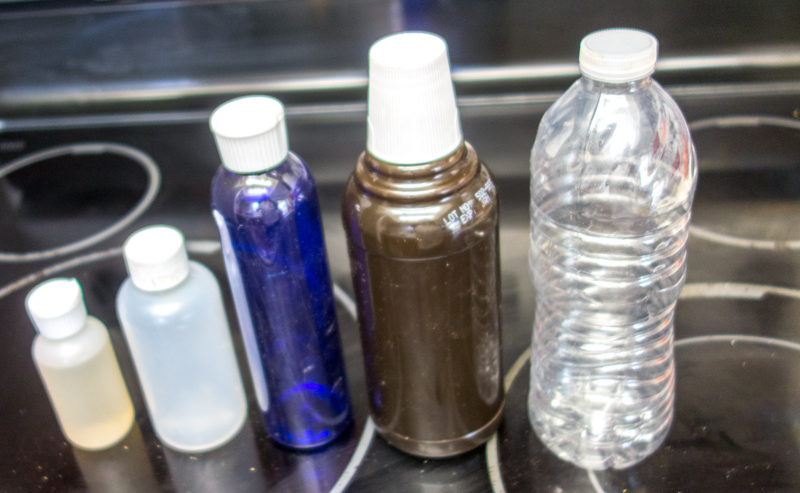
 A couple years ago I was prescribed a mouth wash due to minor periodontal disease. The mouth wash came in a heavy duty 16 ounce PETE bottle, with caps that have .5 and 1.0 ounce markings. Puls the bottles are dark brown so they don’t get confused as water bottles. The bottles weigh 1.75 ounces each and are much more durable that water bottles or even Gatorade bottles. I have 5 or 6 of them now.
ok, so there ” possibly ” are very specific plastics that can be used to transport white gas without gumming up and destroying your delicate back country stove.
next, how about safety, meaning passing the crush proof test. sh$t happens out in the middle of no where. you can’t just say “I will be very careful with my ultra light gas container so it doesn’t get damaged and spill gas all over my stuff. how do the plastic bottles that pass the first test fair under extremely rough conditions, can you drop a 200 lb weight on it without it bursting?
and back to actual weight saving, how much is actually saved in head to head assessment ? what is the saving for a bottle that can pass a crush test similar to a metal bottle ? not one you have to be delicate and careful with.
Read James’ posts again.
ok, so there ” possibly ” are very specific plastics
those bottles are not just possible, they are real products sold for decades and not specifically made for one type of fuel.
The safety aspect backpaking with them is a different matter.
It is up to you to work out the risk.
like many others I carry my “alcohol” fuel (menthylated spirit in the photo above) inside a collapsible Platypus container, others will opt for a metal one.
Become a member to post in the forums.
 Pro-Grade Water RepellencyPolypropylene face fabrics: see the future of raingear.
 © Beartooth Media Group Inc.
 Loading...