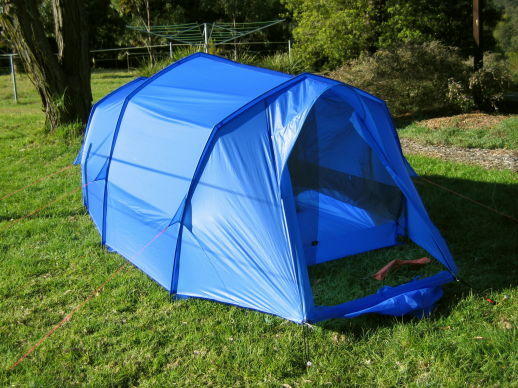
Conventional ultralight wisdom is that while a double-walled tent does provide some warmth (along with some other advantages) you are better off getting a single-walled tent and applying the weight savings towards a warmer sleeping bag. So, for example, if a double-walled tent weighs a pound more than a similarly designed single-walled tent, you can add eight ounces of insulation to your sleeping bag and have a warmer, lighter experience. I wonder, though, if advances in material have now changed so much that this general approach is no longer valid. If the difference between a double-walled tent and a single-walled tent is, for example, eight ounces, then it isn’t hard to imagine that for the same weight, you might be warmer with a double-walled tent, especially when you add the possibility of two people sleeping under the same tent. Even if it is a close tie, the other advantages (better moisture control and no drafts) suggest that is it reasonable to consider ultralight double-walled tents.
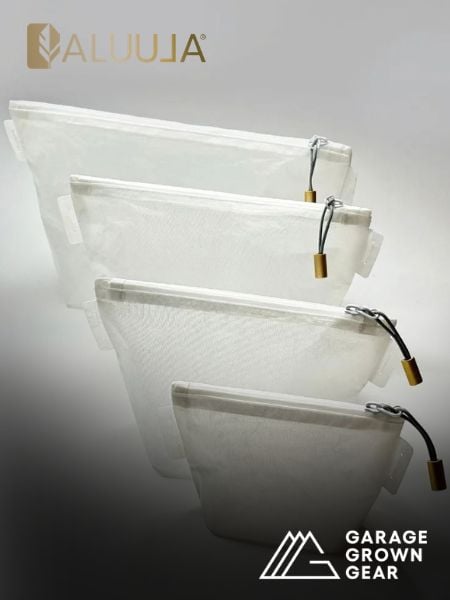
I am curious what people think and specifically what materials might make sense for such a tent. In Will Rietveld’s excellent article he mentions using “an air-permeable inner wall” and that “Double wall tents work best if the inner wall is fabric and not mesh” (scroll down to “Single-walled versus Double-walled”). I’ve read many posts confirming that opinion. This is where my mental design of an ultralight double-walled tent stalls. I can imagine the bottom being silnylon (bathtub perhaps) followed by a combination of mesh and this permeable fabric above it. The rain fly could be Cuben. What makes sense for the permeable fabric? How does nano-seeum compare to other permeable fabrics (in terms of weight)? I believe Ron Bell mentioned that spinnaker fabric is treated to get it to be waterproof. Is untreated spinnaker breathable at all? Obviously, it can’t be too breathable, or it wouldn’t work well for a sail.