Topic

Officially joining the UL ranks . . . slowly

  • This topic is empty.
Viewing 25 posts - 1 through 25 (of 26 total)
PostedJul 19, 2008 at 1:01 am

Hello all:

I've been lurking in the forums, soaking up as knowledge about UL backpacking as I possibly can (I also have the Lightweight Backpacking and Hiking book on order, as well as the illustrated Lighten Up!), and I've decided to take the plunge.

I'm new to backpacking, but even after the scant few hikes I have under my belt, I knew there had to be a better way. Lo and behold, there is!

When buying my gear, I tended to opt for light(er) weight stuff (generally not the lightest because in many instances lower weight=higher prices – significantly oftentimes), but was still left wanting for a more pleasant experience when on the trails of central and eastern Kentucky.

Recently, I've started slimming down on gear (not bringing some things which I had thought were necessities like my Brunton Lantern, and using a stuff sack with clothes for a pillow rather than using a backpacking pillow), and replacing relatively new gear (which I hope to sell at some point) with much lighter weight options.

I've most recently replaced my Brunton Raptor Stove (5 oz plus fuel) with a 1 oz White Box Stove, and my REI Mars 85 Pack (5200 in3/6lb) with a GoLite Quest (4650 in3/3lb 5oz), and am looking to do more. Along with the stove, I went ahead and purchased a Snow Peak Trek 900 cookset (6.2 oz) to replace my ridiculously heavy GSI Bugaboo mess kit (1lb 2.2oz).

As one might notice, I'm not looking to set any records with my lack of weight (I chose an internal frame 3 lb pack rather than a frameless 1lb 10oz pack for instance), and I am looking to get my base weight to around 16-18 lbs.

I am a hammock sleeper (I have a Jacks R Better Bridge Hammock and 11×10 cat tarp – 3lb 4oz plus lines and stakes), and have no interest in getting any lighter by going the tarp method (or any other ground dwelling method for that matter). For now I use a Thermarest tech blanket (21oz) for summer use, and plan on using a JRB quilt for Fall and shoulder season camping (both an under and over quilt) rather than a bulky, relatively heavy sleeping bag.

I also use an MSR HyperFlow for filtration, and have no real interest in going lighter by using non-filter methods (although I did consider the UV method which would save about 3.5 oz, but takes much longer to purify less water, and I would also have to worry about carrying batteries – and extra batteries).

If there is one thing I have learned by reading this site, is that many choices that have to be made about what to pack boil down to preference rather than weight alone. And although weight will certainly factor heavily in to all of my decisions henceforth, I have to go with what I feel is best rather than rely on simple math.

If anyone has any general suggestions on how I might proceed in slimming some weight, I would greatly appreciate it. Again, I have found this site invaluable in helping me form my philosophy on lightweight hiking, and I am sure that that thought process will continue to be molded by some of the great stuff I have read here on the forums and magazine. When it's not 4 in the am, I will look through my pack and list some more of the gear that I have so that you all will have a better idea on where I can cut gear, or make it better.

Thanks

PostedJul 19, 2008 at 3:58 am

What are you using for holding stove fuel? Try a smaller/lighter option if you can. Could you move from a GoLite Quest to a Jam2 pack? That would save almost 2 pounds. The cookset was definitely a good purchase. What do you use to hold water? Get rid of the Nalgenes and move to water bottles or maybe a Platypus reservoir if you haven't already.
If you have a small scale, in the range of grams or ounces, weigh some of your gear and post a gear list of what you have and ask for comments. I'm sure the gram weenies will post a few suggestions for trimming down.
You are wise to note that it isn't always about the weight. Sometimes the comfort of a "luxury item" exceeds the desire to lighten up. If this concept changes for you, try to keep it limited to luxury items. Items essential to your safety should never be left behind in favor of weight savings.

EndoftheTrail BPL Member
PostedJul 19, 2008 at 9:27 am

Here's one general approach — while waiting for your list:

1. Buy a scale. This step alone has gotten me much more sensitive to weights — grams turn into ounces which turn into pounds.

2. Leave things out. Carefully go through your list and see what gear pieces are often brought along but seldom use. Bear in mind safety and comfort — but many of us are still "guilty" of bringing too much stuff.

3. Multitasking — Of the remaining gear pieces which we believe we need, carefully determine which gear pieces can perform multiple functions so other pieces can be left at home.

4. Substitution — Having decided on just the necessary pieces, if you are still unhappy with your overall pack weight — then look at buying lighter weight pieces to substitute for your current, heavier ones. Folks often start with "The Big Four" — shelter, bag, pad, and pack. Don't forget to look at bulk as well as weight. Replacing bulky fleece clothing with down or synthetic fill can reduce bulk significantly.

Finally, while evaluating individual gear pieces, also look at how they fit together as a "system". Everything should work together. For example, once you whittle down your gear weight and bulk to a certain level, a UL pack may be appropriate (but not before). And with a lighter pack weight overall, a pair of trail runners may make more sense than heavy, traditional boots (but again maybe not before). It's all related.

Hope this helps.

PostedJul 19, 2008 at 9:37 am

I have 2 small 4oz plastic fuel bottles from MiniBullDesigns on order. Most trips will only require 1 of them, but longer trips I'll have to take both (and likely more for week-longers).

http://minibulldesign.com/mbdstore/index.php?main_page=product_info&cPath=4&products_id=14

4 oz is probably as little as I would take in the event of emergency; going on a 2oz per day average (the White Box Stove takes about 1 oz to boil 16 oz of water) would give me an extra day (3-4 meals/hot drinks give or take) when planning for an overnighter. On a side note, I've also got a Beer Can pot, pot stand and MiniBullDesigns Magic Mouse stove (<6 oz combined – the White Box Stove won't cook a beer pot efficiently because of the design of the jets) on the way as well which will save even more weight for solo trips, and for when I know that boiling limited amounts of water is all I will do. I wanted both the beer can pot and Trek 900 because I plan on buying the BushBuddy Ultra in the relatively near future (particularly for Fall hiking when having a fire will be a welcome comfort at night) which nests nicely inside the Trek 900, and the fuel savings make up for the heavier stove option. The Trek 900 also gives me options between actually cooking a meal, or just heating water.

I heavily considered the frameless packs, specifically the GoLite Pinnacle (because I use a hammock – and in colder weather will require 2 quilts, I favor larger volume packs), but I'm not there yet (so far as mindset is concerned). I'm new to backpacking, and something about a frame to help support the load, even a lighter load, is a safety net that, although I'm willing to forgo in the future, I'm not entirely comfortable abandoning just yet. I'm sure that I'll get over this hurdle soon enough as I become more comfortable on the trail (mentally speaking). I also know that when I'm ready, I'll instantly shed ~2 pounds, even if the rest of my kit stays exactly the same! :)

I use a 2 liter reservoir for water, and a very small lightweight plastic cup (1 oz) for mixed drinks (Propel and whatnot). I would switch to a titanium cup, but couldn't find a lighter alternative, nor could I justify the price for the meager weight savings that might be achieved.

I will definitely post a weighed list of gear as soon as I can find my scale (I have one that goes down to grams).

Thanks for the reply and suggestions.

PostedJul 19, 2008 at 9:42 am

Thanks. I've conceptualized some of those things, but hadn't found the right words for those ideas. Thanks for helping me to make those ideas real, and giving me a way to make concepts concrete.

Jim Colten BPL Member
PostedJul 19, 2008 at 2:02 pm

Note: this is in no way a judgement of the parameters you've set … just an analysis of their wt effects. (after all, it is YOUR hike, not mine). But I feel compelled to say that at 16# base wt, you're joining the light ranks, rather than the UL (in the 10# neighborhood).

Comparing your big three with typical (in no way extreme) UL wts:
pack 37oz vs 21 15oz diff
shelter 54oz vs 13 41oz diff (8×10 slnylon tarp)
"sleeping bag"
42oz vs 29 13oz diff (21oz quilt + 8oz pad vs two 21oz quilts)
water treatment
8oz vs 1 7oz
total diff 76oz … 4lb12oz

The rest of your kit will need to be pretty well dialed to solid UL stds to get to 16lbs from that start. FWIW, my first attempts to lighten up were heavier that your's

Have a good hike!

PostedJul 19, 2008 at 7:25 pm

Many thanks!

Light ranks, UL ranks, despite my lack of a proper understanding of a difference, it's a heck of a lot lighter than the 40+ lbs I have been carrying! :)

One might also say that the only real difference, rather than weight, is that one way, one sleeps in full comfort in the shelter of choice (despite the sometimes undesirable trappings involved), while the other way one is channeled to sleep a particular way just so that he (or she) might have the lightest pack possible (that isn't to say that one can't be comfortable under a tarp sleeping on a pad, but that in order to make an arbitrary weight, the options are severely cut which don't always sit well with some – IMO, any ground dwelling method is uncomfortable, and I see no difference between sleeping under a simple tarp and sleeping in the most pimpin' 8 man double walled tent sprawled out on the most padded pad known to human kind; neither are good options, and definitely not so that I can make a particular weight for my shelter.).

Either way, the classifications of hiking styles are, by and large, very subjective and sometimes arbitrary (where exactly is the line between light and UL? Who sets these rules, and is there really that big of a difference between someone who carries 15, and one who carries 14?). Some seem to consider a base weight of 12 UL, while others consider it 10, while still others would consider anything under 35 to be UL. And they are all right; 35 lbs must be like carrying feathers to those who routinely carry 50.

For me, it's not necessarily about making an arbitrary weight so that I might be considered UL, but about being as light as I can be without making unnecessary sacrifices (like going to ground, or having to wait long periods of time for water).

Trimming down on weight is very important to me, but not at the expense of making weight just to make weight.

All that said, I do plan on getting a much lighter pack, but I'm not yet comfortable with using a frameless pack. From what I understand, UL packs, such as the Jam2 (et al), are designed to be used by seasoned ULers who have their kit and packing methods down, not beginners like myself, due to a real risk of injury. Once I feel comfortable with my gear and packing methods, I'll definitely be switching to a much lighter pack (like the GoLite Pinnacle or equivalent) and instantly cutting my weight by nearly 2 lbs.

My necessity for quilts is a seasonal thing; in the spring and summer, I can get away with just 1 over quilt, making my thermal arrangements lighter than even the "typical" ULer because I don't need a pad. The shoulder seasons and winter are a different story. 2 quilts are a must to keep warm (bridges freeze before roads). Some get away with a CCF pad and an over quilt, but I'm not one of them.

I choose the heavier MSR filter most due to its sheer speed and efficiency (3 lpm). I generally filter for more than just myself. A slower pump would start to become a hassle quickly and waiting 4 hours for Aquamira to work in order to save 6.4 oz doesn't seem quite right.

I greatly look forward to having my gear further streamlined. Thanks for the food for thought.

Jim Colten BPL Member
PostedJul 19, 2008 at 9:18 pm

Christopher,

Like I said, it's your hike and once again, enjoy it … that's the whole idea anyway.

But stay open to the possibility that you might try tarping some day. When I first heard that folks use a tarp for a shelter I thought "Yeah,,,,, right. No way I could be safe without a tent! And everyone knows it's gotta be double walled". OH!, that's right .. you're one of hammock guys, never mind (mischievous smile)

But I tried a 7.5×9.5 blue tarp from the building supply store on an outstanding late Oct weekend car camping trip (with a Real Tent along for backup). Didn't use the tent and I lived to tell about it! It's been a progression since then.

BTW, I don't know the origins of the base weights for SUL, UL, light and traditional styles but there seems to be general agreement on the numbers. But you are absolutely right, the real standard is determined by whatever reasonably light load strikes the right balance between comfort in trail and comfort in camp … for you.

signing off …

Jason Brinkman BPL Member
PostedJul 19, 2008 at 9:41 pm

I think you definitely have the right mindset. The reason one lightens up is so that you can carry the things you value most. I have heard of hammock campers that find those things more comfortable than their beds at home! Certainly sounds like it is the right choice for you.

For me, a cushy inflatable pad is the luxury I can't sleep comfortably without (well maybe I can on duff or sand, but I tell myself that I can't!).

We would really need to see your list to help much more. I know that I found a ton of savings in what I call my utility/miscellaneous gear. You know – the full size Leatherman, 50 feet of rope, 1/2 pound knife, folding saw, hatchet(!), etc that I used to carry. I certainly don't miss that stuff, cause I never really used it anyway.

Another big one I see with the unintiated is packing too many clothes. I have a buddy who took his new girlfriend backpacking for a weekend recently. She tried to take two changes of clothes per day, and one per day included jeans! More realistically though, the average backpacker could probably do without two pairs of long underwear, three tshirts, camp shoes, and clean socks for every day.

I have completely quit carrying extra fuel on predictable hikes. Worst case if I run out, I eat the one or two extra bars or gorp that I brought. Hasn't been a problem yet. And nothing wrong with a cold meal on an extra hike out day.

PostedJul 20, 2008 at 1:11 am

Thanks for the encouragement. I have been weighing away tonight, and have come up with a preliminary list of stuff that I will be carrying. This list certainly isn't comprehensive, but it's a fair chunk. I still have to work out stuff like guy lines, stakes, etc.

packtowel (4oz/113g)
Adventure Medical Kit .7 (8.3oz/235g)
White Box Stove/windscreen/ground pad (2.05oz/58g)
MSR HyperZFlow Water Filter w/mesh sack (8.6oz/244g)
GPS (7.85oz/222g)
****Primus .9L Kettle (7.05oz/199g)
****Snow Peak Trek 900 (6.3oz/178g)
PCT Bear Bag (3.05oz/87g)
Poncho (1.65oz/47g)
Brunton Titanium Spork (.7oz/20g)
Knife (2.8oz/79g)
Platypus 2L Bladder (3.5oz/99g)
Platypus 1L Bottle (.6oz/17g)
GoLite Quest Pack (3lb 5oz/1503g)
JRB Bridge Hammock + Sack (37oz/1049g)
10×11 Cat Tarp + Sack (19oz/539g)
Thermarest Tech Blanket (24.05oz/682g)
Bic lighter (.65oz/19g)
Firelight Mini Firestarting Kit (.81oz/23g)
ProLite 4 (24oz/680g)
Petzl Tikka Plus w/o batteries (2.7oz/77g)

****Denotes gear that is an either/or rather than a both/and

I have also found that I have been able to shed a fair amount of weight by making decisions, many of them easy. The amount of lost weight due to finding lighter gear has been tremendous: Just in pack, stove and cookware alone, I have lost 3.65 lbs./1.66 kg. I imagine that a few more ounces can be added to that once I get my beer can stove.

Once again, thanks for all of you input. I greatly appreciate it. I'll be putting more up as I weigh it out. I also need to remember that I need to weight EVERYTHING, not just the obvious stuff.

Roger Caffin BPL Member
PostedJul 20, 2008 at 1:33 am

Hi Chris

Having a set of scales is, as Ben said, a huge step forward. That said, herewith a few cheapish things to consider:

> packtowel (4oz/113g)
??? Needed?

> Adventure Medical Kit .7 (8.3oz/235g)
??? Do you ever use it really? How about a few BandAids and some Micropore surgical tape? (This will create controversy of course.)

> GPS (7.85oz/222g)
??? And no compass or map? A small compass and a photocopy of a topo map is much lighter, and doesn't need batteries.

> Brunton Titanium Spork (.7oz/20g)
GSI Lexan spoon: more functional and less weight. (See review at BPL)

> Knife (2.8oz/79g)
Heavy! Do you really USE this. Would a GSI Lexan knife suffice?

> Platypus 2L Bladder (3.5oz/99g)
> Platypus 1L Bottle (.6oz/17g)
Two 1.25 L PET fizzy drink bottles are lighter, at 34 g each. They are quite robust.

> Thermarest Tech Blanket (24.05oz/682g)
One of the less weight-efficient means of insulation around. Upgrade at some stage to a good UL down quilt, or maybe a BPL Cocoon quilt.

You don't mention clothing or footwear. Could be a few ounces there too.

Cheers

Dean F. BPL Member
PostedJul 20, 2008 at 2:19 am

If you truly are a dedicated hammock guy then you can save over a pound by getting a lighter hammock. The Hennessey Ultralight Backpacker is 1-lb 15-oz. Compared to your 3-lb 4-oz this saves you 1-lb 5-oz. Of course, the Hennessey costs $190. Their Hyperlight Backpacker would save you another 5-oz, but that's $230.

I have the Expedition Asym, and I LOVE IT. It's the most comfortable wilderness shelter I have ever had, but it's too heavy, so I'm in the market for an Ultralight Backpacker Asym, myself. It'll still be 1-lb heavier than whatever shelter is carried by a typical tarp fanatic, but IT'S WORTH IT. I'll admit that on occasion I carry a tarp when I'm in a fanatical mood, myself. (Actually a Gatewood Cape- uberfanatical.)

PostedJul 20, 2008 at 2:20 am

There are certainly some things missing from the list. My stuff is pretty scattered right now, so I haven't got it all to weigh as of yet. I'll be adding as I find gather them.

As far as your comments:
Strictly speaking, the pack towel is a good thing to have because of the high humidity in the summer here. After a dip in the river, it can be really tough to dry off without using some sort of towel. Air drying is sometimes not possible. I'll likely cut the towel down by a fair bit (it is pretty large) to save on some weight. Have you got any suggestions for dual use gear?

It's very likely that I am going to empty the med kit quite a bit. It seems very redundant. I certainly want to be prepared, but I also don't need the redundancy that the kit provides.

I do have a compass and use the map as my primary means of navigation, I just don't have them on hand to weigh. I have neglected to mention that I am a tech junkie. I use the GPS in order to have a comprehensive record of my hike (exact distance, tracks, waypoints, elevation profiles, speed, rest time, etc). This is certainly a luxury item for me, and not a necessity, but one that I'm very likely to keep. I make graphs and charts, etc post hike. Don't get me wrong, I use it for navigation, but it is primarily an archiving tool. There are lighter versions available, but I use this one with my family (it has extensive geocaching abilities that other GPS units simply don't have), and getting another lighter one isn't an option (my wife will only give me so much leeway!).

I'll look into the Ti spork v Lexan spoon. Thanks for the tip.

Yes, I do use the knife. And I'm sure that I'll use it even more once I get my BushBuddy stove for shaving branches to get some good tinder. Perhaps I can find a lighter alternative. Any suggestions? I also use it for cutting things like moleskin etc. It is a multi-purpose tool for me.

I prefer to use bladders. I like the no-hands thing on the trail, and I can use the bottle as a pillow (as well as mixed drinks), or for extra warmth if my hammock gets too cold (a hazard of hammock camping).

Agreed on the inefficiency of the Tech Blanket. I'm sure there is a better way. Normal quilts are too warm for the spring/summer here (even summer quilts), but it can get cool enough that having nothing isn't really an option either. As soon as I figure a better weight/warmth ratio, I'm all over it.

I'll definitely have to look at what I would generally pack as far as clothing. It is generally pretty minimal (extra pair of underwear, socks and wicking shirt per day). As of now, I'm using some light-duty hiking boots. They are not particularly heavy, but they are not particularly light either. I am not confident enough to go with trail shoes just yet (see my reasons for using an internal frame pack), and so boots it is. I am still looking for a good, light pair of camp shoes. Do you have any suggestions as far as camp shoes are concerned? Many might say to not have camp shoes, but until I make the transition from boots to trail shoes, I will need something to protect my dogs when they're not in the boots (river rocks really hurt too).

Thanks!

PostedJul 20, 2008 at 2:27 am

I chose the JRB Bridge because of the flat lie. It is perfectly flat (not most flat like all gathered end hammocks). I could make one and save a bit (maybe), but my sewing skills for a project that large are non-existent. The weight also considers the bug net which will remain at home during fall/winter.

Does that 1 lb 5 oz consider the tarp as well (it doesn't seem like it on the website)? My tarp is large, and as a result pretty heavy in comparison to many others, but the extra coverage is worth it, especially in the event of bad weather.

Either way, I'm much too large for any of those super light hammocks. The highest limit is 200# for the ultralightweight hammocks, which I exceed.

Roger Caffin BPL Member
PostedJul 20, 2008 at 3:25 am

> I am not confident enough to go with trail shoes just yet (see my reasons for using an internal frame pack), and so boots it is. I am still looking for a good, light pair of camp shoes.

I understand the logic – taking it cautiously, and part of me agrees fully. And I can understand wanting something light for camp.

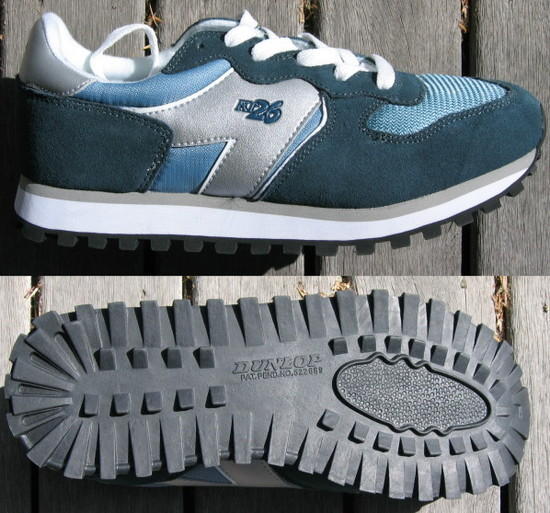
New KT26s

I wear the shoes here: 345 g each (12.2 oz) each. So light and so comfortable that at the end of the day I don't bother taking them off. Fantastic friction too.

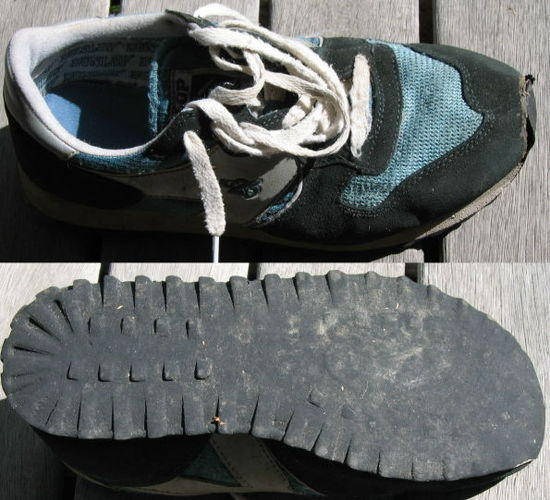
Old Kt26s

However, anytime you go into UL gear you have to be aware that it can have a shorter life. One pair of my KT26s last me about 4 calendar months walking, but we are out an awful lot in very rough country, almost every week. So I have to replace them regularly. It is interesting that a pair of brand name joggers which might last me 18 months costs about the same as several sets of these shoes which together last about the same time. But the light weight and comfort I gain – ah, that's where I am smiling.

Keep at it!

Cheers

PostedJul 20, 2008 at 7:50 am

I used to pack a pair of Crocs as camp shoes when I wore boots. I liked them a lot because they are fairly light, comfortable, surprisingly supportive and protective, and very quick-drying.

Dave . BPL Member
PostedJul 20, 2008 at 8:31 am

The A.G. Russell Featherlite is my knife of choice. I weighs 1.5 oz., but it has a great locking mechanism that is sturdy enough to allow for batoning small bits of wood for use in my Bushbuddy. It's also pretty cheap at $35.

Just something to consider if you want to go for a lighter knife.

Charles Grier BPL Member
PostedJul 20, 2008 at 9:45 am

Christopher, are you sure of the weight for the poncho (1.65 oz)? If so, where did you get it and what kind is it? I want one too!!!
Also, your cooking gear seems heavier than necessary. You can get an IMUSA aluminum mug that will hold 0.8 liter that weighs 3.6 oz with a foil lid at WalMart. And, you can get a BPH-free, GSI Cascadian, 12 fluid oz cup that weighs 1.7 oz, if you cut the handle off. The IMUSA mug costs about $6.00 and the cup costs about $3.75. They are both pretty sturdy. BTW, a standard stainless steel Sierra Cup only weighs 2.75 oz and you can also use it to hammer in tent pegs.

PostedJul 20, 2008 at 10:28 am

Hey Christopher,

You'll get there… looks like you're definatly headed in the right direction.

As far as the first aid kit goes, check out this thread. I had a 10oz kit that is now down to 3.5oz. Also the podcast that is mentioned in there is worth listening to.

http://www.backpackinglight.com/cgi-bin/backpackinglight/forums/thread_display.html?forum_thread_id=13691

I'm also a hammock camper as well (Hennessy Exped. Assym)… and I've also purchased the Golite Pinnical. I think it carries the load well and should have enough room for your 2 quilts. When I bought it I had about a 15 lb. base weight and now I'm down to 9.5 lbs. As you reduce your gear and weight it'll compress down to compensate for that new empty space. It's a pretty sturdy pack for under 2 lbs. Find a store that will let you bring all of your gear in and stuff it in a pack to get a feel for it.

I bring a few extra clothing items, not much, but probably more than most here:

Extra pair of socks, extra t-shirt, extra pair of breifs.

That way if I get to where I can't stand my own stank I can wash a pair and hang it from my pack to dry while continuing with my day.

Enjoy the books, lots of good info in them, especially "Lighten Up".

Have fun!

PostedJul 20, 2008 at 11:08 am

It's a simple and cheap yet effective means of covering oneself in a rain storm.

Coghlan's Emergency Poncho. You should be able to pick it up at just about any camping/sporting goods store around. I'm also sure that they're widely available on the net (although it's low cost is likely higher than its corresponding shipping cost). It's not meant for heavy use, but at <$2, one can afford its lack of durability. It should be large enough to cover one's pack as well (50x80in/127x203cm), and is 1 size fits all.

Weighed just now (again for posterity):
Poncho in plastic bag (1.65oz/47g)

PostedJul 24, 2008 at 10:40 pm

After some careful consideration, I have decided to send back the GoLite Quest pack (53 oz / 740 g), and replace it with the GoLite Pinnacle (free shipping and returns was a great incentive to buy from backcountrygear – there is no brink and mortar retailer close enough to try these packs).

My fears concerning a frameless pack were not based from the right mindset, IMO. Were I planning on carrying traditional backpacking weights, a frame would be essential, but I'm definitely looking to get well under 25 lbs for the average weekender, and only approaching 30 lbs for week long trips. I chose the Pinnacle because, as I've noted in other posts in this thread, I choose to hammock camp which means needing the extra volume in order to store the hammock, tarp + lines and 2 quilts (during temps of anything under ~65-8F), plus any extra winter/shoulder season gear. I wasn't sure that a smaller volume pack, like the Jam2, would be large enough to accommodate all that stuff. When I don't need the space, this pack can cinch down so that all of my gear is held tight.

Another consideration is that although the Quest is larger than my current pack (Kelty Storm 3600), it isn't that much larger, and it doesn't weight that much less. If I decide, after testing the Pinnacle, that I need a frame, I can always revert back to my Kelty until I am ready to make the move. That said, I don't anticipate any problems because the lump sum of everything is going to be vastly lighter than what I was carrying previous to my sitch to being as light as possible.

Needless to say, the largest benefit of this decision is a further weight reduction of 26 oz (gotta love it when pounds are part of a weight reduction, and not just ounces or grams). I'm currently in the process of making a spreadsheet of all of my gear, and will post it when it's "done."

Thanks all for all of your help.

PostedJul 25, 2008 at 9:51 am

I would still consider using Aqua Mira or other chlorine dioxide for your water.
I know you stated earlier that you don't want to have to wait for your water: thinking I'd have to wait was what kept me from switching as well…but in my opinion you don't wait at all- drink the remainder of your water, eat an energy bar, change your socks, take some pictures- all things you cannot do while pumping water. With Aqua Mira you really only wait 5 minutes to mix your chemicals- if it's the first thing you do when you stop, they're done by the time you get out your bottles and have them filled (How long does it take to get out a filter, connect hoses, set up at a stream, etc. etc….5 min?) Dump in your chemicals, shake, and hit the trail. I set my watch timer to go off in 30 minutes and forget about it. (You probably shouldn't let yourself go so long without water that you can't comfortably wait 30 min. anyhow…) I think chemical treatment has actually made my water stops faster and made the stops more enjoyable- you do whatever you want and the chemicals do the work for you.
Try it for a trip and see before you rule it out- there's nothing to lose. Just a thought.

EndoftheTrail BPL Member
PostedJul 25, 2008 at 5:28 pm

If choosing between chlorine dioxide liquids versus tablets — choose tablets — to avoid dealing with counting drops, mixing, and the extra five-minute wait time. It's why Aqua Mira too is now selling the stuff in tablet form. Lighter, quicker, easier and more potent too.

PostedJul 28, 2008 at 8:33 am

Hi Christopher, and welcome!

I'm also soaking up everything I can find in these forums and articles, learning how to lighten my pack. Let me share a couple of the most important things I have learned so far:

1. Think outside the box when it comes to gear.
2. Pick up a sewing machine at a yard sale anyway. You can save a lot by being able to do basic things yourself. Also, local seamstresses are often willing to barter (you can put up shelving, paint walls etc in exchange for work).
3. eBay and Military Surplus are great places to shop.
4. Learn how much water you NEED to carry, and don't carry more – water is HEAVY!

For instance: if you can't afford a down sleeping bag and the synthetic one you can afford is "too heavy",
A – get a couple of yards of ripstop,
B – carefully cut the seams of the sleeping bag and separate top and bottom halves,
C – use basic hand sewing loops or even two lines of straight stitching (if you don't have a sewing machine) to close the edges of the top half and straight stitches to add the ripstop as the "bottom" to the top half of the bag (almost anyone can do these basic stitches and yes there are easy ways to make a more finished product), and
D – you have just reduced the weight of your sleeping bag by about half by turning it into a top bag.

I know you're a quilt sleeper, but you get the idea. Look at the gear you have with a different perspective. Military Surplus or eBay are great places to find synthetic insulated poncho liners (quilt), synthetic insulated jacket and pant liners (camp wear and part of sleep system) and other lightweight and inexpensive goodies. Walmart can be good, too, but they look at you funny if you carry your scale in with you. :-)

When I started reading these forums I thought the gram weenies were a bit nuts. But it finally dawned on me that saving 2 ounces on eight items equals a pound saved. Hmmmmm. I'll probably never hit the SUL mark, but interacting with these wonderful people is continuing to rapidly change my comfort level with lighter and less equipment.

Good luck and have fun!

Dean F. BPL Member
PostedJul 29, 2008 at 11:55 pm

I'm pretty sure that the 1-lb 5-oz figure DOES include the tarp. If I'm wrong, somebody tell me. (And there is a used one for sale somewhere on this forum for $120…) The Hennesseys also lie pretty flat- it's kind of the point of their touted "asymmetrical" construction. I've never used any other hammock, though, so I can't compare.

Viewing 25 posts - 1 through 25 (of 26 total)
Loading...