


What are the following abbreviations?
(1) 3 mil plastic sheeting
(2) tent floor with 1,800 mm polyurethane coating
(3) Breathability: 15,000 g/square meter/24 hours
Topic
Become a member to post in the forums.
What are the following abbreviations?
(1) 3 mil plastic sheeting
(2) tent floor with 1,800 mm polyurethane coating
(3) Breathability: 15,000 g/square meter/24 hours
mil/mm= milimeter; 1 millimeter= approx 1/25 inch
g=grams I think (1 gram=1/32oz)
S.
That was what I thought when I first encountered these abbreviations but thinking about it:
1. A clear plastic sheeting to cover patio furniture can come in 4-mil — and if mil really stands for millimeter, then that's .16 inch — that would be a pretty thick plastic board, not sheeting!
2. A PU coating is pretty darn thin (heck, the whole fly is pretty darn thin) — so 1,500 mm cannot possibly be millimeter! I suspect "mm" is a unit measuring the water pressure that the coating is able to resist, not the thickness of the coating???
3. G normally stands for grams. But 15,000 grams of water vapor transfer over 24 hours??? That's more than 4 gallons of water! Maybe it really is "grams" but if companies test breathability by using a massive (square meter) humidifier and running it for 24 hours to evaporate out 4 gallons of water in just one day — that has little to do with "real world" usage! Knowing Goretex and all, maybe that's not so surprising…
.
from http://www.customzip.com/service.html#howthick2
How thick is 2 Mil.
2 Mil. = 50.8 Microns = .0508 Millimeters = 1/1000 inch. The standard household Ziploc® sandwich bag is 1.5 Mil. The heavier freezer bags sold in stores are generally 1.75 Mil.
2 Mil. is the standard industrial strength thickness.
How thick is 4 Mil.
4 Mil. = 50.8 Microns = .0508 Millimeters = 1/500 inch. 4 Mil bags are twice as thick as the 2 Mil. bags and considered heavyweight.
Jaiden:
Thanks, that confirms that "mil." is not millimeter. But what I really want to know is what "mil." stands for?
Edit: Scratch that, I read the above post wrong and thought 1 mil was 1/1000 of an inch, in which case milli-inch sort of (in a twisted way) made sense. But alas 2 mil=1/1000 in, which puts me back at square one.
Edit 2: After reading the wiki article that was linked:
'A thou, also known as a mil, is a unit of length equal to 0.001 inches (a "milli-inch").' So I guessed correctly.
Adam
I dropped by Dictionary.com and saw that mil is defined as "a unit of length equal to 0.001 of an inch (0.0254 mm), used in measuring the diameter of wires."
It apparently is derived from "millésimus" or thousandth.
so that leaves
(2) tent floor with 1,800 mm polyurethane coating
(3) Breathability: 15,000 g/square meter/24 hours
Neither of these units of measure make sense to me. I'm wondering if "mm" is referring to a thousandth of a "mil", which would be 1.8 "mil" or slightly thicker than you're average ziplock bag.
A breathability of 15 litres per sqaure meter per day is plausible…
Many European countries switch the period and comma usage in numbers compared to the US, so a comma is the decimal point and period is the thousands separator.
1,800 mm for a European manufacturer specification is 1.800 mm to us.
The sources I picked are all American. Now, these are abbreviatons that we see "all the time" when looking at tents and jackets, and they give us a sense of comparability and all — but seriously, no one knows the names of the measurements???
I think Dave's got the answer for "mil". Reading his link, a "mil" as used here in the US represents 1/1000th of an inch (a "milli-inch") and is used to denote thickness of paper, film, plastic sheetings, etc. So a 2-mil plastic sheeting is 2/1000th of an inch thick. Now this makes sense. An American mil (1/1,000th of an inch) is not to be confused with the metric mil or millimeter (approx 1/400th of an inch).
OK, one down and two more to go. What about "mm" and "g" above?
Ben-
You are correct on the usage of "mm" as a measure of waterproofing. I'm blanking on the full specifics of the test, but a sample of the fabric is attached to a cyclinder. Water is then added to the cylinder, and once water starts to penetrate the fabric, they take a measure of just how high the water filled the cylinder. This gives you the measurement, in millimeters, of how waterproof the coating material is.

g is the abbreviation for gram. The high number has to do with the particular test for breathability which, if not mistaken, is the dessicant cup test.
OK, I think I got it:
mil = fabric thickness in milli-inch = 1/1000th of an inch
mm = water pressure as measured in depth of water in millimeters inside a cylinder that a fabric can block out.
g = grams
Thanks to all.
Hi Ben
> (1) 3 mil plastic sheeting
3 mil in America = 0.003 inches.
(2) tent floor with 1,800 mm polyurethane coating
Fabric resists 1,800 mm or 1.8 m of water pressure before it starts to leak at all.
(3) Breathability: 15,000 g/square meter/24 hours
You need more information here for this to make a complete specification, but basically it means that 15 kg or 15 L of water can pass through 1 square metre of fabric in 24 hours **under certain test conditions**.
What you have not specified are:
The humidity on the destination side of the fabric
The temperature of the environment
The wind speed over the surface of the fabric.
All three of these affect the results big time.
The test is usually done with a piece of fabric somewhat smaller than a square metre of course.
There are a range of breathability Standards from different countries, and each standard gives different rankings. What you will find is that each company uses the Standard which best suits its products (puts them ahead of their competition), although they never tell you this. :-)
Cheers
Roger
Ben,
There are a couple different methods to measure breathability or moisture transfer. The units you specify above are probably a water vapor transmission rate (WVTR). The test is run by exposing one side of the film/fabric to a low humidity (usually 0%) and the other side to a high humidity (this can be anything, but is often 50, 90, or 100% RH). Whoever reported the numbers should have specified that, since it makes a difference when comparing numbers from different suppliers. The amount of mositure that permeates through to the dry side is measured with a infared sensor on the dry side of the film/fabric.
Alternatively, you can fill a cup with water and cover the top with the fabric. You then store the cup in a humidy chamber at a low RH for a period of time. By weighing the weight loss of the cup occasionally, you can get a WVTR.
I use an instrument like this to measure the ability of a film to protect cookies or coffee from going stale.
Become a member to post in the forums.
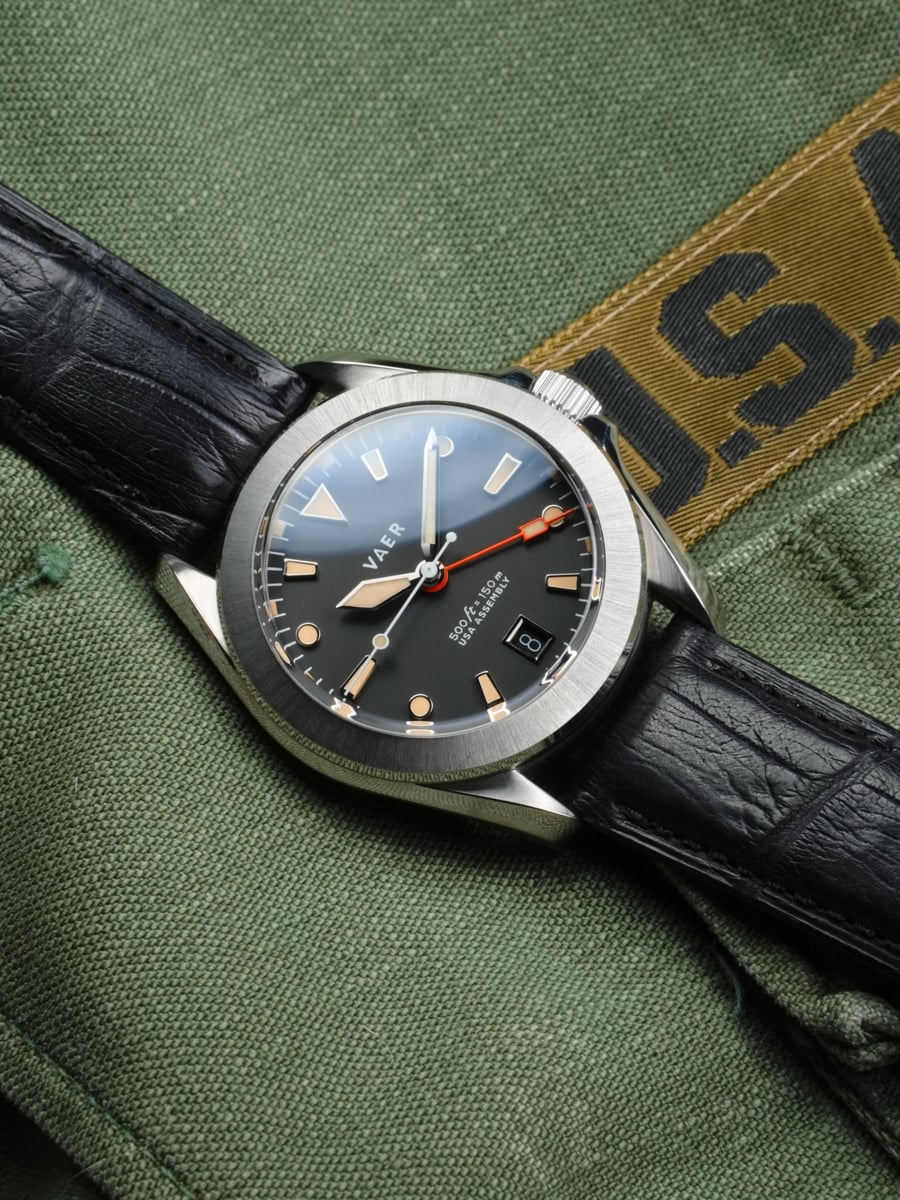 A Cult-Classic GMT Reimagined for Everyday WearInspired by the famously bezel-stripped Rolex GMT-Master worn by Marlon Brando in Apocalypse Now, the G2 Apocalypse turns a piece of 1970s film and watch history into a practical everyday GMT. Its restrained 39mm design pairs a Swiss Ronda quartz GMT movement with sapphire crystal, 150 meters of water resistance, strong BGW9 lume, and USA assembly. The result is an accurate, low-maintenance travel watch with a story collectors will immediately recognize.
 © Beartooth Media Group Inc.
 Loading...