Topic

Canister stove and pot advice

Viewing 25 posts - 1 through 25 (of 30 total)
Steven Hall BPL Member
PostedOct 25, 2015 at 11:35 pm

I've been using a caldera cone alcohol set for a few years now and it works great for bowling water but I've been wanting to get something that will allow me to cook different meals besides just dehydrated ones so I've been looking at some canister stoves and pots and looking for some advice. Jetfoil mining stands out as one but definitely a little heavier than other options. Anyone use one? Any advantages over just a stove and pot? I don't do any crazy weather trips or snow so don't need anything that needs to be able to withstand the elements to much. Been looking at the msr micro rocket as it looks to do the job well and is nice and light…any other suggestions? If I go the non jetboil route I'm looking at the msr kettle, or the ever new .9 titanium mug pot or just there normal .9 pot. Any suggestions on these or other ones? Thanks!

Jesse Anderson BPL Member
PostedOct 26, 2015 at 5:58 am

I don't own a jetboil but if you want to do more than rehydrate I'd say they're e pretty poor option. Their shtick is in efficiency of boiling, but because they weight so much you really don't see that benefit unless you are on a trip of a week or more. Sure you can use another pot with them but then you have to add another pot support which makes it even heavier. Be a little weary with the real small stoves for "cooking" most of them have pretty terrible flame spread which will cause hot spots on your pan and could easily lead to scorching your food. I have the much hyped BRS-3000T which is an amazing device, especially for the crazy low price. That said, cooking on it would be tricky for how concentrated the flame pattern is. The micro rocket seems like it has a small head, is significantly more expensive than competitors, isn't nearly as light, and has a less than fantastic pot support system. I love a lot of MSR products, but I would not call that their finest work. It really boils down to (yeah I just made then pun) what type of cooking you want to do. I know many have given favorable reviews to the FMS-116T due to its light weight and good flame spread.

James Marco BPL Member
PostedOct 26, 2015 at 6:34 am

There are a lot of good canister stoves on the market. It sort'a depends on what you are trying to do with them. I went through the same process as you did about 5-6 years ago. For longer trips trips, ie more than 7 nights, I still bring my old SVEA. For shorter trips, in the 3-5 night range, I bring a canister stove. For very short weekend trips, I just bring my cone. So, trip length and fuel availability will effect my choice. Who is your partner? This will have a fairly strong effect on my choices. If I am traveling with another hiker, I usually bring my SVEA. I can make a 10oz bottle of fuel last for both of us for a week. Roughly, 2 liters of water per day plus 15 minutes of cooking. Often we go on fishing trips, so fried trout is often on the menu or soups, stews, etc. If I am solo, I bring the canister (Caffin remote) stove. It is lighter, but does not cook quite as well, having a narrow burner. Size of the burner and flame dispersion have a lot to do with it, too. All the toppers start failing at around 40F, so I never use them. At least the remote has a preheat to help compensate. For spring and fall (sometimes in summer) temps often dip into the 40's and mid 30's. Even after a couple years of use, temperature changes at night means adjusting fuel/flame more often than the older SVEA. I cannot leave the stove when I am cooking. How much fiddling do you want to put up with? Also, a group of 6 guys were out and stayed at my lean-to. It took them over an hour to make coffee in the morning because no one had thought to keep the canisters in the sleeping bag and the stoves wouldn't even light. (Well, they lit and went out…they had to build a fire to warm up the canisters.) I never plan on being out at 25F, but spring/fall sometimes it happens. I cannot recommend toppers except for summer use. As far as pots, well I always use aluminum. A ~1Liter grease pot for solo travels and a 1.9L pot with a partner. Both are lighter than their ti equivalents at about 3.25oz and 4.75oz. The aluminum helps to disperse heat a bit better and I rarely burn anything, meaning they clean up easily…usually just with water. On occasion, a piece of scrubbie is needed. The JetBoils are considered toppers. They are a bit heavy, but are well designed for compactness. I usually carry a GG Murmur at around 2200ci. So carry size is important to me. I save weight (usually about a pound) in the size of the pack. This is all taken up by the extra weight of the gear I use. A waterproof compression bag for sleeping gear and the weight of the older SVEA. In total, it about breaks even, I guess. Anyway, check out this thread: http://www.backpackinglight.com/cgi-bin/backpackinglight/forums/thread_display.html?forum_thread_id=98947&disable_pagination=1 However, multiple canisters can be a problem to carry. Each one weighs about 4oz to 6oz empty. They take up a lot of space in my in my pack. It is easier to deal with 16oz of fuel in a smaller bottle (usually a 20floz bottle.)

John S. BPL Member
PostedOct 26, 2015 at 8:08 am

I know a married couple that try to cook for two out of a jetboil and it is a mess…lol.

Steven Hall BPL Member
PostedOct 26, 2015 at 10:54 am

Thanks for the advice so far…isn't the Minimo supposed to be Jetboil attempt to make one that is good for cooking? Not just boiling water? I always go on trips were we do everything solo for food. Understand that makes some redundancies in our packs… For cooking I'm mainly thinking of pastas and or shepherd pie type things…

PostedOct 26, 2015 at 11:24 am

I can recommend the Soto canister top stove. Unless you do a lot of subfreezing backpacking a canister top stove should be fine. At the high 20's I can just warm it in my hands or pocket for a few minutes to get it to light… after it's burning the windscreen I made for it reflects enough heat back onto the canister to keep it running just fine. But if I were camping a lot in the low 20's or teens I'd go with an invertable canister stove. billy

PostedOct 26, 2015 at 11:36 am

Over the years my favorite canister stoves are these two: Snowpeak Giga – it can be dialed in pretty well for cooking. Hot and fast. MSR WindPro – it isn't fast, but it sips fuel, can be inverted and dials in to an exact tiny flame if cooking gourmet. As for pots….a 1.3 or so is my favorite solo size.

PostedOct 26, 2015 at 11:56 am

"All the toppers start failing at around 40F, so I never use them." Mine worked fine at 25F, and I did not keep the canister in my bag. Thermal feedback was enough to keep it going, and I did more than just boil water. I had coffee in the morning in several minutes. I didn't time it, but I wasn't left waiting… I use this pot: http://www.sierratradingpost.com/jacob-bromwell-classic-stainless-steel-cup-large-32-floz~p~6701h/ At 3oz and just under a liter capacity it is comparable to Ti and Al. SS cleans easily and is very durable. The handle sucks, but that is my only complaint. It's cheap too. :^) I use this stove: http://www.backpackinglight.com/cgi-bin/backpackinglight/vargo_jet_ti_stove.html#.Vi5pAvlVhBc Works great for me, and I found it on sale for $25. :^)

PostedOct 26, 2015 at 12:49 pm

I've also had good experience cooking with the SOTO MicroRegulator (OD-R1), though the new WindMaster is supposed to be better according to Jim. That + a good hard anodized aluminum pot.

James Marco BPL Member
PostedOct 26, 2015 at 1:24 pm

"All the toppers start failing at around 40F, so I never use them." Yup. The pressure starts dropping off at about 40F and gets worse the lower you go. The remote stove (the Caffin stove) works pretty well much lower…never really had it down to it's limit. But, it does not maintain a steady flame for about a minute or two. The JetBoil Sol fails at just below freezing…around 26f-29f I would guess. The pot works well with the Caffin stove, though…around 7-8g/liter. But, it is difficult to cook in unless you are just re-hydrating something. See these articles: https://www.backpackinglight.com/cgi-bin/backpackinglight/effect_of_cold_on_gas_canisters.html#.Vi5woG52G00 http://adventuresinstoving.blogspot.com/2011/11/how-cold-can-i-run-my-gas-stove.html http://zenstoves.net/Canister.htm http://bushwalkingnsw.org.au/clubsites/FAQ/FAQ_Mixtures.htm Note that it takes about 4-5 bar to run a stove at about 3/4 rated capacity.

Bob Shaver BPL Member
PostedOct 26, 2015 at 3:42 pm

A problem is that the source of heat in canister stoves is about as big as a quarter. For cooking things like pasta, cobbler, bread, anything other than water, you'll burn it. I use a Caldera setup to cook everything. They make a nice little simmer ring to get a smaller flame and longer burn time. I cook pasta with spaghetti sauce, pasta with smoked salmon and pesto sauce, pasta carbonara, scalloped potatoes in cheese sauce and bacon pieces, rice and quinoa dishes, plus fry fish and mushrooms. Its hard to fry fish in a JetBoil. Combined with an outback oven and the simmer ring I make pizza from scratch, cornbread, bisquits, banana bread, etc. In my experience if you were just going to boil water, the canister and JetBoil would be great stoves. For cooking, I use the Caldera Cone and their alcohol stove. Some cooking info is on this site: http://www.backpackingtechnology.com

PostedOct 26, 2015 at 4:55 pm

Bob, that is why the MSR WindPro works so well in cooking – it isn't a tiny heat source, it is wider. I don't use alchy stoves anymore, now that I have small children again. Way too dangerous with those 2 around me.

Bob Moulder BPL Member
PostedOct 26, 2015 at 8:02 pm

Speaking of heavier… http://www.backpackerspantry.com/products/outback-oven/outback-oven-parts-and-accessories/scorch-buster-only.html Warning: Heavy Old-School… I used one of these things with a Whisperlite (gasp!!) and 3 pebbles between Scorchbuster and pot to further diffuse the heat pattern and it never burned anything, although it required some careful attention. Fast forward… I'd probably use it with one of the Sotos because of the wider flame pattern, but still use the pebbles if I were doing some "real" cooking, which I really don't do these days because of fuel efficiency considerations. However, I might get back to doing some actual cooking with a canister stove because the increased fuel needs for an overnight trip or for a few days (the vast majority of my trips) represent a relatively small weight penalty.

PostedOct 27, 2015 at 12:16 am

I have the following stoves for backpacking: 1. Caldera Cone Sidewinder W/Inferno insert (for wood burning) and the matching 3 cup anodized aluminum Open Country pot. 2. Brunton Crux folding canister stove and folding 3-leg canister stand. The 3 cup Open Country pot is used with both stoves for 3 season use B/C it's just right for solo cooking. (In winter I use a 1.5 liter pot for melting snow and cooking.)

Bob Shaver BPL Member
PostedOct 27, 2015 at 9:39 am

The MSR WindPro looks like a great stove. If it simmers well it would likely be one of the best canister stoves for low heat cooking. If Steve already has a Caldera Cone, if the pot used with it has a fairly wide bottom he can cook anything in it. What kind of meals were you thinking of cooking, Steve? I use a 900 ml Snow peak pot, or a 1.9 L Evernew, and both work well for cooking stuff like pasta and rice dishes.

Bruce Johnson BPL Member
PostedDec 31, 2015 at 6:52 pm

+1 for the Soto, especially above freezing. Tomo makes a cool little wind deflector too.


David Thomas BPL Member
PostedDec 31, 2015 at 7:49 pm

The BRS-3000T has a smaller flame pattern, but for a lot of meals, you bring water to boil (high flame) and then simmer (low flame), so that would be okay.

But at 25 grams and $11-$15 bucks, I’d argue it is an ideal starter canister stove.  It may well be the only canister stove you ever own – there’s nothing lighter and nothing cheaper and nothing smaller – but regardless, you can do a few trips with it and decide if a larger flame pattern would be worth more money and weight to you.  You’ll always a have a back-up or a second stove for a larger group trip.

In the same vein, a cheap aluminum (better heat conduction in the base = less burned food) pot could be your starting point.  The Walmart grease pot is what?  $10, I think.  And some people never change from that.

I am a big proselytizer for heat-exchanger pots, but I’m usually out with a family of four or two families, often snow camping in Winter in Alaska, and my wife refuses to constrain her recipes to save fuel.  For most people and most trips, the pay back isn’t there, weight-wise.  But again, having a basic set up is never wrong and if you opt for a HX pot in the future, there are $30 options in the 0.8-liter size for one or two people.

Summary: through the power of the interwebs and this forum, scores of experienced backpackers have shifted through dozens of options.  There’s a $25 solution (BRS-3000T and Walmart grease pot) that is so close to perfect, that unless you’re mostly cooking in 80 mph wind for 12 people at -10F and need it to burn yak’s milk, you don’t need to look further.

Thomas Willard BPL Member
PostedJan 1, 2016 at 10:06 am

@Dave- would you mind sharing the $30 options for the .8L hx pots? Thanks!

James L BPL Member
PostedJan 1, 2016 at 2:30 pm

Tom,
I’m not Dave, but I belive those $30 HX pots he was talking about are the Optimus Weekender pots and perhaps the 1 ltr Olicamp XT pot.

All are hard anodized Chinese made pots.

The Olicamp is a nice little pot. A full 1 ltr at the same basic size and weight as the Optimus .8lt
It acheives that by eliminating the nearly useless(for most folks) “frying pan” lid..

The Olicamp XT and BRS-3000T combo at about 7 oz and less than 50 bucks is probably the best heat exchanger solo combo on the market in terms of cost vs weight.

David Thomas BPL Member
PostedJan 1, 2016 at 4:01 pm

James is right, those are two examples that I was referring to.

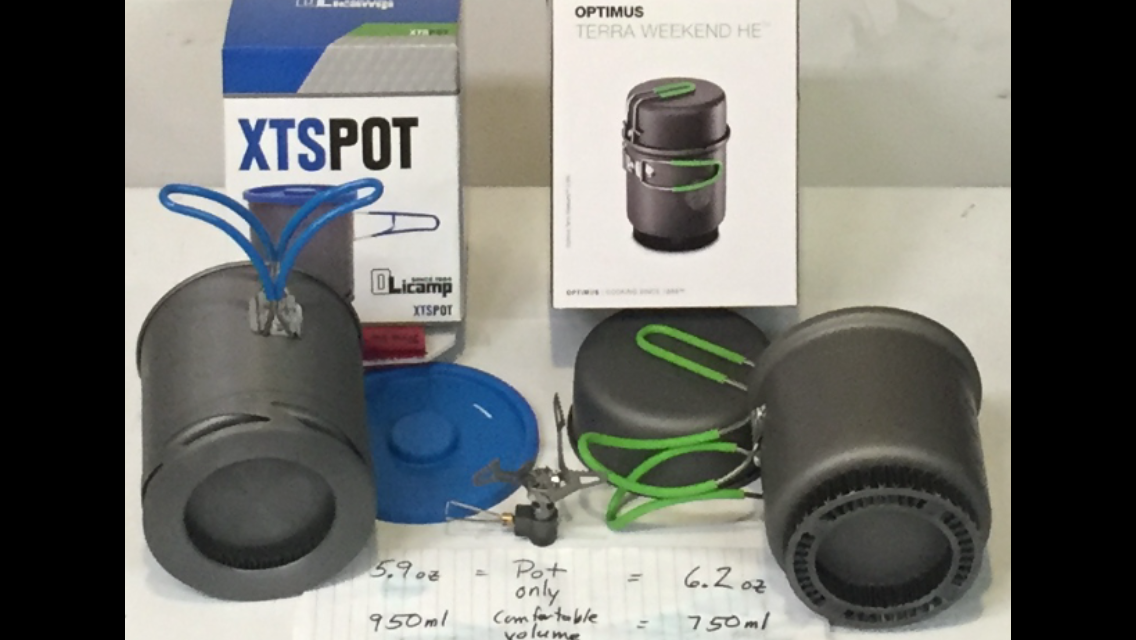
The Olicamp, 1.0-liter pot XTS Pot, which I’d call an honest 950-ml usable volume and 5.9 ounces for the pot only – handles and lid removed.  $28.49, free shipping on Amazon two weeks ago.

And the Optimus Terra Weekend HE which claims “0.95-liter” but I’d put 750 ml in it.  Weight of 6.2 ounce with handles and lid removed (which is its own little non-HE pot).  $31.05, free shipping on Amazon two weeks ago.

To repeat: although I show all the bits and pieces in that photo, the weights are only for the bare pot.  Add a few grams for some aluminum foil as a lid. Oh, and that’s a BRS-3000T in between the pots.

I got them recently and haven’t tried them for HX efficiency (I’ve got a few MYOG pot HX ideas I want to try alongside) but I don’t see an obvious HX benefit from one to the other.  But the Olicamp would get my nod for:

larger capacity, 950 versus 750 ml,

10% cheaper,

decently light plastic lid that I would consider bringing (that goofy extra pot/lid thing on the Optimus, I’d always leave home), and

lighter weight.

Realize that these smaller pots (and HX exchanger pots in general) require a little more dicking around settling the pot down on the burner (compared to a flat-bottomed pot).  With the Optimus, I’d carefully rest the HX ring on top of the BRS-3000T pot supports   With the Olicamp, I’d wiggle the pot supports in between the HX fins (which might give a better heat exchange, with the burner closer to the pot and all the hot gases passing through the HX fins).  Or, if I’d settled into a certain pot/burner combo, I might grind down the pot supports to be an easier fit.

For a bigger HX pot, like the 2- and 3-liter ones I use on group trips, a larger burner head would be nicer and more stable, although I’ve used the BRS-3000T a lot one with those larger pots, and have never dumped the lentils into the pine needles.  For these small HX pots, I’d PREFER a small burner like the BRS-3000T so more of the flame and hot gases pass through the HX fins.

Thomas Willard BPL Member
PostedJan 1, 2016 at 9:43 pm

I was hoping you would be mentioning other pots. Lol. I use the Olicamp with the Soto Windmaster. While it performs remarkably, I’m looking for something lighter weight if it’s out there. I have thought about using the JB Sol Aluminum companion cup with my Soto.

Peter H BPL Member
PostedJan 2, 2016 at 9:48 am

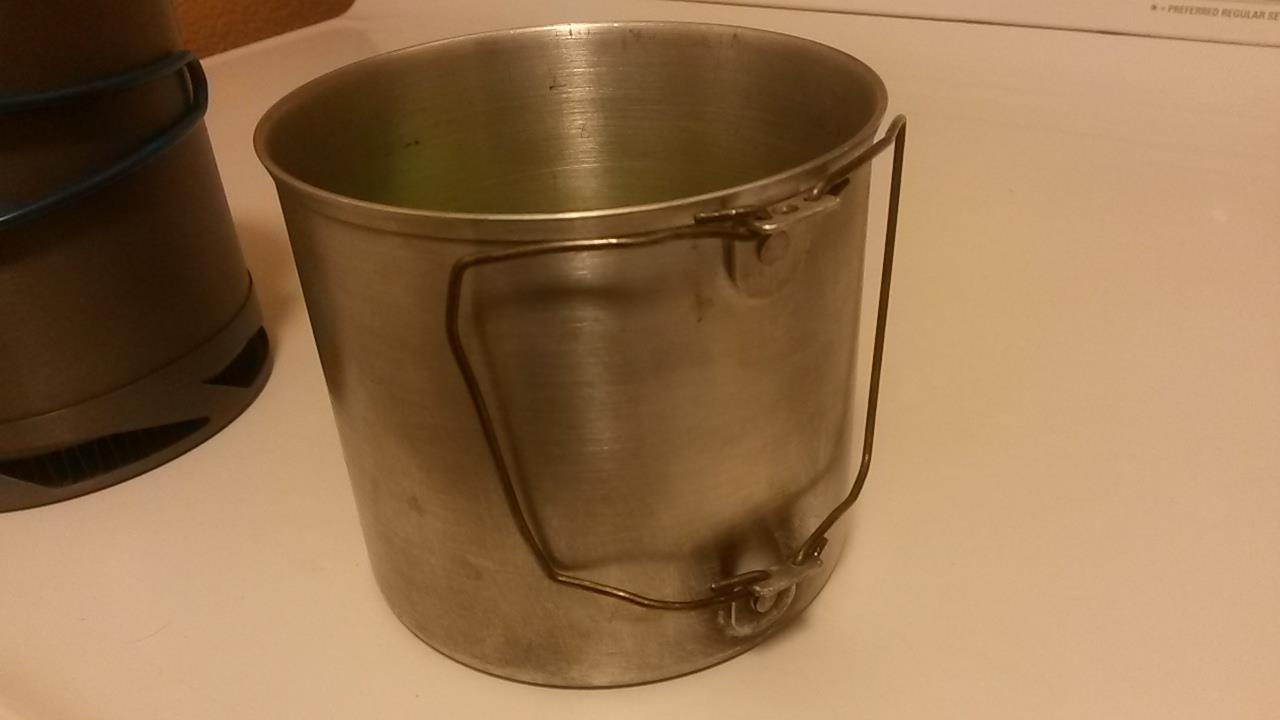
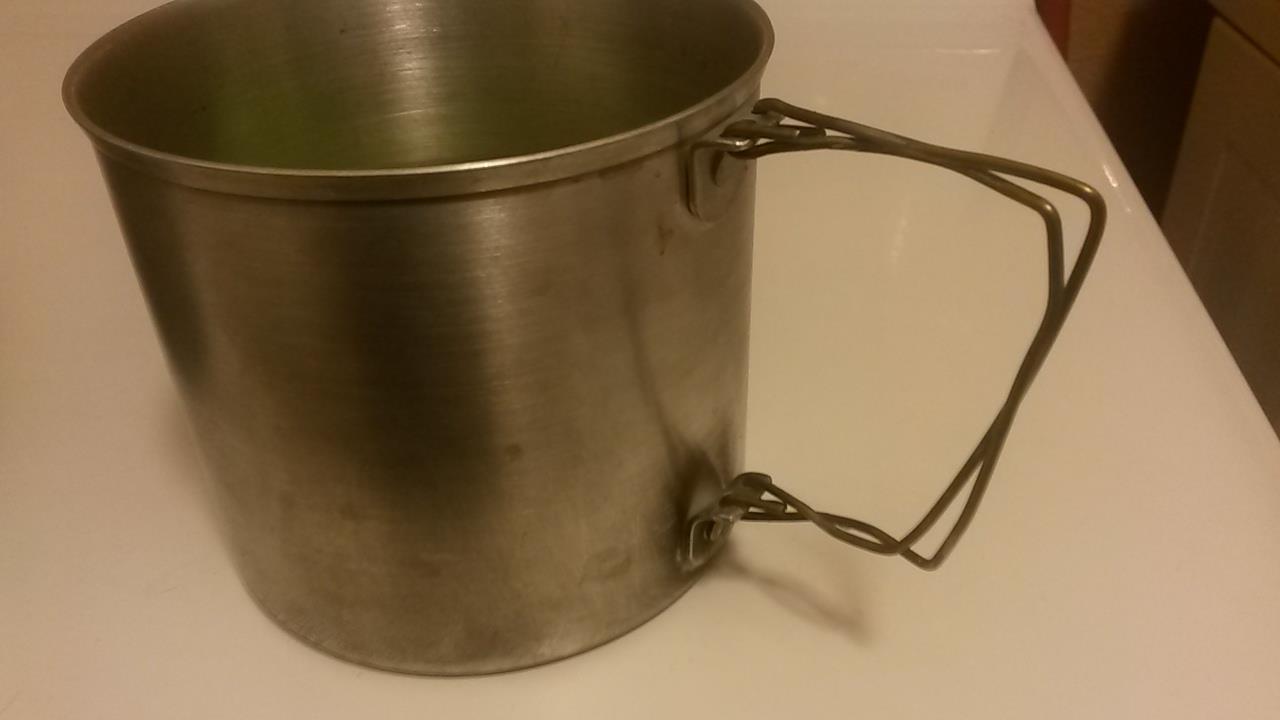
The 1L imusa cup is 3 oz lighter than the XTS, but no hx. The XTS lid fits perfectly on it. I was willing to sacrifice the heat exchanger for a 3 oz weight loss.

With BRS, mini bic, little green BRS bag, imusa mug and lid it comes to 5.9 oz. The XTS pot w/out lid is 6.5oz

Thomas Willard BPL Member
PostedJan 2, 2016 at 9:58 am

I’ve always been hesitant about the IMUSA mugs.  Without sounding like a newb, does the mug leave a metallic taste from the aluminum?  It just looks like the old mugs of my Boy Scout past that left my mouth feeling like I was sucking on a roll of pennies.

Peter H BPL Member
PostedJan 2, 2016 at 11:49 am

I know what you mean about that taste. But, the imusa doesn’t do that. I modified mine using a coat hanger, to store easier in the pack. Also, on the very first boil, I put in 2 cups of water. This created a mark in the aluminium, a stain, if you will, at the two cup mark. Makes measuring easier.

PostedJan 2, 2016 at 1:26 pm

The Optimus gas stoves have a great flame spread on them if you want to cook.

Viewing 25 posts - 1 through 25 (of 30 total)
Loading...