Topic

Carbon monoxide death?

  • This topic is empty.
Viewing 25 posts - 1 through 25 (of 26 total)
Anton Solovyev BPL Member
PostedJul 28, 2015 at 8:58 pm

A very sad story:

===
http://denver.cbslocal.com/2015/07/28/cause-of-death-determined-in-maroon-bells-campers/

PITKIN COUNTY, Colo. (CBS4) – The Pitkin County Coroner’s office identified two suspected lightning strike victims as 41-year-old Jeffery Beard and 14-year-old Cameron Beard.
The two were from Colorado Springs and died on July 16 near Aspen.
The coroner’s office investigated the deaths and determined the cause of death for both to be carbon monoxide poisoning. Officials said it happened by the use of a camp stove within the enclosed space of a tent.
Though a lightning strike to the campers’ tent was originally thought to be the cause, the sheriff’s office said there was evidence to suggest carbon monoxide poisoning as a possible cause of death, as well as lightning.
Autopsies revealed physical evidence of carbon monoxide, and both bodies had burns.
===

Any thoughts on what stove may have been the cause? I thought most canister stoves had pretty low emissions. I routinely use a Jetboil inside a Duomid (which is ventilated, of course, but not always: I have had the tent sealed 100% by snow).

PostedJul 28, 2015 at 9:24 pm

I suspect it was a camping heater rather than a small camping stove.
not that I know, just guessing.

Ken Thompson BPL Member
PostedJul 29, 2015 at 6:28 am

Sad indeed. Curious as to how it all played out. Guessing not a freezer bag meal, but actual cooking. How long would a stove need to be on anyway?

Hikin’ Jim BPL Member
PostedJul 29, 2015 at 8:38 am

There are small tent heaters. I have one. Not really backpacking appropriate, more for car camping, but then I’ve seen guys carrying propane grills into the back country.

Whether it was a stove or a true heater, they probably were using it for heat. If the tent wasn’t ventilated well, it wouldn’t take a lot of CO to get them really drowsy, then falling asleep, then… well, you don’t come back from that. Tents don’t have a lot of volume.

HJ
Adventures In Stoving
Hikin’ Jim’s Blog

PostedJul 29, 2015 at 8:58 am

I have a hard time believing the stove, heater, etc. is the primary cause of their death. I just can't fathom how a device that small could suck oxygen fast enough from the interior before its replaced by the outside air.

Tent fabric is very porous (H2O is very large compared oxygen hence why they can block water, but still "breathe") not to mention most all tents have a lot of mesh.

I more inclined to believe it was either a combination of the stove/heater + plus lightning or the lightning alone. Lightning can certainly burn all the oxygen out of the tent in a split second which in conjunction with their burns suffocation may have just been icing on the cake.

Anton Solovyev BPL Member
PostedJul 29, 2015 at 10:47 am

Actually, it just occurred to me that burns being present is an argument _against_ the stove induced death. Lightning on the other hand may cause burns.

So, perhaps a combination, lightning as a primary cause and carbon monoxide as a secondary?

I seem to remember reading a few years ago that a coroner is not necessarily a trained professional. I think it was on NPR a few years ago. The cause of death is never as certain as they make it out to be on CSI.

***

I am slightly confused on the subject, but it seems even CO2 (carbon dioxide) is problematic in enclosed spaces. I thought high CO2 would just trigger the inhale reflex and essentially a person would feel suffocating, but my diver friend says CO2 actually can kill slowly w/o person noticing. Not sure how that works.

PostedJul 29, 2015 at 11:55 am

It is possible that a lightning strike could have rendered both unconscious and in that state they were exposed to a relatively low level of CO over a long period of time.

That might explain the presence of lightning damage and "burns". Lightning typically leaves spidery, branching burns.

John S. BPL Member
PostedJul 29, 2015 at 3:23 pm

Good thought Eric. If their blood levels of carbon monoxide are high, that can only happen when they are breathing and will be the immediate cause of death. Lightning strike will be an intermediary cause of death (contributor).

Jonathan Chin BPL Member
PostedJul 29, 2015 at 11:25 pm

From the information in the article below, it seems pretty safe to conclude that this was a simple, tragic case of CO poisoning with no lightning strike. Toxicology reports were positive, both father and son had pink faces & skin blotches, only the father was burned, and the burns were isolated to an area of his body nearest a tipped over stove.

http://www.aspentimes.com/news/17293848-113/sheriff-lightning-may-not-be-to-blame-for

Also, there's data in the article below showing CO levels emitted from many common stoves. Some stoves (especially the MSR Reactor) can emit alarmingly high amounts of CO, especially at low power. This is deceptively dangerous as someone who wanted use a stove in a tent would likely assume that keeping the stove on low would be the safest option. Add in the fact that the tent would likely have likely been sealed down pretty tight in a thunderstorm and you have a recipe for trouble.

http://www.backpackinglight.com/cgi-bin/backpackinglight/stoves_tents_carbon_monoxide_pt_3.html#.Vbm_JHjtxFI

PostedJul 30, 2015 at 2:31 am

From that article :
"On Thursday, another person hiking in the area who checked the bodies before personnel from Mountain Rescue Aspen reached the campsite reported seeing a stove in the tent that was tipped over. The burn on Jeffrey Beard was on a part of his body closest to the stove, the person, who asked to remain anonymous, reported."
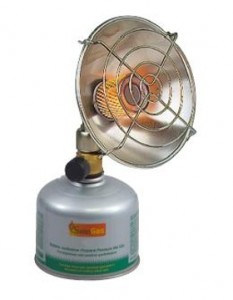
Still does not sound to me like an open flame stove but a gas heater.
This kind of thing :
gas heater

Roger Caffin BPL Member
PostedJul 30, 2015 at 3:04 am

Hi Lane

> Tent fabric is very porous (H2O is very large compared oxygen hence why they can
> block water, but still "breathe")
Sorry, but this is completely false. Neither silnylon nor PU-coated fabric are porous like that to air.

> not to mention most all tents have a lot of mesh.
We are led to believe the tent was closed up, so any mesh would be irrelevant.

> Lightning can certainly burn all the oxygen out of the tent in a split second
Where did you get this idea from? Lightning is an electrical arc. It generally does not burn any significant amount of oxygen out of the air at all. If it hits something and sets it alight the fire might use up oxygen to be sure, but this does not seem to have happened here.

Yes, we are aware of people sealing their tents up in bad weather and leaving a stove of some sort running to keep them warm. It has happened numerous times. Sadly, this simply reflects ignorance on their part, and they often die as a result. I am afraid your ideas do not match known science.

Cheers

PostedJul 31, 2015 at 12:15 am

Is it possible to calculate how large should be the vent opening (say in the ceiling) for the safe operation of a stove, given the capacity of the stove and the tent's size? I'm thinking of wood burning stoves here as well.

Roger Caffin BPL Member
PostedJul 31, 2015 at 4:37 am

> Is it possible to calculate how large
Basically, no. Infinite number of variables.

I leave a door opening of about 200 x 50 mm at the top, and there is always a ~~40 mm gap at the bottom edge of the vestibule end of the tent. Never any problems with that.

Cheers

PostedJul 31, 2015 at 11:05 am

From what I read CO is far more dangerous than CO2. It doesn't have need displace most of the oxygen. Only a small percentage of CO in the air will cause unconsciousness and eventually death.

It was at one time somewhat common to have water-skiers drown after inhaling the fumes from a poorly tuned outboard motor in open air.

A kerosene/white gas stove has the potential of giving off a good amount of CO.

On a side note, some homeless people were squatting in my neighbours garage while they were away.

They all died from CO poisoning even with a certain amount of ventilation, but they may have been burning gasoline in a can for heat

PostedNov 7, 2015 at 12:20 am

There are many reasons to suggest that lightning was involved. Two other children were sleeping in the exact same tent. When they were taken to the hospital the next day, they were tested for carbon monoxide poisoning and 0% carbon monoxide was found in their bodies. If their deaths were strictly related to carbon monoxide the other 2 children should have died also. The man was a very experienced backpacker. The stove in the tent was a small jet boil and it was charred black. Something powerful probably hit the man and the stove as they were both severely burnt. They were in a porous tent. There were burn holes found in the top and bottom of the tent along with other evidence that would suggest it was more than carbon monoxide that killed the man and child.

Dean F. BPL Member
PostedNov 7, 2015 at 7:39 am

Nice necro, Cammy! You’re suffering from a misconception, Lane. The issue is NOT exhaustion of the oxygen in the tent. The issue is poisoning by carbon monoxide (CO), which is a waste product of just about any form of combustion. CO competitively binds to hemoglobin, and in fact binds with far greater efficiency than oxygen. For practical purposes any hemoglobin binding site that binds a CO molecule is permanently disabled, meaning that it cannot bind and release an oxygen molecule. You can then “suffocate” by not being able to transport oxygen to your tissues. Some stoves make more CO than others. Often the difference between models can be dramatic. The MSR Reactor used to be notorious for high CO production, though they have changed the design considerably since that testing and this may no longer be true. We ultralight fanatics tend to scoff at the issue because we tend to use very breezy tarps instead of hermetically sealed tents, but this is a very real danger in such a case.

John S. BPL Member
PostedNov 7, 2015 at 9:06 am

http://www.aspentimes.com/news/17602020-113/maroon-bells-campers-carbon-monoxide-levels-way-above http://www.aspentimes.com/news/17889134-113/aspen-times-weekly-a-family-forever-changed Was it lightning or carbon monoxide? Camille Beard is convinced her husband and son didn’t die of carbon monoxide poisoning. “I know it was lightning,” she said recently during an interview at her home in Colorado Springs. “Nothing else makes sense.” Her husband, Jeffrey Beard, was found lying on his left side inside the tent with the camp stove he’d used earlier to heat water for warmth located near his chest area, she said. The right side of his face was burned, along with a burn on his right shoulder and a “Z” mark burned through his shirt and into his right arm. She also said he had three marks on the left side of his body nearest the stove she thinks were lightning entrance or exit wounds. “Lightning charred the stove,” Camille said. “It’s the only thing that makes sense.” Autopsy reports that noted 61 percent carbon monoxide blood saturation in her 13-year-old son, Cameron, and 60 percent saturation in her husband are inaccurate, she said. “Sixty percent carbon monoxide is absolutely wrong,” Camille said. “(The ‘Z’ scar on her husband’s shoulder) is a lightning scar. His shirt was melted.” Camille also said Cameron had a burn on the side of his face. The mortician who prepared the bodies for burial told Camille and other family members that the burn injuries “had to be lightning caused,” she said. Finally, Camille said both Brandon and Elise Beard — who survived and were sleeping in the same tent as their father and brother — were tested for carbon monoxide after they were brought to Aspen Valley Hospital and the readings were negative. Elise Beard said in an interview that her father lay on one side of the tent, while she lay next to him with her brother, Cameron, next to her and finally her brother, Brandon, next to Cameron. She told a reporter she saw no indication of a lightning strike on the tent before she left on the morning of July 15. Elise also said she left the tent in the middle of the night to go to the bathroom, and “the world was tilting.” Elise told a Pitkin County sheriff’s investigator she thought she smelled gas from the camp stove during the night and that she felt nauseous, according to a sheriff’s department report. She said Brandon was “hallucinating there were snakes wiggling in the tent,” according to the report. Those experiences could all be indications of carbon monoxide poisoning, said Dr. Robert Kurtzman, the forensic pathologist who performed the autopsies on Cameron and Jeffrey. Camille said in the interview with The Aspen Times that she didn’t want her children to have to talk about what happened during the night. She declined to comment on Brandon’s alleged hallucinations. Kurtzman said the mortician who told Camille the burns were lightning caused overstepped his bounds. He said it’s not uncommon for experienced funeral directors to believe they are qualified to analyze bodies. “This man did a great disservice to this family and created doubt in this woman’s mind,” Kurtzman said. “And there’s no way to undo that.” Kurtzman said he has no doubt that Cameron and Jeffrey died of carbon monoxide poisoning. His autopsy report on Jeffrey notes a “postmortem thermal injury on the right side of the face, neck and shoulder and on the right forearm. There is no other injury. The facial hair is singed greatest on the cheek and in gradual gradient diminishing towards the remainder of the face and scalp. “There are no entrance or exit injuries typical of electric/lightning injury,” the report states. Kurtzman said carbon monoxide is not produced by lightning. In order to be poisoned by carbon monoxide, a person must be alive and breathing, he said. Also, both Cameron and Jeffrey’s bodies were pink in color, another indication of carbon monoxide poisoning, according to autopsy reports. Lightning burns have different characteristics than heat source burns, he said. The “Z” in Jeffrey’s arm was caused by the stove, Kurtzman said. “The type of injury he had was a heat source thermal injury,” he said. Cameron’s autopsy report notes no evidence of any injury, and Kurtzman said he saw no burns on his body. However, a sheriff’s investigator who inspected the bodies at Aspen Valley Hospital after they were brought down by a helicopter wrote that Cameron “appeared to have a small burn mark on one cheek, but no other obvious damage to his body,” according to the investigator’s report. Kurtzman also said he would expect Brandon and Elise not to show elevated signs of carbon monoxide at the hospital because it had likely dissipated from their bodies by the time they were tested. As for why Brandon and Elise survived, while their father and brother had highly lethal levels of carbon monoxide, Kurtzman pointed to conditions inside the tent. He said they could have been inside their sleeping bags or facing in a direction where there were lesser levels of the gas. He also said that younger, healthier people have a better chance at surviving such a situation than older people or those with heart or cardiovascular problems. “I don’t take (Camille’s doubts) personally,” Kurtzman said. “I feel horrible for this woman. She just lost her husband and son. “Lightning is an act of God. Carbon monoxide is not.” Camille acknowledged that the carbon monoxide diagnosis greatly upsets her. “I feel that tarnishes Jeff’s image,” she said. “He always puts his kids first.” Two deputies who inspected both tents the Beards used found only “one small hole in the rain fly of one tent. The hole was the size of a cigarette burn,” according to a sheriff’s report. After realizing that no one retrieved the stove from the campsite, another deputy and a member of Mountain Rescue Aspen hiked 5.3 miles back into the Maroon Bells Wilderness two days after the deaths to get it, another sheriff’s report states. They found Jetboil stove and two fuel containers “neatly organized in the area in which the Beard family was camping,” the report notes. Neither fuel container was damaged, though the “burner and cup both showed significant burn marks on the outside.” – Jason Auslander

John S. BPL Member
PostedNov 7, 2015 at 9:34 am

Cammy, I am sorry about your husbands death. But, lay persons (funeral director, etc) should not involve themselves in situations (attempting to make cause of death determinations) best left to medical professionals.

PostedNov 7, 2015 at 10:35 am

Very sad story. I know when I get cold… I mean REALLY cold… nothing works as good… neither my hands nor my brain… I just don't think clearly when I am REALLY cold. Billy

Dean F. BPL Member
PostedNov 7, 2015 at 10:56 pm

Were the other two kids in the same tent? The other articles I read said that they were in a neighboring tent. And, Jesus- yes, my condolences, Cammy. I didn't connect you to this incident, somehow. And if there is anything I can do (though that seems unlikely from Afghanistan) let me know.

David Thomas BPL Member
PostedNov 8, 2015 at 11:24 pm

This pushes a lot of buttons for me. 1) as a parent who has lost a child. 2) as a dear friend of several people who have lost their spouses. And, 3) as a chemical engineer reasonably knowledgable about combustion processes and about lightening propagation and CO generation. 1) Cammy: what a horrible, tragic outcome for you and your surviving children! I truly hope you all heal from this devastating event and draw on your nuclear family, extended family, and broader community to get through this. For my wife and I, when we lost our younger son, it was incredibly difficult and more then ever before, we reached out to family, friends community, and professionals for whatever they could offer. I can't say it gets better quickly, but for us, it got better over time. Not so much for ourselves, 13 years later, but more so for other people, we attend monthly meetings of Compassionate Friends (google it) and it is as striking to us how raw and painful the new members who have lost a child a year or a month ago are experiencing things as it is to them how we and some other surviving parents can be calm and more peaceful (but still, at times, tearful) years later. Look to your friends, minster and possibly your funeral director to give you comforting thoughts. And lay down your own limits and needs: "Do not talk to me anymore about Xxxxx. It brings me more peace to view what happened as Yyyyyyyy." is something you can say to your friends and family and that they should respect. If not, don't talk to them much for the next few years. And don't look to authorities or officials to give you a narrative that helps you through this. Cammy, you could stop reading now. 2) losing a child is simply, completely, tragic. Losing a spouse – for my closest friends who have – has been more mixed. "What if they hadn't gone on that bike ride?" "what if they'd been completely complaint with their meds?" The pure tragedy of losing a child is confounded with the mixed feelings of an adult who could have chosen a different course. And it is harder to let those feelings out, to give voice to them; but ultimately, I think, more important to express the complicated mix of feelings of loss and anger. "If only I'd. . . . " "If only they'd . . . . ". It was a much smaller set of close, dear, wise friends with whom I could have those conversations. Cammy, definitely stop reading now. 3) I've watched myself and some dear friends go through some tragic events. Being totally "data-driven" is NOT a blessing. I think if one was completely "sane" with no illusions, we'd all be insane because we'd grasp the huge and unavoidable tragedies of being human. I (unfortunately) have a very good memory and that HASN'T been helpful in dealing with tragedy. My friends who mentally rewrite history rebound from painful events more easily. So it doesn't surprise me at all that the wife imagines her husband – who pushes over a mountain pass in a storm and gets all his children hypothermic – as some infallible outdoorsman, and not as having been understandably motivated to rewarm his children with the stove in the tent at 11,000-12,000 feet (far lower partial pressure of O2 and therefore far higher CO generation). In a smaller, friendlier state, the state coroner gave us an easier-to-hear story that we knew (an MD mom and an engineer dad ) didn't totally add up. And we passed that on to our older son and the baby sitter, because, Why burden them with a more painful (albeit far more likely) scenario? The coroner knew that was no abuse or negligent or charges to be filed and went with the easier-to-hear possibility. As it sounds like the Colorado funeral director did.

Ian BPL Member
PostedNov 9, 2015 at 5:14 am

Cammy and David, I have no words, other than sorry.

Viewing 25 posts - 1 through 25 (of 26 total)
Loading...