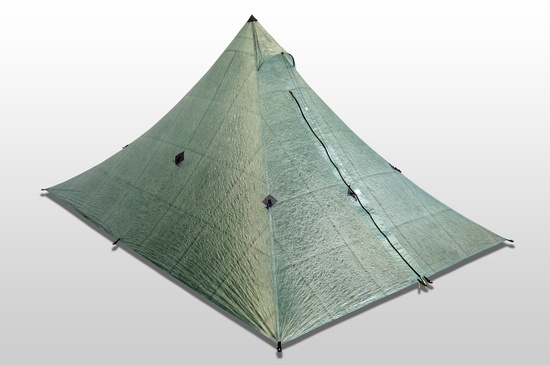
Topic

‘Mids in Wind, Storms

Viewing 25 posts - 1 through 25 (of 49 total)
[ Drew ] BPL Member
PostedMay 28, 2015 at 10:19 am

From what I've read and seen here at BPL, 'mid shelters seem to be great in high winds and are generally good for 4 season use. I'd like to see some discussion on the details of this:

-How well 'mids do in winds of different speeds (5-50MPH?)

-Snow and heavy rain considerations an best practices

-Guy lines and staking

Of course, there are several types of mids and materials they're made of, each of which will do better or worse than others in inclement weather, but information about specific mids or general information is welcome. I'd like to get an idea of what to expect as I am new to the mid club.

I've seen [few] videos/pictures of some mids from MLD and HMG standing up to some pretty heavy winds on ridges, but it'd be nice to seem more from fellow BPLers.

David Chenault BPL Member
PostedMay 28, 2015 at 10:57 am

The best mids, with properly cat cut and evenly cut and sewn seams, will when pitched tight be almost immobile in winds up into the twenties, and have substantial but controlled deflection at 50 mph. Noise will be present but not incessant.

Heavy rain is in my experience a non-issue. Silnylon mids will have a bit of sagging after a few hours of heavy rain, but raising the center pole an inch usually sorts that out nicely.

Heavy, wet snow is probably the most difficult condition to deal with. Snow will build up along the perimeter and eventually impinge on the living area quite a bit. A taller mid, a larger mid, and lots of tension helps here, but at some point if it snows enough you'll have to get out and shovel.

Good staking is crucial. I tried to pitch a Trailstar with deadmen buried in gravel on a beach in 60+ mph gusts once, and had a fun time diving for the shelter as one anchor pulling zippered the others in about 1 second. No such thing as overkill when the weather is real. Realistically staking conditions are the biggest reason you might want to not use a mid under some circumstances.

Since using the Seek Outside BT2 I've become convinced that mid-point guylines are primarily a bandaid for poor design. With plenty of perimeter anchors and steep enough sides you don't need them.

Ross L BPL Member
PostedMay 28, 2015 at 11:35 am

I have owned and used both rectangular and conical mids in high winds, and much prefer the conical design. They just don't catch as much wind and thus suffer from less deflection of the walls. I also prefer cuben fibre in windy environs as it flaps less than silnylon.

PostedMay 28, 2015 at 1:07 pm

As Dave said "Good staking is crucial".

For years there have been arguments for and against mids.

There was even a photo of a mid that had collapsed in heavy wind. I don't remember the source.This picture was hung up at a few outfitters. I suspect so they could sell you on their dome tents.

Mids tend to direct a high percentage of the force of the wind to the centre pole and the stakeouts.

If the centre pole is week, it can collapse. It the corners aren't solidly attached they can pull out.

Trekking poles are plenty strong for the centre pole and if all coroners are solid, it will hold up in a tropical storm. I know I have had to sit out a couple.

Most common 3 season tents won't do well in these kind of winds, unless they have many tie-outs in use and/or very heavy poles.

PostedMay 28, 2015 at 1:16 pm

>There was even a photo of a mid that had collapsed in heavy wind. I don't remember the >source.This picture was hung up at a few outfitters. I suspect so they could sell you on their >dome tents.

Give me a little bit of time online and I bet I could find a picture of nearly any tent on the market collapsed! lol No matter how bomproof the tent is, if it is not pitched properly you will have trouble!

As far as mids go my first exposure to them was through climbing – lightweight stout shelters similar to the BD Megalight have been around in climbing for decades and when pitched properly perform very well in snow and wind.

PostedMay 28, 2015 at 1:47 pm

The Seek Outside BT2 looks impressive.

Dave, how do you manage condensation when there are bugs and no top vent?

Also, how do you attach two trekking poles for sufficient height?

Alex Wallace BPL Member
PostedMay 28, 2015 at 1:54 pm

For the past two years I've been using a GoLite Shangri-La 3, hexagon 'mid, on trips that I'm joined by a friend. I primarily hike in the northern to central Sierra, elevations ranging from 6,500 ft. to 12,000 ft. Spring through fall, with most of my trips in mid to late summer. While the weather is usually perfect, when the skies do open up it can be down right scary. Also, strong winds are not uncommon in the afternoon, but generally subside at night.

So far the SL3 has been solid in light to moderate winds, but as explained above, it absolutely depends on good staking. I don't know the speeds, but I've been able to directly compare it to other nearby shelters and it appeared less affected. For example, while on a trip in northern Yosemite with another couple who used a newer REI Quarter Dome T2, while dealing with strong winds their tent would deflect, shake, and billow during gusts yet the SL3 remained steady with just slight deflection on the windward panels.

I can usually find soil (decomposed granite?) to place a stake, but it's not uncommon to add a pile of basketball sized rocks at each corner on top of the stake, or with a length of guy line lassoed around them, for added confidence. I don't think I've ever placed more than the minimum 6 stakes for the SL3 and that has always sufficed. Maybe in really strong winds I'd think different.

My biggest concern with the SL3, and all floor less shelters really, is dealing with pooling water during hard rain storms. Of course every good BPL'er knows that site selection is key here, but even then I've had situations that I just felt a nice bathtub floor would be nice to have.

Stephen M BPL Member
PostedMay 28, 2015 at 2:13 pm

Mids are great, loads of space and very wind restiant. One thing to know though is if one peg comes out in strong winds the whole tent can come down.

Ralph Burgess BPL Member
PostedMay 28, 2015 at 2:25 pm

I think Dave C summed it up well.

Tension is critical in high winds, so Cuben Fiber > Silnylon, because it has huge tensile strength and doesn't stretch. With Dyneema guylines, in rough weather I set mine up so taut that I can twang the guylines like a guitar string, and they stay that way.

Securing the guylines crucial, whatever kind of shelter. People often try to tie off directly to rocks, which never works well. Others put in stakes then try to put a rock on top of the end of the stake in some half-assed way. But by far the best way, in my experience, is this kind of deadman: tie a fixed loop in the end of the guyline; put a substantial stick through the loop; lay the stick flat on the ground, with the loop in the middle; put two rocks on either end of the stick. It's easy to adjust tension by just moving the stick back and forth, and you can make it as secure as you need by just using bigger rocks, or piling on additional rocks. This works on any surface except snow.

Jerry Adams BPL Member
PostedMay 28, 2015 at 2:50 pm

I think a tunnel tent like Roger's is best in mountaineering conditions

In a mid, the sides blow in which takes most of the internal volume. But when I'm sleeping I guess it doesn't matter. The side may almost touch my face. The distance from the peak to the side is maybe 6 feet, so deflection is unavoidable.

I do 30 MPH winds on occasion which is okay.

I've experimented with guylines that come out mid way between peak and bottom which helps.

Without a floor, stuff blows under the edge of the tent. Like sand, dirt, leaves, water. If I pile up some branches against the edges, on the outside, it helps. Also, arrange my stuff inside, like put everything in bags rather than loose. Maybe have several bags along the edge to catch any stuff that blows in.

Maybe a floored mid would be better for mountaineering. Then the weight of the occupants would help keep the tent in place.

Yeah, basketball sized rocks on top of the stakes keeps them in place pretty good.

Alex Wallace BPL Member
PostedMay 28, 2015 at 3:07 pm

"People often try to tie off directly to rocks, which never works well. Others put in stakes then try to put a rock on top of the end of the stake in some half-assed way."

Works for me.

Roger Caffin BPL Member
PostedMay 28, 2015 at 3:16 pm

> People often try to tie off directly to rocks, which never works well. Others put in
> stakes then try to put a rock on top of the end of the stake in some half-assed way.

It all depends on the size of the rocks…
And how many.

Cheers

Nico . BPL Member
PostedMay 28, 2015 at 3:25 pm

I own both a Trailstar and a Duomid at the moment, so my experiences are based on these shelters.

Properly staked, these shelters can handle heavy gusts quite well and stay standing. Once or twice a year we spend a few nights on a windswept beach on an offshore island. Winds out there are reliably consistent and often blast up to 40 knots or more all night. A mid has been our shelter of choice for these conditions.

I've also experienced what happens in strong winds when a mid is not properly staked. As Dave C (I think) shared, once one stake goes, the whole shelter can quickly get picked up and flung away.

One other comment tangentially related to mids concerning guylines. I know most of us are weight conscious and see swapping out guylines to thinner gauge lines as low hanging fruit on the path toward weight savings, but many of these mids (MLD, HMG, etc.) use line loc 3s for tensioning. 2mm cord may work with these line locs in light winds or under low tension, but in strong winds or under extreme tension, 3mm lines hold much better. In strong winds I've experienced 2mm lines slipping under tension; if they slipped enough to give the wind a toehold, the chances of shelter collapse/failure increase. I had to tie off knots in the lines so they couldn't slip any farther through the line locs.

Ross L BPL Member
PostedMay 28, 2015 at 4:10 pm

Ralph Burgess

I hardly consider putting a rock on a stake (some half assed way as you put it) to be any lesser than your method. I have been doing it for decades with great success. Maybe a deadman works for a forest dweller, but above treeline I have never found an abundance of lumber. Never s shortage of big rocks though. Cheers

John Eyles BPL Member
PostedMay 28, 2015 at 4:27 pm

I've read several times about the method of a deadman built with a stick with a rock at each end. I too don't understand why this would work any better than just tying the guyline to a big rock (if its mass is equal to the sum of those in the stick method). But I have very little experience doing this sort of thing, so I'm not saying it's wrong, I'd just like an explanation as to why.

My main experience is using the guyline tied to rock method in GC on a Lightheart Duo. It loosened just enough for the flapping sound to be deafening. With my new MLD SpeedMid I used the stake-with-a-rock-on-top method and it seemed to work better, but it's apples versus oranges (on the shelter type).

Funny thing, the one time we were in the SpeedMid, my girlfriend said "this is great, until the pole falls down". I explained the impossibility of that, as long as the 4 corners held secure. But then realized it IS probably the worst-case shelter for a single-point failure bringing the whole thing down. I kept that to myself.

M B BPL Member
PostedMay 28, 2015 at 4:55 pm

The movement of a guyline against a rock in high winds will cut it two. I have had it happen.

I usually put my guyline around a stick, and pile rocks o the stick so that the moving/vibrating guyline does not touch the edge of the rock.

Bob Moulder BPL Member
PostedMay 28, 2015 at 4:59 pm

I too don't understand why this would work any better than just tying the guyline to a big rock (if its mass is equal to the sum of those in the stick method).

I've observed the reason for this.

When looped around the rock and when under great tension from high wind, the guyline tends to LIFT and DRAG the rock at the same time, greatly reducing the friction between the rock and the surface upon which it lies.

[ Drew ] BPL Member
PostedMay 28, 2015 at 5:00 pm

"Since using the Seek Outside BT2 I've become convinced that mid-point guylines are primarily a bandaid for poor design. With plenty of perimeter anchors and steep enough sides you don't need them."

In heavy winds, where they are pushing in on the walls and causing a loss of volume, do mid panel guylines work well to prevent it? Also, with heavy snow, do the mid point guylines help in the same way? I'm trying to figure out if it's worth it to use them.

Is it best to try to pitch the mid as close to the ground as possible when the weather is bad?

PostedMay 28, 2015 at 5:34 pm

Try piitching low-ish, but allow ventilation. Expect condensation during prolonged rain with two people.

Mid panel tieouts will help with wind, but snow will stick to your cuben mid regardless. Pulling out the panel may mitigate this somewhat.

I've also had a rock abrade my guyline to failure, and now tie a slip loop and insert stick/stake and then weight down with rocks.

Ross L BPL Member
PostedMay 28, 2015 at 5:38 pm

I have to disagree with Dave C. My experience has been that mid point guylines reduce the amount of unsupported fabric and thus the wall deflection inwards on the user. I have been in some wicked windstorms in recent years, and I value as many tieouts as possible to spread out the forces of wind loading.

David Chenault BPL Member
PostedMay 29, 2015 at 7:39 am

"In heavy winds, where they are pushing in on the walls and causing a loss of volume, do mid panel guylines work well to prevent it? Also, with heavy snow, do the mid point guylines help in the same way? I'm trying to figure out if it's worth it to use them."

In heavy winds I don't actually think midpoint guylines do much to mitigate deflection, which is a bit counterintuitive. The most wind-resistant mids I've used (BT2, Trailstar, Solomid) get the job done by offering the wind little to grab on to. Guylines are a band aid for an already intransigent problem. They probably do offer the potential to spread the load out amongst more stakes.

Side guylines can assist with snow shedding, mainly by allowing you to steepen the angle of the side panels. To this end you want the guy points to be rather lower than half height.

J-L BPL Member
PostedMay 29, 2015 at 10:29 am

I'll say this: I've never been in a tent during a bad storm and thought to myself, "I have too many guylines and stakes deployed". I think that extra guylines and stakes tend to be weight well spent.

As for mids in storms, they are only as good as your stake job. If your staking is solid, I think almost all mids will be fine. Some designs will place more stress on stakes than others.

[ Drew ] BPL Member
PostedMay 29, 2015 at 12:35 pm

"s for mids in storms, they are only as good as your stake job. If your staking is solid, I think almost all mids will be fine. Some designs will place more stress on stakes than others."

What would you say is the best design in regards to lower stress on stakes? For example, my mid has tieouts at each corner and 4 additional tieouts in between each corner, for a total of 8. Halfway up the mid there are reenforced dyneema guyline points – again, one in each corner and one between each corner. How would this compare with something like the BT2, Duomid, Ultamid…

Pic for reference:soijef

Dave @ Oware BPL Member
PostedMay 29, 2015 at 1:21 pm

I find additional tie out points about 1/3 up from the ground give best headroom in high winds and heavy snow.

As for strength nylon vs cuben fiber in high wind, neither should tear out unless designed or sewn improperly so force acts on just a few stitches or glue area, but the stretch of the nylon should help keep anchors in place.

Rocks, all the way for anchors. Big as you can carry. In high wind, tie them on all ground level tie outs before putting up the pole.
Make sure the tarp is making a nice symmetrical shape on the ground (square or rectangle depending on the design) a diamond shape will leave you with a corner high in the air like a chair with one short leg.

Put the rocks back when you are done.

Viewing 25 posts - 1 through 25 (of 49 total)
Loading...