Well, added weight for sake of efficiency is a given. It doesn't stop with just organizing gear.
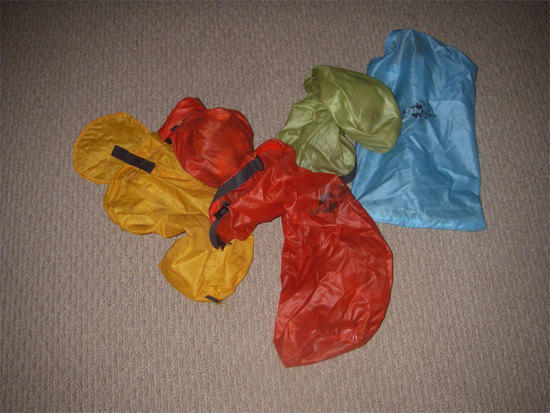
I use a Sea to Summit (STS) Dry/Compression bag for my bag, long johns, camp jacket, and socks. After emptying my pack, it gets rolled and inserted into the bag (after turning it inside out) for use as a pillow.
My food bag is a dry bag with PU coating. I went through 3-4 sil ones (much lighter) but they did not hold up. Cuben was the same. The abrasion was a bit too much for sil and cuben. So, the 3oz, medium bag is used. When canoeing, I have been known to flip in some cases, usually getting in or out. Some storms I have been hiking in (all day rain storms) have saturated everything except the contents of the drybags (both for my bag and food.) When I get to camp, I pull the supper packet, a couple drink mixes, empty the ditty bag, and hang the bear bag as my water heats. (Here in NY we don't worry about grizzy bears, mostly for black bears & other critters.) I may set up a cloths line under my tarp. and change into sleeping cloths, hanging hiking cloths to dry.
Avoiding water in my "dry" stuff is first. Overall efficiency is increased because I work with what I have to make myself comfortable.
I bring my SVEA. Yup it is heavy. But it gets about .23oz fuel/qt boiled (liter.) Efficient enough not to carry a canister. A 20floz fuel bottle weighs about 16-17oz and will last about two weeks. (Boiling water twice per day, 30oz per boil plus about 15 minutes cooking.) On Thursdays, I make breads/muffins. These last a day or so as snacks. (I should say these are fried dough type breads with about a 1/2oz of olive oil per ball. I make three each time – supper, snack for the next day.) I have plenty of fuel and don't scrimp on it. Sometimes, when it is cold (<35F) I will use this under my tarp to warm up in the morning. The stove packs in three pieces with little fiddling around: cup, stove, fuel. Rugged as hell, my brother dropped a load of firewood on it and it still works.
After I clean up from supper everything gets more or less put away. Some things are left out. Stove, pot, cup, fuel, water, but everything in my pack was used, except maybe my sweater/jacket. I often do not even bring a rain jacket unless the first week is going to show rain for five days. I get wet.
My tarp goes into my pot and onto the top of my pack. Last in/First out. If it is wet, the pot also keeps the water from saturating into my food. My camera is a little Olympus. It is several years old and weighs a lot, about 6.5oz. Sometimes I take pictures as I go.
Overall, I carry about 23-25lbs for two weeks out, depending on the weather. My base weight is around 6-11 pounds depending on saw, stove, camera, rain gear, and sleeping bag, sweater. For two nights, I will be at 15 pounds. So, overall efficiency is pretty good, considering time, weight, what I am doing, comfort, etc for two weeks out, but it looks less than good for two nights out. Depends on what you are doing and what you have optimized your gear for.
I do not try to be the lightest I can be, been there-done that. SUL is often fiddly and takes more time to set up and use. Example: Heximid Solo takes 10 stakes, my tarp uses 5. There is no organization with many frameless packs because gear needs to go into the pack to support the pack on your back, not how it will be used as it is unloaded. I do go with light gear designed to minimize camp chores, has maximum reliability on the trail and maximizes my enjoyment of a trail. I never say "I wish I had…" I am comfortable with being UL after several forays into SUL. Perhaps this is the true value of having the SUL categories?
You realize after a few years that comfort cannot be weighed, nor time, nor reliability. Beyond efficiency, everything needs to work. 100% it needs to work, not just work well 20 times. A leaky tarp is a wet, cold, uncomfortable night that will cost you time to dry your bag out. My SVEA is over 40 years old and is still just chugging along, *every* time. How do you weigh reliability? Throwing a few cut logs on the fire at night is sure comfortable if the temps get a bit below freezing. Most winter campers know the worth of a fire. Is the weight of the saw the weight of comfort? Doesn't really make sense… What are you looking for out of your kit?