


nm
Topic
Become a member to post in the forums.
nm

Thank you.
Showing off…..for your entertainment two of my creations.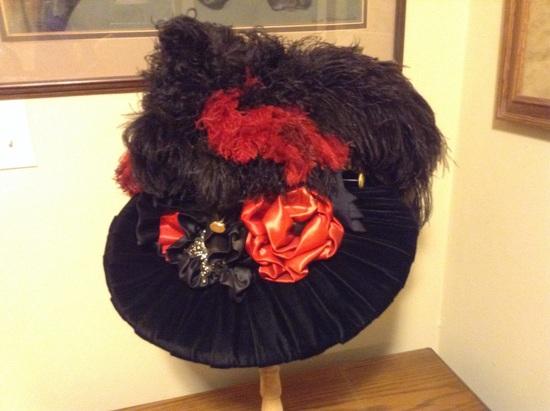

nm
Ha, you have no idea…hehe. I did work for BBC a few times.
nm

The analogy with firearm magazine spring is quite a bit irrelevant.
I have been involved in many heated debates regarding magazine spring in the firearm enthusiasts community. What Jimmy S. posted about those is accurate.
However, the steel spring design could be done in such a manner that the entire deflection of the spring stays within the limits of elastic deformation of the material (and I have done so as a spring designer in my past). One could never over-load such a spring to the point of reaching any sort of permanent (plastic) deformation, thus no damage to the spring occurs. The only damage is from repeating cycles of loading and unloading (fatigue).
This entire train of thought is not applicable to down clusters. These are not man-made, they are not designed to be "indestructible" in a fashion that their compression would never achieve a point where permanent damage would start. Nature designed them not after steel springs, and to be honest, history shows that designs by analogy end up quite stupid.
Thus we (on BPL at large) do not know where this limit is for down clusters, where permanent deformation and irreparable/irreversible damage begins to occur. Granted, there are people who have studied the matter, and have the answer, but it is not the same one as what the firearm magazine analogy would lead you to accept.
That's why we are having the discussion.
DM,
a +2 for a great post of yours here. Thanks!
You're welcome.
A few more things about down…remember birds molt, so feathers/down is not really made indestructible. And birds use their beaks to clean and spread oils throughout their feathers, both for protection from rain and snow, and to "treat" the feathers with an emollient. A feather is after all a modified form of keratin, and we all know how it feels to have dry skin and how much more flexibility our skin has once we apply creams and oils. So once your bag or coat starts to loose it's ability to loft and keep you warm, that is the time where you need to consider replacement or cleaning. And that's why it's bad to use detergents, specific down cleaners do not dry or damage the delicate fluffy parts of down.

Not a pro on the terminology here so cut me some slack but if design by analogy is to design in a complimentary/replicative manner to an existing design such as found in nature I would have to strongly disagree that most are stupid. Maybe our lack of ability to duplicate such intricate or imaginative design shows our stupidity yes but certainly not the idea to replicate them. More and more we are taking from nature to solve problems.
If my understanding of design by analogy is all wrong than in the infamous words of Rosan Rosanadana "never mind"
jimmyb
I'm kinda thinking Jimmy's anology or comparison was more of a visual thing, no harm done. I also shoot and replace parts on my guns and have seen those springs and his visualization of the "over bending" was nicely illustrative.
Edited for spelling error…..:-p

> Thus we (on BPL at large) do not know where this limit is for down clusters, where
> permanent deformation and irreparable/irreversible damage begins to occur.
I respectfully beg to disagree (having spent 27 years doing research in an gov't establishment that specialised in keratin).
Cheers
>> Thus we (on BPL at large) do not know where this limit is for down clusters, where
>> permanent deformation and irreparable/irreversible damage begins to occur.
>I respectfully beg to disagree (having spent 27 years doing research in an gov't >establishment that specialised in keratin).
Roger,
This is awesome! You have had the answers the whole time!
Do tell us then what degree of compression is precisely at the limit of irreversible damage, so we could all abide.
You previous posts on the matter only indicated that vacuum-packaging of down garments is acceptable.
I am sure there are differences between what was considered adequate vacuum delivered by a packaging vacuum pump in the 1950s, and today's vacuum pumps. We (ok, I is more accurate here) simply don't know the degree of compression ensuing, and whether or not there was any consideration for the different fill powers of the vacuumed sleeping bags.
Let's now quantify this.
If 1 ounce of 800 fill power down takes up 800 cu. in. when fully lofted, to what minimum volume can we compress it without damaging it? And keep it there for a prolonged time?
Then the same for 850, and 900 fill power, please.
I think a chart, a graph, a table, or simply a string of numbers would suffice.
Thanks!
Wow! Every day is a learning day!
This thread has gone technical, with hats, which is cool. But nobody seems bothered that Moosejaw said about the compressed jacket that it "only loses its loft but not its performance".
The jacket may be ok, but that makes me wonder about Moosejaw.
The idfl has literature out stating that down can basically be compressed all you want and the only real downside is that it may take forever to fluff back up
Which incidentally is the point of the idfl tests their conditioning methods attempt to restore the down to the original state which came out from the factory
Im off climbing now for the next week … Ill post up the references when i get back
But its all on the idfl website
No need for intrawebz speculation
;)

Eric,
Thanks for the idfl reference. Here are a couple lines from their website that appear to address the issue at hand:
"Compression, shipment, storage, and finished product assembly cause fill power to drop. Comforters, pillows, and even bulk down may drop 5-20%. Jackets and sleeping bags may drop 10-40%."
"Will the Fill Power ever return to its original value? Yes, consumer use of a product can return fill power to original value."
What is the idfl?
I've never bought anything from Moosejaw……they have such bad feedback at times I'd rather not deal with that.
I think that the life of the down product is as variable as who produces, distributes and sells, and the end owner so it's different for each item. It could even go as far back as to how nutritionally well or not so well fed the bird is kept. It goes without too much conjecture that properly raised birds will produce better quality down. And that that down will with good treatment be longer lasting.
My mother inherited a down and satin comforter, she treated it with great care and it has lasted four generations. It was never ever crushed and always was given its own large box to remain fluffed during moves, and was the guest room bedcover. So it was always used and admired as a much loved heirloom.
> You have had the answers the whole time!
Yep.
In addition, several people have already given you the answer, that vacuum packaging is OK, but you did not want to listen.
Cheers
> What is the idfl?
International Down and Feather Labs, where as usual 'international' really means 'American'.
They are responsible for a new very gimmicked test method which can give a fill factor of >900, but this new method is ignored and derided by most European manufacturers. It requires bone dry down, which you will never get in the field. It was developed solely so that some gear mfrs could claim a higher fill power than others.
Cheers
Oh! Thanks!
Sounds like a bunch of BS, but oh well……standardization of some things is impossible, too many fingers in pies.

My MB spiral down hugger is several years old, and is kept in a big net bag, uncompressed at all times except when in my pack and I'm moving on foot. Was concerned, after the super BPL review, about posts reporting failure of the down to adequately fill the down compartments. Brrrr! Has never happened to me. The down fills it to just the volume of each compartment, but no more. It's still trucking. Far more warmth per weight than anything else tried. I would NEVER compress it anytime other than when hiking on the trail.
I've never heard the suggestion that you can go too dry with down before, interesting.
I'm in a place with pretty high relative humidity (Sydney, Australia) – it's in the 70-80% range for more than half the year. I was thinking of putting the sleeping bag in a sealed container with silica gel. Not sure how dry it'll get, I suspect quite dry. It'll be in there for 8 months between uses.
Bad idea?
It will probably be fine, just put the silica in small cloth bags and check on it every once in a while, you might want to replace the silica. I use dryer sheets to keep stored items smelling nice and bugs don't like them.
From what I understand, UPS and FEDEX have gone to "Dimensional Weight" when calculating shipping costs, so this may be why Moosejaw compressed the down garment, in order to save on shipping costs. It is getting expensive to ship down sleeping bags due to their high volume.
I refuse to compress down bags when shipping to a customer. WM doesn't ship their bags tightly compressed to me, they go out the door just like I receive them from WM.
As far as compressing down when it is damp, Niels of Valandre has always told me "look what happens to your hair when you put on a hat when your hair is wet?"
Become a member to post in the forums.
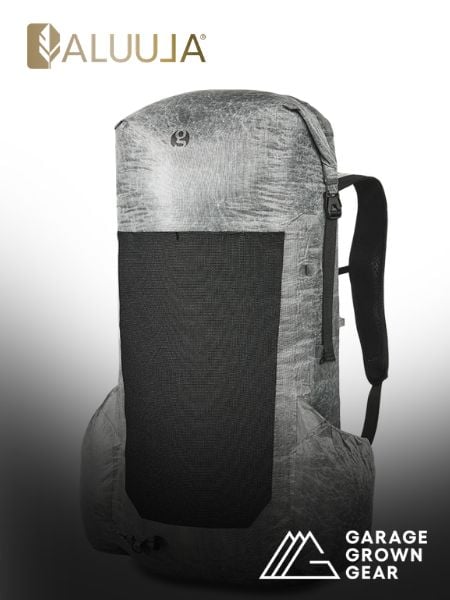 New Gear with Aluula FabricsLighter, stronger, more abrasion-resistant, and highly water-resistant - explore ultralight backpacking gear made with ALUULA Graflyte fabrics. Engineered for exceptional strength, durability, and lightweight performance, ALUULA Graflyte helps reduce pack weight without sacrificing reliability, making it ideal for demanding backcountry adventures.
 © Beartooth Media Group Inc.
 Loading...