


Wide pads (25″+) – especially inflatable pads that have a thickness of 3 or 4 inches – don’t play nice with bivy sacks.
Most bivy sacks don’t have the floor width or volume to accommodate wide pads without creating bivy sack zipper stress, compressing your bag/quilt insulation, or constraining your movement inside the bivy sack.
The solution is to either find a bigger bivy sack or use a narrower pad.
The problem is that bigger bivy sacks don’t exist. One exception is the 2025 version of the Big Agne 3-Wire Bivy. While it does accommodate a 25-inch wide pad with plenty of volume to minimize loft compression, its floor width is still too narrow, which places abrasion strain on the top fabric (the waterproof-breathable part).
I’ve been using the Big Agnes bivy sack this year (photo below) and really like it – it’s my favorite hooped bivy because of its large interior volume and the ability to create a tent-like pitch for freedom of movement and condensation mitigation.
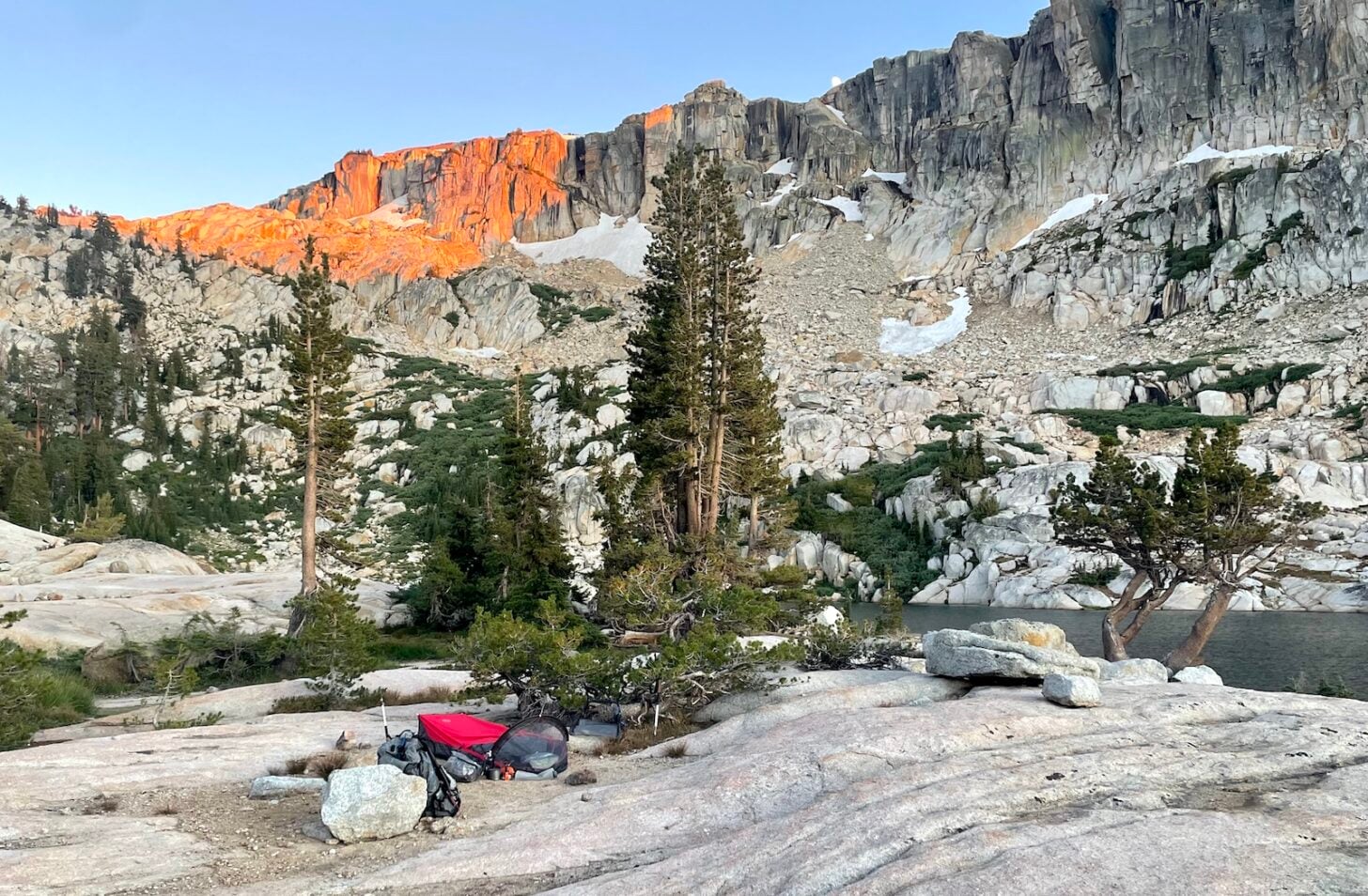
But minimal bivy sacks are my jam. My favorites are the MSR Pro Bivy (apparently discontinued now) and the MLD eVENT Soul. New in my arsenal this year is the Samaya Nano Bivy, which is lighter and more breathable than any other bivy sack I own.
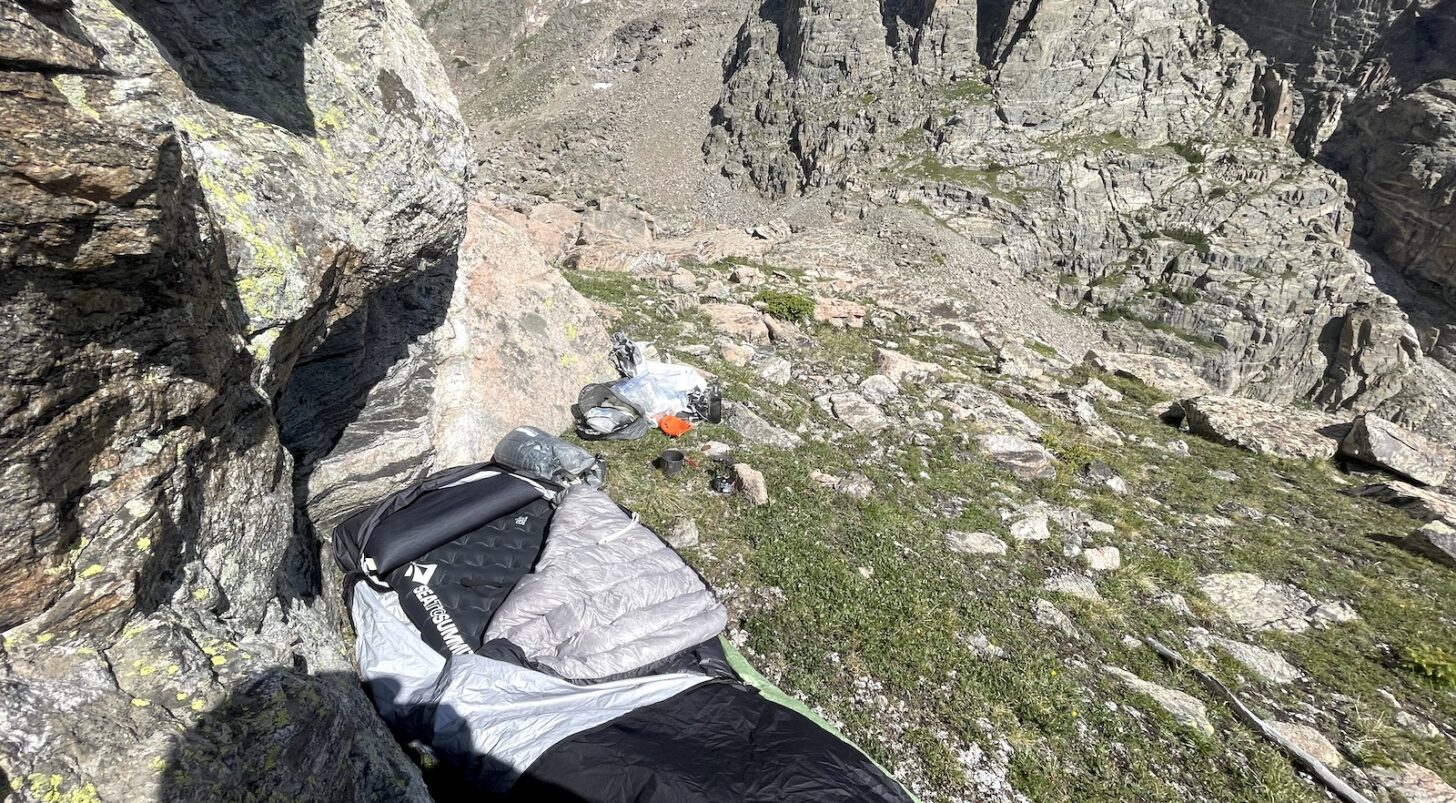
In one of these minimalist bivy sacks, I have to be more judicious about my pad choice – my Nemo Tensor Rectangular Wide is too big for all three of these.
But I’m not a huge fan of narrow (20-inch) pads. I like to change sleep positions, I like to sleep on my side with my knees bent, and I like to rest my elbows on my pad when I’m sleeping on my back. Narrow pads don’t allow me to do this.
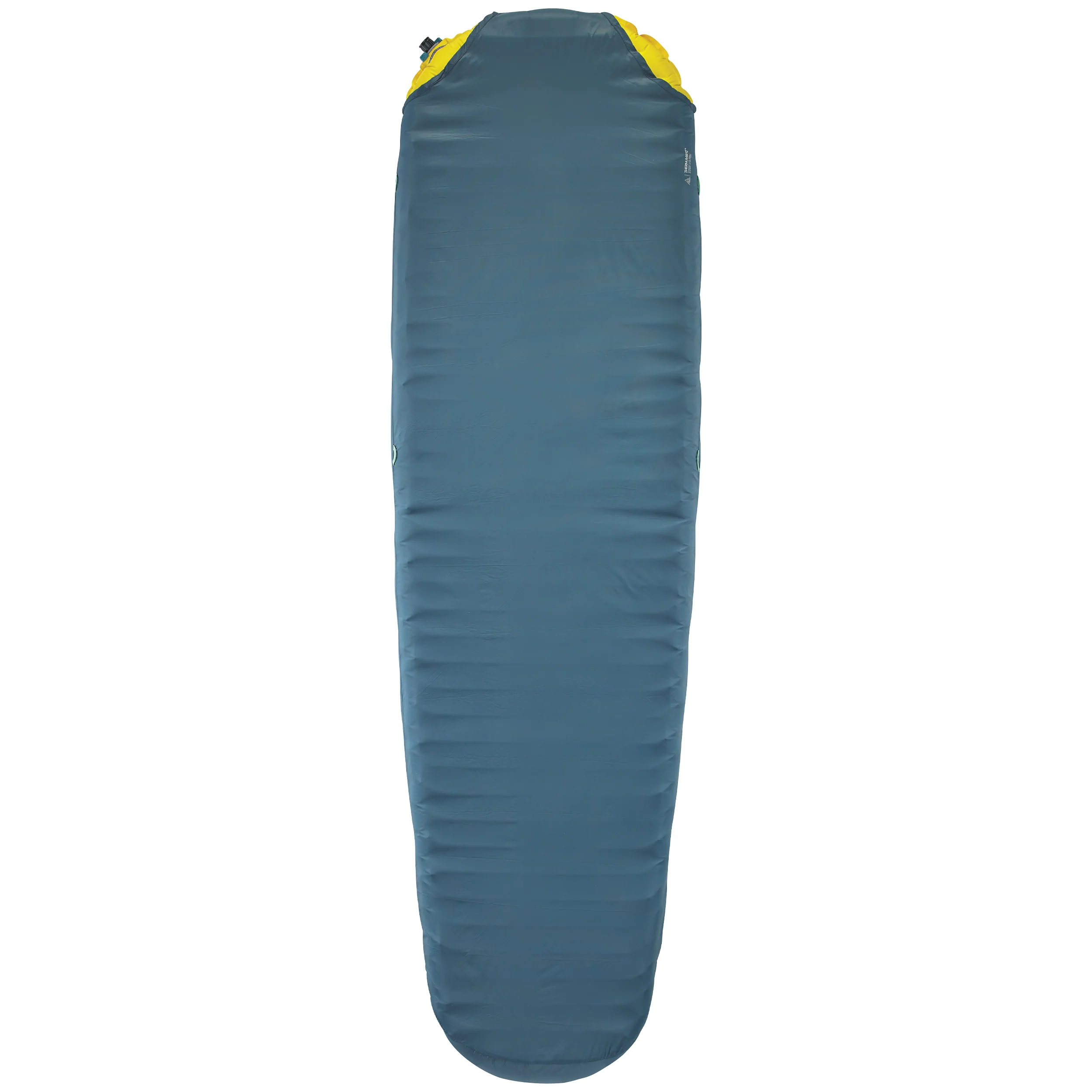
I discovered a potential solution this summer – an inflatable pad that’s almost 22 inches wide, instead of the narrower 20 inches. That’s the Sea to Summit XR (and XR Pro) – I’m using the regular mummy sizes (see photo above). Neither one of them is wide enough to cause down quilt compression in any of my bivy sacks, and they are wide enough to provide a notable increase in sleep comfort for me.
The XR series fabrics are a bit noisy (squeaky) on bivy sack and tent floors, and the fabric is a little clammy next to skin. I mostly camp in temperatures that require me to wear clothes at night, so it hasn’t been an issue (yet) for me. But when the temperatures warm up and I’m sleeping in boxers again, maybe I’ll add a sheet.
(Sea to Summit XR pads are now included in our Inflatable Sleeping Pads Market Report, which received a significant update this month.)
Related:
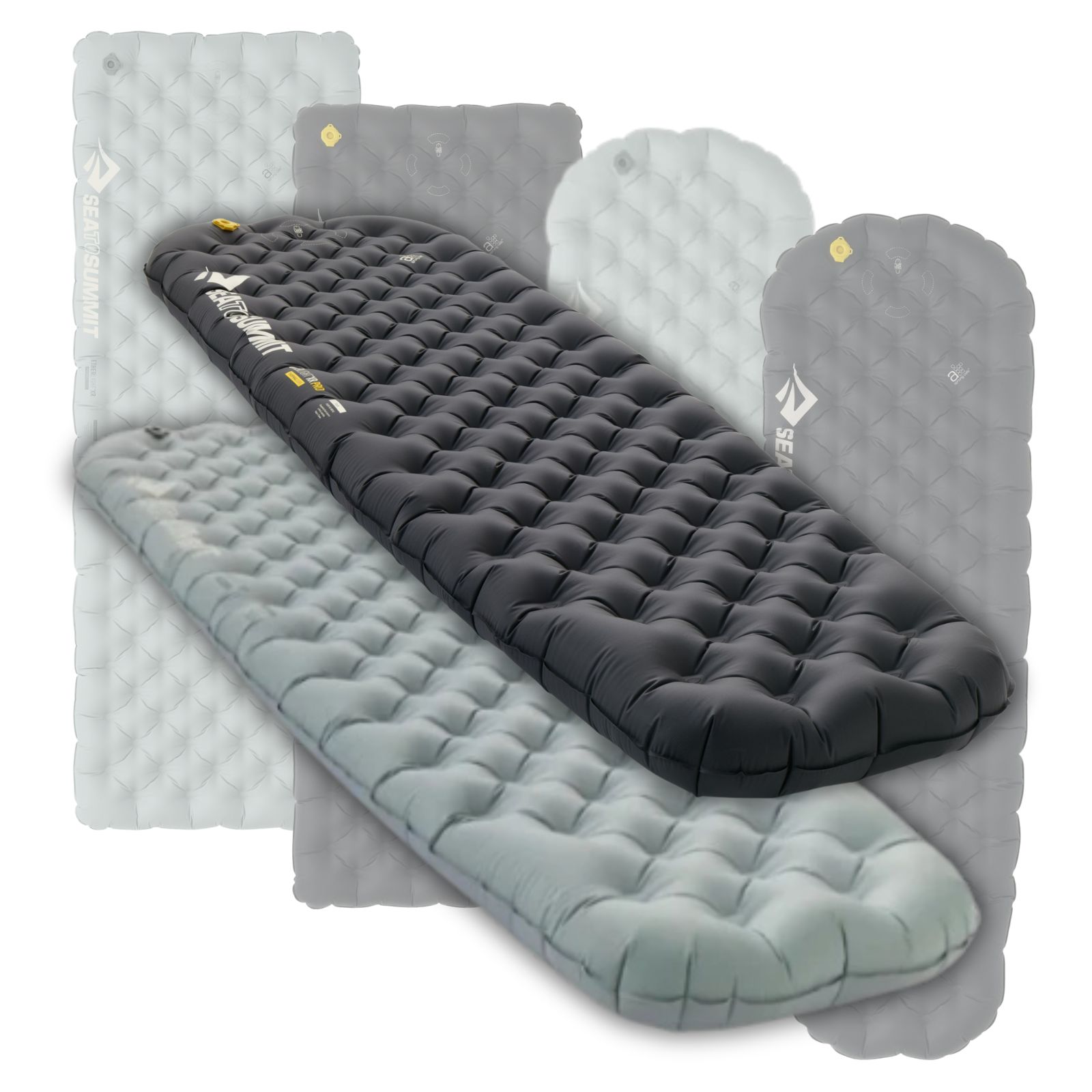
The Sea to Summit Ether Light XR Insulated ASC Sleeping Pad is an insulated air pad with Air Sprung Cell construction, ThermalCore insulation with a suspended TRM reflective layer, 10 cm thickness, 4.1 R-value, XPRESS valve, integrated pump sack, and 470 g Regular weight.

Oversized volume for large pads, larger people, or winter sleeping bags. Easy-entry exit and ventilation options with a fully-retractable top. Storm window at head end can be operated from inside to control ventilation and views. Three-stake pitch with overhead pole improves livability and breathability.

The Mountain Laurel Designs eVENT Soul Bivy is a fully enclosed, three-layer bivy featuring eVENT waterproof/breathable ripstop upper fabric and a 1.3 oz 20d Pro SilPoly floor with >3,500 mm HH rating; it weighs ~11 oz (310 g) in medium and includes a full‐width waterproof zipper, overhead hang loop, hang loops at corners, and a wire hoop that holds the upper fabric off the face to reduce condensation.
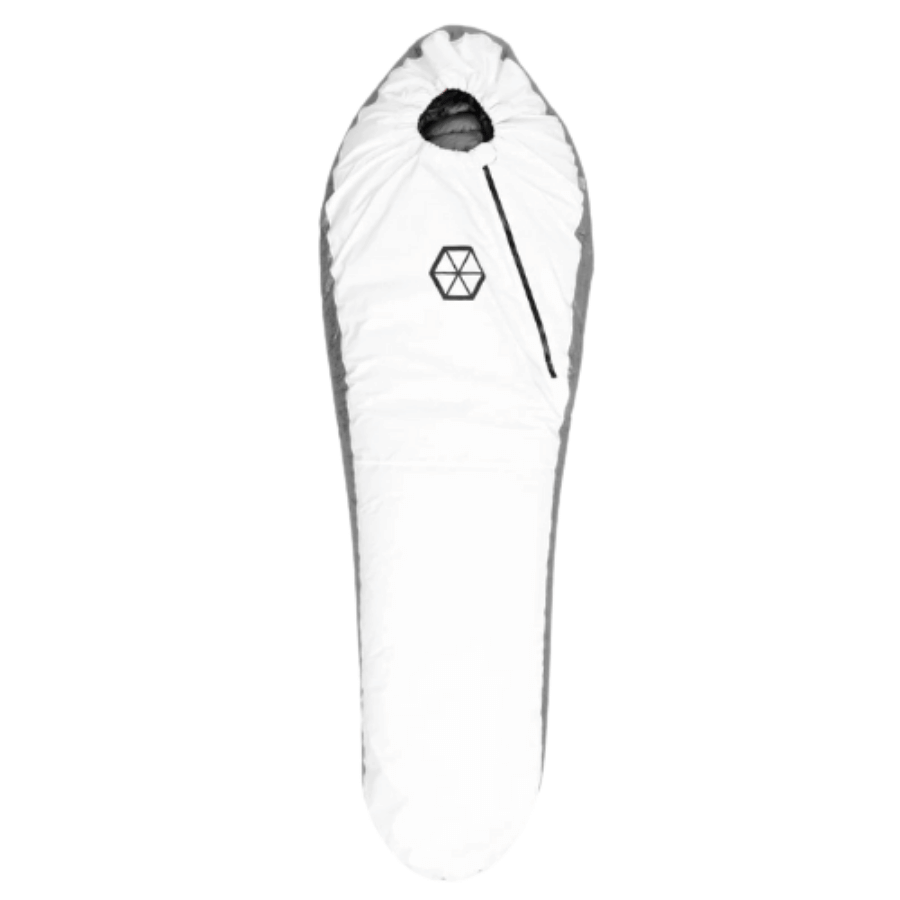
The Samaya NANO BIVY is a 235g ultralight bivy sack featuring Dyneema Composite Fabric floor (20,000mm waterproofing) and 3-layer Nanovent membrane walls (10,000mm waterproofing, 40,000g/m²/24h breathability). It offers 4-season protection with fully taped seams and a water-repellent YKK AquaGuard zipper, designed for minimalist mountaineering and emergency shelter during alpine races.
Reduce next-to-skin clamminess when sleeping on an inflatable sleeping pad in warmer temperatures.


Discussion
Become a member to post in the forums.
Companion forum thread to: Narrow vs. wide pads with bivy sacks
Exploring the challenges of pairing bivy sacks with wide inflatable pads, and identifying practical alternatives for improved sleep systems
Bivy sack users: I’m very curious to know what (if any) changes you make to your tent-pad sleep system when you move to a bivy sack.
I didn’t make any changes to my sleeping pad, pillow or quilt. I was worried that my tall pad would not fit with me on it, but it did. [EDIT: My pad is 23 inches wide so not wide, but 4 inches tall] The bivy enhanced the pillow and quilt by keeping the pillow more in place (if the head area is also stuffed with other clothing) and preventing drafts in the quilt.
I started using pull over leggings instead of long underwear because its a pain to change into long underwear if people are around and you don’t have tent for privacy.
I started sleeping more with a hat as a way to keep the netting off my face.
I also started stuffing spare cloths into my head area as I found this kept the air I was breathing warmer and slightly more humid and comfortable. Without that, the open net head of the MLD would blow away warmth and humidity and was less comfortable than sleeping under a tent or tarp.
I started using it under the tarp or tent more than I expected too, due to the condensation problem with bivy’s under the open sky.
My take on this is that pads are not too wide — bivies are too small.
Part of this is just naming convention: Larger bivies are called “tents”, like the SnugPak Ionosphere, for example. It’s bivy-shaped and has enough room to maybe change clothes. It isn’t much of a tent, either… that’s just what they call it. The design is not unlike the BA Three Wire Hooped Bivy, but the size is a bit more generous. It isn’t light, so not useful for our needs, but it’s an example of the naming conventions.
This is similar to the way that some “2p” tents are only large enough for one person and a dog. It’s just a name, not a real limitation of the concept.
I use Large size MLD bivies and when I use the large 25 pad I have had no issues. I also use synthetic quilts so no down to compress or get damp. Lately I have ditched the inflatable pad and only been using my Nemo Switchback.. all problems solved!
Depending on the conditions I’m going out in, I change out my down bag for a synthetic to gain marginal extra inches, and will also swap out my pad accordingly from a 2″ inflatable to a old school torso length prolite and a 1/4 evazote pad.
I’m glad this thread came up. I have a trip next month that may be colder so I was planning on bringing a warmer, wider rectangular pad. I just put the pad and quilt into my regular width Katabatic bivy and found out it is too tight in both the footbox and zipper.
I like a bivy for draft protection, so may try a sleeping bag cover I already have and hope it doesn’t slither off the pad.
I sometimes just place my inflatable pad under my MLD bivy and on top of a sheet of mylar.
I just tried bivy sack camping for the first time this past weekend with a 20″ tensor trail pad. I used the Bristlecone wide bivy and I felt like it would easily fit my tensor all season. What other gear are people putting inside the bivy sack, especially if real estate is limited?
I kind of didn’t like my gear exposed to conditions/wind. I felt like I had to worry about everything tucked away or pinned down as opposed to just throwing everything into my inner tent. Also, drafts on my side were not an issue but I did feel wind around my neck, especially since I didn’t sleep with a puffy.
Like Bruce, I have always put my pads under my bivy and just used it like a sleeping bag cover, more more nimble that way and just roll around with the bivy on top of the pads.
All of my gear comes into bivy with me, at head end, my empty pack. Thats about it.. I usually dont have much extra gear because its all being used. Except food and cook kit.. in my Ursack or Bear Canister away from camp.
Both photos you can see.. the first one, my pack is not in there yet, but other then food and ursack ( next to me) that pack is all I have left..
Goes right in the head end of my bivy and keeps my pillow in place from sliding away.
Thanks for the pics and descriptions. I think I could get everything but pack, water bottles, and cook kit/canister inside my bivy comfortably given its size. I should have tried since that is pretty much the same that I keep in or out of my inner with double wall tent setup. I don’t think I would want my stinky pack near my head in a bivy though, ha. I did like having much less stress when looking for a campsite at the end of the day that’s for sure!
Also note that Nemo Switchback pad under my bivy, not inside it. Makes a comfortable nights sleep instead of air pad and no worries of punctures, inflating and deflating, rolling (packing) up, arms and elbows hanging off sides… just back to basics keeping it simple. It can get wet and doesn’t matter, its also my resting pad during breaks and around camp.
My pack is under my legs as I use a short pad unless its in the winter. I have one large plastic bag that holds everything else, other than food the kitchen and water, that can go in the head of the bivy if needed but usually just sits next to my head outside.
I slept in my bivy on top of my pad, until I made a larger bivy to fit my system and myself.
I find I have room for a LW Nemo Tensor Extreme Conditions and a WM Antelope or Katabatic Sawatch in my MLD eVent Soul in XL size
I definitely don’t have the room in my size L event soul for the tensor + antelope without compression my bag, esp when sleeping on my side…I wish I could have a M length bivy with the XL girth!
Yes, indeed! The bivy equivalent of the MW sleeping mat!
How wide is the Samaya Nano at the foot end?
Why are we putting the pad inside the bivy?
I think the pad and insulation work better as a system if the pad is inside the bivy. A bag is less likely to slide off the pad within the confines of the bivy and a quilt can be strapped to the pad if both are inside. The bivy also affords the pad some measure of protection from sharp or rough objects.
Got it!
Didn’t see these points as I’m generally very aware of my placement on the pad; and don’t use pad attach straps with my quilts.
But I have been annoyed by the lack of intentional mobility when the somewhat rigid pad is inside the bivy, like certain stretching, hunting for socks and phones at the foot end, adjusting a tarp guy line, whatnot.
These days I favor a different system for several reasons, but that’s outside the scope of Ryan’s post
There always seem to be pros and cons whichever way you go!
You should check out bivybags from Exped like the bivybag Ventair/PU (link: Bivybag VentAir/PU – Bivybag | Exped), these are made since 20 years always being really wide and long for just about any mat size and sleepingbag size. Such bivybags with mats inside also prevent convective heat loss through the sides of the mat.
Become a member to post in the forums.