


Introduction
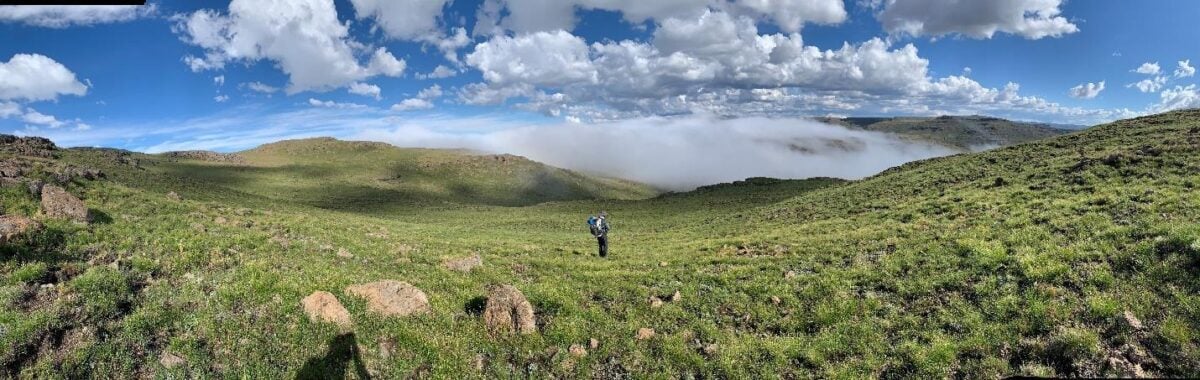
The Zulu called them uKhahlamba – the Barrier of Spears. In the 1700s, the South African Dutch Voorstrekkers named them the “Drakensberg” or “Mountains of the Dragon.” When you’re swinging in the mist at 10,000 feet (3,000 m), clinging to the chain ladders bolted into the vertical face of Sentinel Peak, listening to thunder, you’ll understand why.
The Drakensberg Mini-Traverse (MT) doesn’t ease you into this hike; it drags you into the sky and spits you out onto a new world where spears of jagged basalt ramparts stab the sky, and ancient San rock art tells stories of times past. The MT delivers raw beauty and heart-pounding exposure along the escarpments’ edge, all in a manageable time frame. Forget the social-media-hyped hikes with their catchy selfies and convenient pubs – the MT is therapy for those who want a new kind of remote experience. Each night can be an endless expanse of stars with the Milky Way blazing across the night sky. Weather systems barrel across the rooftop of Southern Africa in the blink of an eye and with the fury of an angry dragon, and where the only sounds are wind, breath, rain, and, if you’re lucky, the whoosh of a bearded vulture’s wings. Whether you’re watching the sunrise color the mountains in reds and golds, or wild-camping in solitude that makes you feel as if you are the only person, the Drakensberg redefines adventure and reinforces why we get into the backcountry in the first place!
My wife, Meredith, and I embarked on a six-day trek of the MT, a 51-mile (85 km) section of the Drakensberg Grand Traverse. The route’s elevation averages about 10,170 ft (3100 m), and is renowned for its emptiness, unpredictable weather, challenging navigation, and stunning views.
Unlike typical marked trails, the MT features a mix of goat paths, shepherd trails, and open country, with no clear route to follow. The trek’s difficulty lies not only in the rugged terrain but also in the remote nature of the journey, which demands careful preparation, flexibility, and a readiness for quickly changing weather conditions.
Getting to/From the Trailhead
From our home in Malawi, we flew into Johannesburg (Jo’berg) and took an Uber to the Wistieshoek Mountain Lodge, located near Sentinel Peak. The lodge has a daily shuttle to the Sentinel Peak car park and the Park offices, the starting point for the MT. There, we registered with the Rangers and paid our park fees. The shuttle service was an excellent way to get to the trailhead without any hassle. It was easy, convenient, and affordable. At the end of the trip, we returned to Witsieshoek Lodge and arranged a shuttle to collect a rental car, which gave us the flexibility to explore the region on the way back to Jo’berg, including stops at the nearby San rock art sites which are UNESCO World Heritage Sites.
Day 1: Sentinel Peak to the Veranda
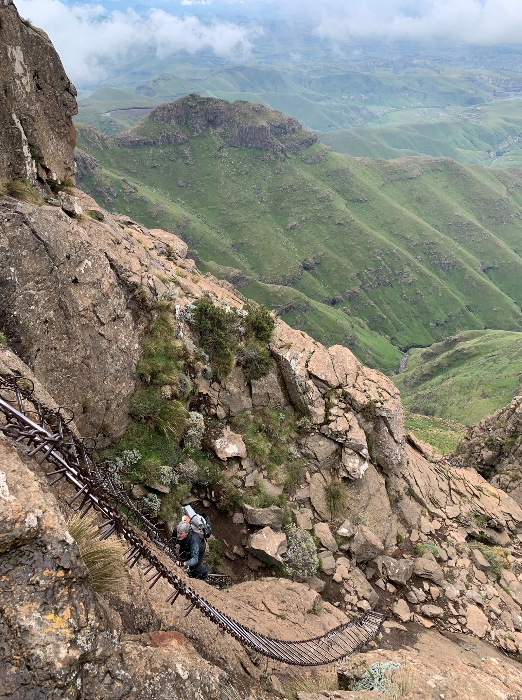
Our first day began with a morning shuttle from Witsieshoek to the Sentinel car park (8,517 ft / 2,596 m). The trail to the top of Sentinel Peak spans about 3.7 mi (6 km) and offers stunning views across the northern Drakensberg. It winds past wildflowers, rock outcrops, and a few slippery sections equipped with chains for safety.
The highlight – and challenge – was climbing the famous Sentinel Chain Ladders, two swaying steel structures fixed to the cliff face. Not being entirely comfortable with heights, I kept my focus upward, avoiding the dizzying drop below. While there’s an alternate scramble up the Beacon Buttress gully, we chose the ladders. For us, the total time from the car park to the top was about 2.5 hours.
At the top (9,938 ft / 3,029 m), we encountered two Lesotho shepherds. In Lesotho, shepherding is a cultural rite of passage for boys becoming men. Shepherds live in the mountains for extended periods, dressed in traditional Basotho blankets, rubber boots, and grass-woven hats, fully adapted to the harsh alpine conditions.
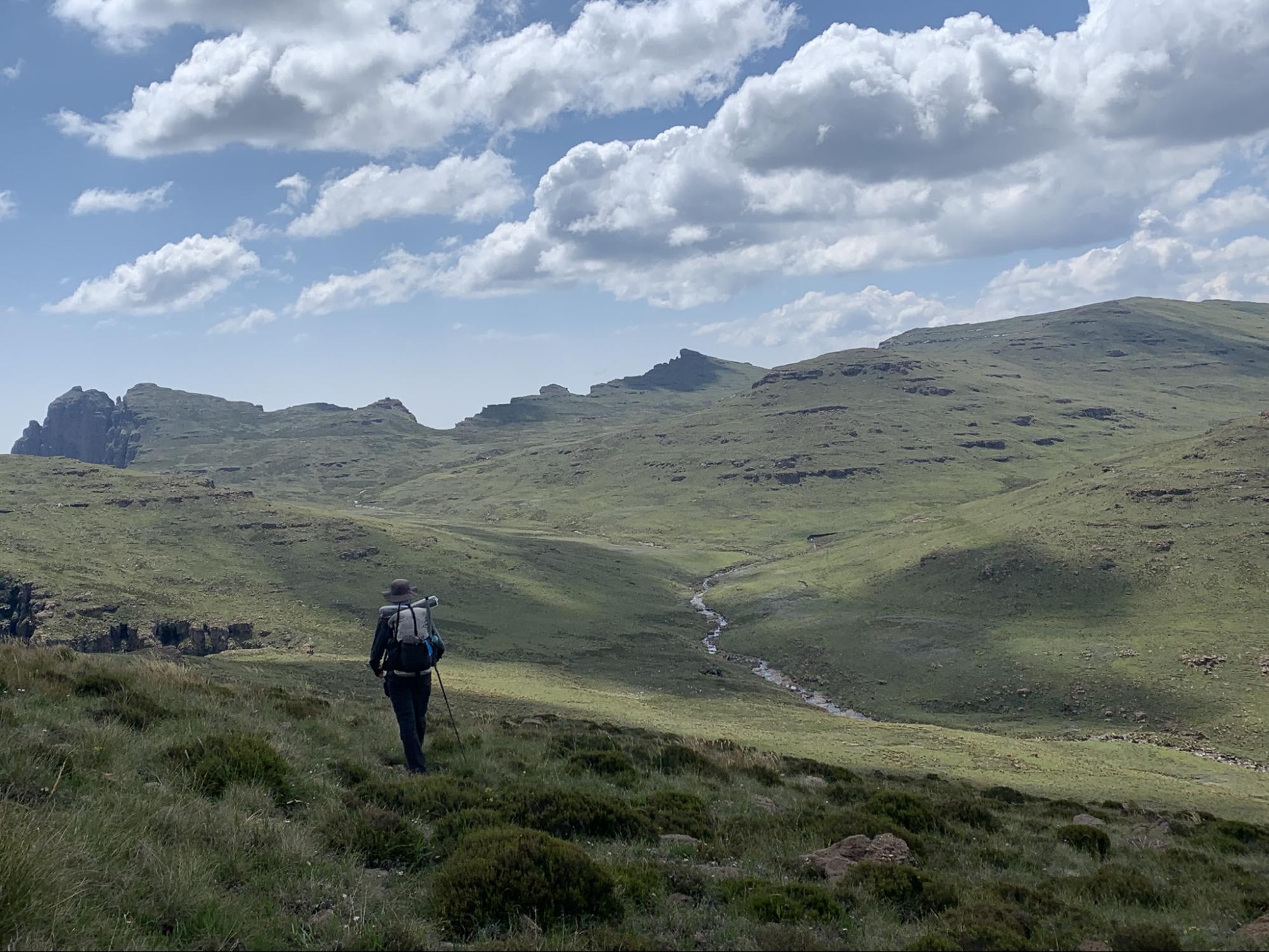
Following the Tugela stream, we soon reached the edge of Tugela Falls – Africa’s highest waterfall and the world’s second highest – where we enjoyed lunch with our feet dangling over the 3,000 ft (948 m) drop. From there, we continued along the escarpment, passing Monte-aux-Sources and descending toward the Bilanjil River, navigating boulders and rough terrain along the way.
We watched clouds rise and evaporate in the sun, only to return quickly, spilling over the plateau and shifting the weather from sunny and warm to cool and misty in moments. After picking our way through marshy terrain, we climbed toward Ifidi Pass, aiming for Ifidi Cave, but were forced to reroute as clouds thickened and darkness approached.
As we were enveloped in clouds, we found shelter under a rock overhang known as the “Veranda,” a 15 to 18 ft (5 to 7 m) high ledge partially enclosed by a low rock wall built by shepherds and past hikers. With camp set up, we boiled water, ate, sipped tea, and settled in for the night, grateful for a semi-protected spot after a long, awe-inspiring day.
Day 2: Veranda Overhang to Skylight Cave
After a morning coffee at the Veranda, we packed up and headed southeast, contouring along the escarpment before crossing into the next valley. From the top of the ridge, sweeping views stretched in every direction – raw, open terrain that felt both vast and humbling.
Member Exclusive
A Premium or Unlimited Membership* is required to view the rest of this article.
* A Basic Membership is required to view Member Q&A events


Discussion
Become a member to post in the forums.
Companion forum thread to: Riding the Dragon: Trekking the Mini-Traverse, a Drakensberg Mountain Adventure
Jeff de Graffenried recounts a trek across South Africa’s Drankensberg Mountains’ Mini-Traverse.
Amazing – thanks for sharing a trek in an area most of us won’t ever get to visit.
Well, that is a trip! Well done and thanks for taking the time write it up!
Become a member to post in the forums.