


Arriving at the Pukaskwa
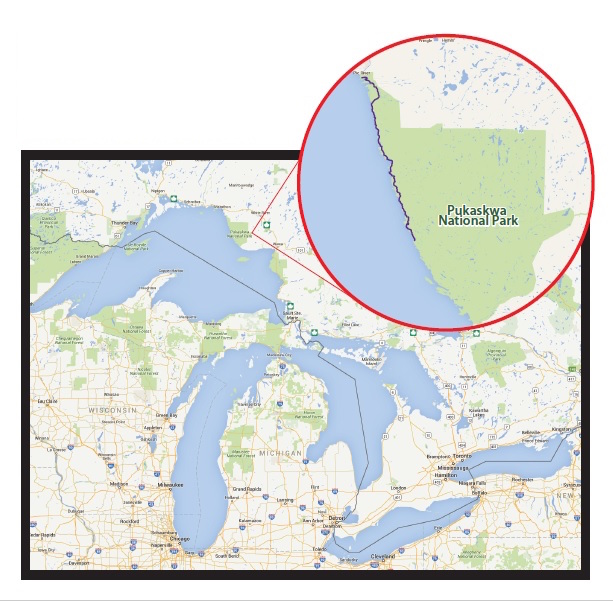
“YOU ARE HERE!” the map at the Hattie’s Cove Visitors Centre told us. “Here” was the trailhead of the Coastal Trail at Pukaskwa National Park, the result of a 2-day, 13-hour drive from Toronto, and a year’s worth of plans, training, dreams, and excitement.
A trip in the making since we completed the Coastal Trail at Lake Superior Provincial Park last season, our dream was to travel once again to the majestic Lake Superior region. We wanted to experience the ethereal beauty of the world’s largest freshwater lake: this time, in Pukaskwa National Park, four hours further north than last year’s trek.
Parks Canada is the federal body responsible for Pukaskwa, the only wilderness national park in Ontario.
Pukaskwa National Park protects over 1,800 square kilometers of ecosystems that include boreal forest and the Lake Superior shoreline. Falling within the traditional territory of the Anishinaabe people, Parks Canada works collaboratively with local First Nations to protect and preserve the land and educate the public. By reputation, the Coastal Hiking Trail at Pukaskwa was more wild, remote, challenging, rugged, and beautiful than its Provincial Park counterpart. We had to find out for ourselves!
The Trip Planner (a park-issued mini-guidebook) told us that hiking times in Pukaskwa were based on a hiker averaging 0.9 mph (1.5 km/hr) over rugged and slippery terrain with a 35 lb (16 kg) pack. All hikers, we were advised, should be experienced backcountry hikers. The one-way Coastal Hiking Trail had no road access at the end; the only way out was to take a shuttle vessel back up the coast or to turn around and hike back. The cost of the boat was prohibitive for us; and so our plan was to hike the Coastal Hiking Trail to the end and back again, a total of 75 miles (120 km), allowing ourselves nine days to complete it.
After a brief orientation session with park staff and a final quick trip to the washroom, we were ready to begin. Every fiber of our being was twitching to get on the trail. It was time to make our Pukaskwa dream come true!
Day 1: The Adventure Begins
- Day 1: Aug 30, 2015
- Destination: Hattie’s Cove to Willow River
- Distance: 11 miles (17.5 km)
- Time: 7 hours
- Average Speed: 1.6 mph (2.5 km/hr)
- Ascent/Descent: 1411 ft/1398 ft (430 m/426 m)
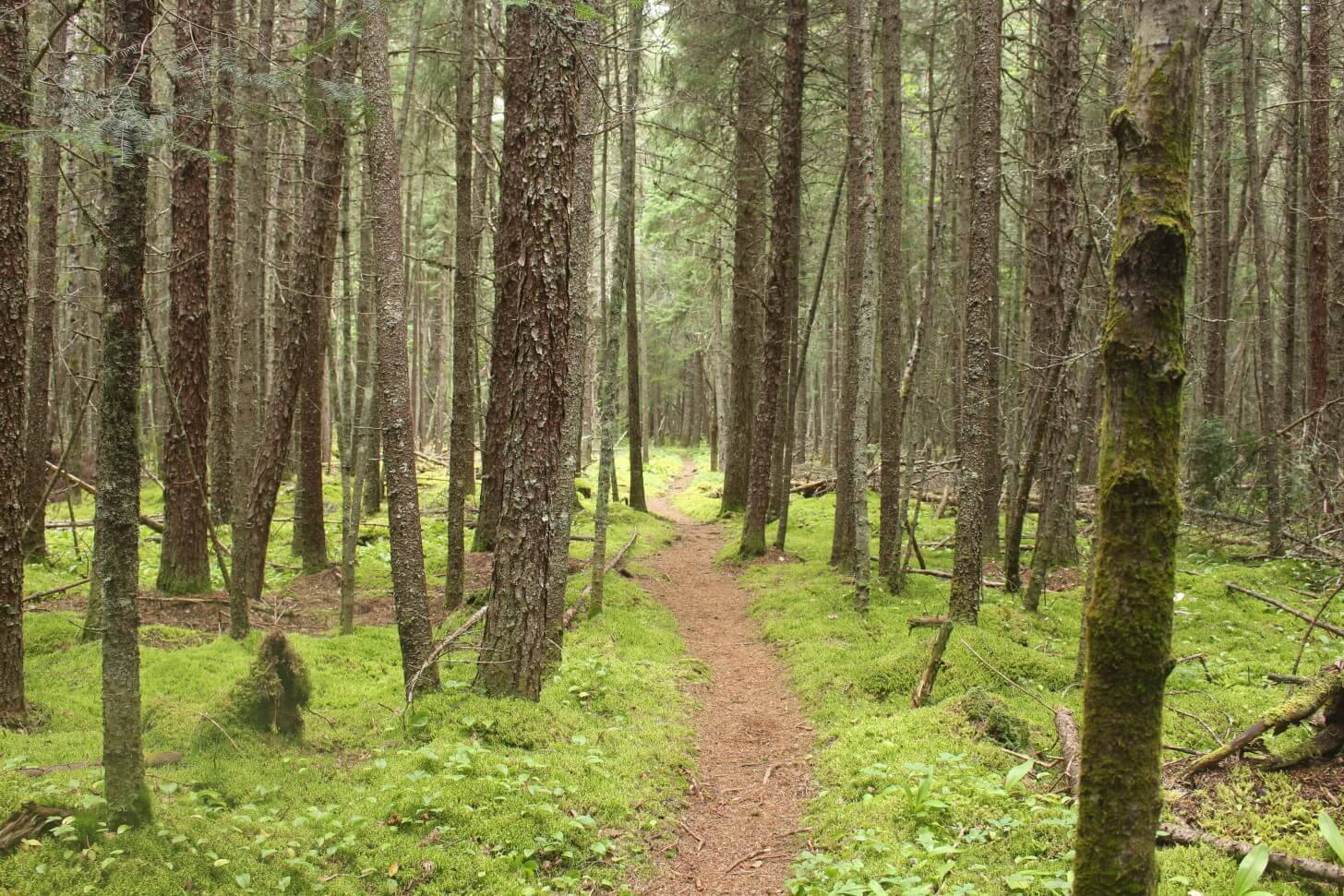
Leaving Hattie’s Cove, Pukaskwa’s Coastal Hiking Trail first traversed through the park’s successful 2012 prescribed burn site, with interpretive signs educating us about the burn and illuminating the cycle of life, death and rebirth of the northern boreal forest.
Turning inland, the trail became a wooden boardwalk wandering through a marshy wetland.
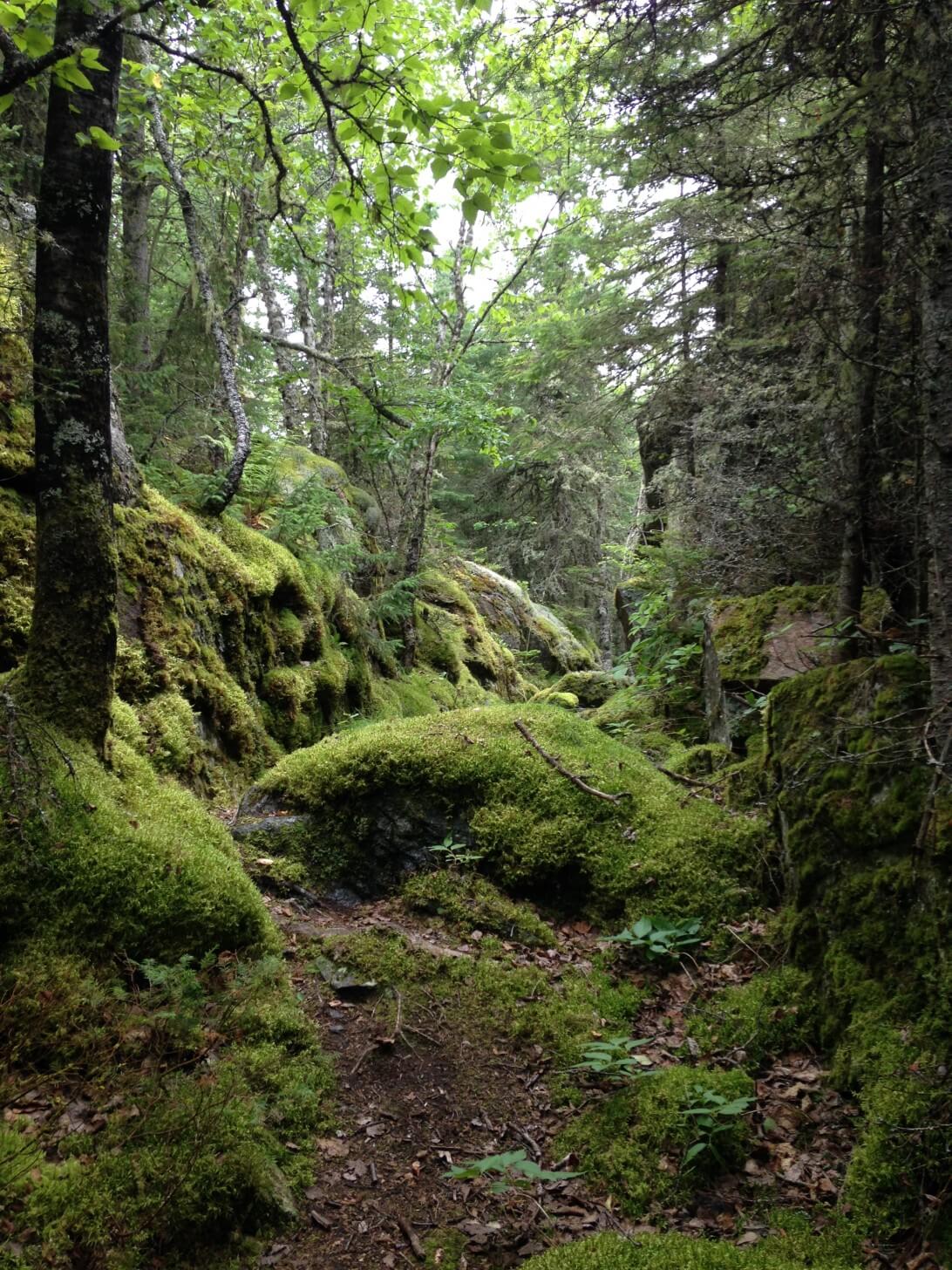
Leisurely meandering its way back into the forest, the trail caressed our feet with a carpet of thick green spongy moss. Small inland lakes and waterfalls seemed to greet us around every bend.
Crossing through a beach strewn with enormous driftwood timbers, we learned to step lightly as the log drivers of long ago must have done.
And finally, as we approached the coast, the trail reluctantly surrendered to the ancient, rugged geology of the Canadian Shield and the tenacious Jackpine.
If there is one tree that reflects the spirit of the wilderness and the rugged beauty of Northern Ontario more than any other, it would have to be the resilient Jackpine. One of the hardiest of the pines, its long needles, flexible branches, rough bark, and long stringy roots can withstand freezing winds, blowing ice and snow, drought, and even forest fires. It can grow on hilly, rocky terrain and sandy soil. It has learned to adapt and survive in its harsh environment. It is a real Canadian! It has become our favourite tree and a symbol of our adventures in Ontario’s north backcountry.
Member Exclusive
A Premium or Unlimited Membership* is required to view the rest of this article.
* A Basic Membership is required to view Member Q&A events


Discussion
Become a member to post in the forums.
Thanks for the positive feedback Ethan!
I went back into our gear to verify the mat dimensions because you raise a good point and we never found any kind of stretching of the flooring width area. I have to apologize for my previous post/comment, the dimensions of our Exped Downlite 5 Pads are 20˝x 72˝ NOT 25˝ width. Sorry. Which makes more sense now. Thanks for pointing that detail out! Only issue we found that you may be interested in as an annoyance regarding slippage of the pads on the Cuben Fiber floor when sleeping. If not pitched on a totally flat surface(which rarely happens in the backcountry) or any kind of tossing and turning, the pads slip and slide/shift around very easily. We use a Thermarest coupling system to strap our pads to help keep the pads together at night. (I’ve also heard of using silicon on the bottom of the pads also but have not gone that route yet).
As for getting the Edges flush to the ground question, no. There is a probably 5˝ to 6˝ gap and that is a good thing in my opinion for ventilation purposes when it’s sealed up tight. It is ideal to have at least one door of the 4 open for good air circulation at night if possible.
Hope that helps a bit with your decision.
Stephen
It took me a month to finally get around to reading this but it was WELL worth it. Thanks for sharing a trip report from this little unsung corner of the earth. Those who don’t know or don’t care may never know but those who do… well… Excellent stuff.
Become a member to post in the forums.